


TL;DR:
- Cold pressing extracts juice or oil without heat, preserving natural flavor, color, and nutrients. It involves mechanical pressure that minimizes oxidation and heat, but shelf life depends on processing and storage; oils are suitable for raw use, while juices are highly perishable. Label claims like “cold pressed” indicate the method but do not guarantee nutrient levels or quality standards.
Cold pressed means extracting juice or oil through mechanical pressure alone, without applying heat, so the natural flavour, colour, and nutrients stay as close to the source ingredient as possible.
For juices, that means a hydraulic press or slow masticating auger crushes produce and squeezes out liquid with minimal friction heat, keeping oxidation low. For oils, it means seeds or fruits are mechanically pressed in an expeller or stone mill rather than being treated with chemical solvents or high-temperature refining. The two processes share a name because they share a principle: pressure over heat.
Three things determine whether cold pressing actually matters for what you are buying:
- Extraction method: hydraulic press or slow auger for juice; mechanical expeller or stone press for oil
- Heat and oxidation: both methods aim to keep temperatures low enough to protect volatile compounds
- Shelf life and use: cold-pressed juice is highly perishable; cold-pressed oil keeps longer but suits raw or low-heat use rather than frying
Table of Contents
- What does “cold pressed” actually mean on a label?
- How cold-pressed juice is made, from produce to bottle
- Cold-pressed juice benefits and limits: what the evidence says
- How cold-pressed oils are made and what the terms mean
- Cold-pressed oil benefits, cooking uses, and what to watch out for
- Cold pressed vs other extraction methods: a quick comparison
- How to spot a genuine cold-pressed product when buying in the UK
- Key takeaways
- The extra cost is worth it sometimes, but not always
- Useful sources and further reading
What does “cold pressed” actually mean on a label?
The term describes a production method, not a regulated health claim. In practice, it signals mechanical extraction without added heat or chemical solvents. What it does not guarantee, on its own, is a specific nutrient level or purity standard.
Common label phrases and what they usually indicate:
- Cold pressed: mechanical extraction, minimal heat; applies to both juices and oils
- First cold pressed: the oil comes from the first pressing of the raw material, before any further processing; most common on extra-virgin olive oil
- Unrefined: no bleaching, deodorising, or solvent treatment after pressing; flavour and minor antioxidants remain intact
- HPP (High Pressure Processing): a post-pressing preservation step for juice that uses water pressure rather than heat; extends shelf life without cooking the product
- Pasteurised: heat-treated after pressing to kill pathogens; extends shelf life but applies some thermal stress to the juice
Products that commonly carry the cold-pressed label include fruit and vegetable juices, extra-virgin olive oil, seed oils (hemp, flaxseed, pumpkin, sunflower), and carrier oils used in skincare such as sweet almond and hemp seed.

How cold-pressed juice is made, from produce to bottle
The process is straightforward but slower than conventional juicing.
- Wash and prep: produce is scrubbed, trimmed, and cut into pieces small enough for the press
- Shred or mulch: a grinder or auger breaks the cell structure to release juice
- Press: a hydraulic press or slow masticating juicer applies steady pressure; no spinning blades, no friction heat
- Collect and filter: juice flows through a fine cloth or mesh to remove pulp and seeds
- Preserve (optional): commercial producers apply HPP or pasteurisation; home juicers skip this step
- Pack and chill: juice goes straight into sealed bottles and into refrigeration
Equipment matters. A hydraulic press is an industrial machine that applies tonnes of pressure to a cloth-wrapped pulp pad; it produces the densest, least-aerated juice but is not a home appliance. A masticating (slow auger) juicer is the practical home equivalent: it rotates at around 60 rpm, crushing and pressing rather than shredding, which reduces heat and foam compared with a centrifugal machine spinning at 12,000 rpm or more. Centrifugal juicers are fast and cheap but generate friction heat and aerate the juice, which accelerates oxidation.
HPP versus pasteurisation. HPP submerges sealed bottles in high-pressure water, killing pathogens without heat. Pasteurisation heats the juice briefly. Both extend shelf life well beyond the raw product, but HPP is generally considered gentler on heat-sensitive compounds.
Pro Tip: If you make juice at home with a masticating juicer, drink it within 24 hours and store it in a full, sealed glass bottle to minimise the air gap and slow oxidation.
Cold-pressed juice benefits and limits: what the evidence says
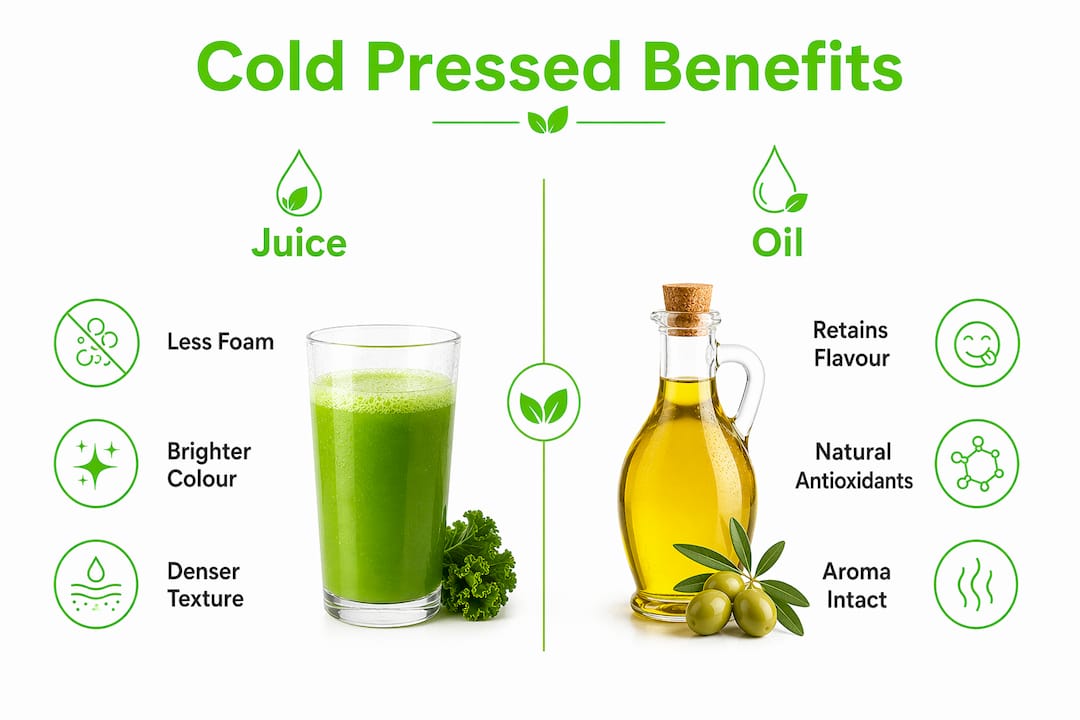
The sensory case for cold-pressed juice is solid. Reduced aeration and heat during extraction produces less foam, a denser mouthfeel, and brighter colour than centrifugal juicing. For many people, it simply tastes better.
The nutritional case is more nuanced. A controlled study found no significant differences in antioxidant capacity between cold-pressed and centrifugal juices; quality declined markedly in both after several days of storage. Dietitians and food journalists largely agree: evidence for markedly higher nutrient levels in cold-pressed juice compared with well-handled centrifugal juice is limited. Storage conditions and how quickly you drink it matter as much as the extraction method.
Practical benefits:
- Lower oxidation during extraction preserves colour and volatile flavour compounds
- Minimal foam and pulp for a cleaner drinking experience
- No added heat means heat-sensitive vitamins face less stress at the point of pressing
Realistic limits:
- Juicing removes fibre entirely; health authorities note that juice should not replace whole fruits and vegetables because of this fibre loss and the potential for higher sugar intake
- Natural sugars are concentrated; a 250 ml cold-pressed apple juice can carry as much sugar as several whole apples
- Cost is substantially higher than centrifugal or pasteurised juice
Shelf life for UK consumers. Without HPP or pasteurisation, refrigerated shelf life is roughly 48–72 hours; degradation accelerates noticeably by day six. HPP or pasteurised cold-pressed products typically last up to around 30 days refrigerated, depending on the process. Check the pack date, not just the best-before date, when buying from a chiller cabinet.
Treat cold-pressed juice as a vitamin-rich supplement to a diet that includes whole fruit and vegetables, not as a replacement for them. The importance of dietary fibre is one reason nutritionists consistently recommend keeping whole foods in the picture alongside any juice habit.
How cold-pressed oils are made and what the terms mean
Oil extraction follows a similar logic: mechanical force, minimal heat, no chemical solvents.
The process:
- Seeds, nuts, or fruits are cleaned and dried to the correct moisture level
- They are crushed or ground to break cell walls
- An expeller press or stone mill applies mechanical pressure to squeeze out oil
- The raw oil settles and is filtered to remove solids; no bleaching or deodorising follows
Contrast with other methods. Solvent extraction uses hexane (a petrochemical solvent) to pull oil from the raw material; the solvent is then evaporated off. High-heat refining follows most solvent-extracted oils to neutralise flavour, remove colour, and raise the smoke point. Both steps strip the minor antioxidants and flavour compounds that cold-pressed oils retain.
Key terms:
- Expeller pressed: mechanically pressed without solvents; some friction heat is generated but no external heat is added; similar to cold pressed but the temperature is not strictly controlled
- Solvent extracted: uses chemical solvents; produces a neutral, high-yield oil but removes natural compounds
- Refined: processed after extraction to remove colour, flavour, and impurities; higher smoke point, longer shelf life, less character
- Unrefined: minimal post-extraction processing; retains flavour, aroma, and minor antioxidants
- First cold press: oil from the first mechanical pressing only, before any further extraction
Cold-pressed oil benefits, cooking uses, and what to watch out for
Cold-pressed oils retain flavour, aroma, and minor antioxidants that refining removes. That is the genuine advantage. A good cold-pressed extra-virgin olive oil, hemp seed oil, or pumpkin seed oil has a depth of flavour that refined versions simply do not.

The trade-off is smoke point. Because refining strips the minor constituents that burn at lower temperatures, cold-pressed oils are best for raw or low-heat uses and poorly suited to high-temperature frying.
| Use case | Cold pressed suitable? | Notes |
|---|---|---|
| Salad dressings and vinaigrettes | Yes | Flavour shines; no heat applied |
| Low-heat sautéing | Sometimes | Depends on the specific oil |
| High-heat frying | No | Risk of burning and off-flavours |
| Drizzling over finished dishes | Yes | Ideal finishing use |
| Skincare and massage | Yes | Carrier oils such as sweet almond or hemp seed |
Storage tips:
- Keep in a dark glass bottle away from direct light and heat
- Store in a cool cupboard or the fridge for oils with very short shelf lives (flaxseed, hemp)
- Smell before using: rancid oil smells of old crayons or stale nuts and should be discarded
- Use within the producer’s recommended period after opening, typically 3–6 months
Adulteration risk. Because cold-pressed oils command a premium, blending with cheaper refined oils is a documented market concern. Prefer suppliers who publish origin information and third-party testing results.
Cold pressed vs other extraction methods: a quick comparison
| Method | Equipment | Oxidation / nutrients | Shelf life | Typical cost | Best for | Flavour |
|---|---|---|---|---|---|---|
| Hydraulic / masticating (cold pressed) | Hydraulic press or slow auger | Low oxidation; minor compounds retained | 48–72 hrs unpasteurised; up to 30 days HPP | Higher | Raw drinking, dressings, skincare | Full, fresh |
| Centrifugal juicing | High-speed spinning blade | Higher oxidation; some heat | 24–48 hrs | Lower | Quick home juicing | Lighter, more foam |
| Expeller pressed (oil) | Mechanical screw press | Moderate; some friction heat | Months (sealed) | Mid-range | Cooking at moderate heat | Mild to moderate |
| Solvent / refined (oil) | Chemical extraction + refining | High processing; minor compounds removed | Long | Lowest | High-heat frying | Neutral |
Practical decision rules:
- Choose cold-pressed juice when flavour and freshness matter and you will drink it within 48–72 hours
- Choose HPP cold-pressed juice when you want a longer fridge life without pasteurisation heat
- Choose cold-pressed oil for raw applications, finishing, and skincare where flavour and natural compounds count
- Choose refined oil for high-heat frying where smoke point is the priority
How to spot a genuine cold-pressed product when buying in the UK
Labels can be vague. Here is what to check before you buy.
Buying checklist:
- Label language: look for “cold pressed”, “unrefined”, or “first cold pressed”; “natural” alone means nothing specific
- Preservation method: HPP or pasteurised should be stated clearly on juice; absence of either means a very short fridge life
- Ingredient list: 100% named produce for juice; no carrier oils or additives for a single-origin oil
- Pack or pressing date: fresher is better for both juice and unrefined oil; no date is a red flag
- Storage instructions: cold-pressed juice must be refrigerated; unrefined oils need cool, dark storage
- Origin: country or region of origin should be stated, particularly for olive oil
UK regulatory and trust signals. The UK Organic certification (Soil Association or equivalent) covers farming standards, not extraction method, but it does indicate the raw material was grown without synthetic pesticides. PDO (Protected Designation of Origin) and PGI (Protected Geographical Indication) marks on olive oils indicate verified provenance under UK retained law post-Brexit. Neither mark guarantees cold pressing, but both reduce the risk of mislabelled blends.
Red flags: a suspiciously low price for a premium oil, no origin or pack date, vague “natural process” wording, and opaque or clear plastic bottles (light degrades unrefined oils quickly).
Pro Tip: For cooking oils, buy in smaller bottles more frequently rather than a large bottle that sits open for months. Oxidation after opening is the main quality killer, regardless of how carefully the oil was pressed.
Key takeaways
Cold pressed describes a mechanical extraction method that keeps heat and oxidation low, but ingredient quality and how quickly you consume or store the product determine most of the nutritional outcome.
| Point | Details |
|---|---|
| Definition | Cold pressed means mechanical extraction without heat or solvents, applied to both juices and oils. |
| Juice shelf life | Unpasteurised cold-pressed juice lasts roughly 48–72 hours refrigerated; HPP extends this to around 30 days. |
| Nutritional claims | Research finds no consistent superiority over centrifugal juice; storage conditions matter as much as extraction method. |
| Oil best uses | Cold-pressed oils suit raw dressings, finishing, and skincare; avoid them for high-heat frying. |
| Label checks | Look for pack date, origin, preservation method, and organic or PDO/PGI marks when buying in the UK. |
The extra cost is worth it sometimes, but not always
The cold-pressed category has attracted a lot of marketing noise, and it is worth being clear-eyed about where the premium is genuinely justified and where it is not.
For oils, the case is strong when flavour is the point. A cold-pressed pumpkin seed oil drizzled over soup, or a cold-pressed extra-virgin olive oil finishing a salad, delivers something a refined oil simply cannot. The same logic applies to carrier oils for skincare: the natural fatty acid profile and minor compounds in a cold-pressed sweet almond or hemp seed oil are part of what makes them effective. For those uses, paying more makes sense.
For juice, the picture is murkier. The sensory difference is real: less foam, brighter colour, denser texture. But the nutritional gap between a cold-pressed juice and a well-made centrifugal juice is not as wide as the price gap suggests. What matters more is drinking it fresh, keeping it cold, and not treating it as a substitute for whole fruit. If you are spending significantly more on cold-pressed juice expecting a measurable health upgrade, the evidence does not fully support that expectation.
My practical recommendation: prioritise cold-pressed for oils you use raw and for skincare. For juice, the method matters less than the freshness and the quality of the produce. Always check the pack date, look for clear origin labelling, and prefer organic certification where the budget allows. At Naturessoulshop, the cold-pressed oils range covers both culinary and carrier oils with transparent sourcing, which is the standard worth holding any supplier to.
Useful sources and further reading
- Effect of cold-pressed and centrifugal juicing on juice quality (PMC) — peer-reviewed study comparing antioxidant capacity and bioactive compounds between extraction methods
- Cold-pressed oils: properties and applications (PMC) — scientific overview of cold-pressed oil composition, flavour retention, smoke points, and adulteration risk
- Fresh juice: are drinks that seem healthy actually healthy? (Harvard T.H. Chan School of Public Health) — public health commentary on fibre loss, sugar concentration, and juice as supplement rather than food replacement
- Is cold-pressed juice actually better for you? (Real Simple) — dietitian-reviewed summary of the evidence for and against cold-pressed juice claims
- Cold-pressed juice (Wikipedia) — process overview covering shelf life, HPP, and home versus commercial production
- Benefits of cold-pressed oils: your complete guide (Naturessoulshop) — retailer guide to culinary and health uses of cold-pressed oils available in the UK
- Are cold-pressed oils better for your health? (Naturessoulshop) — evidence-balanced comparison of cold-pressed and refined oils for UK shoppers


