


TL;DR:
- Dietary fibre is crucial for gut health, reducing disease risks and supporting digestion by feeding beneficial bacteria. Most people consume less than the recommended amount, limiting its health benefits, but increasing intake gradually with variety improves well-being. Whole plant foods, such as legumes, grains, fruits, and vegetables, are the best sources, and maintaining hydration helps prevent digestive discomfort.
Dietary fibre is defined as the indigestible plant material that passes through your digestive system, feeding beneficial gut bacteria and regulating core bodily processes. The importance of fiber cannot be overstated: it reduces the risk of cardiovascular disease, type 2 diabetes, and certain cancers, while keeping digestion running smoothly. Health bodies recommend 25 grams daily for women and 38 grams for men, based on a target of 14 grams per 1,000 calories consumed. Most people in the UK fall well short of these figures, and the consequences show up in gut health, weight, and long-term disease risk.

Why is the importance of fiber so fundamental to health?
Dietary fibre divides into two distinct types: soluble and insoluble. Each plays a different but equally necessary role in the body. Together, they form the backbone of a well-functioning digestive system.
Soluble fibre forms a gel in the gut that slows digestion, lowers LDL cholesterol, and stabilises blood sugar levels. Insoluble fibre adds bulk to stool and speeds transit through the bowel, reducing constipation and the risk of conditions like diverticular disease. Most plant foods contain both types, which is one reason dietary variety matters so much.
Beyond digestion, fibre acts as fuel for the gut microbiome. Gut bacteria ferment fibre to produce short-chain fatty acids (SCFAs) such as butyrate, propionate, and acetate. These compounds lower systemic inflammation and protect against chronic diseases including cancer and type 2 diabetes. A gut microbiome that is well-fed with fibre is measurably more diverse and more resilient.
The broader health benefits of fibre include:
- Reduced inflammation through SCFA production in the colon
- Lower LDL cholesterol via soluble fibre binding bile acids
- Improved blood sugar control by slowing glucose absorption
- Better bowel regularity through increased stool bulk and motility
- Reduced chronic disease risk including colorectal cancer and cardiovascular disease
Pro Tip: Aim to eat a mix of soluble and insoluble fibre sources at each meal. Oats and apples deliver soluble fibre; wholemeal bread and broccoli deliver insoluble fibre. Combining both types gives your gut microbiome the widest range of fermentable material.
How much fibre do you actually need each day?
The standard recommendation is 14 grams of fibre per 1,000 calories, which translates to roughly 25 grams per day for women and 38 grams per day for men. These figures come from established nutritional guidelines and represent a minimum threshold for measurable health benefit, not an upper ceiling.
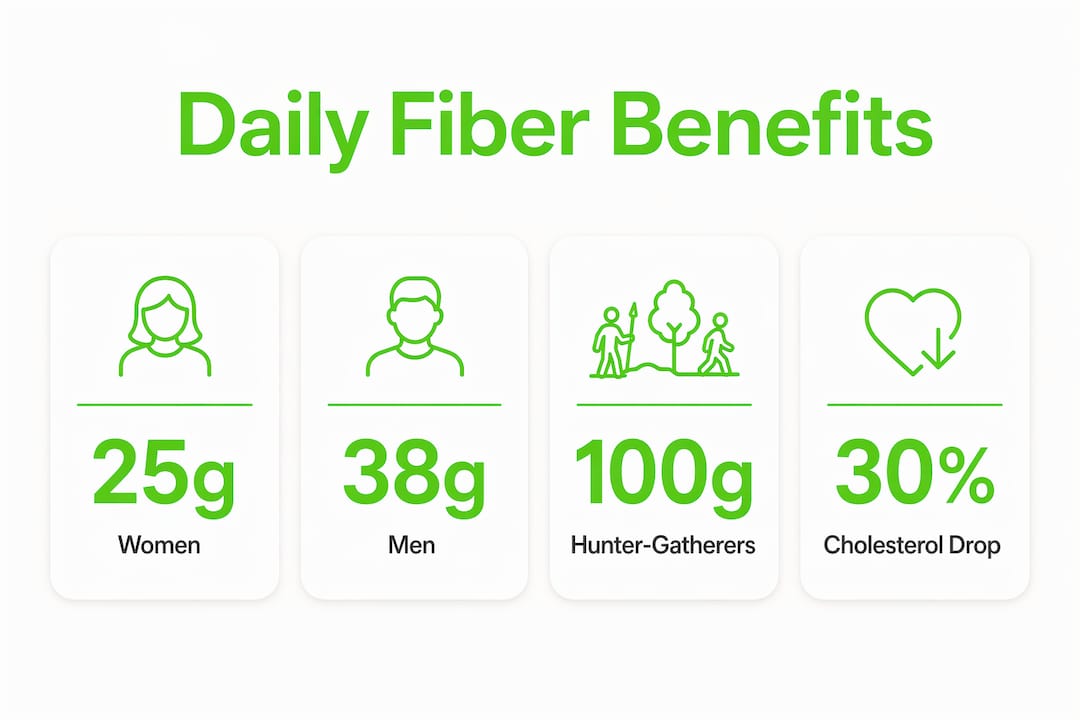
Some populations consume far more. Hadza hunter-gatherers in Tanzania eat between 100 and 150 grams of fibre daily, with excellent metabolic health and no adverse effects. This suggests the human gut is capable of handling significantly more fibre than most Western diets provide, provided the increase happens gradually.
| Group | Daily fibre target | Key benefit |
|---|---|---|
| Adult women | 25g | Digestive regularity, blood sugar control |
| Adult men | 38g | Cardiovascular protection, gut microbiome diversity |
| Active adults | 14g per 1,000 kcal | Proportional to energy intake |
| Hadza hunter-gatherers | 100–150g | Benchmark for ancestral gut health |
Individual needs vary based on age, activity level, and gut tolerance. Older adults often need to pay closer attention to fibre intake as gut motility slows with age. People with irritable bowel syndrome may need to moderate certain fibre types, particularly fermentable ones, under professional guidance.
Pro Tip: Track your fibre intake for three days using a food diary app. Most people are surprised to find they are consuming fewer than 15 grams daily. Knowing your baseline makes it far easier to close the gap gradually.
Which foods are richest in fibre and how do you eat more of them?
Whole plant foods are the most reliable source of dietary fibre. Nutrition experts strongly prefer whole foods over isolated supplements because they deliver a complex, synergistic nutritional profile that supplements cannot replicate. A fibre supplement gives you one compound; a bowl of lentils gives you fibre, protein, iron, folate, and a range of phytonutrients simultaneously.
The richest fibre sources span several food categories:
- Legumes: lentils, chickpeas, black beans, and kidney beans (6–9g per 100g cooked)
- Whole grains: oats, barley, quinoa, wholemeal bread, and brown rice
- Fruits: avocados, pears, raspberries, and blueberries
- Vegetables: broccoli, carrots, sweet potato, and artichokes
- Nuts and seeds: chia seeds, flaxseeds, almonds, and walnuts
Chia seeds deserve particular attention. Two tablespoons deliver around 10 grams of fibre, mostly soluble, and they absorb water to form a gel that slows digestion and prolongs satiety. Avocados are another underrated source, providing both soluble and insoluble fibre alongside heart-healthy monounsaturated fats.
Dietary variety is not just a preference. It is a biological requirement. Different plant fibres feed different strains of gut bacteria. Eating the same three vegetables every week limits microbial diversity. Rotating your fibre-rich vegan foods across the week builds a more diverse and protective gut microbiome.
Whole foods vs. fibre supplements: a practical comparison
| Approach | Fibre types delivered | Additional nutrients | Gut microbiome impact |
|---|---|---|---|
| Whole plant foods | Soluble and insoluble | Vitamins, minerals, phytonutrients | High diversity benefit |
| Isolated fibre supplements | Typically one type | Minimal | Limited diversity benefit |
What are the health benefits of fibre beyond digestion?
Fibre’s role extends well beyond keeping your bowels regular. Daily fibre intake of 25–30 grams is linked to reducing death from cardiovascular disease by up to one-third. That is a significant reduction achievable through diet alone, without medication.
The cardiovascular benefit works through several mechanisms. Soluble fibre binds bile acids in the gut, forcing the liver to draw on circulating LDL cholesterol to produce more bile. The result is a measurable drop in blood LDL levels. Fibre also reduces blood pressure modestly, partly through its anti-inflammatory effects and partly through the gut-heart axis mediated by SCFAs.
Blood sugar regulation is equally well established. Soluble fibre slows the absorption of glucose into the bloodstream, blunting post-meal blood sugar spikes. This reduces the demand on the pancreas to produce insulin and lowers the long-term risk of type 2 diabetes. People who eat foods for better digestion consistently tend to show more stable fasting glucose levels.
Appetite control is another underappreciated benefit. Fibre increases the volume of food in the stomach and slows gastric emptying, both of which prolong the feeling of fullness. This is not a minor effect. High-fibre meals consistently reduce total calorie intake at subsequent meals, making fibre one of the most practical tools for weight management.
Key health benefits beyond digestion include:
- Cardiovascular protection through LDL reduction and blood pressure support
- Blood sugar stabilisation reducing type 2 diabetes risk
- Appetite regulation supporting healthy weight management
- Systemic anti-inflammatory effects mediated by gut-derived SCFAs
- Reduced colorectal cancer risk through faster bowel transit and SCFA production
How to safely increase your fibre intake
The single most common mistake when increasing fibre intake is going too fast. Increasing fibre gradually while maintaining good hydration avoids bloating, gas, and constipation. Your gut microbiome needs time to adapt to a higher fibre load. Rushing the process overwhelms the bacteria responsible for fermentation and produces uncomfortable side effects.
A sensible approach is to add roughly 5 grams of fibre per week until you reach your target. That might mean swapping white bread for wholemeal on day one, adding a portion of lentils to dinner by the end of the week, and introducing chia seeds to your breakfast the following week.
Hydration is non-negotiable. Insufficient water can turn fibre into immovable masses in the gut, worsening the very constipation you are trying to prevent. Aim for at least 1.5–2 litres of water daily as you increase your fibre intake.
Common pitfalls to avoid:
- Relying on supplements instead of whole foods, which lack the nutritional synergy of plant-based sources
- Increasing too quickly without allowing gut bacteria time to adapt
- Neglecting hydration, which makes fibre counterproductive
- Eating the same sources repeatedly, which limits microbial diversity
Pro Tip: Swap one refined grain for a whole grain each day for a week before adding a new fibre source. This pacing gives your gut microbiome time to adjust and keeps digestive discomfort to a minimum.
Key takeaways
Dietary fibre is the single most underconsumed nutrient in modern Western diets, and closing that gap delivers measurable benefits for gut health, heart health, blood sugar, and long-term disease prevention.
| Point | Details |
|---|---|
| Daily fibre targets | Women need 25g daily; men need 38g, based on 14g per 1,000 calories. |
| Two types, two roles | Soluble fibre lowers cholesterol and stabilises blood sugar; insoluble fibre improves bowel regularity. |
| Gut microbiome fuel | Fibre fermentation produces SCFAs that reduce inflammation and protect against chronic disease. |
| Whole foods over supplements | Whole plant foods deliver fibre alongside vitamins, minerals, and phytonutrients that supplements cannot replicate. |
| Increase gradually | Add fibre slowly over several weeks and drink at least 1.5–2 litres of water daily to avoid digestive discomfort. |
Why I think we are still getting fibre badly wrong
Fibre is not officially classified as an essential nutrient, despite decades of evidence linking it to reduced cardiovascular mortality, lower cancer risk, and better metabolic health. That classification gap matters. It shapes public health messaging, clinical priorities, and food labelling. Until fibre is treated with the same urgency as vitamins and minerals, most people will continue to under-consume it.
The carbohydrate debate has made this worse. Demonising carbohydrates broadly has led many health-conscious people to cut out whole grains, legumes, and fruit, which are precisely the foods that deliver the most fibre. The result is a population that avoids refined sugar (sensible) but also avoids lentils and oats (counterproductive). These are not the same thing, and conflating them has real health consequences.
What I have observed consistently is that the people who struggle most with energy, digestion, and weight are often the ones eating the least variety of plant foods. Not because they are eating badly in the conventional sense, but because they have been told that carbohydrates are the enemy. Fibre-rich whole foods are not a carbohydrate problem. They are the solution to one.
The shift needed is not dramatic. Eating 30 different plant foods per week, a target supported by gut microbiome research, is achievable with modest dietary changes. Add a handful of seeds to your breakfast. Swap white rice for a grain mix. Eat the skin on your apple. These are not sacrifices. They are upgrades.
— Arjit
Naturessoulshop: your source for organic, fibre-rich whole foods
Getting enough fibre starts with having the right foods in your kitchen. Naturessoulshop stocks a wide range of organic, clean-ingredient products designed to support exactly this kind of diet.

From jowar-based snacks and red lentil fettuccine to nut and seed crackers, the range covers whole grains, legumes, seeds, and plant-based staples. Every product is free from artificial additives and made with ingredients you can recognise. Browse the full organic food store to find fibre-rich options across every meal of the day, whether you are building a high-fibre breakfast, a gut-friendly lunch, or a plant-forward dinner.
FAQ
What is dietary fibre and why does it matter?
Dietary fibre is the indigestible carbohydrate found in plant foods that feeds gut bacteria, regulates digestion, and reduces the risk of chronic diseases including heart disease and type 2 diabetes. Unlike other nutrients, fibre passes largely undigested to the colon, where it performs its most important work.
How much fibre should I eat per day?
Women need approximately 25 grams of fibre daily and men need approximately 38 grams, based on a target of 14 grams per 1,000 calories consumed. Most people in Western countries consume fewer than 20 grams daily.
What are the best food sources of fibre?
Legumes, whole grains, fruits such as pears and avocados, vegetables such as broccoli and sweet potato, and seeds such as chia and flaxseed are among the richest sources. Whole plant foods are always preferable to isolated fibre supplements.
Can eating too much fibre cause problems?
Increasing fibre too quickly causes bloating, gas, and constipation. Gradual increases paired with adequate hydration allow the gut microbiome to adapt without discomfort. Evidence from populations like the Hadza suggests very high intakes are safe when built up over time.
Does fibre help with weight management?
Fibre slows gastric emptying and increases meal volume, both of which prolong fullness and reduce total calorie intake at subsequent meals. This makes high-fibre diets one of the most practical and evidence-backed approaches to managing body weight without calorie restriction.


