


TL;DR:
- Cold pressed oils are extracted mechanically at low temperatures, preserving nutrients like polyphenols, vitamin E, and carotenoids. They offer superior antioxidant and anti-inflammatory benefits, supporting heart health and skin repair, compared to refined oils. Use high smoke point cold pressed oils for cooking and raw-use oils for salads and skin, storing them in dark bottles to maintain freshness.
Cold pressed oils are defined as oils extracted mechanically at low temperatures, without heat or chemical solvents, preserving the full spectrum of nutrients present in the source seed or fruit. The benefits of cold pressed oils are substantial: they retain polyphenols, vitamin E, carotenoids, and natural flavour compounds that refined oils lose during industrial processing. These nutrients directly support heart health, reduce inflammation, and nourish skin at a cellular level. Whether you cook with them, apply them topically, or take them as supplements, cold pressed oils deliver a nutritional profile that refined alternatives simply cannot match.
What nutritional advantages do cold pressed oils offer over refined oils?
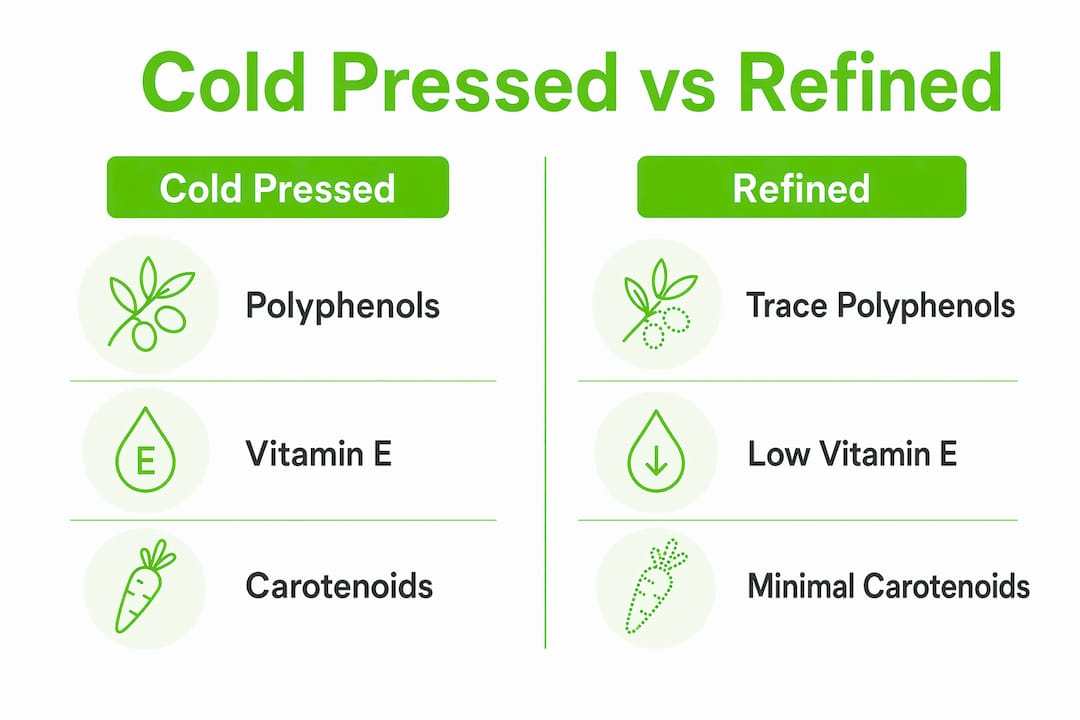
Cold pressing preserves key antioxidants that refining destroys. Polyphenols (200–500mg/kg), vitamin E, and carotenoids survive the mechanical extraction process intact. Refining, by contrast, uses high heat and chemical solvents that strip these compounds away. In some refined oils, this process also generates small amounts of trans fats, which carry well-documented cardiovascular risks.
The practical consequence is significant. Cold pressed oils carry antioxidant and anti-inflammatory compounds that support heart and brain health in ways that refined oils cannot. Vitamin E, for example, protects cell membranes from oxidative damage. Polyphenols reduce systemic inflammation, which underpins conditions from arthritis to cardiovascular disease.
One trade-off does exist. Refining raises smoke point by removing free fatty acids and phospholipids, typically by 20–50°C compared to cold pressed equivalents. A lower smoke point is not a defect. It is a sign of purity. An oil that smokes at a lower temperature does so because it still contains the bioactive compounds that make it worth eating.
The table below shows how nutrient levels shift between cold pressed and refined versions of the same oil.
| Nutrient | Cold pressed oil | Refined oil |
|---|---|---|
| Polyphenols | 200–500mg/kg | Trace to none |
| Vitamin E | High | Significantly reduced |
| Carotenoids | Present | Largely removed |
| Natural flavour | Full and distinct | Neutral or absent |
| Trans fats | None | Trace amounts possible |
Pro Tip: Choose your oil based on cooking temperature. Use cold pressed oils for medium heat, finishing, and dressings. Reserve refined oils for high-heat frying only when necessary.
Which cold pressed oils are best for cooking and which for raw use?
Not all cold pressed oils behave the same way under heat. The right choice depends on the oil’s fatty acid composition and smoke point.

Cold pressed mustard oil is one of the strongest performers for cooking. It retains allyl isothiocyanate, omega-3 fatty acids, and has a smoke point of approximately 250°C, making it suitable for most everyday cooking without nutritional compromise. Refining destroys both its pungency and its omega-3 content entirely. Cold pressed sesame and groundnut oil also handle medium heat well, contributing nutty flavour notes that refined versions cannot replicate.
High antioxidant oils like sesame and mustard demonstrate good oxidative stability despite their relatively lower smoke points, which makes them safe for medium-heat cooking. Their antioxidant content actually slows the degradation process. This is the opposite of what most people assume about lower-smoke-point oils.
Highly polyunsaturated oils are a different matter. Linseed and evening primrose oils are for raw use only. Heat degrades their beneficial omega-3 fatty acids and can form harmful compounds. These oils belong in smoothies, salad dressings, or taken directly by the spoonful.
Here is a practical breakdown by oil type and recommended use:
- Cold pressed mustard oil (smoke point ~250°C): everyday cooking, stir-frying, marinades; rich in omega-3s and allyl isothiocyanate
- Cold pressed sesame oil (medium smoke point): medium-heat cooking, Asian-style dishes, finishing; rich in sesamol and lignans
- Cold pressed coconut oil (medium smoke point): baking, medium-heat cooking; rich in medium-chain triglycerides
- Cold pressed groundnut oil (medium smoke point): sautéing, dressings; rich in resveratrol and vitamin E
- Cold pressed linseed oil (low smoke point): raw use only, dressings, smoothies; highest plant-based omega-3 content
- Cold pressed hemp seed oil (low smoke point): raw use only, finishing; balanced omega-3 to omega-6 ratio
- Cold pressed evening primrose oil (low smoke point): raw use or supplementation; rich in gamma-linolenic acid
Pro Tip: Store cold pressed oils in dark glass bottles away from heat and light. Active compounds degrade faster in clear containers or warm cupboards, so a cool, dark shelf extends freshness considerably.
How do cold pressed oils benefit your skin and overall wellness?
Cold pressed oils work on skin through two mechanisms: antioxidant protection and fatty acid repair. Vitamin E and polyphenols neutralise free radicals that cause premature ageing and inflammation. Fatty acids, particularly linoleic acid and oleic acid, reinforce the skin barrier and support cell regeneration.
Cold pressed black cumin oil, derived from Nigella sativa, is one of the most studied oils for immune and skin applications. It is rich in thymoquinone, a potent antioxidant shown to modulate immunity and reduce allergy symptoms. Topically, it calms inflammatory skin conditions including eczema and psoriasis. Internally, it supports immune resilience.
Cold pressed hemp seed oil, available from Naturessoulshop, provides a near-ideal omega-3 to omega-6 ratio for skin health. It absorbs quickly without clogging pores, making it suitable for oily and combination skin types. Avocado oil, cold pressed and unrefined, delivers oleic acid and vitamin D, which penetrate deeply to repair dry or damaged skin.
Common cold pressed oils used in skincare and their primary benefits:
- Hemp seed oil: balances sebum, soothes inflammation, suits all skin types
- Black cumin oil: antimicrobial, anti-inflammatory, supports eczema and acne-prone skin
- Avocado oil: deeply moisturising, rich in oleic acid and vitamin D, suits dry skin
- Jojoba oil: mimics skin’s natural sebum, regulates oil production, suits oily skin
- Rosehip oil: high in vitamin C and beta-carotene, reduces scarring and hyperpigmentation
- Evening primrose oil: gamma-linolenic acid supports hormonal skin conditions
Beyond skin, the dietary benefits of cold pressed oils extend to cardiovascular and neurological health. Regular consumption of oils rich in polyphenols and omega-3s reduces markers of systemic inflammation. This matters for long-term conditions including high cholesterol, cognitive decline, and joint inflammation.
What should you look for when choosing and storing cold pressed oils?
Quality varies widely between products labelled as cold pressed. The label alone is not sufficient. Look for oils that specify mechanical extraction, low-temperature processing, and packaging in dark glass bottles. These three factors together indicate that the oil has been handled correctly from seed to shelf.
Shelf life is shorter than refined oils. Cold pressed oils last 6–12 months and must be stored away from heat and light to preserve their antioxidant integrity. Once opened, use them within three months for best nutritional quality. A rancid smell or bitter taste signals oxidation, and an oxidised oil offers no health benefit.
A two-oil system is the most practical approach for most households. Use a cold pressed oil with a higher smoke point, such as mustard or sesame, for everyday cooking. Keep a raw-use oil, such as linseed or hemp seed, for dressings and finishing. This approach covers both nutritional breadth and practical cooking needs without compromise.
Best practices for purchase, storage, and use:
- Check the extraction method. The label should state “cold pressed” or “mechanically extracted.” Avoid oils that only say “natural” or “pure” without specifying the method.
- Choose dark glass packaging. Light degrades polyphenols and vitamin E rapidly. Plastic bottles offer no protection.
- Check the harvest or pressing date. Fresher is better. An oil pressed six months ago has already lost some potency.
- Store in a cool, dark place. A kitchen cupboard away from the hob is ideal. Avoid the fridge for most oils, as it can cause cloudiness without improving stability.
- Match the oil to the cooking temperature. Use highly polyunsaturated oils only for raw applications. Use oils with higher antioxidant content for medium-heat cooking.
- Buy in quantities you will use within three months. Larger bottles are economical but only if the oil stays fresh.
Key takeaways
Cold pressed oils retain the antioxidants, polyphenols, and fatty acids that refined oils lose, making them the superior choice for both cooking and skincare when matched correctly to temperature and use.
| Point | Details |
|---|---|
| Nutrient retention | Cold pressing preserves polyphenols, vitamin E, and carotenoids that refining removes. |
| Smoke point trade-off | A lower smoke point signals purity, not poor quality; match oil to cooking temperature. |
| Raw-use oils | Linseed, hemp seed, and evening primrose oils degrade under heat and belong in dressings only. |
| Skincare applications | Oils like black cumin, hemp seed, and rosehip deliver antioxidants and fatty acids directly to skin. |
| Storage matters | Dark glass bottles and cool, dark storage preserve freshness for 6–12 months after pressing. |
Why I think most people are using cold pressed oils wrong
Most people buy a cold pressed oil, feel good about the purchase, and then use it exactly as they would a refined oil. They fry with linseed oil, store sesame oil next to the hob, and wonder why the flavour goes flat within weeks. The oil was never the problem. The handling was.
The insight that changed how I think about this is treating the smoke point as a purity marker rather than a limitation. When I stopped trying to make cold pressed oils behave like refined ones, and started using them where they actually excel, the difference in flavour and the way food felt after eating it became obvious. A cold pressed mustard oil used in a medium-heat dal, or a cold pressed sesame oil drizzled over roasted vegetables at the end of cooking, delivers something a refined oil simply cannot.
I also think the two-oil system is underrated. Most households resist it because it feels complicated. In practice, it takes thirty seconds to decide which oil fits the dish. The nutritional breadth you get from rotating between a cooking oil and a raw-use oil is worth that thirty seconds every time.
The one thing I would push back on is the idea that cold pressed oils are only for people with a particular budget or lifestyle. A 5-litre bottle of cold pressed mustard oil from a quality source costs very little more per use than its refined equivalent. The gap in nutritional value is far larger than the gap in price.
— Arjit
Cold pressed oils from Naturessoulshop
Naturessoulshop stocks a curated range of cold pressed oils for cooking, skincare, and daily wellness. Every oil is mechanically extracted and packaged to preserve the antioxidants and fatty acids that make cold pressing worth choosing.

The range covers cold pressed mustard, groundnut, hemp seed, and more, sourced from organic producers who prioritise clean ingredients and transparent processing. For those building a broader wellness routine, Naturessoulshop also carries supplements targeting cholesterol regulation and cardiovascular health, which pair naturally with a diet rich in cold pressed oils. Browse the full selection at the Naturessoulshop online store and find the oils that fit your cooking and skincare needs.
FAQ
What makes cold pressed oils healthier than refined oils?
Cold pressed oils retain polyphenols, vitamin E, and carotenoids that refining removes through heat and chemical solvents. These compounds provide antioxidant and anti-inflammatory effects that support heart, brain, and skin health.
Can you cook with cold pressed oils?
Cold pressed oils with higher smoke points, such as mustard (~250°C) and sesame, are suitable for medium-heat cooking. Highly polyunsaturated oils like linseed and evening primrose should only be used raw, as heat degrades their fatty acids.
How long do cold pressed oils last?
Cold pressed oils last 6–12 months when stored in dark glass bottles away from heat and light. Once opened, use within three months for the best nutritional quality.
Which cold pressed oil is best for skin?
Hemp seed oil, black cumin oil, and rosehip oil are among the most effective for skin. Each delivers a different combination of fatty acids and antioxidants suited to specific skin concerns, from dryness to inflammation.
Are cold pressed oils worth the higher price?
Cold pressed oils cost more per litre than refined alternatives, but the nutritional gap is substantial. For everyday cooking oils like mustard or groundnut, the price difference per use is small relative to the benefit of retaining omega-3s, polyphenols, and vitamin E.
Recommended
- Are cold pressed oils better for your health? – naturessoulshop
- Mustard Oil | Organic - Cold pressed & Edible - Conscious Food - 5000m – naturessoulshop
- Safflower Seed Oil | Cold Pressed - Elworld Organic - 1000ml – naturessoulshop
- Sunflower Oil | Cold Pressed - Organic - Edible - Conscious Food - 500 – naturessoulshop


