


TL;DR:
- Eating a plant-forward diet rich in fiber and nutrients improves sleep quality and duration.
- Timing meals two to three hours before bed enhances sleep efficiency and reduces wakefulness during the night.
What you eat directly determines how well you sleep. The connection between diet and sleep quality is not a matter of opinion. Research across thousands of person-nights confirms that dietary composition, meal timing, and eating patterns shape sleep architecture in measurable ways. Specific nutrients influence the production of melatonin and serotonin, while the timing of your last meal affects how long you stay asleep and how deeply you rest. If you have been struggling with broken nights or early waking, your plate deserves as much attention as your pillow.
How food affects sleep: the nutrients that matter most
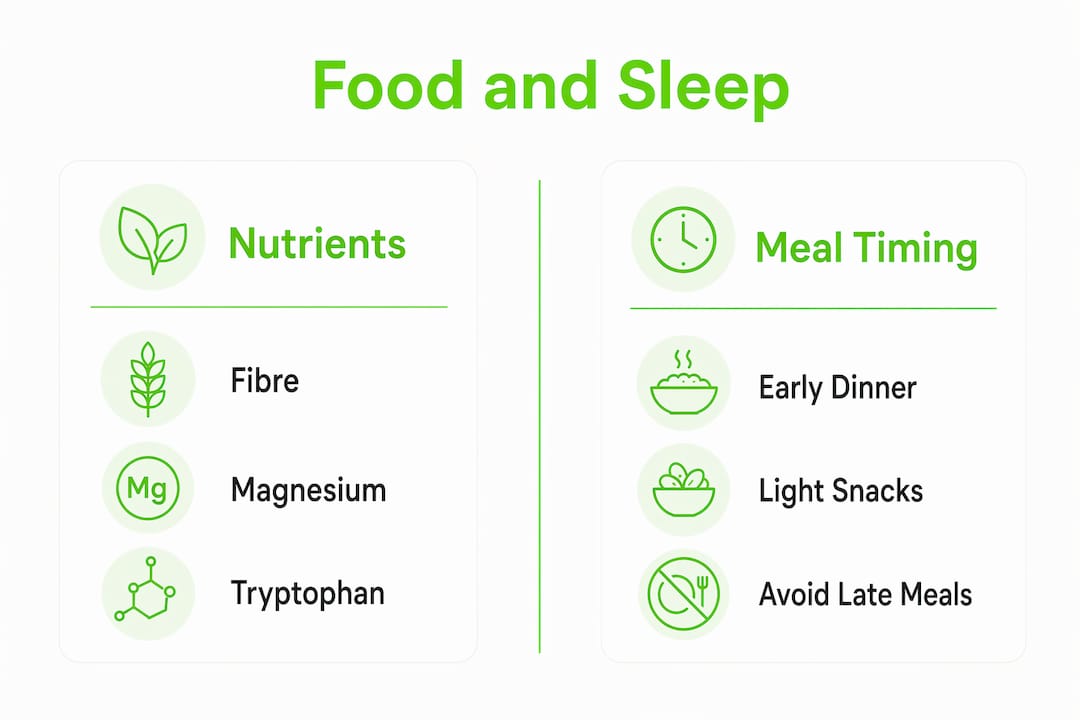
Certain foods support better sleep because they supply the raw materials your brain needs to produce sleep-regulating chemicals. Tryptophan, magnesium, and vitamin B6 are the three micronutrients most directly linked to melatonin and serotonin synthesis. Without adequate levels of these, the brain’s ability to signal sleep onset weakens.
A plant-forward diet delivers all three consistently. Foods that help sleep include:
- Leafy greens and legumes (spinach, lentils, chickpeas): rich in magnesium, which calms the nervous system and supports deeper sleep stages
- Whole grains (oats, brown rice, quinoa): provide complex carbohydrates that aid tryptophan uptake across the blood-brain barrier
- Nuts and seeds (walnuts, pumpkin seeds, almonds): supply both magnesium and tryptophan in concentrated form
- Oily fish (salmon, mackerel, sardines): linked to improved sleep continuity through omega-3 fatty acids and vitamin D
- Fruits (kiwi, cherries, bananas): contain natural melatonin precursors and potassium that supports muscle relaxation
The evidence is specific. Higher daily fibre density increases time spent in deep sleep by 0.59 percentage points and REM sleep by 0.76 percentage points, while also reducing nocturnal heart rate by approximately 1.14 beats per minute. That reduction in heart rate matters because a lower resting heart rate during sleep is associated with more restorative rest and better cardiovascular recovery overnight.
Contrast this with high-fat, high-cholesterol, and high-protein evening meals. Fat and red meat at dinner correlate with poorer subsequent sleep across diverse metabolic backgrounds. The mechanism is partly digestive: heavy fat loads slow gastric emptying, keeping the body in an active metabolic state when it should be winding down.
Pro Tip: Prioritise dietary diversity over fixating on one “sleep superfood.” A wide range of plant-based whole foods, eaten consistently, produces more reliable sleep gains than any single ingredient.
Does meal timing affect how long you sleep?
Meal timing is the most underestimated factor in diet and sleep quality. Eating dinner just one hour before bedtime significantly reduces total sleep time and sleep efficiency in healthy adults. The same study found increases in wake-after-sleep-onset (WASO) and the arousal index, meaning people woke more often and spent more time lying awake.
The key metrics affected by late eating include:
- Total sleep time: reduced when dinner falls within one hour of bedtime
- Sleep efficiency: the ratio of time asleep to time in bed drops measurably
- Wake-after-sleep-onset (WASO): the total minutes spent awake after initially falling asleep increases
- Arousal index: the frequency of brief awakenings per hour of sleep rises
- Nocturnal heart rate: elevated by late heavy meals, keeping the body in a higher metabolic state
Late heavy meals disrupt sleep continuity regardless of food quality. This is the critical insight most people miss. You can eat the most nutritious dinner imaginable, but if it lands on your plate 45 minutes before you turn off the light, your sleep will suffer. Timing overrides composition when the gap is too short.
The practical implication is clear. Aim to finish your evening meal at least two to three hours before bed. This window allows gastric emptying to progress, core body temperature to begin its natural decline, and insulin levels to stabilise. All three processes are prerequisites for efficient sleep onset.

Pro Tip: If you need a nighttime snack for sleep, choose something small and low in fat. A small handful of walnuts, a banana, or a few oatcakes with nut butter provide tryptophan and complex carbohydrates without burdening digestion.
What is the bidirectional relationship between diet and sleep?
The relationship between eating habits and sleep runs in both directions. Poor sleep does not just follow poor diet. It actively causes it.
- Sleep deprivation increases appetite hormones. A short or broken night raises ghrelin (the hunger hormone) and suppresses leptin (the satiety hormone). The result is stronger cravings, particularly for high-carbohydrate and high-energy foods.
- Poor sleep drives higher carbohydrate intake. Sleep quality directly influences next-day food choices, with poor sleepers consuming more carbohydrates and total energy the following day.
- The cycle reinforces itself. Higher carbohydrate and sugar intake in the evening can initially aid sleep onset but disrupts sleep architecture later in the night, leading to another poor night and another day of compensatory eating.
- Metabolic health sits at the centre. The bidirectional dynamic has direct implications for weight management and blood sugar regulation. Poor sleep and poor diet together accelerate metabolic dysfunction faster than either factor alone.
The practical takeaway is that improving sleep can be a critical strategy for managing dietary habits long-term. People who address sleep quality first often find that their food choices improve naturally, without deliberate restriction. This is not a secondary benefit. It is a primary mechanism worth building a wellness plan around.
For those interested in improving sleep naturally, dietary change and sleep hygiene work best as a combined approach rather than separate interventions.
How does a plant-forward diet improve sleep quality?
The planetary health diet is a dietary pattern defined by high intake of vegetables, fruits, whole grains, legumes, and nuts, with limited animal products and processed foods. It was developed with both human health and environmental sustainability in mind. New evidence shows it also produces measurable improvements in sleep.
Adherence to the planetary health diet is associated with better sleep quality (OR=1.35) and adequate sleep duration (OR=1.36). Each incremental increase in adherence improves the odds of sleeping well and sleeping long enough. The effect size is clinically meaningful.
The biological mechanisms are specific. Tryptophan-induced melatonin synthesis and gut microbiome modulation are the two primary pathways. Plant-rich diets feed beneficial gut bacteria, which reduce systemic inflammation. Lower inflammation correlates with better sleep architecture, particularly in older adults.
The Mediterranean diet and DASH diet show similar patterns. The Mediterranean diet correlates with longer sleep duration and fewer sleep disorders, while the DASH diet reduces daytime sleepiness. Both share the plant-forward, high-fibre foundation of the planetary health diet.
| Dietary pattern | Key sleep benefit | Primary mechanism |
|---|---|---|
| Planetary health diet | Better sleep quality and adequate duration | Tryptophan synthesis, gut microbiome support |
| Mediterranean diet | Longer sleep duration, fewer sleep disorders | Anti-inflammatory fats, high fibre |
| DASH diet | Reduced daytime sleepiness | Lower blood pressure, reduced sleep-disordered breathing |
| High-fat, high-protein diet | Poorer sleep quality | Slowed digestion, elevated nocturnal heart rate |
Dietary variety and plant-based intake function as modifiable lifestyle interventions, particularly for people with depressive symptoms or disrupted sleep patterns. The evidence is especially strong in women, where dietary diversity shows a pronounced positive effect on sleep quality. Understanding the difference between plant-based and vegan approaches helps in choosing the right dietary pattern for your lifestyle and sleep goals.
Key takeaways
Diet shapes sleep quality through both nutrient composition and meal timing, with plant-forward eating patterns and a two-to-three-hour gap before bed producing the most consistent improvements.
| Point | Details |
|---|---|
| Fibre improves sleep architecture | Higher daily fibre intake increases deep sleep and REM sleep while lowering nocturnal heart rate. |
| Meal timing matters more than most realise | Eating within one hour of bedtime reduces total sleep time and increases night-time waking. |
| Diet and sleep are bidirectional | Poor sleep drives higher carbohydrate intake the next day, creating a self-reinforcing cycle. |
| Plant-forward diets outperform others | The planetary health diet improves odds of good sleep quality and adequate sleep duration. |
| Dietary diversity is the practical goal | A wide variety of whole plant foods delivers more consistent sleep benefits than any single ingredient. |
Why I think we are all looking at this the wrong way
Most people searching for sleep-friendly foods are looking for a shortcut. They want the one food, the one supplement, the one evening ritual that will fix their nights. I understand the appeal. But the research does not support that framing.
What the evidence actually shows is that sleep responds to patterns, not ingredients. The person eating a consistent, plant-rich diet with dinner finished by 7:30 PM will sleep better than the person who eats poorly all day and then adds a handful of walnuts before bed. The walnuts are not the variable. The overall pattern is.
The other misconception I see constantly is the idea that sleep and diet are separate problems to solve separately. They are not. A bad night makes you reach for sugar and refined carbohydrates the next day. Those choices make the following night worse. The cycle is real, and it is well-documented. Breaking it requires addressing both sides at once, not alternating between “I’m fixing my diet this week” and “I’m working on my sleep next week.”
The most underrated piece of advice I can offer is this: eat more plants, eat them earlier, and eat a wide variety of them. That is not a simplification. That is what the data says.
— Arjit
Sleep better with Naturessoulshop’s organic range
Good sleep starts with what you put in your shopping basket. Naturessoulshop stocks a wide range of organic, plant-based groceries chosen for clean ingredients and genuine nutritional quality. From high-fibre whole grains and legumes to nuts, seeds, and fresh produce, the range covers every food group linked to better sleep architecture.

Whether you are building a more plant-forward evening meal or looking for low-sugar nighttime snacks that support rather than disrupt your rest, Naturessoulshop makes it straightforward to shop by dietary need. The range includes vegan, gluten-free, and dairy-free options across dry grocery, fresh produce, and home care. Clean ingredients, no compromise.
FAQ
Does what you eat really affect how well you sleep?
Yes. Dietary composition directly influences sleep architecture. Higher fibre intake increases deep sleep and REM sleep, while high-fat and high-protein evening meals correlate with poorer sleep quality.
What are the best foods for restful sleep?
Foods rich in tryptophan, magnesium, and vitamin B6 support sleep most reliably. These include leafy greens, whole grains, nuts, seeds, oily fish, and fruits such as kiwi and cherries.
How long before bed should I stop eating?
Finish your evening meal at least two to three hours before bedtime. Eating within one hour of bed measurably reduces total sleep time and increases night-time waking.
Can poor sleep make my diet worse?
Yes. Poor sleep increases next-day carbohydrate and energy intake, creating a cycle where disrupted rest leads to poorer food choices, which in turn disrupts the following night’s sleep.
Is a plant-based diet better for sleep than a meat-heavy one?
The evidence favours plant-forward patterns. The planetary health diet is associated with a 35% improvement in the odds of good sleep quality and a 36% improvement in the odds of sleeping an adequate duration.


