


Walking down the supermarket aisle, you spot two jars of honey. One proudly displays ‘natural’ across its label, whilst the other sits quietly without fanfare. Your hand reaches for the natural option almost instinctively. Yet here’s the catch: neither label guarantees what you think it does. Food labelling shapes every purchasing decision you make, but confusion between terms like ‘organic’ and ‘natural’ often leads to choices that don’t align with your health goals. This guide cuts through the marketing noise to reveal what these labels truly mean, how they influence your behaviour, and practical strategies to shop smarter for genuinely clean, wholesome foods.
Table of Contents
- Understanding Food Labelling: What The Terms Really Mean
- How Food Labelling Affects Consumer Choices And Health Outcomes
- Emerging Labelling Technologies And Evolving Regulations In 2026
- Practical Tips For Smart Shopping Using Food Labels
- Discover Trusted Organic Products For Your Healthy Lifestyle
- Frequently Asked Questions
Key takeaways
| Point | Details |
|---|---|
| Label definitions matter | ‘Natural’ lacks legal standards whilst organic follows strict certification rules |
| Health halos mislead | Organic labels can cause calorie underestimation even amongst informed shoppers |
| Warning labels work | Nutritional alerts reduce purchases of unhealthy items, especially sugary drinks |
| Technology improves trust | QR codes and digital labels provide detailed product information instantly |
| Regulations tighten | New EU directives combat greenwashing and require verified environmental claims |
Understanding food labelling: what the terms really mean
The word ‘natural’ appears on countless products, yet it carries no uniform legal definition across most markets. Manufacturers exploit this ambiguity freely, slapping the term onto products that may contain processed ingredients or synthetic additives. You might assume natural means minimally processed or free from chemicals, but no regulatory body enforces these expectations. This creates a perfect storm for marketing teams who understand the psychological pull of the word without facing consequences for its misuse.
Organic labelling operates under entirely different rules. In the European Union, organic production follows strict standards governing everything from soil management to animal welfare. The USDA Organic seal in North America represents the most trusted standard amongst health-conscious consumers, requiring rigorous third-party verification before products can display the certification. These programmes mandate detailed record keeping, regular inspections, and adherence to approved substance lists that exclude synthetic pesticides and genetically modified organisms.
When you purchase certified organic products, you’re buying into a transparent system. Farmers must demonstrate compliance with organic practices for at least three years before earning certification. Processing facilities face equally stringent requirements, ensuring organic integrity from field to shelf. Understanding the distinction between natural and artificial flavours becomes crucial here, as both can appear in products marketed as natural, whilst organic certification restricts flavouring sources significantly.
Consumers increasingly prioritise ‘free from’ claims when selecting foods. These labels promise products without specific ingredients like pesticides, hormones, antibiotics, or GMOs. Whilst organic certification inherently covers many of these exclusions, standalone ‘free from’ claims lack consistent oversight. You’ll find products labelled hormone-free or antibiotic-free that meet basic legal requirements but don’t necessarily follow organic production methods. The food labelling landscape in India and other markets continues evolving, with governments recognising the need for clearer consumer protection.
Pro Tip: Always check the full ingredient list rather than relying solely on front-of-pack claims. A product labelled natural might list artificial colours or preservatives further down the panel.
Key label types and what they guarantee:
- Organic: Certified production methods, restricted inputs, verified by third parties
- Natural: No standard definition, minimal regulatory oversight, often marketing-driven
- Free from: Specific ingredient exclusions, variable verification depending on claim
- Non-GMO: No genetically modified organisms, may or may not be organic
How food labelling affects consumer choices and health outcomes
Research consistently demonstrates that nutrition labelling reduces calorie intake and encourages healthier selections across diverse populations. When you can see exactly how much sugar, sodium, or saturated fat a product contains, you’re empowered to make informed comparisons. Front-of-pack warning labels prove even more effective, particularly for sugar-sweetened beverages where purchases decrease notably amongst low-income groups who face higher rates of diet-related diseases.
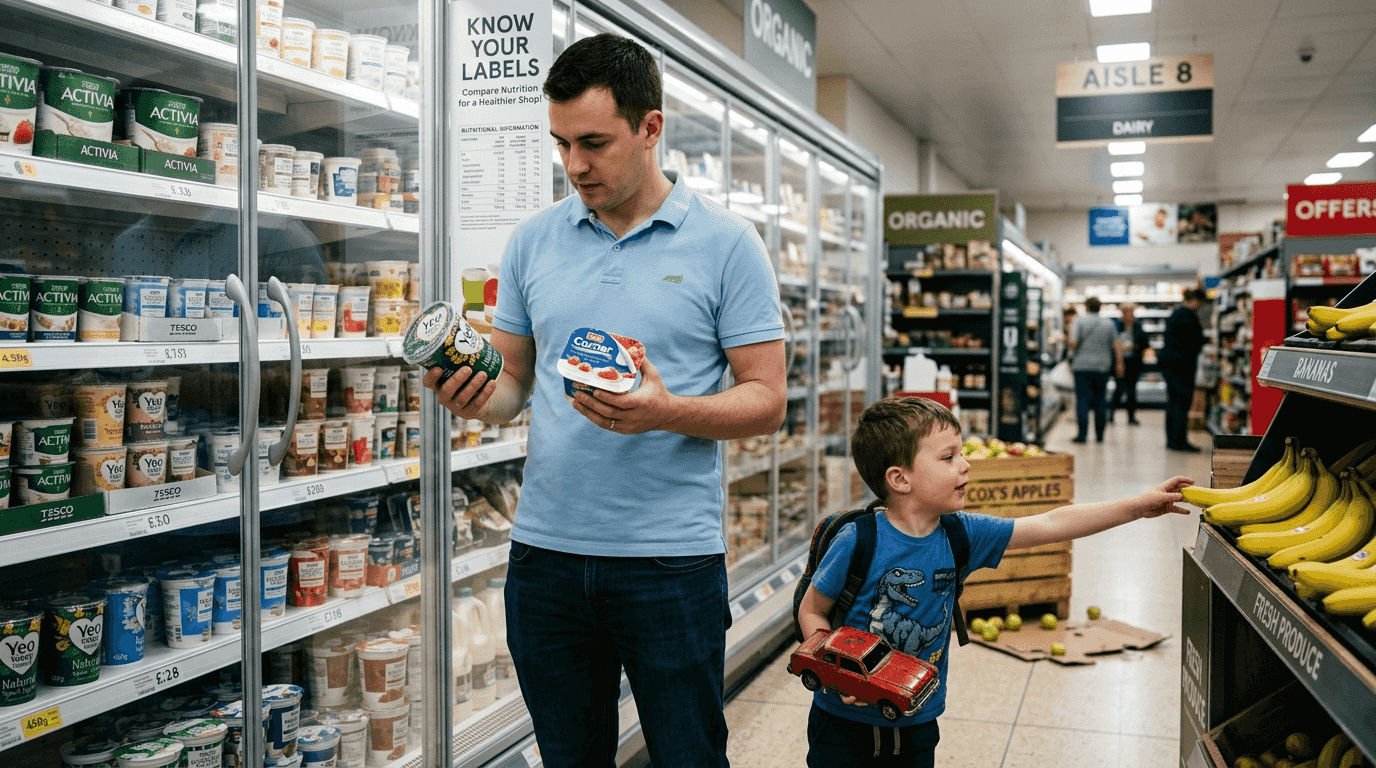
Yet labels don’t always guide you towards better choices. The organic halo effect represents a fascinating psychological phenomenon where the mere presence of an organic label causes consumers to underestimate calories in high-calorie items. You might perceive organic biscuits as inherently healthier than conventional ones, leading to larger portion sizes or more frequent consumption. This misperception affects even nutrition-conscious individuals who regularly read labels, proving that knowledge alone doesn’t prevent cognitive bias.
Younger consumers show particularly strong responses to organic labelling. Millennials and Gen Z shoppers report that organic certification significantly influences their purchasing decisions, especially for fresh produce and packaged goods. These demographics demonstrate greater willingness to pay premium prices for organic options, viewing them as investments in personal health and environmental sustainability. However, this enthusiasm makes them equally vulnerable to misleading claims when products use organic-adjacent language without proper certification.
The impact of labelling varies dramatically across product categories. Warning labels on tobacco and alcohol have proven effective for decades, whilst similar approaches for food face resistance from industry groups. Mindful grocery shopping requires active engagement with multiple label elements, from nutritional panels to ingredient lists to certification seals. You can’t rely on any single indicator to tell the complete story about a product’s health implications.
Demographic factors shape how you interpret and respond to labels. Education level, income, age, and cultural background all influence which label elements capture attention and drive decisions. Lower-income shoppers often prioritise price over health claims, whilst higher-income consumers show greater sensitivity to organic and environmental certifications. Understanding these patterns helps explain why fresh versus frozen food debates often miss the mark, as optimal choices depend heavily on individual circumstances and priorities.
“The organic label creates a health halo that can paradoxically lead to overconsumption of calorie-dense foods, undermining the very health goals consumers seek to achieve through organic purchases.”
Label influence on behaviour:
- Nutritional information: Reduces overall calorie intake by 6-8% when consistently displayed
- Warning labels: Decrease sugary drink purchases by up to 25% in some populations
- Organic certification: Increases willingness to pay by 20-40% depending on product category
- Health claims: Trigger automatic positive associations that may override nutritional facts
Emerging labelling technologies and evolving regulations in 2026
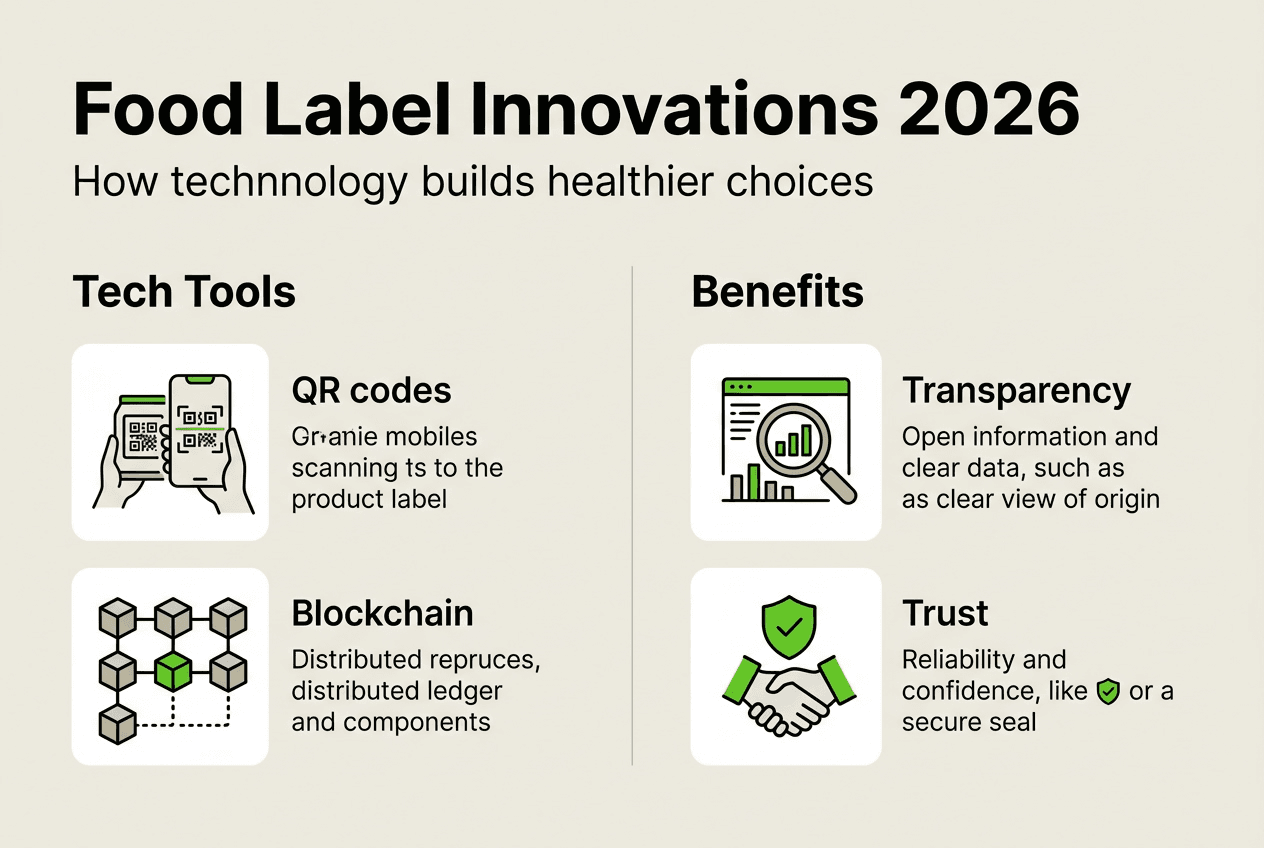
Digital innovation transforms how you access product information. QR codes now provide detailed nutritional data, sourcing information, and sustainability metrics through a simple smartphone scan. These technologies bypass the space limitations of physical packaging, allowing brands to share comprehensive details about ingredients, production methods, and third-party certifications. Front-of-pack labels complement digital solutions by offering at-a-glance health ratings that guide quick decisions in busy shopping environments.
The European Union took decisive action against greenwashing in 2024, establishing stricter standards through Directive 2024/825 that prohibit generic environmental claims without verified certification. This legislation directly addresses the proliferation of vague terms like ‘eco-friendly’ or ‘sustainable’ that appeared on products without substantiation. Manufacturers must now provide evidence for any environmental claim, backed by recognised certification schemes or transparent lifecycle assessments. The directive aims to restore consumer trust in environmental labels after years of widespread misuse eroded confidence.
These regulatory changes create tangible benefits for conscientious shoppers. You no longer need to guess whether a ‘green’ label represents genuine environmental commitment or clever marketing. Certified eco-labels must meet specific criteria verified by independent bodies, whilst unsubstantiated claims face legal consequences. This shift levels the playing field for brands genuinely investing in sustainable food packaging and production methods, rewarding transparency over empty promises.
Blockchain technology emerges as another tool for enhancing label credibility. Some organic producers now use blockchain to create immutable records of their supply chains, allowing you to trace products from farm to table. Whilst still in early adoption phases, this technology promises unprecedented transparency for environmental impact of food choices. You can verify organic certification, fair trade compliance, and carbon footprint data through secure, tamper-proof systems.
Governments worldwide recognise that label clarity directly impacts public health outcomes. Ongoing regulatory efforts focus on standardising nutritional information formats, restricting misleading health claims, and requiring clearer allergen warnings. The challenge lies in balancing consumer protection with industry flexibility, as overly prescriptive rules might stifle innovation whilst loose standards enable deception.
| Technology | Benefit | Current adoption |
|---|---|---|
| QR codes | Unlimited information access | Widespread in 2026 |
| Front-of-pack ratings | Quick health comparisons | Growing across EU |
| Blockchain tracking | Supply chain verification | Early stage, premium brands |
| Digital twins | Complete product lifecycle data | Pilot programmes |
Pro Tip: Download apps that scan barcodes and provide independent nutritional ratings, giving you objective assessments beyond manufacturer claims.
Practical tips for smart shopping using food labels
Developing critical label evaluation skills protects you from marketing manipulation. Start by examining the ingredient list before considering front-of-pack claims. Ingredients appear in descending order by weight, so the first three items reveal the product’s true nature. A cereal boasting ‘made with whole grains’ might list refined flour first, followed by sugar, with whole grains appearing third or fourth. This simple check cuts through misleading emphasis on minor healthy ingredients.
Comparing organic, natural, and conventional products requires understanding what each term guarantees. Organic certification ensures production standards but doesn’t automatically mean superior nutrition. Natural claims offer virtually no assurance about processing methods or ingredient quality. Conventional products might contain identical nutrients to organic versions at lower prices, though they likely involve synthetic pesticides and fertilisers. Your choice should align with priorities, whether that’s environmental impact, potential pesticide exposure, or budget constraints.
When evaluating organic and natural labels specifically:
- Verify certification seals from recognised bodies like USDA Organic or EU Organic
- Read ingredient lists to confirm claims match contents
- Compare nutritional panels, as organic doesn’t mean low calorie or low sugar
- Research brand reputations for transparency and ethical practices
- Consider ‘free from’ claims in context of your dietary needs and values
- Calculate cost per serving rather than package price to assess true value
Frequent label readers remain most susceptible to the organic halo effect, so maintain scepticism even as you gather information. That organic chocolate bar contains just as many calories as conventional versions. The organic ice cream delivers identical sugar content. Don’t let certification status override basic nutritional awareness when managing calorie intake or specific health conditions.
Consumers increasingly prioritise ‘free from’ claims when selecting organic foods, particularly regarding pesticides, hormones, and antibiotics. These exclusions represent tangible benefits of organic certification. However, verify which specific substances a product excludes, as some ‘free from’ labels highlight legally prohibited ingredients that wouldn’t appear in any product anyway. Genuine value comes from avoiding substances that conventional production permits but organic standards restrict.
| Label type | Production standards | Nutritional guarantee | Environmental benefit | Cost premium |
|---|---|---|---|---|
| Organic | Strict, verified | None | Significant | 20-40% |
| Natural | Minimal, unverified | None | None | 10-20% |
| Conventional | Standard regulations | None | Variable | Baseline |
| Free from | Depends on claim | Depends on exclusion | Variable | 15-30% |
Pro Tip: Focus your organic budget on produce with highest conventional pesticide residues like berries and leafy greens, whilst conventional options work fine for thick-skinned fruits and vegetables.
Integrate mindful grocery shopping practices into your routine. Plan meals before shopping to avoid impulse purchases driven by clever labelling. Compare multiple brands within each category, checking both certifications and nutritional content. Don’t assume expensive equals healthy or that organic certification justifies unlimited consumption. Balance label information with broader dietary patterns, remembering that whole foods like fresh produce often carry the most valuable ‘labels’ through their inherent nutritional density. Starting your day with healthy breakfast options built around whole ingredients matters more than obsessing over certification status of every packaged item.
Discover trusted organic products for your healthy lifestyle
Now that you understand how to decode food labels and identify genuine organic certification, you’re ready to put this knowledge into practice. Nature’s Soul Shop offers a carefully curated selection of organic and natural products across every category, from fresh produce to pantry staples, all meeting the strict standards we’ve discussed. Every item undergoes verification to ensure authentic certification and clean ingredient lists, removing the guesswork from your shopping decisions.
Explore the Nature’s Soul Fresh range for seasonal organic fruits and vegetables that align with your commitment to pesticide-free eating. Browse health-focused products spanning dairy, vegan options, and gluten-free alternatives, each selected for ingredient integrity and nutritional value. Your informed choices deserve a trusted source that shares your standards for quality and transparency.
Frequently asked questions
What does the ‘natural’ food label really mean?
The ‘natural’ label lacks a firm uniform definition across most regulatory jurisdictions, allowing manufacturers considerable freedom in its application. Products labelled natural may contain processed ingredients, synthetic additives, or intensive production methods that contradict consumer expectations. This ambiguity makes natural one of the least reliable indicators of product quality or health benefits, functioning primarily as a marketing tool rather than a meaningful standard.
Are organic labelled foods always healthier than conventional ones?
Organic certification refers to production standards, not nutritional content, meaning organic products aren’t automatically more nutritious than conventional alternatives. The organic halo effect can actually mislead you into underestimating calories in organic treats, potentially leading to overconsumption. Organic certification guarantees restricted pesticide use and prohibited GMOs, but nutritional value depends on the specific food item, processing methods, and overall dietary context rather than certification status alone.
How do newer food label technologies improve transparency?
Digital QR codes provide easy access to extensive product details beyond what physical packaging can display, including sourcing information, detailed nutritional breakdowns, and sustainability metrics. Front-of-pack rating systems complement digital tools by offering quick visual comparisons that help you make confident purchase decisions in seconds. These technologies empower more informed choices by making comprehensive product information readily accessible through devices you already carry.
What regulations exist to prevent misleading environmental claims on food labels?
EU Directive 2024/825 prohibits unfounded generic environmental claims and requires verified eco-label certifications for any sustainability marketing. Manufacturers must now substantiate environmental claims with recognised certification schemes or transparent lifecycle assessments, facing legal consequences for greenwashing. These stricter standards aim to restore consumer trust by ensuring environmental labels represent genuine commitments rather than empty marketing rhetoric, creating accountability throughout the supply chain.
Recommended
- Food Labelling India 2026: 70% Healthier Choices Guide – naturessoulshop
- Sustainable Food Packaging: Ensuring Healthier Choices – naturessoulshop
- Health Regulations for Food – Protecting Family Wellness – naturessoulshop
- Natural Food Preservatives: Healthier Choices for 2025 – naturessoulshop
- Dietary Supplement Selection Guide for Smart Choices | Mybestpharmacy.net | Online Pharmacy
- Nutrition and Longevity: What Are We Eating – And What Should We? – Longevity Travel


