


TL;DR:
- Cutting gluten without careful planning can lead to significant nutritional deficiencies.
- Naturally gluten-free grains like ragi and jowar provide essential nutrients often lacking in processed GF foods.
- Managing cross-contamination and regular nutrient monitoring are crucial for safe gluten-free family diets.
Going gluten-free feels like the responsible choice, especially when you’re managing a child’s health or exploring plant-based eating. But here’s what most guides won’t tell you: cutting gluten without careful planning can quietly create nutritional gaps that undermine the very health goals you’re working towards. For families in Delhi NCR navigating organic food choices, the stakes are real. This article cuts through the noise and gives you evidence-based, practical strategies to eat well, stay nourished, and make gluten-free work for your whole family.
Table of Contents
- Why nutritional balance is challenging on a gluten-free diet
- Core nutrients at risk: What to monitor and why
- Building a naturally balanced, gluten-free meal in Delhi NCR
- Gluten-free pitfalls: Hidden dangers and cross-contamination in Indian kitchens
- The surprising truth most gluten-free guides overlook
- Discover nutritious, organic gluten-free choices with Nature’s Soul Shop
- Frequently asked questions
Key Takeaways
| Point | Details |
|---|---|
| Nutritional gaps are common | Gluten-free diets often lack iron, calcium, zinc, and B vitamins, so careful planning is needed. |
| Local grains are powerful | Using ragi, jowar, and bajra can greatly improve nutrient intake for gluten-free families in Delhi NCR. |
| Processed isn’t always healthier | Many gluten-free packaged foods are high in sugar and fat, so focus on organic whole foods instead. |
| Regular monitoring matters | Both children and adults need ongoing nutrient checks and diet adjustments to stay balanced gluten-free. |
Why nutritional balance is challenging on a gluten-free diet
The idea that gluten-free automatically means healthier is one of the most persistent myths in modern nutrition. Wheat, barley, and rye are removed, yes. But so are many of the nutrients those grains carry. Without deliberate substitution, the gaps add up quickly.
Research confirms that gluten-free diets risk deficiencies in iron, calcium, magnesium, zinc, and B vitamins. These aren’t minor nutrients. Iron supports your child’s cognitive development. Calcium builds bones. B vitamins power every cell in the body. Removing gluten-containing grains without replacing them with equally nutrient-dense alternatives leaves real holes in your family’s diet.
Processed gluten-free products make this worse, not better. Many GF packaged foods are higher in sugar and fat, and lower in fibre and micronutrients compared to their conventional counterparts. That gluten-free biscuit or packaged bread might feel like a safe swap, but it’s often nutritionally inferior.
The nutrients most commonly affected on a gluten-free diet are summarised below:
| Nutrient | Why it drops on GF diets | Key food sources to include |
|---|---|---|
| Iron | Fortified wheat removed | Lentils, spinach, ragi |
| Calcium | Dairy alternatives often unfortified | Sesame seeds, amaranth, dairy |
| Magnesium | Whole grains removed | Pumpkin seeds, bajra, dark leafy greens |
| Zinc | Absorption lower from plant sources | Legumes, nuts, seeds |
| B vitamins (esp. B1, B3, folate) | Fortified flour removed | Dals, eggs, leafy vegetables |
| Dietary fibre | Refined GF products low in fibre | Jowar, whole dals, vegetables |
Children are particularly vulnerable. Parents managing family nutrition across different dietary preferences face an added layer of complexity. Those on plant-based diets face the steepest challenge because animal foods, which compensate for many GF nutrient gaps, are also off the table.
Key risks to keep in mind:
- Relying heavily on rice and potato as GF staples limits micronutrient variety
- Processed GF snacks can displace more nutritious whole foods
- Fibre shortfall leads to poor gut health over time
- Children’s growth can be affected if deficiencies go undetected
“Gluten-free eating done right is about strategic inclusion, not just elimination. The families who thrive are those who actively build nutrient variety into every meal.”
For a deeper look at how to structure meals around these risks, the guidance on a balanced gluten-free diet is a practical starting point.
Core nutrients at risk: What to monitor and why
Once you understand the broad risks, the next step is knowing exactly which nutrients need your attention and how to track them. Not all deficiencies feel obvious. Fatigue, poor concentration in children, and slow growth can all be signs that something is missing, often long before a blood test flags it.
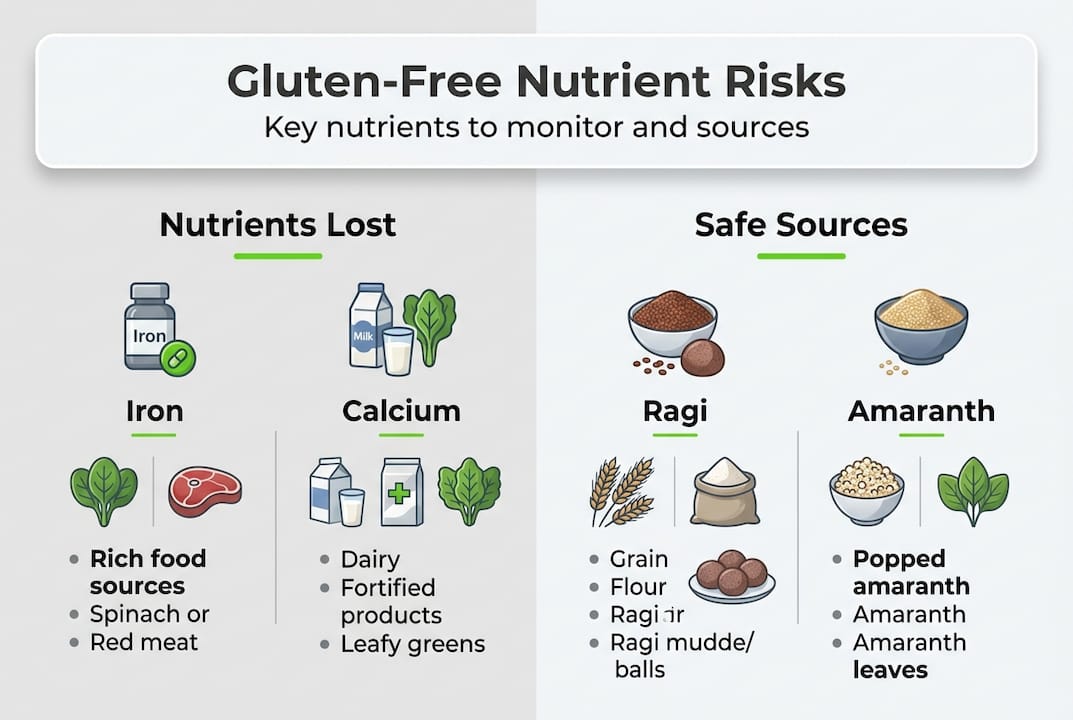
The most persistent concern is vitamin B12. It is entirely absent from plant foods, and children on GF diets show persistent gaps in key nutrients even when parents are trying their best. For anyone following a plant-based gluten-free diet, B12 supplementation is non-negotiable, alongside careful planning for iron, calcium, zinc, and omega-3 fatty acids.
Here’s a comparison of nutrient risks and practical solutions across two common dietary patterns:
| Nutrient | Plant-based GF risk | Omnivore GF risk | Practical solution |
|---|---|---|---|
| Vitamin B12 | Very high | Low | Supplement daily if plant-based |
| Iron | High (lower bioavailability) | Moderate | Pair with vitamin C foods |
| Calcium | High | Moderate | Include dairy or fortified alternatives |
| Zinc | High | Moderate | Soak legumes to improve absorption |
| Omega-3 | High | Low | Flaxseed, walnuts, algae oil |
| Vitamin D | Moderate | Moderate | Sunlight and supplementation |
Vitamin C deserves a special mention for plant-based GF eaters. Eating iron-rich foods like spinach or lentils alongside a vitamin C source, such as amla, lemon juice, or tomatoes, significantly improves how much iron your body actually absorbs. This one habit can make a meaningful difference.
Steps for monitoring your family’s nutritional status:
- Schedule an annual blood test covering iron, ferritin, B12, vitamin D, and zinc for every family member on a GF diet
- Keep a simple food diary for two weeks every few months to spot patterns and gaps
- Consult a registered dietitian who understands both gluten-free and plant-based nutrition
- Track your child’s growth at regular intervals and flag any slowdown to your paediatrician
- Review supplement use annually, as needs change with age and diet
For parents packing school meals, lunchbox ideas for gluten-free kids can help you build variety without stress. Structured gluten-free meal planning also makes monitoring easier because you can see exactly what nutrients are coming in each week.
Pro Tip: If your child is on a GF diet, ask your doctor for a full micronutrient panel at least once a year. Catching a deficiency early is far easier than reversing it after months of depletion.
Building a naturally balanced, gluten-free meal in Delhi NCR
Here’s the good news: Delhi NCR families have access to some of the most nutritious naturally gluten-free grains in the world. Ragi, jowar, bajra, amaranth, and a wide range of dals are all naturally free of gluten and packed with the nutrients that processed GF products lack.
Using organic local grains and vegetables builds a far stronger nutritional foundation than relying on imported or packaged GF alternatives. And given that GF packaged products are often more expensive and less nutritious, this approach also saves money.
Practical meal-building ideas for Delhi NCR families:
- Breakfast: Ragi porridge with jaggery and banana, or bajra cheela with mint chutney
- Lunch: Jowar roti with dal tadka, sabzi, and a small bowl of curd
- Dinner: Amaranth khichdi with seasonal vegetables and a side of stir-fried greens
- Snacks: Roasted makhana, chikki made with sesame and jaggery, or fresh fruit with a handful of nuts
The key principle is rotation. Eating ragi one day, jowar the next, and amaranth the day after ensures you’re drawing from a wider range of micronutrients. Sticking to only rice and potato, which is a common default, narrows your nutritional base considerably.
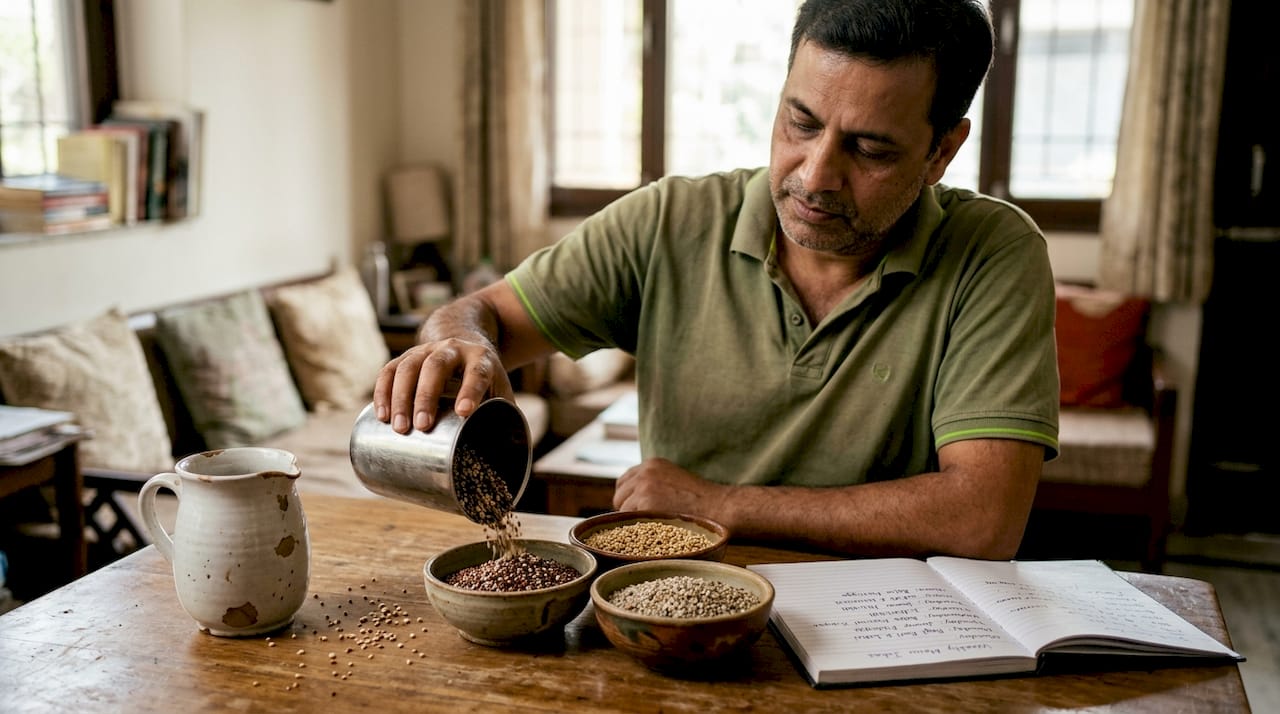
For families doing batch cooking, preparing a large pot of dal, a grain like bajra or jowar, and two or three roasted or steamed vegetables at the weekend covers most of the week’s lunches and dinners. This approach works especially well for school lunchboxes.
Substitution ideas that work well in Indian kitchens:
- Replace wheat atta with jowar or bajra flour for rotis
- Use besan (chickpea flour) for pancakes, cheelas, and coatings
- Swap semolina (suji) with multigrain dalia organic gluten free for upma and porridge
- Use rice flour or ragi flour for baking and thickening sauces
For more structured guidance, gluten-free meal prep in Delhi NCR offers templates tailored to local ingredients and family schedules.
Pro Tip: Rotate at least three different gluten-free grains across your week. Each grain has a different micronutrient profile, and variety is your best defence against deficiency.
Gluten-free pitfalls: Hidden dangers and cross-contamination in Indian kitchens
Even when you’re doing everything right at the meal-planning level, cross-contamination can silently undo your efforts. In Indian kitchens, where wheat flour is used daily and shared utensils are the norm, the risk is higher than most families realise.
Research shows that cross-contamination in Indian kitchens and restaurants is a significant concern for those with coeliac disease or serious gluten sensitivity. Even a small amount of gluten, invisible to the eye, can trigger an immune response in someone with coeliac disease.
Steps to reduce cross-contamination at home:
- Designate separate chopping boards, rolling pins, and pans for gluten-free cooking
- Store gluten-free flours and grains in sealed containers away from wheat flour
- Clean surfaces thoroughly before preparing GF meals, not just a quick wipe
- Avoid frying GF foods in oil previously used for wheat-based items
- When ordering food outside, ask specifically about shared cooking surfaces and oils
For guidance on eating out safely, the gluten-free dining out guide covers what to ask and what to avoid at Delhi NCR restaurants. And for home kitchen setup, cross-contamination in Delhi NCR offers room-by-room advice.
One more critical point: going gluten-free without a medical reason can actually harm your nutrition. Many people unnecessarily avoid gluten and end up with worse overall nutrition than before. Gluten-free eating is essential for those with coeliac disease or confirmed gluten sensitivity. For everyone else, it requires careful thought.
“Self-diagnosing a gluten intolerance and cutting wheat without guidance is one of the most common ways otherwise healthy people accidentally create nutritional deficiencies. Always get tested before going fully gluten-free.”
The surprising truth most gluten-free guides overlook
Most gluten-free nutrition content, even the well-researched kind, is written from a Western perspective. It focuses on what to remove, which supplements to buy, and which packaged alternatives to choose. What it rarely addresses is the extraordinary advantage that Delhi NCR families already have.
India’s traditional food culture is built on naturally gluten-free diversity. Ragi, jowar, bajra, amaranth, a dozen varieties of dal, and an abundance of seasonal vegetables are not exotic health foods here. They’re everyday staples. The problem is that modern convenience culture, including packaged GF products, has pushed these foods to the margins.
True nutritional balance on a gluten-free diet isn’t found in a fortified biscuit or an imported grain blend. It’s found in a bowl of bajra khichdi with ghee, a plate of ragi roti with fresh sabzi, or a simple dal made with locally grown lentils. Exploring local gluten-free food diversity is not a compromise. It’s a genuine nutritional advantage.
The families who eat best on a gluten-free diet are the ones who focus on what they’re adding to their plates, not just what they’re taking away. Mindful inclusion, not anxious restriction, is where real health lives.
Discover nutritious, organic gluten-free choices with Nature’s Soul Shop
If you’re ready to put these lessons into practice, Nature’s Soul Shop makes it easier to find clean, trustworthy ingredients for your family’s gluten-free meals. From organic ragi and jowar to whole dals and naturally gluten-free snacks, every product is chosen with clean ingredients and nutritional quality in mind.
Browse the full range of organic gluten-free foods or explore the Nature’s Soul Fresh range for seasonal vegetables and dairy. For a curated view of wellness essentials, the health product selection brings everything together in one place. Eating well, gluten-free, and organically in Delhi NCR has never been more straightforward.
Frequently asked questions
What are the most common nutritional deficiencies on a gluten-free diet?
Iron, calcium, magnesium, zinc, vitamin D, fibre, and B vitamins are most commonly low on gluten-free diets, particularly when processed GF products replace whole grains.
Can children safely follow a gluten-free diet without nutritional risks?
Children need careful meal planning and regular nutrient checks because persistent nutritional gaps can occur even when parents are making genuine efforts to eat well.
Are processed gluten-free foods healthier than regular food?
Many processed GF products are higher in fat and sugar and lower in fibre and micronutrients, making natural and organic whole foods a far better choice for daily nutrition.
Is a plant-based gluten-free diet safe without supplements?
Vitamin B12 must be supplemented on any plant-based gluten-free diet, and close monitoring of iron, calcium, zinc, and omega-3 intake is essential for long-term health.
How can cross-contamination be avoided in Indian kitchens?
Use separate utensils and rolling pins, store gluten-free grains away from wheat flour, and clean surfaces thoroughly before cooking, as cross-contamination risk in shared Indian kitchens is significant.
Recommended
- Budget gluten-free shopping in Delhi NCR: smart tips for 2026 – naturessoulshop
- How to Eat Out Gluten Free in Delhi NCR in 2025 – naturessoulshop
- Gluten Free Meal Prep in Delhi NCR: Easy Ideas for 2025 – naturessoulshop
- Cross Contamination Gluten Free: Safe Eating in Delhi NCR 2025 – naturessoulshop
- How to avoid gluten in nutrition and boost wellness


