


That bright red tomato or crisp green spinach at your local market might look fresh, but here’s the uncomfortable truth: up to 21% of conventional vegetables in Indian markets exceed permitted pesticide residue limits. For health-conscious families, especially first-time parents, this statistic raises serious questions about what’s actually on your plate. Organic vegetables promise a cleaner alternative, but do they deliver genuine health benefits or just clever marketing? This article examines the evidence behind organic produce in India, from pesticide exposure to nutritional value, helping you make informed choices for your family’s well-being.
Table of Contents
- What makes organic vegetables different?
- Pesticide residues: What you need to know
- Nutrition: Are organic vegetables really better for you?
- Safety and well-being: Why families with children prefer organic
- Environment and ethics: The bigger reasons millennials choose organic
- Common myths and limitations to consider
- How to choose and use organic vegetables in your Indian kitchen
- Try the organic difference with Nature’s Soul Shop
- Frequently asked questions
Key Takeaways
| Point | Details |
|---|---|
| Lower pesticide risk | Organic vegetables have much lower synthetic pesticide residues, making them safer for families and children. |
| Modest nutritional gains | Organic produce often contains more antioxidants and vitamin C, though the health impact overall is usually small. |
| Supports family well-being | Choosing organic can especially benefit children’s health and immune systems by reducing chemical exposure. |
| Eco-friendly choice | Organic farming methods are better for soil, water, and biodiversity, supporting environmental health. |
What makes organic vegetables different?
Let’s clarify exactly what makes organic vegetables unique compared to those from regular markets. Organic farming in India uses no synthetic pesticides, fertilisers or GMOs, relying instead on methods like botanical pesticides and natural soil enrichment.
The core principles of organic vegetable production in India include:
- No synthetic chemicals: Farmers avoid artificial pesticides, herbicides, and chemical fertilisers entirely
- Natural pest management: Botanical solutions like neem extracts and azadirachtin control pests without synthetic residues
- Soil health focus: Compost, green manure, and crop rotation maintain fertility naturally
- GMO-free guarantee: No genetically modified seeds or plants are permitted
- Certification requirements: Products must meet strict standards and carry recognised organic labels
These farming methods create a fundamentally different growing environment. Instead of quick chemical fixes, organic farmers build healthy soil ecosystems that naturally resist pests and diseases. Crop rotation prevents soil depletion whilst encouraging beneficial insects and microorganisms. This approach takes more time and labour, but it produces vegetables without the chemical residues that concern many parents.
Understanding organic certification in India helps you identify genuine products. Look for certification marks from recognised bodies, which verify that farms follow organic standards throughout the growing season. These labels aren’t just marketing—they represent regular inspections and documented farming practises.
The farming differences extend beyond what farmers don’t use. Organic methods actively build biodiversity, improve water retention, and create resilient farm ecosystems. Whilst conventional farming prioritises maximum yield through chemical inputs, organic farming balances productivity with long-term soil health and environmental protection.
Pesticide residues: What you need to know
Understanding organic farming means looking closely at the real risk: chemical residues on the vegetables that reach your plate. Conventional vegetables in India often have significant pesticide residues, with local surveys finding up to 21% exceed limits; organic samples show almost no synthetic residues.
Recent FSSAI residue data reveals that thousands of food samples analysed between 2022 and 2025 contained pesticide levels above permissible limits. The problem isn’t limited to exotic imports—everyday vegetables like tomatoes, leafy greens, and capsicums frequently test positive for multiple pesticide residues.
| Vegetable type | Conventional residue level | Organic residue level | Reduction |
|---|---|---|---|
| Leafy greens | High (multiple pesticides) | Near zero | 95%+ |
| Tomatoes | Moderate to high | Trace amounts | 90%+ |
| Root vegetables | Low to moderate | Minimal | 85%+ |
| Capsicums | High | Near zero | 95%+ |
Why does lower exposure matter? Children and pregnant women are particularly vulnerable to pesticide effects. Their developing nervous systems and smaller body sizes mean even small exposures can have disproportionate impacts. Research links chronic low-level pesticide exposure to developmental delays, weakened immunity, and digestive issues in young children.
Pro tip: Washing conventional produce under running water removes some surface residues, but it cannot eliminate pesticides absorbed into the vegetable tissue during growth. Peeling helps with root vegetables, but you lose valuable nutrients in the skin.
Organic vegetables aren’t strictly pesticide-free. Farmers may use botanical pesticides like neem oil, which break down quickly and pose minimal health risks compared to synthetic alternatives. The crucial difference is that organic produce shows almost no synthetic pesticide residues in laboratory testing, whilst conventional samples often contain multiple chemical compounds.
For families seeking safe choices, the evidence is clear: organic vegetables dramatically reduce your household’s pesticide exposure. This matters most for vegetables you eat frequently and those your children consume regularly. A pesticide-free vegetables guide can help you prioritise which items to buy organic when budget is a concern.
Nutrition: Are organic vegetables really better for you?
Whilst pesticides drive most parents’ and millennials’ choices, the next question is nutrition: are organic vegetables actually more nourishing? Organic vegetables tend to have 10-50% higher antioxidants, more vitamin C and polyphenols, but their mineral content is similar to conventional.
| Nutrient | Organic advantage | Clinical significance |
|---|---|---|
| Antioxidants | 10-50% higher | Moderate—supports immunity |
| Vitamin C | 15-30% higher | Small—most diets adequate |
| Polyphenols | 20-40% higher | Moderate—anti-inflammatory |
| Minerals (iron, calcium) | Similar levels | None |
| Fibre | Slightly higher | Small |
The nutritional story is nuanced. Organic vegetables often contain more beneficial plant compounds because they must produce their own defences against pests, rather than relying on chemical sprays. This stress response creates higher concentrations of antioxidants and polyphenols, which offer genuine health benefits.
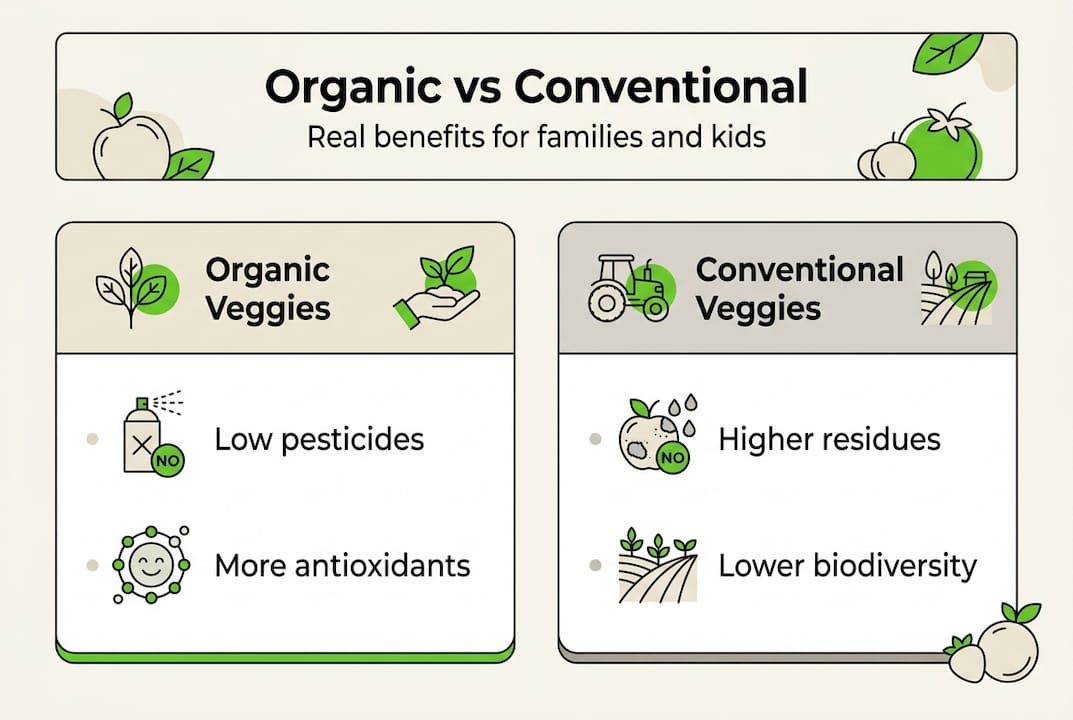
However, meta-analyses show the nutritional superiority of organic produce is modest and not always clinically significant. If you’re eating a varied diet with plenty of vegetables, the difference between organic and conventional nutrition may not dramatically change your health outcomes.
Organic vegetables typically have:
- Lower nitrate content, which some research links to better cardiovascular health
- Higher omega-3 fatty acid levels in leafy greens
- More diverse beneficial bacteria on the surface
- Better flavour profiles due to slower growth and soil quality
The nutritional value of organic foods extends beyond simple vitamin counts. The absence of chemical residues means you’re not consuming potentially harmful compounds alongside your nutrients. For families focused on organic vs conventional nutrients, this clean ingredient profile matters as much as vitamin content.
Expert insight: Prioritise vegetable variety and freshness as much as organic status. A diverse diet of fresh conventional vegetables beats a limited selection of organic ones. The greatest nutritional gains come from eating more vegetables overall, regardless of farming method.
Safety and well-being: Why families with children prefer organic
Nutrition is important, but the real tipping point for many is protecting children’s health. Lowering pesticide exposure supports child immunity and digestion; parents choose organic to protect sensitive developing systems.
Babies and young children face unique vulnerabilities:
- Their blood-brain barriers are still developing, allowing more chemicals to reach the nervous system
- Pound for pound, children consume more food relative to body weight than adults
- Detoxification systems in young livers work less efficiently
- Rapid cell division during growth means greater susceptibility to chemical interference
Paediatricians increasingly recommend reducing food chemical exposures where practical. Whilst no single pesticide exposure will harm a healthy child, the cumulative effect of daily low-level exposure over years remains poorly understood. Many parents view organic vegetables as a precautionary choice—minimising an uncertain risk whilst their children’s bodies develop.
Research links organic diets to measurable health improvements in children. Studies show lower urinary pesticide metabolites, reduced allergy symptoms, and better gut microbiome diversity in children eating predominantly organic diets. The higher antioxidant content may support developing immune systems, whilst the absence of synthetic chemicals reduces the toxic load on young bodies.

Pro tip: Start with organic versions of vegetables your children eat most frequently. If your toddler loves tomatoes and cucumbers, prioritise those. You’ll maximise the health benefit whilst managing costs.
Introducing organic vegetables needn’t be complicated:
- Begin with one or two organic swaps per week
- Let children help choose colourful organic vegetables at the market
- Prepare organic vegetables the same way as conventional ones—familiarity matters
- Focus on taste and freshness rather than lecturing about pesticides
For families building an organic diet for kids, the goal is creating sustainable habits. Even partial organic adoption reduces chemical exposure significantly. If you’re dealing with fussy eaters, these tips for picky eaters can help make organic vegetables appealing without battles at the dinner table.
A practical guide for parents emphasises that perfect isn’t necessary. Every organic vegetable you serve reduces your child’s pesticide exposure. That’s a win, even if you can’t afford to go fully organic.
Environment and ethics: The bigger reasons millennials choose organic
Families focus on safety, but for many young Indians, the organic choice is a statement about values and the planet. Indian millennials choose organic for health and environmental reasons, and are willing to pay 20-30% more for produce grown without synthetic chemicals.
The environmental case for organic farming is compelling. Synthetic pesticides and fertilisers leach into groundwater, contaminate rivers, and harm beneficial insects like pollinators. Organic farming builds soil health over time, increasing carbon sequestration and creating resilient ecosystems. These farms support greater biodiversity, from soil microbes to birds and beneficial insects.
Millennial consumers increasingly view food choices through a holistic lens. They’re asking: Does this support local farmers? Does it protect the environment for future generations? Does it align with my values around sustainability and animal welfare? Organic vegetables answer yes to all three questions.
Behavioural research shows young Indian consumers prioritise:
- Transparency about farming practises and ingredient sourcing
- Supporting small-scale and local organic farmers
- Reducing their personal environmental footprint
- Investing in long-term health rather than short-term savings
The willingness to pay more reflects a shift in priorities. Millennials often view the organic premium as an investment rather than an expense—one that pays dividends in personal health, environmental protection, and ethical consumption.
Small steps to support more sustainable food choices:
- Buy seasonal organic vegetables when they’re most affordable
- Support local organic farmers’ markets and cooperatives
- Grow a few organic herbs or vegetables at home, even in small spaces
- Choose organic for the vegetables you eat most frequently
- Reduce food waste by planning meals and storing produce properly
The environmental benefits of organic farming extend beyond your immediate health. Every organic purchase supports farming systems that regenerate soil, protect water quality, and preserve biodiversity. For environmentally conscious consumers, this broader impact justifies the higher price.
Common myths and limitations to consider
As with any health decision, it’s wise to bust popular myths so you don’t waste money or set expectations too high. Organic is not always more nutritious and is not entirely pesticide-free; cost and shelf-life are real considerations.
Organic vegetables aren’t 100% pesticide-free. Farmers may use approved botanical pesticides, and trace contamination can occur from neighbouring conventional farms or atmospheric drift. The key difference is that synthetic pesticide residues are near zero, not that organic produce is completely chemical-free.
Realistic limitations to consider:
- Price premium: Organic vegetables cost 20-30% more in most Indian cities due to certification, labour, and lower yields
- Shorter shelf-life: Without synthetic preservatives, organic produce often spoils faster, requiring quicker consumption
- Variable availability: Seasonal and regional limitations mean you can’t always find organic versions of every vegetable
- No taste guarantee: Organic doesn’t automatically mean better flavour, though many consumers report improved taste
- Modest nutritional edge: The vitamin and mineral differences are real but small, not transformative
Pro tip: If affordability is an issue, prioritise organic for the most-consumed vegetables and those kids eat most. Leafy greens, tomatoes, and capsicums typically have higher pesticide residues when grown conventionally, making them smart organic priorities.
Understanding organic farming pros and cons helps set realistic expectations. Organic vegetables offer genuine benefits, particularly around pesticide reduction and environmental impact. However, they’re not a magic solution to all health concerns, and the nutritional advantages are incremental rather than revolutionary.
The scientific consensus on organic produce acknowledges both benefits and limitations. Researchers agree that organic farming reduces pesticide exposure and supports environmental health, whilst noting that nutritional differences are modest and health outcomes depend on overall diet quality.
How to choose and use organic vegetables in your Indian kitchen
Armed with realistic pros and cons, here’s how to make organic vegetables work in your own kitchen, even if you’re just getting started. Smart shopping and proper storage maximise both nutrition and value.
What to look for when buying organic vegetables:
- Certification marks: India Organic, USDA Organic, or other recognised certification logos
- Vendor reputation: Buy from established organic retailers or certified farmers’ markets
- Freshness indicators: Firm texture, vibrant colour, and no signs of wilting or decay
- Seasonal alignment: Organic vegetables in season cost less and taste better
Storing and cooking organic vegetables properly preserves their nutritional value. Because organic produce lacks synthetic preservatives, it requires more careful handling. Store leafy greens in breathable bags in the crisper drawer. Keep tomatoes at room temperature until ripe, then refrigerate. Root vegetables last longest in cool, dark, dry conditions.
Budget-friendly approaches for Indian families:
- Start small: Choose three to five vegetables to buy organic, focusing on what you eat most
- Buy seasonal: Organic vegetables cost significantly less when locally in season
- Join a cooperative: Organic buying groups and farm subscriptions offer better prices
- Grow your own: Even a small balcony garden can produce organic herbs and greens
- Mix strategically: Buy organic for high-residue vegetables, conventional for low-residue ones
- Reduce waste: Proper storage and meal planning prevent spoilage and stretch your budget
If you need to mix organic with conventional vegetables, prioritise organic for items with thin skins or those you eat raw. Leafy greens, tomatoes, capsicums, and cucumbers benefit most from organic sourcing. Root vegetables with thick skins that you peel, like potatoes and carrots, are lower priority for organic purchasing.
Thorough washing helps with conventional produce but cannot eliminate all residues. Soak vegetables in water with a splash of vinegar for 10 minutes, then rinse under running water. This removes surface pesticides and dirt, though it won’t affect chemicals absorbed during growth.
For safe organic shopping tips, focus on building relationships with trusted vendors who can verify their organic certification and farming practises. Ask questions about their growing methods and certification status. Genuine organic farmers are usually happy to discuss their practises.
Try the organic difference with Nature’s Soul Shop
Ready to make the switch or simply try something new? Nature’s Soul Shop offers certified organic vegetables alongside a complete range of wellness products, all with clean ingredients and transparent sourcing.
We understand that choosing organic is about more than pesticides. It’s about investing in your family’s health, supporting sustainable farming, and making choices that align with your values. Our organic vegetable selection makes it easy to start small or go all in, depending on your family’s needs and budget. Explore our range of organic produce, natural home care, and clean skincare products. Every item meets strict organic standards, so you can shop with confidence. Whether you’re a first-time parent looking to reduce your baby’s chemical exposure or a health-conscious millennial seeking sustainable options, we’ve got you covered. Start with one organic swap this week. Choose the vegetable your family eats most, and experience the difference in freshness, flavour, and peace of mind. Visit Nature’s Soul Shop today and discover more on natural health for your whole family.
Frequently asked questions
Are organic vegetables really safer for children in India?
Yes, organic vegetables reduce chemical exposure, especially important for children. Organic produce has much lower synthetic pesticide residues, which helps protect children’s developing immune and digestive systems from unnecessary chemical burden.
Is there a big nutritional advantage to choosing organic vegetables?
Research shows organic vegetables may have more antioxidants and vitamin C, but overall nutritional differences with conventional vegetables are small. The mineral content is similar, so the advantage is modest rather than transformative.
Can organic vegetables in India still contain any pesticides?
Yes, organic farming uses botanicals, not synthetic chemicals. Natural or botanical pesticides are allowed in organic farming, but synthetic pesticide residues are near zero in tested samples, making them far safer than conventional options.
Why are organic vegetables more expensive in India?
The costs are higher due to certification, labour, and lower yields. Millennials are willing to pay 20-30% more for produce grown without synthetic chemicals, viewing it as an investment in family health and environmental sustainability.
How can I be sure vegetables are truly organic?
Look for Indian organic certification marks and buy only from trusted retailers or certified local producers. Recognised certification logos verify that farms follow organic standards and undergo regular inspections.


