


Many Indian parents are caught between two extremes: dismissing organic food as an expensive fad or feeling guilty for not going fully organic overnight. Neither extreme helps your child. Organic diets lower the risk of childhood obesity and metabolic syndrome, and that is worth taking seriously. This guide cuts through the noise, explains what organic really means in India, and gives you practical steps to build healthier eating habits for your child without turning mealtimes into a battle or your grocery bill into a crisis.
Table of Contents
- Understanding organic: What does organic really mean in India?
- Health benefits: What science really says about organic diets for kids
- Certification and food safety: How to choose true organic products
- Practical tips: Building an organic diet routine for your child
- Sustainability matters: Why choosing organic benefits your family and India
- Find trusted organic options for your family
- Frequently asked questions
Key Takeaways
| Point | Details |
|---|---|
| Lower obesity risk | Organic diets can help reduce the chance of childhood obesity in India. |
| Look for certification | Buy products with the Jaivik Bharat logo and official seals for true organic quality. |
| Balance matters most | A balanced meal with some organics is healthier than focusing on organic alone. |
| Support sustainability | Choosing organic helps India’s farmers and the environment. |
| Start small | Begin with simple swaps and build organic habits over time. |
Understanding organic: What does organic really mean in India?
The word ‘organic’ gets thrown around on packaging, social media, and at the local market with very little consistency. Before you spend a single rupee more, it helps to know exactly what the term means under Indian law.
In India, a food product can only be called organic if it meets the standards set by Indian organic certification bodies: Jaivik Bharat, NPOP (National Programme for Organic Production), or PGS-India (Participatory Guarantee System). These are regulated by FSSAI, and food labelling rules require that certified products display the appropriate logo. Without one of these marks, a product is not legally organic, regardless of what the packaging claims.
One of the most common traps parents fall into is assuming ‘natural’ means the same as ‘organic’. It does not. A product labelled ‘natural’ may still contain synthetic pesticides, chemical fertilisers, or artificial additives. The organic vs conventional evidence consistently shows that certified organic produce has measurably lower pesticide residues than conventional alternatives.
“Choosing organic is a step toward a healthier lifestyle, but consumers must check for proper certification marks and not be misled by vague claims on packaging.” — FSSAI
Here is what genuinely certified organic food looks like:
- Displays the Jaivik Bharat logo or NPOP/PGS-India seal
- Produced without synthetic pesticides or chemical fertilisers
- Free from genetically modified organisms (GMOs)
- Sourced from farms that follow documented organic practices
- Traceable back to a certified producer or cooperative
Health benefits: What science really says about organic diets for kids
Parents deserve straight answers, not marketing language. So here is what current research actually supports.
The strongest evidence links organic diets to a reduced risk of childhood obesity and metabolic syndrome. An odds ratio of 0.89 for childhood obesity in children who eat organic diets is a meaningful finding. In plain terms, children who regularly eat organic food have a statistically lower chance of becoming obese. That is not a small thing in a country where childhood obesity rates are climbing steadily.
| Health condition | Evidence strength | What research shows |
|---|---|---|
| Childhood obesity | Strong | Organic diets linked to lower risk |
| Metabolic syndrome | Moderate | Positive association with organic eating |
| Allergies | Mixed | No clear benefit established |
| Cancer prevention | Weak | Insufficient evidence to draw conclusions |
The organic vs conventional differences go beyond pesticide levels. Organic produce often contains higher levels of certain antioxidants and polyphenols, which support immune function and healthy growth. The nutrients in organic foods guide explains this in more detail for parents who want to go deeper.
Pro Tip: Do not stress about making every single item on your child’s plate organic. A balanced meal with a variety of whole foods, some of which are organic, delivers far more benefit than a restrictive all-organic diet that limits food variety.
Certification and food safety: How to choose true organic products
Knowing the health benefits is one thing. Finding genuinely safe, certified organic food in a crowded Indian market is another challenge entirely.
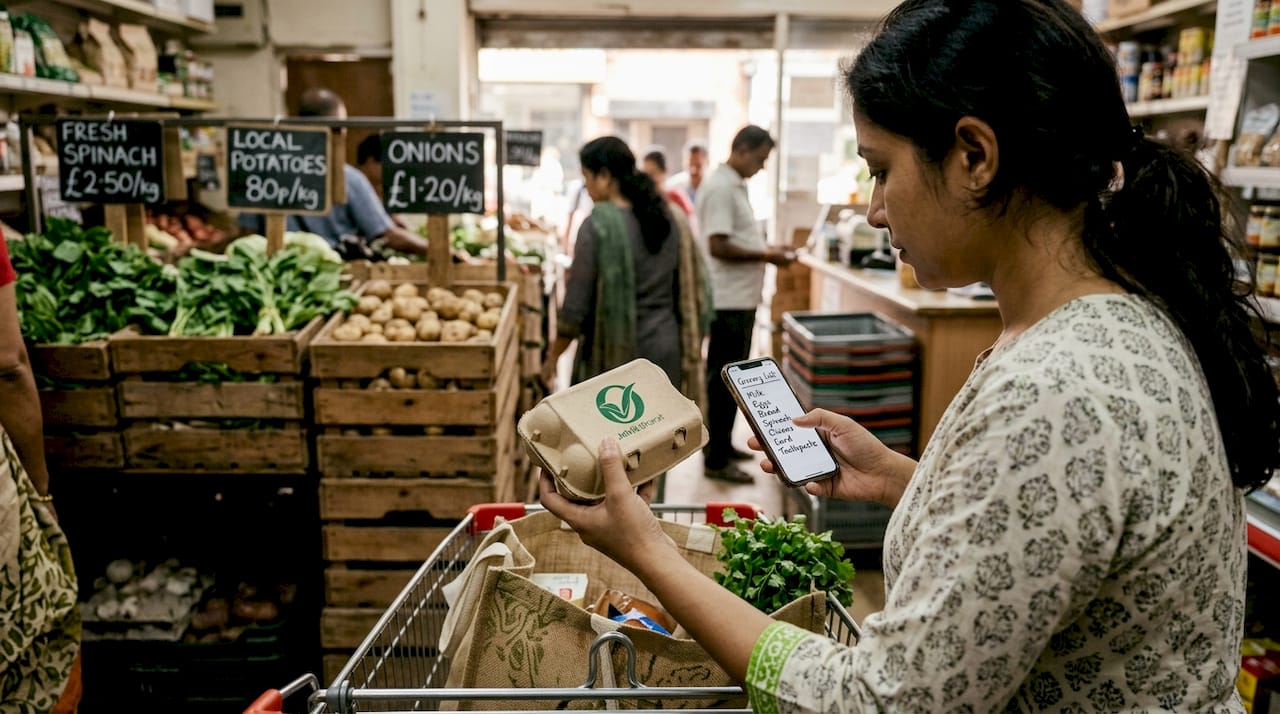
Certified organic foods in India must display the Jaivik Bharat logo along with NPOP or PGS-India seals. If a product does not carry one of these marks, it is not certified organic under Indian law, regardless of how it is described on the label.
Here is a simple step-by-step process to verify organic food when you shop:
- Look for the Jaivik Bharat logo on the front or back of the packaging.
- Check for the NPOP or PGS-India seal alongside it.
- Read the ingredient list. Certified organic products will not contain synthetic additives or preservatives.
- Buy from retailers or brands you trust. Loose produce sold as ‘organic’ at a street stall without any certification is a red flag.
- When in doubt, check the organic food labelling guidelines to understand what each mark means.
- Use the FSSAI’s online resources to verify brand registrations if you are unsure about a specific product.
FSSAI has issued clear warnings about fake organic labels, noting that vague terms like ‘farm fresh’, ‘chemical-free’, or ‘pure’ carry no legal weight. Understanding what organic means in India helps you shop with confidence rather than guesswork.
Pro Tip: Always wash all fresh produce thoroughly under running water, even when it is certified organic. Organic certification reduces synthetic pesticide residues significantly, but it does not eliminate all environmental contaminants.
Practical tips: Building an organic diet routine for your child
The biggest mistake parents make is trying to overhaul everything at once. Start small, focus on the foods your child eats most often, and build from there.
These are the organic foods worth prioritising first, because they tend to have the highest pesticide residues in conventional form:
- Apples, strawberries, and grapes
- Spinach, tomatoes, and bell peppers
- Milk and dairy products
- Rice and wheat-based staples
- Pulses and lentils used in everyday cooking
Balanced, partly-organic diets provide major health benefits and support sustainable farming without requiring you to spend a fortune. The goal is progress, not perfection.
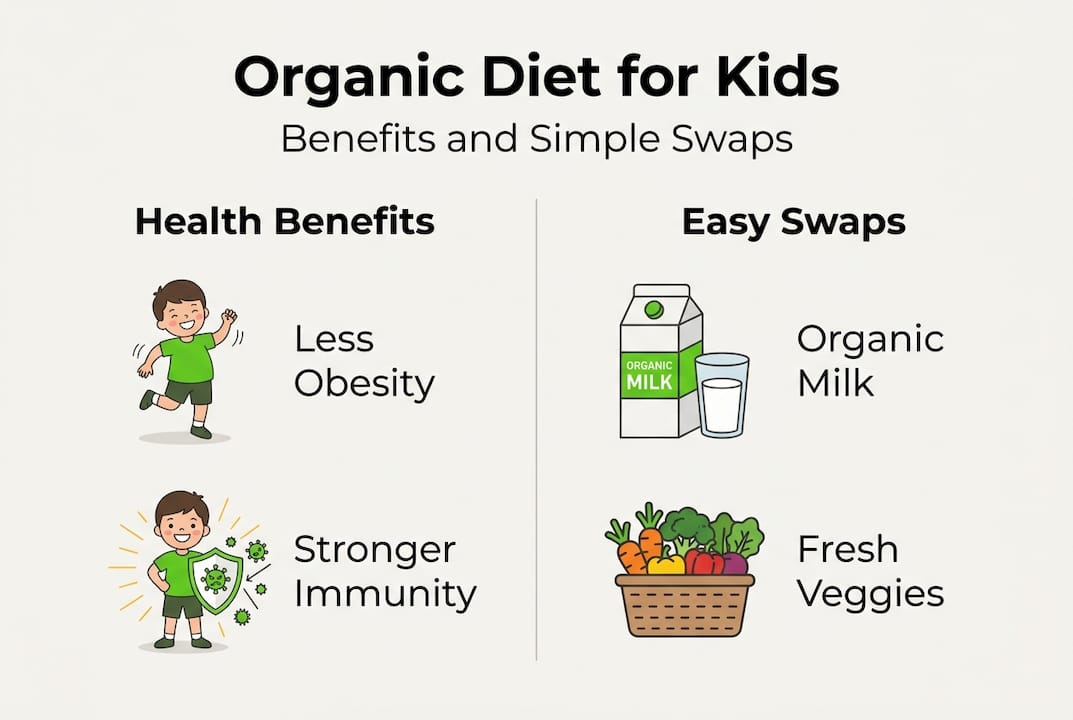
| Conventional habit | Organic swap | Benefit for your child |
|---|---|---|
| Regular packaged milk | Certified organic milk | Lower antibiotic and hormone exposure |
| Conventional rice | Organic rice | Reduced pesticide residue in daily staple |
| Standard cooking oil | Cold-pressed organic oil | Cleaner fats, no chemical processing |
| Regular fruit snacks | Organic seasonal fruits | Lower pesticide load, better flavour |
| Packaged breakfast cereal | Organic whole grain options | No synthetic additives or preservatives |
If your child is a fussy eater, the transition can feel even harder. The picky eater tips guide offers specific strategies for introducing new foods without mealtime battles. For a broader roadmap, the switching to organic guide walks you through the process week by week. And if you want help structuring meals properly, building balanced meals is a great place to start.
Choosing organic also has a ripple effect beyond your kitchen. When Indian families buy certified organic produce, they directly support small farmers who practise sustainable agriculture without relying on synthetic chemicals. That is a meaningful choice for your community, not just your child.
Sustainability matters: Why choosing organic benefits your family and India
Organic farming is not just about what ends up on your child’s plate. It is about how the food was grown, who grew it, and what kind of land and water will be available for the next generation.
Organic farming methods protect soil health by avoiding synthetic fertilisers that degrade the earth over time. They reduce chemical runoff into rivers and groundwater, which matters enormously in a country where water quality is already under pressure. They also support biodiversity by avoiding pesticides that harm pollinators like bees, which are essential for food production across India.
“When families choose certified organic, they are not just protecting their children from pesticide exposure. They are investing in the livelihoods of small Indian farmers and the long-term health of the land those farmers depend on.”
Organic diets support local farmers and reduce exposure to synthetic pesticides, making the choice beneficial at every level. Here is a quick summary of the positive impacts:
- Lower synthetic pesticide exposure for your child
- Support for local Indian farmers who use sustainable methods
- Healthier soil and cleaner water for future generations
- Reduced carbon footprint compared to intensive conventional farming
- Stronger rural economies and more stable farmer incomes
Every certified organic purchase you make sends a clear signal to the market: Indian families want clean, safe, sustainably grown food. That signal matters.
Find trusted organic options for your family
Understanding the science and the certification process is the first step. The next step is finding a reliable source for certified organic products that your family will actually enjoy eating.
At Nature’s Soul Shop, we stock a carefully curated range of certified organic products across every category your family needs, from fresh fruits and vegetables to dairy, dry grocery, and snacks. Our Nature’s Soul Fresh range is specifically designed for families who want clean, traceable ingredients without the guesswork. You can also browse our full range of health products to find options that suit your child’s age, taste preferences, and nutritional needs. Every product we carry meets strict certification standards, so you can shop with confidence rather than confusion.
Frequently asked questions
Do organic foods help prevent allergies or cancer in children?
The evidence for allergy or cancer prevention by organic diets is currently mixed and not strong enough to make firm claims. Organic food supports overall health, but it is not a proven shield against these specific conditions.
How can I tell if organic food in India is genuine?
Look for the Jaivik Bharat logo alongside NPOP or PGS-India certification on the packaging, and always buy from verified retailers or trusted brands.
Is it more important to go fully organic or to focus on a balanced diet?
Experts consistently recommend prioritising a balanced, varied diet over a restrictive all-organic approach. Incorporating some organic staples into a well-rounded diet is the most practical and effective strategy.
Are organic diets suitable for all ages of children?
Yes. Organic food supports healthy growth across all age groups when it forms part of a balanced and varied diet, from weaning age through to teenagers.
How does choosing organic foods help Indian farmers?
Buying certified organic directly supports sustainable agriculture and improves the livelihoods of small Indian farmers who rely on chemical-free farming methods.
Recommended
- Tips for picky eaters: encourage healthy organic eating – naturessoulshop
- Essential nutrients for growth: organic foods guide 2026 – naturessoulshop
- Organic Certification in India: Your Guide to Healthy Choices – naturessoulshop
- Building a Balanced Meal Naturally: A Step-by-Step Guide – naturessoulshop


