


TL;DR:
- Planning meals and shopping with a list reduces food waste and saves money.
- Buying local, seasonal, and certified organic produce lowers costs and environmental impact.
- Small sustainable habits, like reusing bags and choosing plant-based proteins, create lasting change.
Most Indians assume that shopping sustainably means paying more, hunting down niche stores, or overhauling the entire kitchen. None of that is true. With a few deliberate shifts in how you plan, source, and store your groceries, you can cut costs, reduce waste, and eat cleaner without it feeling like a chore. This guide breaks down exactly how to do that, section by section, so your next weekly shop becomes a genuinely smarter one. Whether you are just starting out or already curious about organic choices, these practical steps are designed for real Indian households.
Table of Contents
- Plan smarter: meal planning and intentional shopping
- Choose local, seasonal, and organic produce
- Minimise packaging and food waste
- Rethink proteins and staples: plant-based choices and hybrid habits
- Why small steps beat perfection in sustainable grocery shopping
- Try sustainable shopping with Nature’s Soul Shop
- Frequently asked questions
Key Takeaways
| Point | Details |
|---|---|
| Plan with intent | Weekly meal plans and lists cut both costs and prevent unnecessary waste. |
| Choose local and organic | Buying seasonal, certified produce from local sources boosts health and savings. |
| Reduce single-use packaging | Opting for reusable bags and bulk staples helps the environment and your budget. |
| Prioritise plant-based staples | Favouring dals, millets, and local veg options lowers your shopping footprint. |
| Focus on progress | Making one or two sustainable changes weekly is better than seeking all-or-nothing perfection. |
Plan smarter: meal planning and intentional shopping
The single biggest driver of food waste in Indian homes is not over-buying. It is buying without a plan. When you walk into a supermarket or mandi without a list, you end up with a fridge full of ingredients that do not quite go together, and half of them end up in the bin by Thursday.
Meal planning weekly and building your shopping list around actual meals reduces both impulse buys and food waste in one go. It sounds simple because it is. The discipline is in doing it consistently.
Here is a practical approach to get started:
- Audit your pantry first. Before writing a single item on your list, check what you already have. Staples like rice, dal, and spices often get duplicated because we forget what is already there.
- Plan five to six meals for the week. You do not need to plan every meal. Focus on dinners and one or two lunches. Breakfasts tend to be repetitive and easy to manage.
- Build your list by category. Group items by produce, dairy, dry goods, and proteins. This prevents backtracking in the store and reduces the temptation to browse.
- Stick to the list. Promotions and end-of-aisle displays are designed to break your resolve. If it is not on the list, it does not go in the basket.
- Review and adjust weekly. What worked last week? What went to waste? A five-minute review each Sunday makes the next week sharper.
For mindful grocery shopping, digital tools genuinely help. Apps like AnyList, OurGroceries, or even a shared Google Keep note let you update the list in real time and avoid duplicates when multiple family members are involved.
Pro Tip: Cook once, eat twice. Plan at least two meals that share a base ingredient, such as a dal that works both as a curry and a soup. This halves your prep time and stretches your grocery budget further.
Food waste is a larger problem than most households realise. It contributes roughly 4% to India’s nutrient footprints, meaning the resources used to grow, transport, and store food that never gets eaten represent a genuine environmental cost. Planning is the cheapest and most effective fix.
Choose local, seasonal, and organic produce
Once your meal plan is ready, the next question is where and what to buy. This is where most people either overspend or make compromises they later regret.
Shopping at local mandis or farmers markets is one of the most underrated moves for health-conscious Indian consumers. Seasonal and local produce typically costs 20 to 30% less than supermarket equivalents, arrives fresher because it has not travelled as far, and has a significantly lower carbon footprint. A tomato grown 30 kilometres away and sold at your local mandi is almost always better value than one that has been cold-stored and transported across states.
When it comes to organic labels, the Indian market has improved considerably but still requires some vigilance. Look for these certifications before you buy:
- NPOP (National Programme for Organic Production): The government standard for organic certification in India.
- Jaivik Bharat: A government-backed label for certified organic food products.
- India Organic: Issued under NPOP, this is one of the most recognised marks.
- FSSAI organic logo: Mandatory for packaged organic products sold in India.
You can verify organic certifications through the APEDA database or the FSSAI website. Do not rely solely on the word “natural” on packaging. It has no regulatory definition in India and means very little.
Spotting genuinely fresh produce does not require expertise. Use your senses:
- Colour: Vibrant, even colour without dull patches or browning edges.
- Scent: Fresh vegetables have a mild, clean smell. Off produce smells sour or fermented.
- Texture: Firm to the touch, not soft or wrinkled.
- Weight: Heavier produce relative to its size usually means higher water content and freshness.
| Food type | Approximate carbon footprint (kg CO2 per kg) |
|---|---|
| South Indian vegetarian meal | 1.2 |
| General vegetarian meal | 1.5 |
| Egg-based dish | 2.1 |
| Chicken dish | 3.2 |
| Red meat dish | 5.0 to 7.0 |
Pro Tip: You do not need to buy everything organic. Focus your organic budget on high-pesticide-risk items like spinach, strawberries, and apples, and on staple grains like rice and wheat that your family eats daily. For thick-skinned produce like bananas or onions, conventional is usually fine.
Minimise packaging and food waste
Choosing what to buy is only half the equation. How you bring it home and store it determines whether your sustainable intentions actually translate into sustainable outcomes.

The most immediate change you can make is to use reusable bags and opt for loose produce over pre-packaged alternatives. Cloth bags, jute bags, and steel containers are all excellent options. Many stores now allow you to bring your own containers for bulk items like grains, lentils, and spices.
| Factor | Packaged produce | Loose produce |
|---|---|---|
| Cost | 15 to 25% higher | Lower |
| Shelf life | Often shorter (trapped moisture) | Longer when stored correctly |
| Packaging waste | High (plastic, foam trays) | Minimal |
| Freshness visibility | Limited | Easy to assess |
Common waste mistakes and how to avoid them:
- Buying in bulk without a plan: Only bulk-buy non-perishables like rice, dal, and oats. Fresh produce bought in excess almost always goes to waste.
- Ignoring storage basics: Wrap leafy greens in a damp cloth and store in the fridge. Keep tomatoes and bananas at room temperature.
- Forgetting what is in the fridge: Do a quick fridge check before every shop. Use older items first.
- Skipping meal prep: Spending 30 minutes on Sunday prepping vegetables dramatically reduces mid-week waste.
“Food waste contributes about 4% to nutrient footprints, making storage and planning as important as the food choices themselves.”
For longer-term storage, glass and steel containers outperform plastic. They do not absorb odours, last for years, and are safer for food contact. Freeze portions of cooked food, excess bread, or bulk-bought proteins to extend their usable life.
Pro Tip: Bring a steel container when buying wet items like paneer or fresh coconut chutney. You skip the plastic bag entirely and keep the product fresher for longer. Small habit, real impact.
For more on this, explore how to reduce food waste at home and adopt zero waste grocery shopping habits that actually stick.
Rethink proteins and staples: plant-based choices and hybrid habits
Beyond packaging and waste, the choices you make in the protein aisle carry the biggest environmental and health impact of any grocery decision.
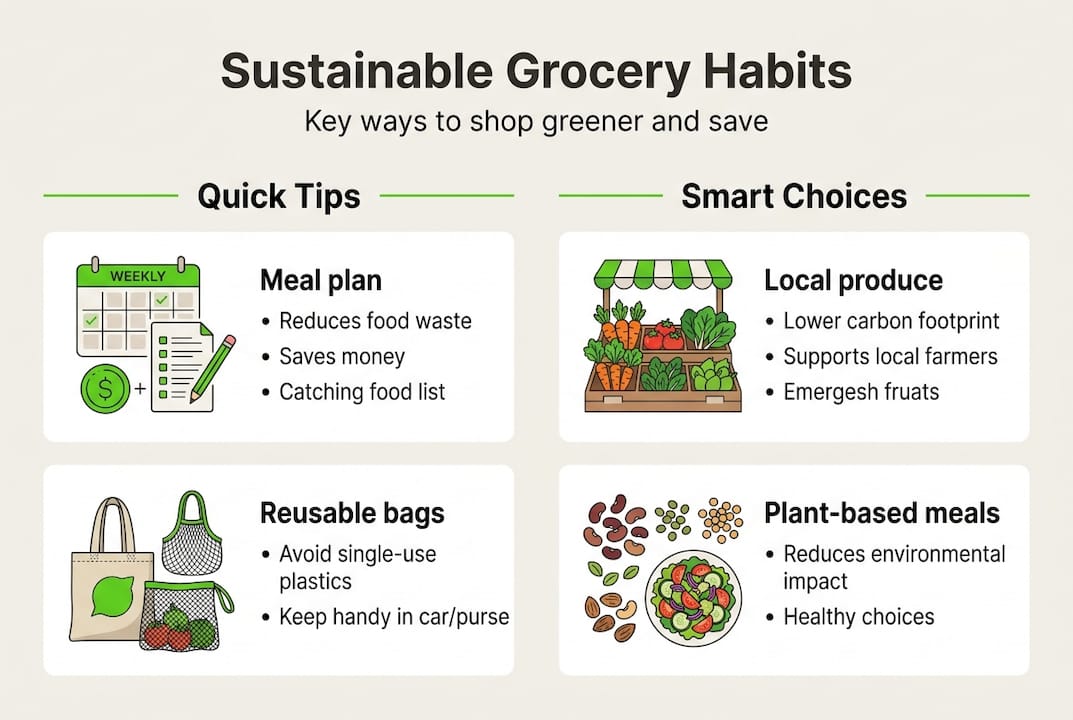
India has a natural advantage here. Traditional Indian diets are already rich in plant-based proteins: dal, rajma, chana, millet, and soya. These are not compromise foods. They are nutritionally dense, affordable, and have a fraction of the carbon footprint of meat-based alternatives. Non-veg dishes carry a carbon footprint 2.38 times higher than equivalent vegetarian meals. That is a significant difference, and it compounds across a household over an entire year.
You do not need to eliminate meat or dairy entirely. A hybrid approach, reducing rather than removing, is both realistic and impactful. Here is how to integrate more plant proteins into a typical Indian diet:
- Swap one dinner a week. Replace a meat-based curry with a dal or rajma dish. The flavour profile is familiar, the cost is lower, and the environmental benefit is immediate.
- Use millets as a base. Jowar, bajra, and ragi are nutritious, affordable, and deeply rooted in Indian culinary tradition. They work as rotis, porridges, and even rice substitutes.
- Read ICMR guidelines. The Indian Council of Medical Research recommends a diet with a strong plant base, moderate dairy, and limited red meat. Aligning your weekly shop with these guidelines is both a health and sustainability win.
For guidance on choosing fresh produce that complements a plant-forward diet, a little research goes a long way.
Pro Tip: Start with one or two plant-based dinners per week. That modest shift, if sustained across a family of four for a year, eliminates the equivalent of hundreds of kilograms of CO2 from your household’s food footprint.
Why small steps beat perfection in sustainable grocery shopping
Here is something the sustainability conversation rarely admits: the pursuit of perfect eco-credentials can actually make things worse. When the bar feels impossibly high, most people do nothing at all. We have seen this pattern repeatedly. A shopper learns about organic certification, realises they cannot afford to go fully organic, and ends up buying nothing differently.
The truth is that incremental progress is where the real impact lives. One plant-based meal a week. Switching from packaged to loose produce at your local mandi. Carrying a reusable bag. These are not consolation prizes. They are the actual levers of change, because they are the ones people actually maintain.
Sustainability is a direction, not a destination. The household that buys local produce twice a week and occasionally chooses organic staples is doing more meaningful work than the one that obsesses over perfection and burns out by month two.
Focus on building habits rather than achieving an ideal. Celebrate the small wins. The shift from a shopping list scribbled on a scrap of paper to a proper weekly meal plan is genuinely significant. Do not let anyone, including yourself, tell you otherwise.
Try sustainable shopping with Nature’s Soul Shop
Putting these habits into practice is much easier when you have a reliable source for certified organic and natural products.
Nature’s Soul Shop brings together verified organic groceries, clean-ingredient staples, and natural living essentials across every category you need: fresh produce, dry grocery, dairy, plant-based options, and even home care and skin care. Every product is selected with the same principles this guide covers: clean ingredients, trusted certifications, and genuine sustainability. Browse the health resources section to find guidance on building a cleaner, more intentional kitchen, backed by products that actually deliver on their promises.
Frequently asked questions
How can I check if a product is truly organic in India?
Look for trusted certifications like NPOP, Jaivik Bharat, or India Organic on the packaging, and cross-check the producer on the FSSAI or APEDA database for added assurance.
Does shopping at farmers markets actually save money?
Yes. Local mandis and farmers markets typically offer 20 to 30% savings on fresh produce compared to supermarkets, with the added benefit of fresher, shorter-supply-chain food.
What is the easiest swap for reducing plastic waste during shopping?
Switch to reusable bags and choose loose produce over pre-packaged alternatives. This single change significantly cuts the plastic that enters your home each week.
Are plant-based meals really healthier and more sustainable?
Plant-based meals have a 2.38 times lower carbon footprint than non-veg equivalents, and they align well with ICMR dietary recommendations for Indian adults.
Should I buy all my groceries organic?
No. Prioritise organic for high-risk items like leafy greens and staple grains, and use conventional options for thick-skinned produce where pesticide exposure is minimal.
Recommended
- Mindful Grocery Shopping: A Step-by-Step Guide to Healthier Choices – naturessoulshop
- Healthy grocery shopping in India: Simple steps – naturessoulshop
- How to choose fresh produce: 5 steps to better choices – naturessoulshop
- Master Zero Waste Grocery Shopping: A Practical Guide – naturessoulshop
- Nectar Blog | Sustainability in Ecommerce: Why It Matters for Brands


