


Reaching for imported blueberries or packaged ‘superfoods’ feels like the healthy choice, but local seasonal produce grown right here in Delhi NCR often outperforms them nutritionally. Produce harvested at peak ripeness yields up to 30% higher nutrient density than food picked early and shipped across continents. Ayurvedic seasonal regimens have recognised this for centuries, aligning diet with nature’s rhythms to reduce seasonal illness and support long-term vitality. This guide covers the science, the tradition, and the practical steps to make seasonal organic eating a genuine part of your wellness routine.
Table of Contents
- What does seasonal produce really mean in Delhi NCR?
- Nutritional and wellness benefits of seasonal eating
- Where and how to buy organic seasonal produce in Delhi NCR
- Integrating seasonal produce into daily wellness and meal plans
- Discover trusted organic produce for your wellness journey
- Frequently asked questions
Key Takeaways
| Point | Details |
|---|---|
| Peak-season produce is healthier | Produce at its natural ripeness holds up to 30% more nutrients than off-season alternatives. |
| Seasonal eating aligns with Ayurveda | Adapting your diet to the seasons can support dosha balance and strengthen immunity. |
| Delhi NCR offers ample variety | Each season provides more than 25 fresh options for diverse, satisfying meals. |
| Certified markets ensure true organic | Rely on NPOP/India Organic labels and reputable markets or delivery services for real organic food. |
| Seasonal choices support local wellness | Eating seasonally lowers your carbon footprint, benefits the local economy and boosts sustainability. |
What does seasonal produce really mean in Delhi NCR?
Seasonality is not just a marketing term. It means food grown and harvested at its natural peak, with minimal chemical intervention to force ripening or extend shelf life. In Delhi NCR, the seasons are distinct and generous. Summer brings alphonso mangoes, watermelons, and ridge gourds. Winter fills markets with spinach, mustard greens, carrots, and cauliflower. The monsoon season offers bottle gourd, bitter gourd, and tinda. Each season is a different menu, not a limitation.
A common myth is that eating seasonally means eating the same five things for months. In reality, each season offers over 25 varieties of fruits and vegetables, giving you more than enough to keep meals interesting and nutritionally diverse. Understanding the local produce benefits of this variety is the first step towards smarter food choices.
Ayurveda introduces the concept of Ritusandhi, the 14-day transition period between seasons. During this window, the body is adjusting and is more vulnerable to illness. Gradually shifting your diet from one season’s foods to the next, rather than making abrupt changes, supports digestion and immunity during this sensitive period.
“Gradual dietary transition during Ritusandhi helps the body adapt without stress, reducing the risk of seasonal imbalances.”
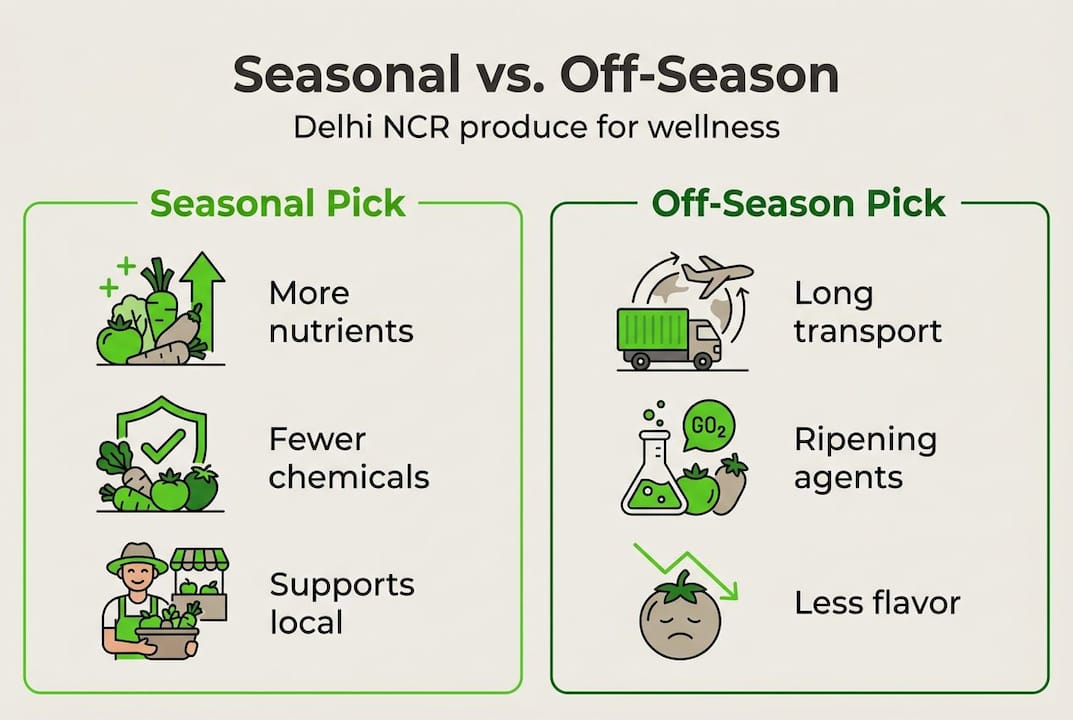
Off-season produce, by contrast, is often grown in artificial conditions, treated with ripening agents, or transported over long distances. The nutritional and ethical cost of that convenience is rarely visible on the label.
Nutritional and wellness benefits of seasonal eating
Eating with the seasons is not nostalgia. It is one of the most evidence-backed dietary strategies available to you. When fruits and vegetables are allowed to ripen fully on the plant, their vitamin and antioxidant content reaches its natural maximum. Imported or off-season produce, picked early and cold-stored, loses a measurable portion of those nutrients before it reaches your plate.
| Nutrient factor | Seasonal organic produce | Off-season or imported produce |
|---|---|---|
| Vitamin C content | High at harvest | Reduced by up to 30% in storage |
| Antioxidant levels | Peak at natural ripeness | Diminished by early picking |
| Pesticide residue risk | Lower with organic farming | Higher with forced cultivation |
| Flavour and freshness | Noticeably superior | Often bland or watery |
Ayurveda’s Ritucharya (seasonal regimen) maps specific foods to each season to maintain dosha balance and support digestion. Cooling foods like cucumber and coconut in summer pacify Pitta. Warming, grounding foods like sesame and root vegetables in winter support Vata. This is not coincidence. It is centuries of observation about how food and climate interact in the body.
Pro Tip: If you are new to seasonal eating, start by swapping just one item in your weekly shop for a certified organic seasonal alternative. Notice the difference in taste and how you feel after a fortnight.
Organic seasonal produce also means significantly lower pesticide and preservative exposure. Understanding organic farming basics helps you appreciate why certification matters, and our guide to pesticide-free vegetables breaks down exactly what to look for on labels. The immunity benefits compound over time, particularly when your diet consistently aligns with what your local environment is producing.

Where and how to buy organic seasonal produce in Delhi NCR
Knowing the benefits is one thing. Finding reliable, genuinely organic sources is another. Delhi NCR has a growing ecosystem of farmers markets, certified suppliers, and delivery services worth knowing about.
Farmers markets worth visiting:
- Gurgaon Organic Farmers Market at Leisure Valley Park, held on weekends, features certified growers from Haryana and Rajasthan
- Sunder Nursery Farmers Market in Nizamuddin East, popular for its curated organic and natural produce stalls
- Dilli Haat occasionally hosts organic produce events alongside its craft exhibitions
- INA Market has select vendors supplying seasonal local vegetables, though certification varies
For those who prefer doorstep delivery, farmers markets and certified services like Gurvani Naturals and app-based organic platforms have made access far more convenient. Our comparison of fruit and vegetable delivery options in Delhi NCR can help you choose the right service for your household.
| Buying method | Pros | Cons |
|---|---|---|
| Farmers market | Fresh, direct from grower, seasonal | Requires weekend visit, limited hours |
| Online delivery | Convenient, certified, consistent | Slightly higher cost, less tactile |
| Local sabzi vendor | Affordable, accessible daily | Certification often unclear |
| Supermarket organic section | Widely available | Mixed sourcing, check labels carefully |
When buying, always look for NPOP (National Programme for Organic Production) or India Organic certification. These are the two government-recognised marks that confirm produce has been grown without synthetic pesticides or fertilisers. Our guide to buying local produce walks you through the certification process in plain language.
For specific items like herbs, certified organic basil in Delhi is now available online, making it easy to add fresh, clean ingredients to your meals without compromise.
Practical tips for smarter seasonal shopping:
- Visit markets early in the morning for the freshest stock
- Ask sellers directly when the produce was harvested
- Avoid anything that looks unnaturally uniform or waxy
- Buy in quantities you can use within three to five days
- Rotate your choices weekly to maximise nutritional variety
Integrating seasonal produce into daily wellness and meal plans
Buying seasonal produce is only half the equation. Using it consistently and creatively is what actually transforms your health. The simplest approach is to plan meals around 3 to 5 seasonal items each week, building your shopping list around what is fresh rather than what a recipe demands.
Here is a simple three-day sample plan across seasons:
- Summer day: Breakfast with papaya and mint, lunch featuring ridge gourd sabzi with brown rice, dinner with a cucumber and tomato salad alongside dal
- Winter day: Morning amla juice, lunch with sarson ka saag and makki ki roti, dinner featuring roasted carrots and beetroot with lentil soup
- Monsoon day: Breakfast with seasonal pears, lunch with tinda and potato curry, dinner featuring bitter gourd stir-fry with quinoa
Ayurvedic alignment makes this even more intentional. In summer, prioritise cooling foods: cucumber, melon, coconut water, and coriander. In winter, lean into warming ingredients: ginger, carrots, sesame, and mustard. During the monsoon, favour light, easily digestible foods like bottle gourd and moong dal to support a digestive system that tends to slow in humid conditions.
“Eating with the seasons is not a restriction. It is the most natural form of personalised nutrition available to you.”
Pro Tip: Batch-cook one or two seasonal vegetables at the start of the week. Roasted carrots, steamed greens, or a simple gourd curry can be repurposed across multiple meals, saving time without sacrificing freshness.
Seasonal eating also reduces food waste significantly. When you buy what is abundant and local, you are working with nature’s supply rather than against it. Our resources on cooking with seasonal produce and the best organic fruits available in Delhi NCR offer practical inspiration for every meal. Supporting local farmers through your food choices also strengthens the regional food economy, keeping money within the community and reducing the carbon footprint of your plate.
Discover trusted organic produce for your wellness journey
For those ready to take the next step in their wellness journey, finding a trustworthy organic food source is now easier than ever. You have the knowledge. Now you need a reliable place to act on it.
Nature’s Soul Shop brings certified organic seasonal fruits, vegetables, and wellness essentials directly to your door across Delhi NCR. Every product is sourced with clean ingredients and transparent certification, so you never have to guess about what you are eating. From fresh produce to dairy, dry grocery, and beyond, the range is built around the same seasonal and wellness principles covered in this guide. Explore the full selection of organic health essentials and make your next shop one that genuinely supports your body and your values.
Frequently asked questions
What are the best months for buying seasonal produce in Delhi NCR?
Most local fruits and vegetables peak between October and March for winter varieties, and April to June for summer produce, with a 14-day Ritusandhi transition between each season where dietary changes should be gradual.
How do I know if produce is really organic and seasonal?
Look for NPOP or India Organic certification at the point of purchase, and buy from reputable farmers markets or verified online services where sourcing is transparent.
Is it expensive to eat seasonal organic food in Delhi NCR?
Seasonal organic produce is often more affordable than premium imported alternatives because sourcing seasonal food reduces transport and storage costs, and supports local farmers with fairer pricing.
Can I get variety in my diet if I eat seasonally?
Absolutely. Each season in Delhi NCR offers over 25 varieties of fruits and vegetables, and rotating your choices weekly ensures your diet stays nutritionally diverse and genuinely interesting.
Are there any health risks from off-season produce?
Off-season produce is frequently forced with ripening chemicals or treated with pesticides to extend shelf life, which can reduce nutritional value and introduce compounds best avoided in a clean diet.
Recommended
- Seasonal eating guide 2026: 30% more nutrients for families – naturessoulshop
- Organic Farming Basics for Healthy Living in Delhi NCR – naturessoulshop
- How to Buy Local Produce in Delhi NCR: Simple Steps Guide – naturessoulshop
- Organic Food Safety in 2025: Guide for Delhi-NCR & Expats – naturessoulshop


