


Filling your kitchen with genuinely nourishing food should not feel like solving a puzzle. Yet for many Indian families, especially first-time parents or those managing gluten-free and plant-based diets, every grocery trip can feel like a minefield of confusing labels, inflated prices, and conflicting advice. The good news is that healthy grocery shopping in India is far more straightforward than the wellness industry would have you believe. With a clear framework, a weekly plan, and a few smart habits, you can eat better, waste less, and spend less, all without chasing expensive imported ingredients.
Table of Contents
- What you need before you shop: The rules of healthy grocery shopping in India
- Step-by-step: How to plan your shopping week for health on any budget
- Smart shopping in Indian markets and apps: Where and how to buy for freshness, value, and trust
- Verification and optimisation: Checking your haul, adapting the plan, and troubleshooting
- A fresh perspective: Why healthy grocery shopping in India is simpler than it sounds
- Shop smarter with Nature’s Soul: Curated organic essentials for Indian families
- Frequently asked questions
Key Takeaways
| Point | Details |
|---|---|
| Plan meals weekly | Plan your meals before shopping to reduce waste and eat more nutritiously. |
| Buy local and seasonal | Choosing produce from local mandis saves money and boosts freshness. |
| Balance your plate | Follow ICMR-NIN guidelines for each food group to ensure well-rounded nutrition. |
| Prioritise whole foods | Whole grains, pulses, fresh fruits, and vegetables should always come before packaged foods. |
What you need before you shop: The rules of healthy grocery shopping in India
Before you write a single item on your list, it helps to understand what a balanced Indian plate actually looks like. The ICMR-NIN dietary guidelines recommend specific daily portions for each food group, giving Indian families a science-backed starting point rather than generic Western nutrition advice. This matters because Indian diets are naturally rich in pulses, cereals, and vegetables, which already align well with these recommendations.
Here is a quick reference for daily portions based on those guidelines:
| Food group | Recommended daily amount |
|---|---|
| Cereals and millets | 250 to 300g |
| Pulses and legumes | 85g |
| Vegetables | 300g |
| Fruits | 100g |
| Milk or dairy | 300ml |
| Fats and oils | 27g maximum |
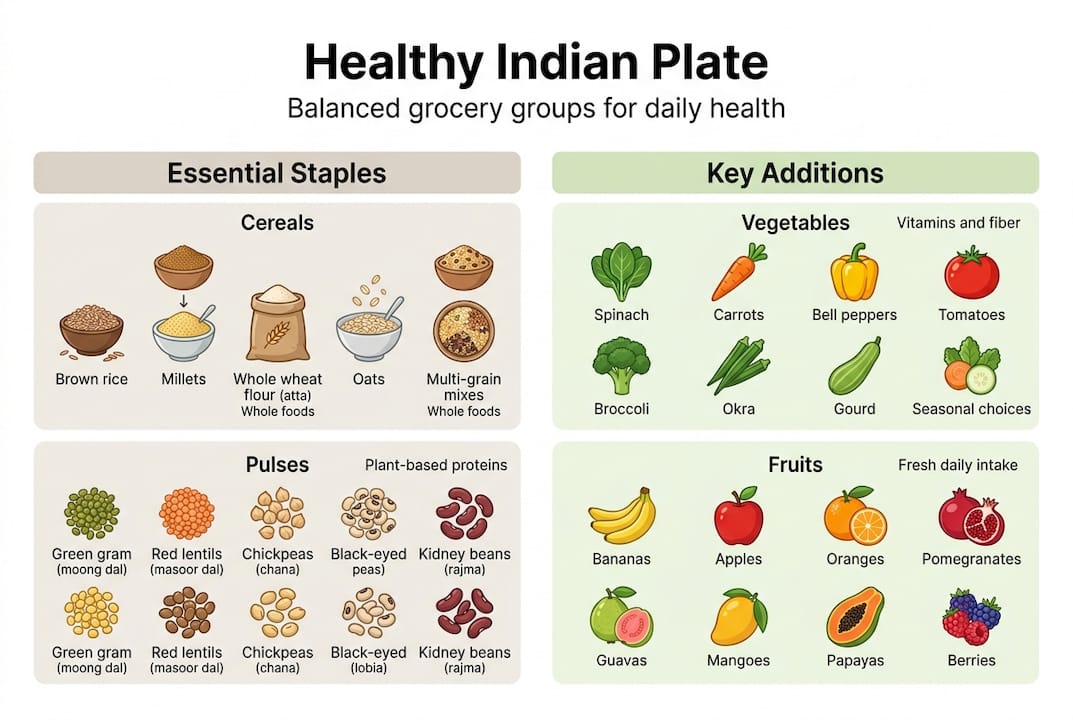
Now, let us address a common myth. Many shoppers believe healthy eating requires quinoa, chia seeds, or imported superfoods. It does not. Moong dal, rajma, ragi, jowar, and seasonal local vegetables are nutritional powerhouses that cost a fraction of the price. Buying from local mandis and focusing on seasonal produce can save 20 to 30% on your weekly grocery bill compared to supermarket shopping.
A few essentials to have in place before you shop:
- Write your list in advance based on planned meals for the week
- Check your pantry first to avoid buying duplicates of staples like rice, dal, or oil
- Focus on local and seasonal produce for maximum freshness and minimum cost
- Avoid shopping hungry, as it leads to impulse purchases of packaged snacks
- Set a realistic budget and allocate more to fresh produce and whole grains
For a broader approach to making thoughtful choices at every stage of your shop, our mindful grocery shopping guide walks you through the full process in detail.
Pro Tip: Download apps like BigBasket, Blinkit, or JioMart before heading out. You can compare prices, check availability of specific millets or organic items, and sometimes spot deals that make bulk buying worthwhile.
Step-by-step: How to plan your shopping week for health on any budget
Planning your week before you shop is one of the most effective habits you can build. Weekly planning reduces food waste and supports consistent healthy eating far better than shopping on instinct. The process does not need to be elaborate. It just needs to be consistent.
Here is a simple weekly planning sequence:
- Outline your meals for breakfast, lunch, dinner, and snacks across seven days
- Check your kitchen inventory for staples already in stock
- Build your list by category: produce, grains, pulses, dairy or alternatives, and pantry items
- Identify seasonal produce available that week and plan meals around it
- Note any dietary needs such as gluten-free or plant-based requirements before finalising
For families with different dietary needs, here is a quick comparison of staple swaps:
| Standard staple | Gluten-free swap | Plant-based swap |
|---|---|---|
| Wheat roti | Ragi or jowar roti | Same |
| Cow’s milk | Coconut or almond milk | Oat or soy milk |
| Paneer | Tofu | Tofu or cashew cheese |
| White rice | Brown rice or millets | Same |
| Ghee | Cold-pressed coconut oil | Cold-pressed coconut oil |
For gluten-free and plant-based eaters, combining cereals and pulses at most meals ensures a complete amino acid profile, which is especially important when dairy or meat is excluded. Ragi porridge with moong dal, or jowar roti with rajma, are classic combinations that tick every nutritional box.
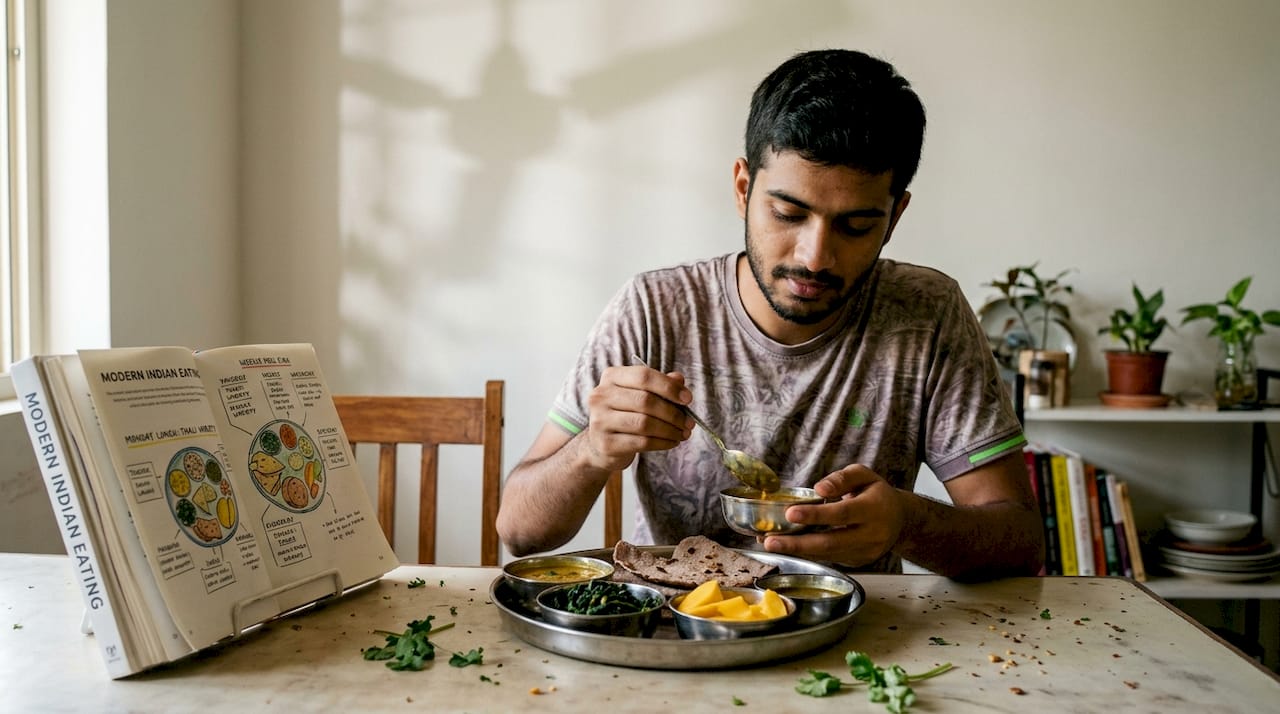
Our guide to meal prep for gluten-free diets has ready-to-use templates if you want a head start. And if you are curious about what is in season right now, our seasonal eating guide is updated regularly for Indian families.
Pro Tip: Parents of young children can save significant time by batch-cooking ragi porridge, dal, and mixed vegetable sabzi on Sunday evenings. Portion and refrigerate for up to three days. Mornings become dramatically easier.
Smart shopping in Indian markets and apps: Where and how to buy for freshness, value, and trust
Knowing what to buy is only half the equation. Where you buy matters just as much for both nutrition and value. Local mandis offer fresher produce at 20 to 30% lower prices than most supermarkets, largely because the supply chain is shorter and there is less packaging overhead.
Here is a quick breakdown of your main shopping venues and what each does best:
- Mandis (open-air produce markets): Best for fresh fruits, vegetables, and seasonal items. Prices are negotiable and variety is high.
- Kirana stores: Reliable for everyday staples like dal, rice, oil, and spices. Building a relationship with your local kirana owner often means better quality and occasional credit.
- Supermarkets: Useful for packaged goods, organic certified items, and brands you trust. Prices are higher but consistency is better.
- Delivery apps (BigBasket, Blinkit, JioMart): Ideal for bulk staples, scheduled deliveries, and comparing prices across brands without leaving home.
When checking freshness at any venue, look for these signs:
- Firm, unblemished skin on fruits and vegetables with no soft spots
- Bright, natural colour rather than artificially glossy surfaces
- A fresh, mild scent rather than a fermented or chemical smell
- Sealed, undamaged packaging on any dry goods or organic items
- Clear expiry dates and FSSAI certification on packaged products
A note for parents and pregnant individuals: Always avoid raw or undercooked foods, unpasteurised dairy, and pre-cut fruits from unknown sources. These carry a higher risk of bacterial contamination and are best replaced with home-prepared alternatives.
For a detailed comparison of fresh versus frozen food choices, and guidance on fruit and vegetable home delivery services across India, we have dedicated resources that go deeper into each option.
Verification and optimisation: Checking your haul, adapting the plan, and troubleshooting
The shop is done, but the work is not quite over. Taking ten minutes to check your groceries against your plan is a habit that separates consistent healthy eaters from those who drift back to convenience foods by Wednesday.
Here is a simple post-shop checklist:
- Check variety: Do you have at least three to four different vegetables and two types of fruit?
- Check balance: Are all food groups represented, including protein sources like dal, eggs, or tofu?
- Check freshness: Inspect produce for any damage that needs to be used first
- Check portions: Do you have enough for the number of meals you planned?
- Check labels: Scan any packaged items for hidden sugars, refined oils, or additives
On label reading, the ICMR-NIN guidelines specifically warn to limit oil to 27g daily and keep ultra-processed foods to a minimum. A product with more than five unfamiliar ingredients on the label is usually a sign to put it back.
If you fall short on any category, here are quick pantry hacks. No fresh greens? Use frozen spinach or dried methi. Low on protein? Canned chickpeas or roasted chana work well. Short on fruit? Dry fruits like raisins or dates in small quantities are a reasonable substitute.
Homemade and local produce are consistently more affordable and nutritious than packaged alternatives, so always default to those when in doubt. Keep a running note of what gets wasted each week and adjust your next list accordingly.
Pro Tip: Keep a small whiteboard or notes app dedicated to your grocery observations. Track what you over-bought, what ran out too fast, and what seasonal items were exceptional. Within a month, your lists will be sharper and your waste will drop noticeably.
For those navigating specific dietary restrictions, our gluten-free shopping tips offer targeted advice on finding certified products without overspending.
A fresh perspective: Why healthy grocery shopping in India is simpler than it sounds
Most healthy eating guides make the process sound like a full-time job. They reference obscure ingredients, suggest expensive supplements, and imply that unless you are sourcing organic everything from a specialist store, you are doing it wrong. We disagree, and the evidence backs us up.
India’s traditional grocery staples are genuinely among the most nutritionally complete foods available anywhere in the world. Moong dal has more protein per rupee than most protein powders. Ragi has more calcium than milk, gram for gram. Seasonal vegetables from your local mandi are fresher than anything sitting in a supermarket cold chain for three days.
The real superpower is routine, not ingredients. A consistent weekly plan built around seasonal produce for wellness and your neighbourhood market is more sustainable than any trendy diet. Buying from local mandis and kiranas also keeps money within your community, which matters.
Simplicity is the strategy. The families eating the healthiest in India are not the ones with the most exotic pantries. They are the ones with the most consistent habits.
Shop smarter with Nature’s Soul: Curated organic essentials for Indian families
If you are ready to put this plan into action, Nature’s Soul makes it easier to source clean, trustworthy staples without spending hours comparing labels. We curate organic millets, gluten-free grains, plant-based alternatives, and everyday Indian essentials with full ingredient transparency, so you know exactly what you are bringing home.

For families following a gluten-free routine, our gluten-free puffed rice is a practical, versatile staple that works for breakfast, snacks, and quick meals. Browse our weekly essentials range and find everything your plan needs, from certified organic dals to cold-pressed oils, delivered directly to your door.
Frequently asked questions
What are the essential staples for healthy grocery shopping in India?
Fresh vegetables, local fruits, whole grains or millets, pulses, nuts, seeds, and moderate dairy form the foundation. Aim for variety and balance as per ICMR-NIN recommendations for each food group.
How can I save money on healthy groceries in India?
Meal plan before shopping, buy seasonal produce at local mandis, and choose local grains like dal and millets. Shopping local and planning consistently saves 20 to 30% compared to unplanned supermarket trips.
What should first-time parents prioritise when shopping for healthy groceries?
Focus on fresh, nutrient-rich foods like ragi, dal, leafy greens, curd, and seasonal fruit. Always avoid raw or undercooked items and unpasteurised dairy, as these carry higher safety risks for young children and during pregnancy.
Are imported superfoods necessary for a healthy Indian diet?
Not at all. Local pulses and millets provide affordable, high-quality nutrition and are recommended over pricier imported alternatives by Indian nutrition experts.
Recommended
- How to Buy Local Produce in Delhi NCR: Simple Steps Guide – naturessoulshop
- Easy meal prep ideas for organic, gluten-free diets in India – naturessoulshop
- Budget gluten-free shopping in Delhi NCR: smart tips for 2026 – naturessoulshop
- Food Labelling India 2026: 70% Healthier Choices Guide – naturessoulshop


