


TL;DR:
- Over 60% of global baby foods tested contain heavy metal traces, posing health risks.
- Parents should verify FSSAI registration, ingredient clarity, and avoid rice-based products.
- Rotation of grains, sourcing organic produce, and diligent label reading enhance safety.
Discovering that some baby foods sold in India contain traces of lead, arsenic, or cadmium is a deeply unsettling moment for any new parent. These are not fringe concerns buried in obscure journals. Heavy metal risks in baby foods are a documented, global problem, and India’s rapidly growing packaged baby food market is not immune. Whether you are starting solids at six months or navigating toddler snacks, understanding what makes a product genuinely safe, not just attractively labelled, is one of the most important things you can do. This guide walks you through the risks, the regulations, and the practical steps to choose wisely.
Table of Contents
- Understanding baby food risks and Indian safety standards
- What to look for: Ingredients, labels, and certifications
- Best practices: Preparing and choosing safer baby food options
- Verifying and updating your baby food choices
- A parent’s reality: Why ‘organic’ does not always mean safe
- Safe shopping for baby food: Your next step
- Frequently asked questions
Key Takeaways
| Point | Details |
|---|---|
| Follow FSSAI and BIS standards | Always choose baby foods that display clear FSSAI and BIS compliance for maximum safety. |
| Prefer organic and sprouted grains | Grain rotation—especially avoiding rice-based products—reduces heavy metal intake risk. |
| Trust certified brands and simple ingredients | Look for trusted labels and avoid preservatives, artificial colours, or ambiguous formulations. |
| Review and update choices regularly | Stay alert to product recalls and regulatory changes to maintain your baby’s food safety. |
Understanding baby food risks and Indian safety standards
Most parents assume that a product sitting on a pharmacy shelf or a well-known supermarket aisle has been thoroughly vetted. The reality is more complicated. Heavy metals detected in over 60% of baby foods tested globally is a figure that should give every parent pause. Lead, arsenic, cadmium, and mercury can accumulate in a baby’s body over time, affecting brain development and organ function even at low levels.
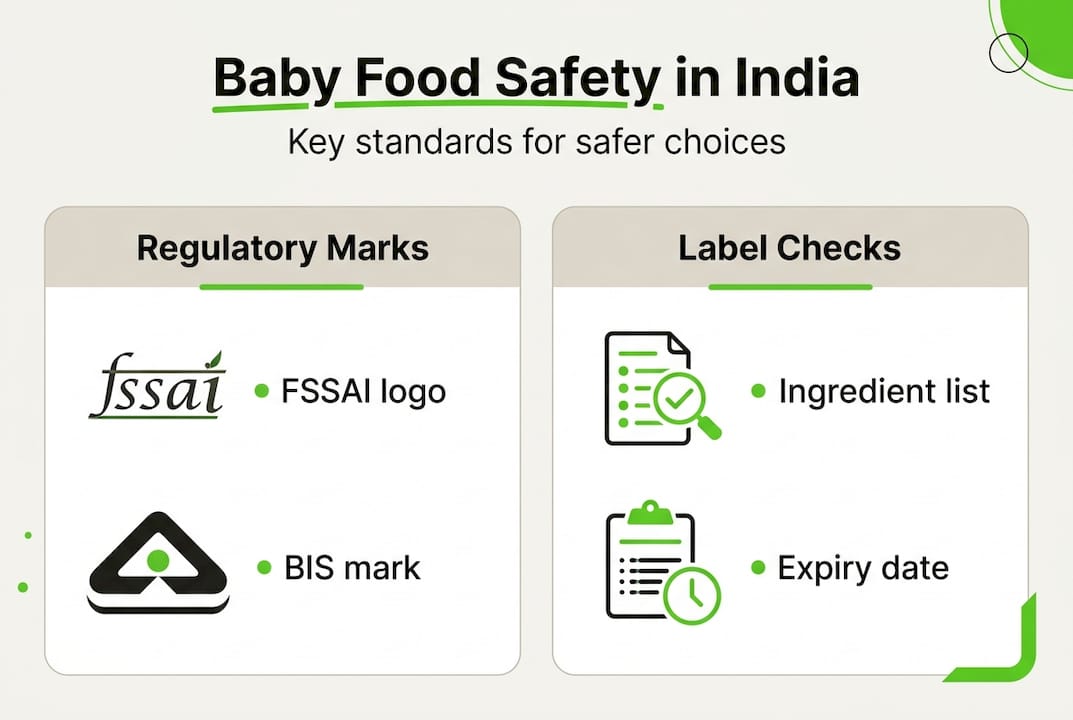
In India, the Food Safety and Standards Authority of India (FSSAI) is the primary regulatory body. FSSAI sets strict limits on metal contaminants in baby foods, covering lead, arsenic, cadmium, and tin. These are meaningful benchmarks, and knowing they exist is your first layer of protection. The Bureau of Indian Standards (BIS) adds another layer, particularly for cereal-based complementary foods. Understanding food health regulations in India helps you see why compliance matters as much as marketing language.
Not all baby foods carry the same level of risk. Rice-based products and those made from root vegetables like carrots and sweet potato tend to absorb more arsenic and cadmium from the soil. This does not mean you should avoid them entirely, but it does mean you should vary your baby’s diet deliberately.
Key risks to watch for in packaged baby food:
- Products with no visible FSSAI registration number on the label
- Rice-based cereals as the sole or primary grain
- Vague ingredient descriptions such as “vegetable blend” without specifics
- No batch number or manufacturing date clearly printed
- Missing allergen information
| Contaminant | FSSAI maximum limit | Why it matters |
|---|---|---|
| Lead | 0.02 mg/kg | Affects brain and nervous system |
| Arsenic | 0.1 mg/kg | Linked to developmental delays |
| Cadmium | 0.05 mg/kg | Damages kidneys over time |
| Tin | 50 mg/kg | Causes gastrointestinal issues |
Making healthier choices starts with reading labels critically, not just trusting brand imagery.
Pro Tip: When buying packaged baby food, look for the FSSAI licence number printed on the pack. You can verify it directly on the FSSAI website. If a product lacks this number, do not buy it.
What to look for: Ingredients, labels, and certifications
Once you understand the regulatory context, the next skill is decoding what is actually printed on the packaging. This is where many parents feel overwhelmed, but a simple checklist makes it manageable.
What every safe baby food label should include:
- FSSAI logo and registration number
- Clear, specific ingredient list with no vague terms
- Batch number and expiry date
- Allergen declarations
- Country of origin for key ingredients
- BIS certification mark for cereal-based products
BIS standards require a minimum of 15% protein, at least 5mg/100g of iron, a maximum of 4% moisture, and strict microbial limits for cereal-based complementary foods. These are not optional suggestions. Products that meet BIS standards have been tested against these benchmarks, which gives you a concrete measure of nutritional quality alongside safety.
Certifications worth trusting in the Indian market include India Organic and Jaivik Bharat, both of which verify that produce has been grown without synthetic pesticides. For global context, the Clean Label Project tests for heavy metals and other contaminants independently. Understanding organic certification in India helps you distinguish genuine marks from marketing decoration.
Red flag ingredients to avoid in baby food:
- Maltodextrin (a filler that spikes blood sugar)
- Added sugar or glucose syrup in any form
- Salt or sodium in products for babies under 12 months
- Artificial colours or flavours
- Hydrogenated or partially hydrogenated oils
- Preservatives such as sodium benzoate
A comparison of label types can help clarify what you are looking for:
| Label feature | Safe product | Avoid |
|---|---|---|
| Ingredient list | Named, specific items | “Vegetable blend”, “natural flavour” |
| Certification | FSSAI number, India Organic | No marks or unverifiable logos |
| Sugar content | Zero added sugar | Glucose, dextrose, fructose listed |
| Grain base | Millets, oats, wheat | Rice as sole grain |
For global organic compliance benchmarks, independent testing organisations recommend prioritising single-ingredient purees when introducing solids, as they are the easiest to trace and verify.
Pro Tip: When introducing solids for the first time, choose single-ingredient purees such as steamed pumpkin or mashed moong dal. One ingredient means one variable, making it far easier to identify any reactions.
Best practices: Preparing and choosing safer baby food options
Label reading is essential, but what you do in the kitchen matters just as much. Safe preparation at home, combined with smart product choices, gives your baby the best protection.
Recommended foods for weaning and early solids:
- Sprouted millets such as ragi, bajra, and jowar
- Moong dal (yellow lentils), well-cooked and blended
- Pumpkin and carrots, peeled and steamed
- Apple and pear, peeled and cooked
- Oats, preferably rolled and certified organic
Sprouted grains deserve special mention. Sprouting breaks down phytic acid, which otherwise blocks the absorption of iron and zinc. An organic sprouted ragi mix is a practical choice for parents who want the nutritional benefit of sprouting without the effort of doing it at home. If you are curious about the process, a sprouting seeds guide can walk you through it step by step.
Safe preparation steps at home:
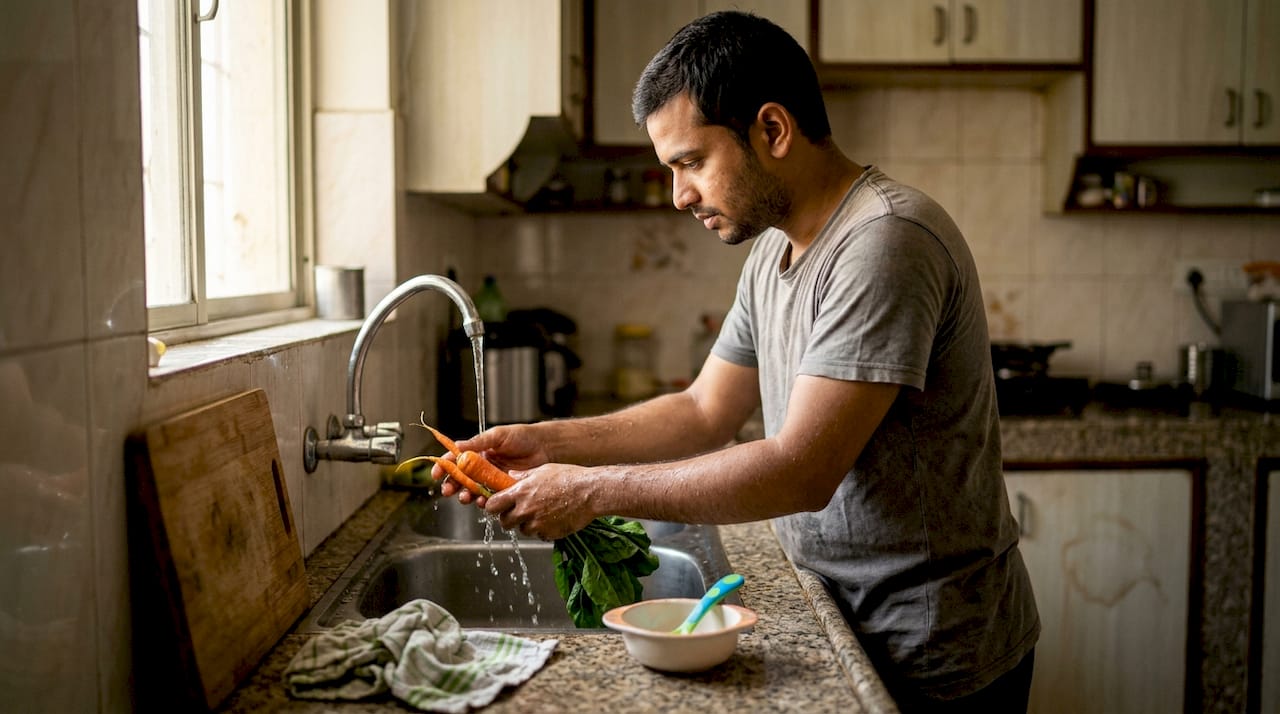
- Wash all produce thoroughly under running water, even if labelled organic
- Peel root vegetables to reduce surface contaminant exposure
- Steam rather than boil to retain nutrients
- Use clean, dedicated utensils for baby food preparation
- Store prepared purees in airtight glass containers, not plastic
- Never add salt, sugar, or honey to food for babies under 12 months
Prioritise compliant, organic, sprouted grain-based products and avoid rice-heavy meals to lower arsenic intake over time. This is not about eliminating rice entirely. It is about not making it the default grain at every meal.
“Variety is your best tool. Rotating grains, vegetables, and proteins means no single contaminant accumulates to harmful levels.”
For fresh produce, organic produce safety tips offer practical guidance on sourcing and handling. If you use vegetables like baby corn, choosing certified organic baby corn reduces pesticide exposure meaningfully. For broader guidance on best organic baby foods, independent reviews can supplement your own research.
Pro Tip: Rotate grains across the week. Use ragi on Monday, oats on Wednesday, and wheat on Friday. This simple habit significantly reduces the risk of arsenic accumulation from rice-dominant diets.
Verifying and updating your baby food choices
Safety is not a box you tick once and forget. Your baby’s nutritional needs change every few months, and the regulatory landscape evolves too. Building a routine around verification keeps you ahead of potential risks.
How to stay informed and adapt regularly:
- Subscribe to FSSAI alerts via their official website or mobile app for product recalls and regulatory updates
- Check the FSSAI food safety connect portal periodically for any brand-specific notices
- Join trusted Indian parenting forums and communities where parents share first-hand product experiences
- Revisit your baby’s food choices every two to three months as their texture tolerance and nutritional needs change
- Request test reports from brands directly. Reputable companies will share these without hesitation
No India-specific heavy metal reports exist for most domestic brands, which is why global focus has shifted to independent third-party testing as the gold standard. This gap in local data means you cannot rely solely on brand reputation. Asking for documentation is entirely reasonable.
Digital tools can help. Apps like the FSSAI Food Safety Connect allow you to scan barcodes and verify registration details. Several parenting communities on social platforms also share crowd-sourced feedback on product quality and safety incidents.
A scientific review of heavy metals in infant foods reinforces that ongoing monitoring, not just initial selection, is critical to long-term safety. Organic food safety resources specific to Delhi NCR and broader India can help you stay current with local sourcing risks.
Pro Tip: Keep a simple food diary for your baby. Note what was eaten, when, and any reactions such as rashes, loose stools, or unusual fussiness. This record becomes invaluable if you ever need to consult a paediatrician.
A parent’s reality: Why ‘organic’ does not always mean safe
Here is something the marketing rarely tells you. The word “organic” on a baby food packet addresses pesticide use during farming. It says nothing about what was already in the soil. Organic products may reduce pesticides but not necessarily heavy metals, because arsenic and cadmium accumulate in soil over decades regardless of farming method.
This is not a reason to distrust organic products. It is a reason to use organic certification as one criterion among several, not as the final word on safety. A product can carry the India Organic mark and still be grown in soil with elevated arsenic levels if the farm has not been independently tested for contaminants.
The parents who stay genuinely ahead of safety concerns are not the ones who spend the most on premium labels. They are the ones who rotate foods, read labels critically, ask questions of brands, and follow realistic organic safety guidance that goes beyond marketing claims. That combination of informed habits is far more protective than any single certification.
Safe shopping for baby food: Your next step
You have done the hard work of understanding what to look for. Now the practical question is where to find products that actually meet these standards without spending hours cross-checking every purchase.
Nature’s Soul Shop curates organic and clean-ingredient products specifically for families who want trusted options without the guesswork. From an organic sprouted ragi mix that is ideal for weaning, to vegan jowar snacks for older toddlers, every product is chosen with clean ingredients and verified sourcing in mind. When you shop from a curated store, you spend less time filtering and more time feeding your baby with confidence.
Frequently asked questions
Are homemade baby foods safer than store-bought options?
Homemade baby foods can be safer when prepared with organic, thoroughly washed ingredients and hygienic methods, but commercial products meeting FSSAI/BIS standards can also be a safe and convenient choice.
What are the safest grains for baby food in India?
Millets, oats, wheat, and sprouted grains are generally safer than rice, which carries a higher arsenic risk. Rice-based baby foods consistently show elevated arsenic levels in independent testing.
How can I check if a baby food brand is safe?
Look for a valid FSSAI registration number, BIS compliance certification, India Organic or Jaivik Bharat marks, and a clean ingredient list with no added sugar, salt, or preservatives.
Are organic baby foods always free of heavy metals?
No. Organic does not guarantee lower heavy metal levels because contaminants like arsenic and cadmium come from soil, not from pesticide use during farming.
Recommended
- Organic diet for kids: A parent’s guide to healthy eating – naturessoulshop
- Organic Certification in India: Your Guide to Healthy Choices – naturessoulshop
- Organic produce: a parent’s guide to safe choices – naturessoulshop
- Food Labelling India 2026: 70% Healthier Choices Guide – naturessoulshop
- Are Dietary Supplements Safe? Risks, Regulations & Safety Guide (2026) – BioEssentials


