


TL;DR:
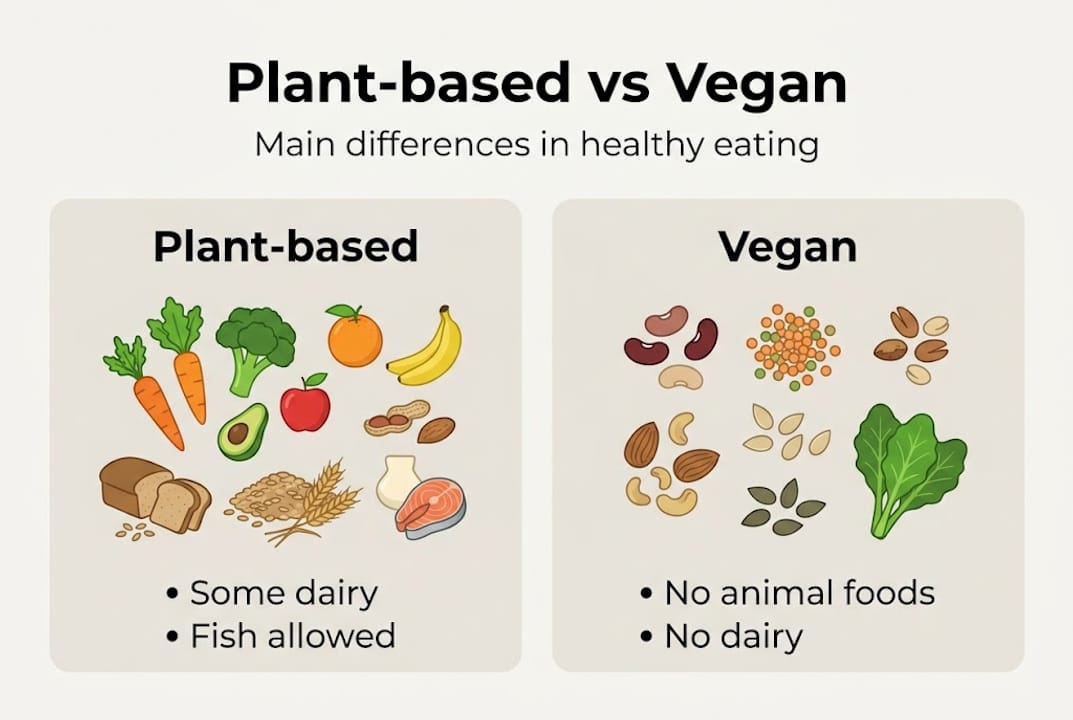
- Plant-based diets focus on mostly or partly derived from plants, allowing limited animal products.
- Veganism strictly excludes all animal products and often extends beyond diet to other products.
- Both can improve health if centered on whole foods and properly planned, but flexibility and quality are key.
Many people use ‘plant-based’ and ‘vegan’ interchangeably, yet the two carry meaningfully different implications for your diet, lifestyle, and long-term health. Plant-based eating emphasises foods derived from plants but may still include limited animal products, which is a crucial distinction. Whether you are curious about reducing meat, exploring ethical eating, or simply trying to feel better, understanding where these approaches align and where they diverge will help you make smarter, more personal choices. This article clarifies both definitions, examines what the science says about health outcomes, flags the nutrients that need your attention, and helps you find the approach that genuinely fits your life.
Table of Contents
- What does plant-based really mean?
- How is veganism different?
- Health impacts: what the evidence says
- Nutrients and pitfalls to watch
- Our take: flexible wins but focus on whole foods
- Explore healthy plant-based living with Nature’s Soul
- Frequently asked questions
Key Takeaways
| Point | Details |
|---|---|
| Definitions differ | Plant-based allows some animal products, while vegan excludes them entirely for diet and often lifestyle. |
| Health gains depend on choices | Whole, minimally processed foods drive better health outcomes than food labels alone. |
| Plan for nutrients | Attention to nutrients such as B12 and iron is key on both diets to maintain wellbeing. |
| Flexibility is fine | You can reap benefits without being 100% vegan, so adapt your approach to suit your lifestyle. |
What does plant-based really mean?
The term ‘plant-based’ sounds straightforward until you try to pin it down. In reality, it sits on a spectrum rather than a fixed point, and that flexibility is both its greatest strength and its biggest source of confusion.
At one end of the spectrum, a plant-based diet might mean eating predominantly vegetables, fruits, legumes, wholegrains, nuts, and seeds while occasionally including fish, dairy, or eggs. At the other end, it can mean eliminating animal products entirely. Pescatarians, flexitarians, and even some Mediterranean-style eaters all fall under this broad umbrella, which is precisely why the label can feel slippery.
“There is no standard definition for plant-based; the Academy of Nutrition and Dietetics applies it to diets where animal-origin foods are mostly or completely excluded.”
This lack of standardisation matters in practice. When a product is marketed as ‘plant-based’, it does not automatically mean it is free from all animal ingredients. Reading labels carefully remains essential regardless of the branding on the front of the packet.
Foods commonly found on a plant-based diet:
- Fresh and frozen vegetables and fruits
- Wholegrains such as oats, brown rice, quinoa, and barley
- Legumes including lentils, chickpeas, and black beans
- Nuts and seeds such as almonds, chia seeds, and flaxseeds
- Plant-based oils like olive oil and coconut oil
- Tofu, tempeh, and other minimally processed soy products
- Occasional fish, eggs, or dairy (depending on the individual’s approach)
Many people are drawn to the flexibility of plant-based eating precisely because it does not demand perfection. You can prioritise plants while still accommodating cultural food traditions, social occasions, or personal preferences. For a deeper look at how this approach connects to broader wellbeing, explore plant-based wellness and sustainability and see how small shifts can build meaningful habits over time.
The key takeaway is that ‘plant-based’ describes a direction of travel rather than a strict destination. That openness makes it accessible, but it also means the health outcomes vary considerably depending on the actual foods you choose.
How is veganism different?
Veganism is a more defined commitment. Where plant-based eating allows for interpretation, veganism draws a clear line: no animal products, full stop. That includes meat, poultry, seafood, dairy, eggs, and honey. For many vegans, the boundary extends beyond food to clothing, cosmetics, and household products that contain or are tested on animals.
The motivation behind veganism is often ethical or environmental rather than purely dietary. Concern for animal welfare and a desire to reduce environmental impact drive many people to adopt a fully vegan lifestyle, not just a vegan plate. This distinction matters because it shapes how strictly someone adheres to the rules and how they respond when options are limited.
Common foods and ingredients vegans avoid:
- All meat, poultry, and seafood
- Dairy products including milk, cheese, butter, and yoghurt
- Eggs and egg-derived ingredients
- Honey and beeswax
- Gelatine, casein, whey, and lactose
- Certain food colourings such as carmine (derived from insects)
- Animal-based stocks and broths
Pro Tip: Hidden animal ingredients appear in surprising places. Worcestershire sauce typically contains anchovies, many wines use animal-derived fining agents, and some breads include milk powder. Always check ingredient lists rather than relying on a product’s general appearance.
The good news is that the vegan vs vegetarian differences are becoming easier to navigate as vegan-friendly alternatives multiply across supermarkets and online stores. Plant milks, vegan cheeses, and egg replacers are now widely available, making the practical side of veganism far less daunting than it once was.
The Academy of Nutrition and Dietetics recognises both plant-based and vegan diets as viable eating patterns, provided they are thoughtfully planned. The critical difference remains intent and strictness: veganism is a principled commitment, while plant-based eating is a flexible framework.
Health impacts: what the evidence says
Both approaches can deliver real health benefits, but the evidence is clear that how you eat within these frameworks matters far more than the label you choose.
Reduced CVD risk is one of the most consistently reported benefits of well-planned plant-based and vegan diets. Studies also link higher plant food intake to lower rates of type 2 diabetes and certain cancers. However, a vegan diet built around crisps, white bread, and processed meat substitutes will not deliver the same outcomes as one centred on whole foods.

A compelling piece of evidence comes from a twins study, which offered a rare controlled comparison. The twins study showed that vegan diets improved Healthy Eating Index scores more than omnivore diets, with participants consuming significantly higher amounts of fibre and legumes. Because the participants shared genetics and upbringing, the dietary differences were the primary variable, making the findings particularly meaningful.
Healthy Eating Index comparison: vegan vs omnivore (twins study)
| Measure | Vegan diet | Omnivore diet |
|---|---|---|
| Healthy Eating Index score | Higher | Lower |
| Fibre intake | Significantly higher | Lower |
| Legume consumption | Higher | Lower |
| Saturated fat intake | Lower | Higher |
| Overall diet quality rating | Improved | Baseline |
The pattern here is consistent with broader research. Whole plant foods, particularly legumes, vegetables, and wholegrains, are the active ingredients driving better health outcomes. Explore the health benefits of plant-based eating to understand why increasing plant variety is one of the highest-return changes you can make to your diet.
The practical implication is straightforward: prioritise whole, minimally processed foods regardless of whether you identify as plant-based or vegan. The label is secondary to the quality of what is actually on your plate.
Nutrients and pitfalls to watch
No dietary approach is nutritionally complete on autopilot. Both plant-based and vegan diets require some intentional planning to avoid gaps that can affect energy, immunity, and long-term health.
Key nutrients to monitor:
- Vitamin B12: Not found reliably in plant foods. Supplementation or fortified foods are essential for vegans and advisable for strict plant-based eaters.
- Iron: Plant-based iron (non-haem iron) is less readily absorbed than the iron in meat. Pair iron-rich foods with vitamin C to improve absorption.
- Calcium: Dairy is a common source, so those avoiding it should prioritise fortified plant milks, tofu set with calcium, and leafy greens such as kale.
- Omega-3 fatty acids: Oily fish is a concentrated source. Vegans should consider algae-based omega-3 supplements or include flaxseeds, chia seeds, and walnuts regularly.
- Protein: Achievable on both diets with variety. Combine different plant proteins across the day to cover all essential amino acids.
Planned vegan and vegetarian diets are considered nutritionally adequate by the Academy of Nutrition and Dietetics, but unplanned ones carry real risks for B12, iron, and other micronutrients. Understanding common nutrient issues in plant-based eating can help you stay ahead of deficiencies before they become problems.
A common pitfall is over-relying on ultra-processed vegan convenience foods. These products may tick the ethical box but often contain high levels of sodium, refined starches, and additives. They are fine occasionally, but building your diet around them undermines the health case for plant-based eating. For practical ideas on getting enough protein, look at essential plant protein alternatives to diversify your sources.
Pro Tip: Spend ten minutes each week planning your main meals and checking nutritional labels for B12 fortification and calcium content. A small investment of time prevents the most common deficiencies from developing silently.
Our take: flexible wins but focus on whole foods
Here is something the plant-based versus vegan debate rarely acknowledges honestly: most people do not need a strict label to get the benefits. What they need is more plants, better quality, and less obsession with perfection.
We have seen this pattern repeatedly. Someone commits hard to veganism, stumbles at a family dinner, feels like a failure, and abandons the whole effort. Meanwhile, someone else quietly doubles their vegetable intake, swaps two meat meals a week for lentil-based dishes, and feels measurably better within a month without ever claiming a dietary identity.
The evidence supports flexibility. You do not need to eliminate every animal product to lower your disease risk or reduce your environmental footprint. What genuinely moves the needle is increasing the variety and volume of whole plant foods in your daily eating. Progress, not perfection, is the engine of lasting change.
If you are transitioning towards a plant-based lifestyle, start with addition rather than subtraction. Add a new vegetable, a new legume, a new grain. The restrictions tend to follow naturally once your palate and habits shift. Labels are useful for communication, but your health does not care what you call yourself.
Explore healthy plant-based living with Nature’s Soul
Whether you are taking your first steps towards plant-based eating or already committed to a fully vegan lifestyle, having the right foods in your kitchen makes everything easier.
At Nature’s Soul, we stock a carefully curated range of organic and vegan-friendly groceries across every category, from fresh produce and dry goods to dairy alternatives and skin care made with clean ingredients. If you are looking for convenient, wholesome snacking, our vegan and gluten-free snacks are a great place to start. Browse our full range of healthy lifestyle products to find options that support your goals, wherever you are on the spectrum.
Frequently asked questions
Can you be plant-based but not vegan?
Yes. A plant-based diet can include small amounts of animal products such as fish, eggs, or dairy, whereas veganism excludes all animal products entirely.
Is a vegan diet always healthy?
Not automatically. Whole food vegan diets outperform unhealthy versions, and ultra-processed vegan products can be less nutritious than a balanced, minimally processed plant-based meal plan.
Do you need supplements on a vegan or plant-based diet?
Many people do, particularly for vitamin B12. Planned vegan diets may still require B12 supplementation, and iron or omega-3 supplements are often advisable depending on individual food choices.
Which is better for the environment: plant-based or vegan?
Both approaches reduce environmental impact by lowering animal product consumption, but fully vegan diets generally carry the smallest carbon and water footprint of the two.
Recommended
- Vegan vs Vegetarian – Impact on Health and Lifestyle – naturessoulshop
- Understanding the Difference Vegan Vegetarian for Healthier Living – naturessoulshop
- Plant-Based Diets: Wellness and Sustainability Explained – naturessoulshop
- Plant-Based Diet and Environment – Real Benefits for Wellness – naturessoulshop


