


Finding truly clean meat for your family’s table in Delhi NCR can feel complicated, especially when juggling health concerns and searching for organic choices. Many parents and expats worry about the hidden risks of additives in everyday foods, especially the chance that nitrites in processed meats can transform into cancer-linked nitrosamines during digestion. This guide breaks down what nitrate-free meats really are, explains how labels work, and reveals the safest options for those committed to natural, wholesome eating.
Table of Contents
- What Are Nitrate-Free Meats Exactly?
- How Nitrates Are Used In Processed Meats
- Health Risks Of Nitrates In Meat Products
- Labelling, Laws And Regional Variations
- Truly Nitrate-Free Options And Safer Alternatives
Key Takeaways
| Point | Details |
|---|---|
| Nitrate-free does not mean nitrate zero | Many products labelled as nitrate-free still contain natural nitrates, which can be misleading for consumers. |
| Health risks associated with nitrates | Nitrates can convert to nitrosamines in the digestive system, potentially increasing cancer risks. |
| Innovative preservation methods exist | Alternatives to synthetic nitrates include natural extracts and advanced packaging techniques that enhance safety and freshness. |
| Label reading is crucial | Consumers should carefully read labels to understand the sources of nitrates and make informed dietary choices. |
What Are Nitrate-Free Meats Exactly?
Nitrate-free meats represent a modern approach to protein consumption that addresses growing health concerns about traditional meat processing methods. These products are specifically designed to eliminate synthetic preservatives and potential carcinogenic compounds typically found in conventional cured meats.
Traditionally, manufacturers added synthetic nitrates and nitrites to meats like bacon, ham, and sausages for three primary purposes:
- Preserving meat and extending shelf life
- Preventing bacterial growth
- Enhancing colour and flavour
However, the chemical transformation of nitrites in the human digestive system can potentially create nitrosamines - compounds scientifically linked to increased cancer risks. Modern nitrate-free meats aim to mitigate these potential health hazards.
Interestingly, many “nitrate-free” products still contain naturally occurring nitrates from ingredients like celery juice powder or beetroot extract. These natural sources chemically function similarly to synthetic nitrates, which means the term “nitrate-free” can be somewhat misleading. Consumers should understand that while these alternative preservation methods may reduce synthetic additive exposure, they do not completely eliminate nitrate compounds.
The key differences between traditional and nitrate-free meats include:
To clarify differences, here is a comparison of traditional processed meats and nitrate-free meats:
| Aspect | Traditional Processed Meats | Modern Nitrate-Free Meats |
|---|---|---|
| Primary Preservative | Synthetic nitrates/nitrites | Natural plant extracts |
| Colour Development | Intense, stable pink/red | Slightly less vivid shades |
| Health Risk Profile | Higher cancer risk potential | Lower synthetic additive risk |
| Consumer Perception | More processed, less natural | Perceived as more wholesome |
| Regulatory Approach | Strict limits on additives | Labelling focused on transparency |
- Preservation method
- Source of nitrates (synthetic vs natural)
- Potential long-term health implications
Nitrate Content Sources
- Synthetic chemical additives
- Natural vegetable extracts
- Soil and water mineral content
Nitrate-free does not necessarily mean zero nitrates - it represents a more natural approach to meat preservation.
Pro tip: When purchasing nitrate-free meats, carefully read labels and understand the actual nitrate sources to make informed dietary choices.
How Nitrates Are Used in Processed Meats
Nitrates and nitrites have been fundamental components in meat processing for decades, serving multiple critical functions that extend beyond simple preservation. Food manufacturers rely on these compounds to ensure product safety, maintain visual appeal, and create distinctive flavour profiles in processed meat products.
The primary roles of nitrates in processed meats include:
- Inhibiting dangerous bacterial growth
- Preventing food spoilage
- Stabilising meat colour
- Enhancing overall flavour development
Specifically, nitrate preservation techniques are crucial in preventing potentially fatal bacterial contamination, particularly against Clostridium botulinum - the microorganism responsible for botulism. This dangerous bacterium can thrive in oxygen-depleted environments like sealed meat products, making nitrate additives an essential safety mechanism.
The chemical transformation of nitrates involves a complex process where nitrites are converted and interact with meat proteins. This interaction not only prevents bacterial growth but also contributes to the characteristic pink or red colour consumers associate with quality processed meats. However, this preservation method comes with potential health considerations, as these chemical conversions can potentially create nitrosamines - compounds linked to increased cancer risks.
Processed meat production involves two primary nitrate introduction methods:
- Direct synthetic chemical addition
- Natural ingredient-based nitrate sources
Nitrate Functionality Aspects
- Microbial growth prevention
- Colour stabilisation
- Flavour enhancement
- Shelf life extension
Nitrates serve multiple essential functions in meat processing, balancing safety, aesthetic, and gustatory requirements.
Pro tip: When selecting processed meats, consider products using natural nitrate sources and look for minimally processed options to reduce potential health risks.
Health Risks of Nitrates in Meat Products
The potential health risks associated with nitrates in meat products have become a significant concern for nutritional experts and health-conscious consumers. These compounds, while serving crucial preservation functions, have been increasingly scrutinised for their potential long-term health implications.

Health risks of processed meats/2025/meat-nitrites) centre primarily around their conversion into nitrosamines - chemical compounds linked to serious health concerns. Regulatory bodies have taken notice, with the European Food Safety Authority and World Health Organization acknowledging the potential carcinogenic risks associated with these additives.
The primary health risks associated with nitrate consumption include:
- Increased risk of colorectal cancer
- Potential cardiovascular complications
- Links to neurodegenerative disorders
- Compromised cellular health
Medical research has classified processed meats containing nitrates as Group 1 carcinogens, indicating a strong scientific consensus about their potential harm. The primary mechanism of concern involves the transformation of nitrates into nitrosamines within the human digestive system, which can potentially damage cellular DNA and promote cancerous growth.
Key health considerations for consumers include:
- Frequency of processed meat consumption
- Total nitrate intake from various food sources
- Individual genetic predispositions
- Overall dietary and lifestyle factors
Potential Health Impact Areas
- Cancer risk
- Cardiovascular health
- Neurological function
- Digestive system integrity
Moderation and informed choices are crucial when consuming processed meats containing nitrates.
Pro tip: Limit processed meat intake and opt for fresh, minimally processed protein sources to reduce potential nitrate-related health risks.
Labelling, Laws and Regional Variations
Food safety regulations regarding nitrate use in meat products represent a complex landscape of international standards, regional variations, and ongoing scientific assessments. Governments worldwide are increasingly scrutinising labelling practices to ensure consumer transparency and protect public health.
Nitrate labelling regulations vary significantly across different regions, with the European Union taking particularly stringent approaches. The EU has implemented reduced permissible nitrate levels in processed meats, reflecting growing concerns about potential health risks associated with these compounds.
Key regulatory aspects include:
- Mandatory disclosure of nitrate sources
- Maximum allowable nitrate concentration limits
- Requirements for natural vs synthetic nitrate labelling
- Comprehensive food safety management protocols
In the United States, the United States Department of Agriculture (USDA) has introduced specific guidelines to address consumer confusion. Products labelled as ‘no nitrates or nitrites added’ must now explicitly disclose the use of natural nitrate sources like celery powder, which chemically function similarly to synthetic additives.
International food safety standards, such as those established by the Codex Alimentarius, play a crucial role in harmonising nitrate regulation approaches across different jurisdictions. These guidelines provide a framework for:
- Maximum residue levels
- Labelling transparency
- Consumer protection mechanisms
- Scientific risk assessment protocols
Regulatory Monitoring Mechanisms
- Periodic product testing
- Manufacturer compliance audits
- Consumer complaint investigation systems
- Continuous scientific review processes
Effective food safety regulation requires constant adaptation to emerging scientific evidence and consumer protection needs.
Pro tip: Always read meat product labels carefully, paying special attention to nitrate source declarations and understanding the difference between natural and synthetic nitrate additives.
Truly Nitrate-Free Options and Safer Alternatives
Navigating the landscape of meat preservation requires understanding innovative approaches that prioritise both food safety and consumer health. Modern food science is increasingly focused on developing alternative preservation techniques that eliminate the potential risks associated with traditional nitrate-based methods.
Safer preservation alternatives include a range of natural and technological innovations:
- Essential oils with antimicrobial properties
- Plant-based extracts like rosemary and thyme
- Microbial peptides from beneficial microorganisms
- Advanced fermentation techniques
- Controlled atmospheric packaging
Natural preservatives offer promising alternatives that can potentially replicate the safety and sensory qualities of traditional nitrate-based approaches. Rosemary extract, for instance, contains potent antioxidants that can help prevent bacterial growth and maintain meat quality without introducing synthetic chemicals.
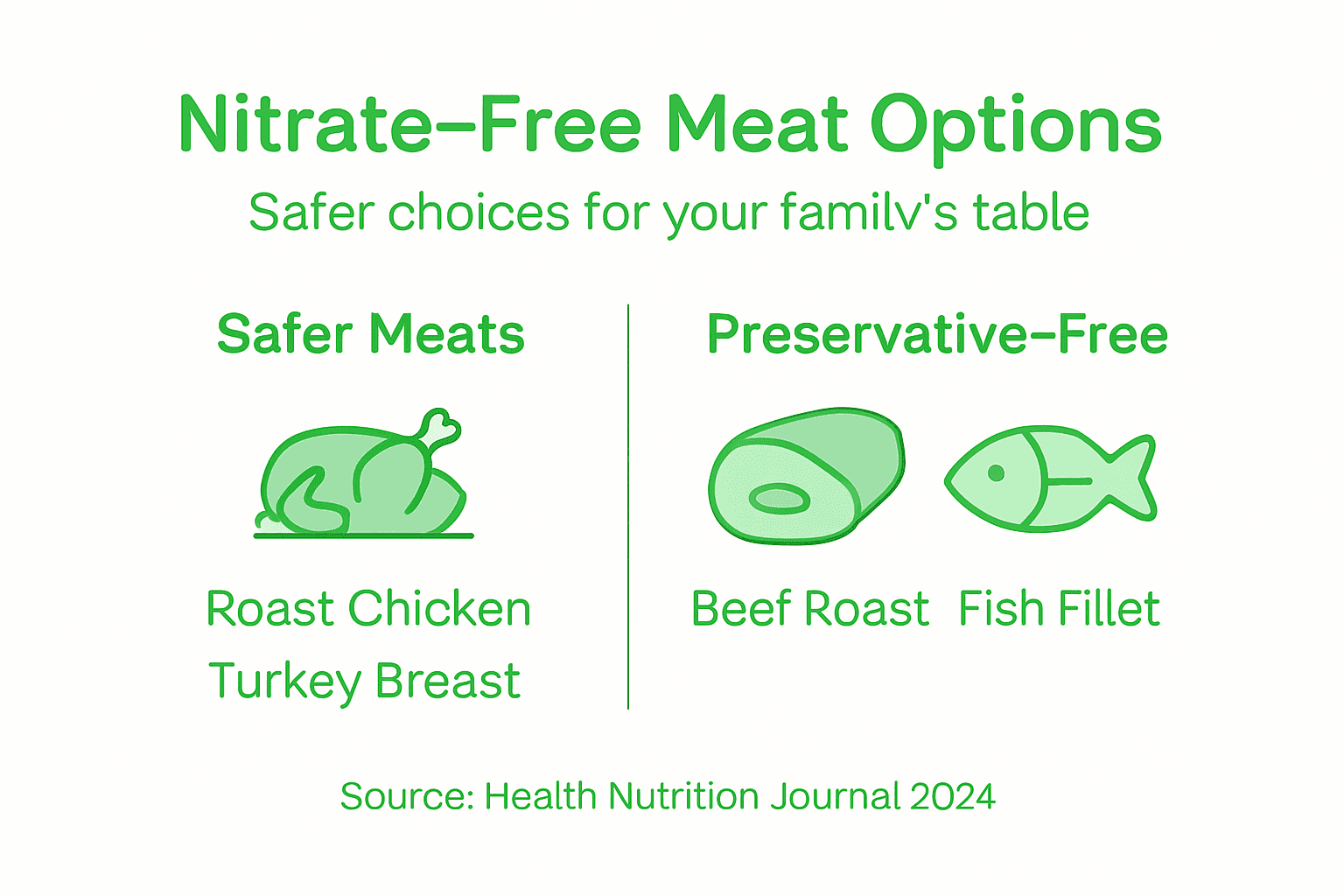
Key considerations for truly nitrate-free meat preservation involve:
Below is a summary table of innovative, truly nitrate-free preservation strategies:
| Alternative Method | Example Ingredient/Technique | Key Benefit |
|---|---|---|
| Essential Oils | Rosemary oil | Natural antimicrobial |
| Fermentation | Lactic acid bacteria | Enhanced safety |
| Plant Extracts | Thyme, green tea extract | Rich in antioxidants |
| Advanced Packaging | Modified atmosphere | Extended shelf life |
- Maintaining microbial safety
- Preserving meat colour and texture
- Ensuring flavour consistency
- Meeting regulatory food safety standards
Innovative Preservation Strategies
- Targeted essential oil applications
- Controlled fermentation processes
- Advanced packaging technologies
- Natural antioxidant systems
Natural preservation techniques represent the future of safe, health-conscious meat processing.
Pro tip: Look for meats preserved using natural extracts and ask your butcher about their preservation methods to make more informed purchasing decisions.
Choose Nitrate-Free Meats for Your Family’s Health and Wellness
Navigating the world of processed meats can be challenging when concerns about synthetic nitrates and nitrites arise. This article highlights the importance of understanding nitrate sources and their impact on long-term health, especially the potential formation of harmful nitrosamines. If you want to prioritise natural preservation methods and reduce synthetic additive exposure, embracing truly nitrate-free meats is a vital step towards safer eating habits.
Discover a wide range of clean, organic options at Nature’s Soul Shop where we offer meats free from synthetic nitrates alongside fresh fruits, vegetables, and wholesome groceries. Make an empowered choice today by exploring our selection of natural and minimally processed foods designed specifically to support your family’s wellbeing. Visit Nature’s Soul Shop now and take control of what goes on your plate.
Frequently Asked Questions
What are nitrate-free meats?
Nitrate-free meats are products designed to eliminate synthetic preservatives, specifically nitrates and nitrites, commonly used in traditional cured meats. Instead, they often utilise natural sources like celery juice powder or beetroot extract for preservation.
Are nitrate-free meats completely free of nitrates?
No, nitrate-free does not imply zero nitrates. Many nitrate-free meats still contain naturally occurring nitrates from vegetable extracts, but these are considered to be a more natural preservation method compared to synthetic additives.
What health risks are associated with traditional processed meats?
Traditional processed meats containing synthetic nitrates have been linked to health risks, particularly the formation of nitrosamines during digestion, which can increase the risk of colorectal cancer and other health issues.
How can I identify truly nitrate-free meats when shopping?
To identify truly nitrate-free meats, carefully read labels for the sources of nitrates used. Look for products that specify natural sources or state that no nitrates or nitrites are added, and prefer those that avoid synthetic chemical preservatives.
Recommended
- How to Build a Balanced Meal Naturally for Families – naturessoulshop
- Benefits of Plant Protein for Family Wellness – naturessoulshop
- Choosing Healthy Fats: Plant-Based Family Nutrition – naturessoulshop
- Building a Balanced Meal Naturally: A Step-by-Step Guide – naturessoulshop
- What kind of meat do we bake for Christmas?


