


TL;DR:
- A balanced plate follows the 50/25/25 formula, with half the plate for fruits and vegetables. It promotes easy meal building without calorie counting by focusing on proper proportions.
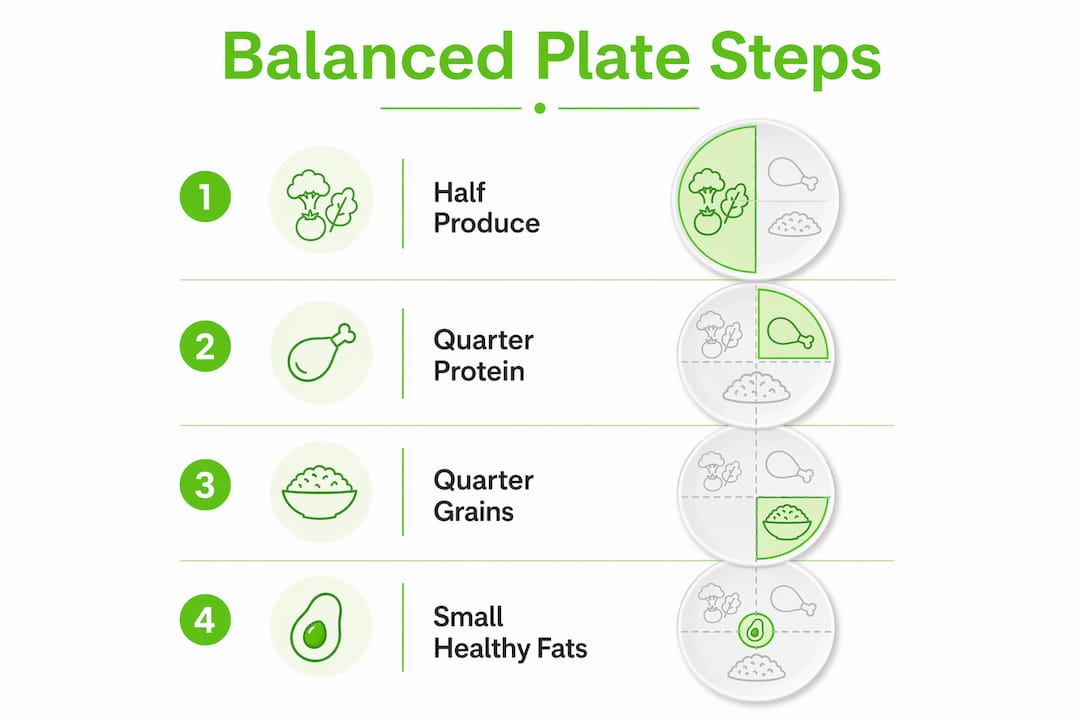
A balanced plate is defined as a meal where half the plate holds fruits and vegetables, a quarter holds lean protein, and a quarter holds whole grains or complex carbohydrates, with a small portion of healthy fats added alongside. This 50/25/25 formula comes directly from Health Canada’s food guide and is endorsed by organisations including the World Health Organization and the Heart & Stroke Foundation. Learning how to build a balanced plate does not require calorie counting or complex meal planning. It requires a simple mental model and the right ingredients on hand.
How to build a balanced plate: what goes where
The 50/25/25 rule gives you a clear starting point. Each section of your plate has a specific job, and choosing the right foods for each section is where the real nutrition happens.
Fruits and vegetables: fill half your plate
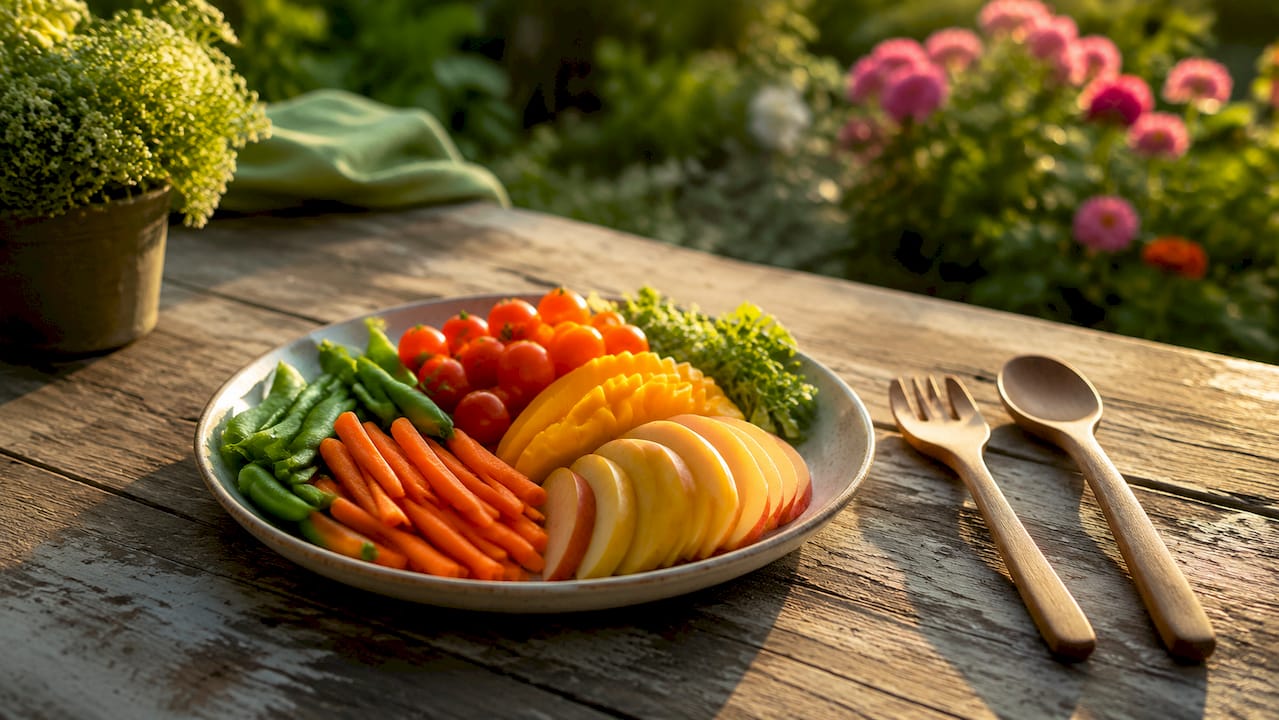
Non-starchy vegetables are the best choice for the produce half of your plate. Broccoli, spinach, kale, courgette, peppers, tomatoes, and cucumber all work well. Fruits such as berries, apple slices, or melon can fill part of this section too, particularly at breakfast or as a side. Starchy vegetables like sweet potato and butternut squash count toward the grains quarter rather than the produce half, which is a detail many people miss.
Protein: fill one quarter
Lean protein sources include chicken breast, turkey, salmon, eggs, and low-fat dairy such as Greek yoghurt or cottage cheese. Plant-based options include lentils, chickpeas, black beans, tofu, tempeh, and edamame. The goal is to choose protein that is minimally processed and low in saturated fat. Starting with protein when assembling your plate promotes satiety and helps you eat the right amount of everything else.
Whole grains: fill one quarter
Whole grains provide fibre, B vitamins, and sustained energy. Brown rice, quinoa, oats, barley, wholemeal bread, and buckwheat are all strong choices. Refined grains like white rice and white pasta digest faster, spike blood sugar more sharply, and offer less fibre. Every 30-gram increase in daily whole grain consumption reduces the risk of high blood pressure by 8%. That single statistic makes the case for swapping white rice for brown.
| Food category | Balanced choice | Less balanced choice |
|---|---|---|
| Grains | Brown rice, quinoa, oats | White rice, white pasta |
| Protein | Lentils, chicken, tofu | Processed deli meats |
| Produce | Spinach, broccoli, berries | Iceberg lettuce only |
| Fats | Avocado, olive oil, nuts | Butter, fried toppings |
Healthy fats: a small but necessary addition
Healthy fats do not fill a quarter of your plate. They are added in a small amount, roughly thumbnail-sized per meal. A drizzle of extra virgin olive oil, a few slices of avocado, a small handful of walnuts, or a tablespoon of tahini all qualify. Fats provide twice the energy per gram compared to carbohydrates or protein, which is why portion size matters. They support brain function, hormone production, and the absorption of fat-soluble vitamins A, D, E, and K.
Pro Tip: Swap butter for extra virgin olive oil as your default cooking fat. It adds healthy monounsaturated fats without the saturated fat load, and it works across almost every savoury dish.
How do you build a balanced plate quickly every day?
Building a balanced meal in under 60 seconds is genuinely possible when you follow a consistent sequence. Consistency in meal patterns matters more than elaborate preparation. Here is the method that works.
- Start with protein. Place your protein source on the plate first. This anchors the meal and prevents the common mistake of filling up on carbohydrates and leaving no room for anything else.
- Add your produce. Fill the remaining half of the plate with vegetables or a mix of vegetables and fruit. Aim for at least two different colours to increase nutrient variety.
- Add your whole grains. Fill the final quarter with a whole grain. If you have precooked grains in the fridge, this step takes seconds.
- Finish with healthy fat. Drizzle olive oil, add avocado slices, or scatter a small handful of seeds or nuts over the plate.
- Serve on individual plates. Serving on individual plates naturally reduces overeating by removing the visual cue of a large shared dish.
The most common mistake is overloading the grains section. Pasta and rice are easy to portion generously, but they should occupy only a quarter of the plate. Use a smaller bowl for grains during meal prep to train your eye.
Meal prepping whole grains and proteins in advance removes the biggest barrier to daily balanced eating. Cook a batch of quinoa or brown rice on Sunday. Roast a tray of chicken thighs or bake a block of tofu. With those two components ready, you can assemble a nutritious meal in minutes on any weeknight.
Pro Tip: Place healthier snacks and prepped ingredients at eye level in your fridge and pantry. The CDC notes that environmental cues directly shape eating behaviour, so what you see first is what you reach for first.
How does a balanced plate support energy, mood, and health?
The WHO identifies adequacy, balance, moderation, and diversity as the four pillars of a healthy diet. A well-built plate addresses all four simultaneously. Each component plays a distinct role in how your body functions hour to hour.
“A balanced plate is not a diet. It is a framework that supports your body’s needs without restriction, tracking, or guilt.” — University of Washington nutrition guidance
Fibre from vegetables, fruits, and whole grains slows digestion and stabilises blood sugar. Stable blood sugar means steady energy across the day rather than the spike-and-crash cycle that follows a refined carbohydrate-heavy meal. Protein supports muscle repair, enzyme production, and cell maintenance. Healthy fats feed the brain and protect the cardiovascular system.
| Nutrient | Primary source on plate | Key benefit |
|---|---|---|
| Fibre | Vegetables, fruits, whole grains | Digestion, satiety, blood sugar control |
| Protein | Lean meat, legumes, dairy | Muscle repair, hormone production |
| Complex carbs | Brown rice, oats, quinoa | Sustained energy, B vitamins |
| Healthy fats | Olive oil, avocado, nuts | Brain function, vitamin absorption |
| Micronutrients | Colourful produce | Immune support, antioxidant protection |
Colour variety in the produce section is not decorative. Different pigments in vegetables and fruits correspond to different phytonutrients. Red tomatoes provide lycopene. Orange carrots provide beta-carotene. Dark leafy greens provide folate and iron. Rotating your produce choices each week covers a broader range of micronutrients than eating the same two vegetables repeatedly.
How do you adapt balanced plate guidelines for different needs?
The balanced plate framework is flexible by design. It avoids restrictive calorie counting and reduces the mental load of healthy eating. Adapting it to different dietary needs requires only small adjustments to the food choices within each section.
For vegetarians and vegans:
- Replace animal protein with lentils, chickpeas, black beans, tofu, tempeh, or edamame.
- Add hemp seeds, chia seeds, or walnuts to the fats section for omega-3 fatty acids.
- Include fortified plant milks or nutritional yeast to address B12 and calcium gaps.
- Check that your grain choice is a complete protein source or pair grains with legumes, as rice and lentils together provide all essential amino acids.
For families with children:
- Reduce portion sizes proportionally rather than changing the plate structure. Children need the same food groups but in smaller amounts.
- Introduce new vegetables alongside familiar favourites rather than replacing them. Familiarity reduces resistance.
- Use family meal planning strategies to rotate ingredients weekly and prevent monotony.
For specific health goals:
- Weight management: keep the grain quarter modest and prioritise high-fibre, non-starchy vegetables in the produce half.
- Heart health: choose oats and barley for their soluble fibre, which lowers LDL cholesterol. Opt for plant-based healthy fats over saturated sources.
- Blood sugar control: swap all refined grains for whole grains and limit high-sugar fruits like grapes and mango in favour of berries and citrus.
The plate method works across all these scenarios because the proportions stay the same. Only the specific ingredients change.
Key takeaways
A balanced plate built on the 50/25/25 formula, with a small portion of healthy fats, is the most practical and evidence-backed method for building nutritious meals consistently without calorie counting.
| Point | Details |
|---|---|
| Use the 50/25/25 formula | Fill half with produce, a quarter with protein, and a quarter with whole grains at every meal. |
| Start with protein | Placing protein first on the plate anchors portion sizes and promotes satiety throughout the meal. |
| Choose whole grains | Whole grains reduce blood pressure risk and provide more fibre than refined alternatives. |
| Add fats in small amounts | A thumbnail-sized portion of healthy fat per meal supports brain and heart health without excess calories. |
| Adapt without losing structure | Swap ingredients for dietary needs but keep the same proportions to maintain nutritional balance. |
Why the plate method changed how I eat
I spent years overcomplicating meals. I tracked macros, followed meal plans, and still ended up eating cereal for dinner on a busy Tuesday. The 50/25/25 plate method solved that problem not because it is perfect, but because it is fast and forgiving.
What I did not expect was how much it reduced decision fatigue. When you know the structure, you stop staring into the fridge wondering what to cook. You look for a protein, a grain, and something green. That is the whole decision.
The biggest shift for me was treating the produce half seriously. Before, vegetables were a garnish. Now they are half the plate, and I genuinely feel the difference in energy and digestion. I also stopped fearing fats once I understood that a thumbnail of olive oil or a few walnut halves is the right amount, not a dietary risk.
For families, the method is even more valuable. Children eat what they see modelled consistently. A plate that looks the same every night, even with different ingredients, teaches portion instinct without a single lecture about nutrition.
The plate method is not a diet. It is a default. And defaults are what actually shape long-term eating habits.
— Arjit
Stock your balanced plate with organic ingredients from Naturessoulshop
Building a nutritious plate every day starts with having the right ingredients available. Naturessoulshop stocks a full range of organic fruits, vegetables, whole grains, legumes, and healthy fats, all with clean, traceable ingredients and no unnecessary additives.

Whether you are building meals for one or feeding a family, the quality of your ingredients shapes the quality of your nutrition. Naturessoulshop carries everything from fresh organic produce to dry grocery staples, plant-based proteins, and dairy alternatives. Browse the full organic food range to find the ingredients that make balanced eating genuinely easy, every day of the week.
FAQ
What is the balanced plate method?
The balanced plate method is a portioning framework where half the plate holds fruits and vegetables, a quarter holds lean protein, and a quarter holds whole grains, with a small portion of healthy fats added. Health Canada and the WHO both endorse this approach as a practical guide to healthy plate composition.
How long does it take to build a balanced plate?
You can build a balanced meal in under 60 seconds using the 50/25/25 formula when ingredients are prepped in advance. Batch-cooking grains and proteins at the weekend reduces weeknight assembly to a matter of minutes.
Can vegans follow the balanced plate guidelines?
Vegans follow the same plate proportions and replace animal protein with lentils, tofu, tempeh, chickpeas, or edamame. Adding hemp seeds or walnuts to the fats section covers omega-3 needs, and pairing grains with legumes provides complete protein.
How much healthy fat should I add to a plate?
A thumbnail-sized portion of healthy fat per meal is the recommended amount. This equates to roughly one tablespoon of olive oil, a few avocado slices, or a small handful of nuts or seeds.
Does the balanced plate method work for weight management?
The balanced plate framework supports weight management without calorie counting by naturally limiting refined carbohydrates and prioritising fibre-rich produce and protein. University of Washington nutrition experts note its effectiveness as a non-restrictive approach to healthy eating.


