


TL;DR:
- Grass fed cattle eat only forage throughout their lives, while grain fed cattle are finished on high-energy grains.
- The nutritional differences include higher omega-3s in grass finished beef and more B vitamins in grain fed meat.
The difference between grass fed and grain fed beef is determined entirely by what the animal eats throughout its life, and that single factor shapes the meat’s nutrition, flavour, environmental footprint, and ethical profile. Grass fed cattle graze on pasture and forage from birth to slaughter. Grain fed cattle typically begin on pasture before spending their final 60–120 days in feedlots eating high-energy grains such as corn and soy. The result is two distinct products with different fat profiles, cooking requirements, and sustainability credentials. Understanding these differences helps you make a more informed choice at the butcher’s counter.
How does diet change the nutritional profile of grass fed vs grain fed beef?
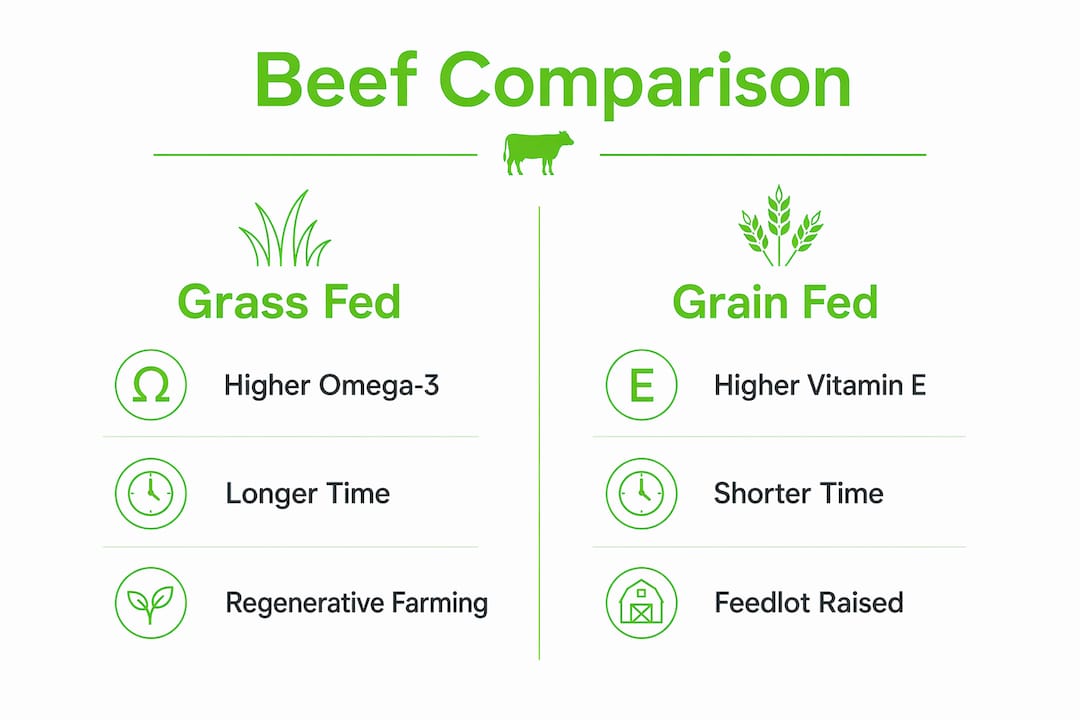
Grass finished beef contains 2–10 times more omega-3 fatty acids and phytochemicals than grain finished beef. That matters because omega-3s support cardiovascular health and reduce systemic inflammation over time. Grass fed beef also carries higher levels of conjugated linoleic acid (CLA), a fatty acid linked to improved body composition in clinical research.
Grain finished beef, however, is not nutritionally inferior across the board. It contains 14.6 times more gamma-tocopherol than grass finished beef, along with 1.3–1.5 times more B5 and B6 vitamins. These B vitamins support energy metabolism and neurological function. Grain fed beef is also richer in total fat, which contributes to its characteristic marbling and caloric density.
One critical nuance: the grass fed label alone does not guarantee superior health outcomes. Tufts University researchers found that grass fed beef is likely no less inflammatory than grain fed beef in clinical settings. The health benefits consumers associate with grass fed meat may be driven more by overall dietary patterns, sustainability, and animal welfare than by a clear anti-inflammatory advantage.
Pasture quality adds another layer of complexity. Beef from biodiverse, regenerative pastures contains 4–8 times more antioxidants than beef from monoculture pastures. A “grass fed” label on a product from a poorly managed single-crop pasture tells you far less than you might assume. For a deeper look at how regenerative farming affects nutrient density, the connection between soil health and beef quality is well documented.
| Nutrient | Grass finished | Grain finished |
|---|---|---|
| Omega-3 fatty acids | 2–10x higher | Lower |
| Gamma-tocopherol | Lower | 14.6x higher |
| B5 and B6 vitamins | Lower | 1.3–1.5x higher |
| Total fat content | Leaner | Higher (more marbling) |
| Antioxidants | Higher (pasture dependent) | Lower |
Pro Tip: When buying grass fed beef for nutritional benefit, look for products from farms that practise regenerative or rotational grazing. The farming method matters as much as the diet label.
What are the taste and cooking differences between grass fed and grain fed?
Grass fed beef is leaner and firmer, with a more pronounced, sometimes earthy flavour. Grain fed beef is richer, more tender, and carries the buttery quality that most people associate with a restaurant-quality steak. Neither is objectively better. They suit different cooking styles and palates.

The fat content drives most of the culinary difference. Grain fed beef’s marbling makes it ideal for high-heat grilling, where the intramuscular fat bastes the meat from within. Grass fed beef performs better in slower, lower-temperature cooking methods where the leaner muscle fibres have time to relax.
Key cooking considerations for each:
- Grass fed beef: Cook to medium-rare, targeting an internal temperature of 130–135°F. Higher temperatures cause the lean muscle to tighten and dry out quickly.
- Grass fed beef: Works well with bold marinades, spice rubs, and braising liquids that complement its stronger flavour.
- Grain fed beef: More forgiving at higher temperatures due to its fat content. Suited to grilling, pan-searing, and dry-heat methods.
- Grain fed beef: Delivers a milder, more familiar flavour that pairs well with simple seasoning.
- Both: Benefit from resting for at least five minutes after cooking. Resting allows juices to redistribute and prevents the meat from drying out on the plate.
Pro Tip: For grass fed steaks, take the meat out of the fridge 30 minutes before cooking. Bringing it closer to room temperature helps it cook more evenly and reduces the risk of a tough, overcooked exterior with a cold centre.
The culinary distinction between the two is real and worth factoring into your purchase decision. If you are grilling ribeyes for a dinner party, grain fed delivers the crowd-pleasing result. If you are slow-cooking a shoulder with spices and aromatics, grass fed’s leaner, more complex flavour is an asset.
How do environmental and ethical factors differ between the two?
Grass finished cattle live on pasture for their entire lives, typically 18–24 months from birth to market. Grain finished cattle reach market weight in 14–18 months, spending their final weeks in concentrated feedlots. The shorter production cycle of grain fed beef makes it more land-efficient in terms of output per acre, but the feedlot system carries significant environmental and welfare costs.
Rotational grazing, the practice of moving cattle between pasture sections to allow regrowth, can reduce methane emissions by up to 45% compared to conventional pasture systems. That is a substantial difference in a sector where livestock methane is a major contributor to greenhouse gas totals. Well-managed pasture systems also build soil organic matter, improve water retention, and support biodiversity in ways that feedlot systems cannot.
“Pasture-based systems, when managed regeneratively, can sequester carbon and restore degraded land. The environmental case for grass fed beef is strongest when the farming method is genuinely regenerative, not just pasture-based in name.”
Feedlot systems raise separate concerns. Concentrated animal feeding operations routinely use antibiotics to manage disease risk in densely housed cattle. This practice contributes to antibiotic resistance, a public health issue that extends well beyond the farm. Animal welfare standards in feedlots are also lower by most independent assessments, with cattle having limited space and no access to natural grazing behaviour.
| Factor | Grass finished | Grain finished |
|---|---|---|
| Time to market | 18–24 months | 14–18 months |
| Methane emissions | Lower (rotational grazing) | Higher |
| Soil health impact | Positive (regenerative) | Neutral to negative |
| Antibiotic use | Lower | Higher (feedlot management) |
| Animal welfare | Higher (pasture access) | Lower (feedlot conditions) |
| Land use efficiency | Lower output per acre | Higher output per acre |
For readers who prioritise ethical meat sourcing, the environmental and welfare differences between these two systems are often the deciding factor, even more than nutrition. The environmental impact of food choices extends across the supply chain, and beef production sits at the centre of that conversation.
What should you know about labels before buying grass fed beef?
The term “grass fed” is widely misunderstood. In most markets, a “grass fed” label only confirms that the animal was raised on grass at some point. It does not mean the animal was never fed grain. The common commercial practice is to raise cattle on pasture and then grain-finish them for marbling before slaughter. This produces a product that carries a grass fed label but has the fat profile of a grain finished animal.
The label that actually guarantees a lifelong forage diet is “100% grass finished.” This term means the animal ate only grass and forage from birth to slaughter, with no grain at any stage. When buying beef for its nutritional or ethical attributes, “100% grass finished” is the phrase to look for.
Practical steps for verifying authentic grass finished beef:
- Look for “100% grass finished” on the packaging, not just “grass fed.”
- Buy from farms or suppliers that publish their farming practices openly.
- Ask your butcher directly whether the animal was grain finished. Reputable suppliers will know.
- Expect to pay a premium. Authentic grass finished beef costs more because the animal takes longer to reach market weight and requires more land.
- Be sceptical of vague terms like “pasture raised” or “naturally raised” without further qualification. These terms carry no legal guarantee of a grain-free diet in most markets.
The price premium for genuine grass finished beef reflects real production costs. Grass finished cattle take up to six months longer to reach market weight than grain finished animals. That additional time on pasture represents land, labour, and feed costs that are passed on to the consumer. The premium is not marketing. It is the actual cost of a different farming system.
Key takeaways
Grass fed beef is nutritionally and ethically distinct from grain fed beef, but the label alone does not guarantee superior quality. Pasture management and finishing practices determine the real difference.
| Point | Details |
|---|---|
| Diet determines everything | Grass finished cattle eat only forage; grain finished cattle spend 60–120 days on high-energy grain. |
| Nutritional trade-offs exist | Grass finished has more omega-3s; grain finished has more gamma-tocopherol and B vitamins. |
| Cooking method must match fat content | Grass fed needs lower heat and careful timing; grain fed is more forgiving at high temperatures. |
| Labels can mislead | “Grass fed” does not mean grain-free; only “100% grass finished” guarantees a lifelong forage diet. |
| Environment matters | Rotational grazing can cut methane by up to 45% and builds soil health that feedlots cannot replicate. |
What I have learned from years of choosing between the two
My honest view is that most people buy grass fed beef for the wrong reason. They expect a dramatic health difference that the clinical evidence does not fully support. Tufts University’s research showing similar inflammatory effects between the two was genuinely surprising to me when I first read it. It shifted how I think about the purchase decision.
The stronger case for grass finished beef is environmental and ethical, not purely nutritional. When I buy it, I am primarily choosing a farming system that treats animals better and manages land more responsibly. The omega-3 advantage is real but modest in the context of a varied diet. The difference in how the land is managed is substantial.
On the culinary side, I have overcooked grass fed steak more times than I care to admit. It punishes inattention in a way that grain fed beef simply does not. Once I started treating it more like game meat, resting it properly and pulling it off the heat earlier, the results improved dramatically. The flavour is genuinely different, not better or worse, but more complex and worth appreciating on its own terms.
My practical advice: if budget is a constraint, do not feel guilty about choosing quality grain fed beef from a reputable supplier. If you can stretch to grass finished, prioritise products from farms that practise regenerative grazing. The grass fed nutrition benefits are real, but they are maximised by the farming method, not the label alone.
— Arjit
Naturessoulshop’s range of ethically sourced organic meat and food
Naturessoulshop stocks a carefully selected range of organic and ethically sourced products, including grass fed meat options chosen for clean ingredients and transparent sourcing. Every product in the range meets the same standard: no unnecessary additives, no compromise on quality, and full traceability back to the producer.
Whether you are building a cleaner diet around high-quality protein or looking for organic alternatives across every food category, Naturessoulshop covers the full spectrum. From fresh meats to dry grocery, dairy, and skin care, the commitment to clean ingredients runs through every shelf. Visit the Naturessoulshop online store to browse the full range, or explore the fresh organic range for seasonal produce and ethically sourced proteins delivered to your door.
FAQ
What is the main difference between grass fed and grain fed beef?
Grass fed cattle eat only grass and forage throughout their lives, while grain fed cattle are typically finished on high-energy grains for 60–120 days before slaughter. This diet difference affects fat content, flavour, and nutritional profile.
Is grass fed beef actually healthier than grain fed?
Grass finished beef contains more omega-3 fatty acids and antioxidants, but clinical research from Tufts University shows no significant difference in inflammatory effects between the two. Grain fed beef has higher levels of gamma-tocopherol and B vitamins.
What does “100% grass finished” mean on a label?
“100% grass finished” means the animal ate only grass and forage from birth to slaughter, with no grain at any stage. A standard “grass fed” label does not carry this guarantee and may include grain finishing.
Why does grass fed beef cost more?
Grass finished cattle take 18–24 months to reach market weight, compared to 14–18 months for grain finished animals. The longer production period and greater land requirements increase costs, which are reflected in the retail price.
Which is better for the environment, grass fed or grain fed?
Grass finished beef from farms using rotational grazing produces significantly lower methane emissions and builds soil health. Rotational grazing can cut methane by up to 45% compared to conventional systems, making it the stronger environmental choice when managed well.


