


Finding truly organic grass-fed meat in Delhi NCR can feel overwhelming for those who value nutrition and transparency. With over 60 percent of British and American certification bodies now setting stricter standards, the meaning of grass-fed has become more than just a label. Whether you are a first-time parent or aiming for a healthier lifestyle, understanding how pasture practices influence quality helps you make confident choices for your family’s wellness.
Table of Contents
- What Grass Fed Meat Really Means
- Types of Grass Fed Meat and Certifications
- Nutritional Benefits and Flavour Profile
- Grass Fed vs Grain Fed: Key Comparisons
- Common Pitfalls and Buying Authentic Meat
Key Takeaways
| Point | Details |
|---|---|
| Understanding Grass-Fed Labelling | Consumers should be discerning regarding grass-fed meat claims, as definitions have become unclear since the USDA’s withdrawal of its official guidelines. |
| Importance of Certifications | Seek meat with certifications from trusted organisations that guarantee animals are raised on a 100% forage diet without antibiotics or hormones. |
| Nutritional Benefits | Grass-fed meat is generally leaner and contains higher omega-3 fatty acids, providing a more complex flavour profile compared to grain-fed alternatives. |
| Awareness of Marketing Claims | Be cautious of vague terms like ‘grass-finished’ and request documentation to ensure authentic grass-fed practices are followed. |
What Grass Fed Meat Really Means
Understanding grass fed meat goes far beyond a simple label. Grass-fed meat labelling has become increasingly complex since the USDA withdrew its official definition in 2016, leaving producers to establish their own criteria. This shift means consumers must be more discerning about what truly constitutes grass-fed meat.
Traditionally, grass-fed meat implies cattle raised exclusively on grass and forage throughout their lifecycle. However, current market practices reveal significant variations. Some producers technically classify their meat as “grass-fed” even when animals spend minimal time on pasture, often being fed dried grass indoors during colder seasons. True grassfed meat requires a 100% forage diet from weaning to harvest, raised without antibiotics or hormones, and maintained under sustainable pasture conditions.
To distinguish authentic grass-fed meat, consumers should look for specific certification indicators. Reputable organisations like the American Grassfed Association provide stringent standards that guarantee animals are genuinely pasture-raised, ensuring they consume a completely natural diet. These certifications help bridge the trust gap between consumer expectations and actual farming practices, offering transparency in meat production.
Pro tip: When purchasing grass-fed meat, always request documentation about the farm’s pasture-raising practices and look for third-party certification to ensure you’re getting a genuinely grass-fed product.
Types of Grass Fed Meat and Certifications
The world of grass-fed meat extends far beyond traditional beef. Grass-fed production encompasses multiple animal types, including diverse protein sources like poultry, swine, bison, and sheep. Each animal category presents unique characteristics and nutritional profiles when raised on a pure grass diet.
Critical distinctions exist within grass-fed classifications. Some meats are categorised as ‘grass-fed’, meaning animals consume grass throughout their entire lifecycle, while others are ‘grass-finished’ - animals initially fed grains before transitioning to a grass-based diet in their final stages. These nuanced definitions require consumers to carefully examine labelling and understand the precise rearing methods of their chosen protein sources.
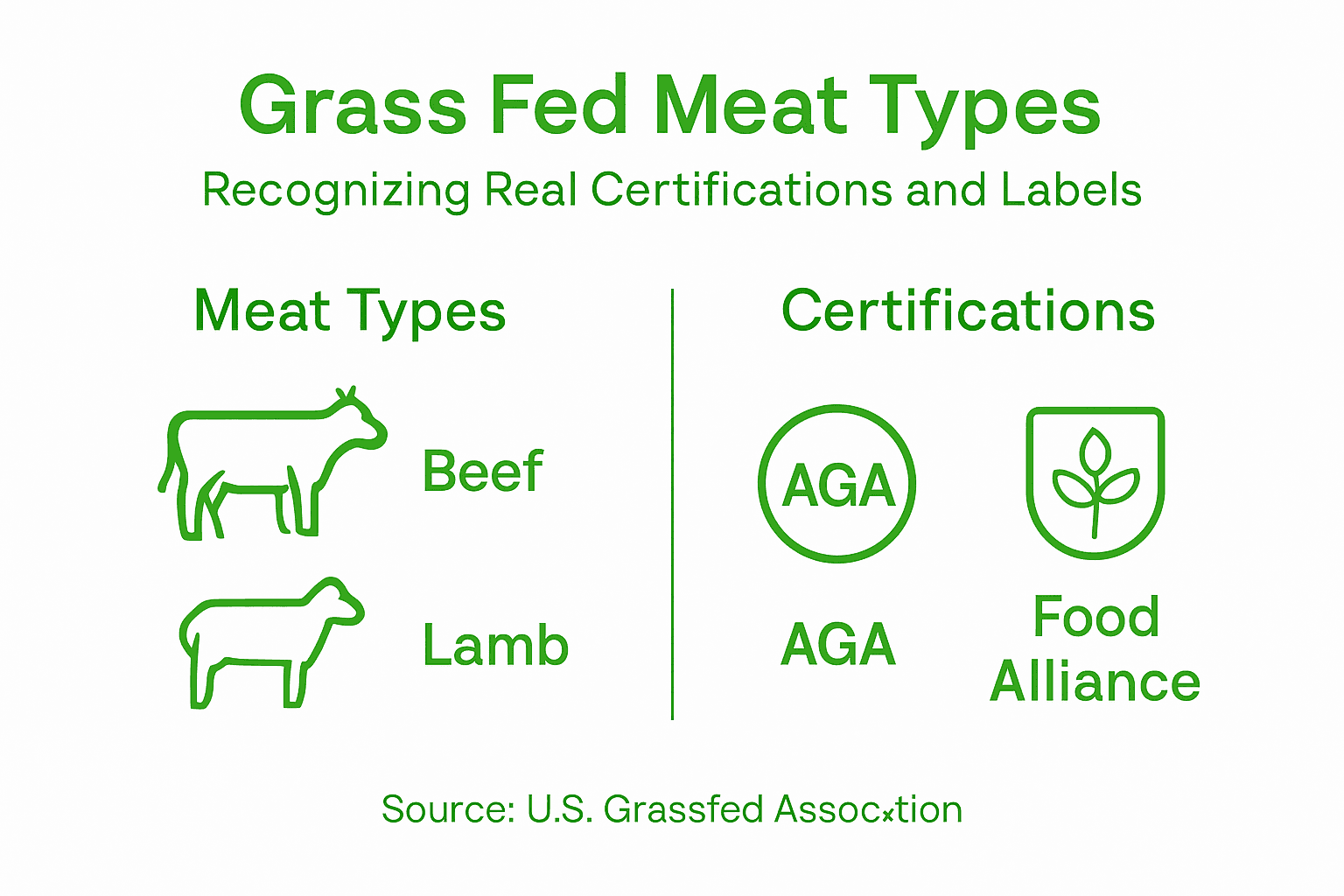
Certification plays a pivotal role in verifying authentic grass-fed meat production. Organisations like the American Grassfed Association provide rigorous standards that guarantee animals are genuinely pasture-raised, without antibiotics or hormones. Regional variations in certification mean consumers must remain vigilant, scrutinising documentation and seeking transparent information about an animal’s diet, living conditions, and overall farming practices.
Pro tip: When purchasing grass-fed meat, request detailed documentation about the animal’s complete dietary history and look for third-party certification from reputable grassfed associations to ensure genuine pasture-raised products.
For quick reference, here is a summary of major certifications and what each guarantees in grass-fed meat production:
| Certification | Guarantees | Region |
|---|---|---|
| American Grassfed Association | 100% forage diet, no hormones or antibiotics | United States |
| Certified Organic | Organic feed, limited synthetic substances | Europe, US |
| Soil Association Organic Standard | Strict pasture-based animal care | United Kingdom |
| Pasture for Life | Continuous outdoor access and pasture diet | United Kingdom |
Nutritional Benefits and Flavour Profile
Grass-fed meat offers a distinctive nutritional landscape that extends beyond conventional protein sources. Nutrient profiles vary significantly based on pasture composition, with diverse grasslands rich in grasses and legumes contributing to enhanced health-promoting nutrients. These meats typically boast higher concentrations of omega-3 polyunsaturated fatty acids, conjugated linoleic acid, and antioxidants compared to their grain-fed counterparts.

The flavour profile of grass-fed meat presents a more complex sensory experience. Unlike grain-fed beef with its sweeter, fattier taste, grass-fed varieties often carry a more pronounced, slightly ‘gamey’ flavour. Grass-fed versus grain-fed beef reveals nuanced nutritional differences, with subtle variations in marbling and fat content directly impacting taste and texture. While the nutritional differences might seem marginal, the environmental and ethical considerations often play a significant role in consumer preferences.
Rotational grazing and pasture management emerge as critical factors in determining meat quality. The seasonal variations, supplemental feeds, and specific grass compositions can dramatically influence the final nutritional profile. Consumers seeking optimal nutrition should look beyond simple labelling, understanding that the animal’s entire lifecycle and grazing environment contribute to the meat’s ultimate nutritional value and distinctive flavour characteristics.
Pro tip: Request information about the specific pasture management practices and seasonal grazing patterns when purchasing grass-fed meat to ensure you’re getting the most nutritionally rich and flavourful product.
Grass Fed vs Grain Fed: Key Comparisons
Cattle feeding practices represent a fundamental difference in meat production, with significant implications for nutrition, flavour, and environmental sustainability. Cattle diet dramatically influences meat characteristics, creating distinct nutritional and sensory experiences for consumers. Grain-fed cattle typically receive supplemental grain to accelerate growth and enhance marbling, resulting in a sweeter, fattier meat profile that many consumers find familiar and appealing.
The nutritional landscape reveals nuanced differences between grass-fed and grain-fed meats. Grass-fed cattle consuming natural forage throughout their lifecycle produce leaner meat with a higher concentration of omega-3 fatty acids and a more complex flavour profile. Grass-fed beef offers subtle nutritional variations, with less intramuscular fat and a more pronounced, slightly gamey taste that reflects the animal’s natural diet and grazing environment.
Environmental and ethical considerations further differentiate these production methods. Grain-fed systems typically enable faster cattle maturation and more efficient meat production, but often raise concerns about sustainability and animal welfare. Grass-fed approaches, while potentially more costly and time-consuming, provide benefits including reduced environmental impact, potentially enhanced animal welfare, and a more natural livestock rearing approach that supports biodiversity and ecosystem health.
Pro tip: When comparing grass-fed and grain-fed meats, consider not just flavour and nutrition, but also the broader environmental and ethical implications of your meat purchasing decisions.
Here is a concise comparison of key characteristics between grass-fed and grain-fed meat varieties:
| Aspect | Grass-Fed Meat | Grain-Fed Meat |
|---|---|---|
| Typical Diet | Natural forage and pasture | Cereal grains and supplemental feed |
| Nutritional Profile | Higher omega-3s, leaner protein | More marbling, increased fat content |
| Flavour | Earthy, gamey, complex taste | Sweeter, milder, richer texture |
| Environmental Impact | Supports biodiversity, lower footprint | Greater resource use, land intensity |
| Growth Rate | Slower maturation, longer lifecycle | Faster growth, quicker market readiness |
| Average Cost | Generally higher, premium pricing | Usually lower, wider availability |
Common Pitfalls and Buying Authentic Meat
Grass-fed meat labelling presents a minefield of potential misunderstandings for conscientious consumers. Grass-fed terminology lacks consistent legal definitions, creating significant confusion about what consumers are actually purchasing. Marketing terms like ‘grass-finished’ or ‘pasture-raised’ can be deliberately vague, potentially disguising practices that do not align with consumers’ ethical and nutritional expectations.
The most critical challenge lies in understanding the vast discrepancy between marketing claims and actual farming practices. Some producers technically classify meat as ‘grass-fed’ while animals spend minimal time on actual pastures, often being fed dried grass indoors or supplemented with grain. Consumer expectations frequently diverge from production realities, with many buyers assuming comprehensive pasture-raising when the actual conditions may be far more restricted.
Authentic grass-fed meat requires rigorous verification through trusted certification bodies. Consumers should seek producers who provide transparent documentation about animal rearing practices, diet composition, and farm conditions. Key indicators of genuine grass-fed meat include certifications from reputable organisations that mandate 100% forage diets, no antibiotics or hormones, and genuinely free-range conditions that support animal welfare and environmental sustainability.
Pro tip: Always request detailed farm documentation and look for third-party certifications that verify comprehensive grass-fed and pasture-raising standards before purchasing meat.
Discover Genuine Grass Fed Nutrition for Your Wellness Journey
Understanding the true meaning of “grass fed meat” is vital for anyone seeking authentic nutrition and ethical food choices. The article highlights common challenges such as misleading labels and unclear farming practices that affect the quality and health benefits of grass fed meat. If you want to avoid confusion and embrace the full flavour and superior nutrient profile of genuine grass fed products raised without hormones or antibiotics you need trustworthy sources.
At Nature’s Soul Shop we share your commitment to wellness with a wide range of organic and natural products including meats that meet strict standards for purity and sustainability. Our curated selection ensures you experience the real benefits of pasture-raised grass fed meat alongside other clean and nourishing foods.
Explore our collection today and take confidence in your choices Knowing you are supporting ethical farming and enriching your health with truly natural ingredients is reason enough to act now.
Find out more about our natural approach here and make your next purchase with full assurance of quality and transparency.
Shop authentic organic products to enhance your wellness regime starting today.
Frequently Asked Questions
What does grass fed meat mean?
Grass fed meat refers to meat from animals that have been raised primarily on grass and forage throughout their lifecycle, as opposed to a grain-based diet. Authentic grass fed meat requires a 100% forage diet without the use of antibiotics or hormones.
How can I identify genuine grass fed meat?
To identify genuine grass fed meat, look for certifications from organizations like the American Grassfed Association, which ensure strict standards for pasture-raising and diet. Additionally, request documentation from producers about their farming practices and animal diet.
What are the nutritional benefits of grass fed meat compared to grain fed meat?
Grass fed meat is typically leaner and contains higher levels of omega-3 fatty acids, conjugated linoleic acid, and antioxidants compared to grain fed meat. These nutritional benefits can contribute to better health outcomes.
How does the flavour of grass fed meat differ from grain fed meat?
The flavour of grass fed meat is often described as more complex and slightly gamey, due to the natural diet. In contrast, grain fed meat tends to have a sweeter, fattier taste because of the higher marbling from grain feeding.


