


Finding truly ethical organic products in Delhi NCR can feel like a maze, especially for british families who prioritise animal welfare and healthy choices. With over 80 percent of Indian parents expressing concern about animal treatment in the food supply, understanding local standards becomes crucial for those new to the country. This article cuts through cultural complexities, giving you clear guidance on how animal welfare shapes organic sourcing so you can make informed decisions that align with your values.
Table of Contents
- Defining Animal Welfare In India
- Legal Framework And Major Laws
- Types Of Animal Welfare Challenges
- Ethical Sourcing And Cruelty-Free Standards
- Obligations For Organic And Natural Sourcing
- Risks And Key Mistakes To Avoid
Key Takeaways
| Point | Details |
|---|---|
| Holistic Understanding of Animal Welfare | India’s approach combines cultural, legal, and ethical views, particularly emphasising the concept of ahimsa (non-violence). |
| Comprehensive Legal Framework | The Prevention of Cruelty to Animals Act, 1960 and the Wildlife Protection Act, 1972 are key laws that define protections for domestic and wild animals. |
| Ongoing Welfare Challenges | Issues such as stray animal populations and poor conditions for working animals require targeted interventions and enhanced legal enforcement. |
| Importance of Ethical Sourcing | Businesses are increasingly expected to embrace cruelty-free standards and transparent sourcing practices that demonstrate a commitment to animal welfare. |
Defining animal welfare in India
Animal welfare in India represents a nuanced intersection of cultural heritage, legal frameworks, and ethical considerations. Deeply rooted in traditions of compassion, this concept goes beyond mere legal compliance to embody a holistic approach towards non-human life. The Animal Welfare Board of India plays a pivotal role in advancing nationwide animal protection standards, establishing comprehensive guidelines that reflect both traditional values and modern ethical perspectives.
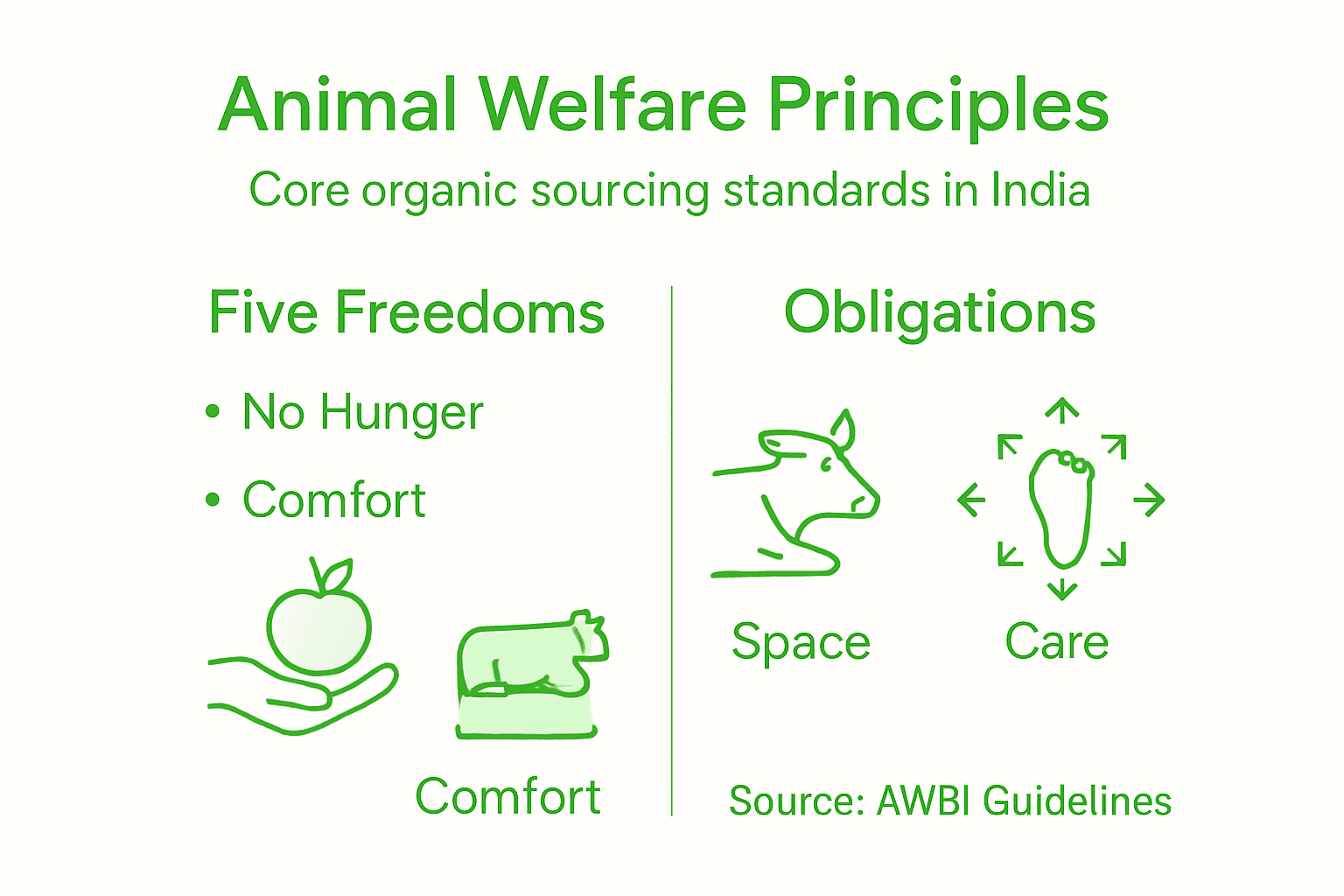
The foundational understanding of animal welfare in India encompasses the Five Freedoms principle, which articulates critical welfare benchmarks: freedom from hunger and thirst, freedom from discomfort, freedom from pain and disease, freedom to express normal behaviour, and freedom from fear and distress. These principles are not merely theoretical constructs but practical guidelines that inform legislative and societal approaches towards animal treatment.
Religious philosophies like Hinduism, Jainism, and Buddhism have profoundly shaped India’s approach to animal welfare, introducing the concept of ahimsa (non-violence) as a fundamental ethical framework. This spiritual foundation distinguishes India’s animal welfare perspective from purely legalistic interpretations, emphasising compassion and interconnectedness between human and animal worlds. Protection laws and cultural attitudes have evolved since the 1960s, creating a dynamic landscape of animal rights and welfare considerations.
Pro tip: When purchasing organic products, look for certifications that demonstrate ethical animal treatment and welfare standards, ensuring your consumption supports responsible and compassionate agricultural practices.
Legal framework and major laws
India’s legal landscape for animal welfare is comprehensive and multifaceted, anchored by several pivotal legislative instruments that collectively form a robust protection mechanism. Statutory laws addressing animal welfare have evolved significantly since the 1960s, establishing a nuanced framework that covers various dimensions of animal protection and rights.
The Prevention of Cruelty to Animals Act, 1960 stands as the cornerstone of animal welfare legislation in India. This seminal act comprehensively defines acts of cruelty, establishes mechanisms for animal protection, and provides guidelines for humane treatment across multiple sectors. Complementing this primary legislation, the Wildlife Protection Act, 1972 offers specific protections for wild species, creating a dual-layered approach to safeguarding animal welfare in both domestic and wildlife contexts.
Administratively, the Animal Welfare Board of India (AWBI) plays a crucial role in implementing and monitoring these legal frameworks. The board oversees regulations spanning diverse domains including stray animal management, performing animal welfare, laboratory animal protocols, transportation standards, and slaughterhouse practices. Comprehensive legal provisions reflect India’s commitment to creating a holistic and progressive approach to animal rights and protection.
Here’s a summary of key Indian animal welfare laws and their main areas of focus:
| Law or Body | Main Provisions | Focus Area |
|---|---|---|
| Prevention of Cruelty to Animals Act, 1960 | Defines cruelty, prescribes protection guidelines | Domestic animals |
| Wildlife Protection Act, 1972 | Offers legal protection for wild species | Wildlife conservation |
| Animal Welfare Board of India (AWBI) | Oversees law enforcement, sets welfare standards | National coordination |
Pro tip: When engaging with organisations or businesses, enquire about their adherence to animal welfare legislation to ensure ethical practices and support responsible treatment of animals.
Types of animal welfare challenges
India confronts a complex landscape of animal welfare challenges that span multiple sectors and species. Diverse welfare issues reflect the intricate interplay between socio-economic conditions, cultural practices, and systemic limitations. These challenges manifest across different animal populations, from urban street animals to agricultural and industrial settings, creating a multifaceted welfare landscape that demands nuanced interventions.
Key welfare challenges encompass several critical domains. Stray animal populations represent a significant concern, with thousands of dogs and cattle navigating urban environments without adequate care or protection. Working animals like bullocks, horses, and carriage animals frequently endure harsh working conditions, experiencing overwork, inadequate nutrition, and limited veterinary support. Laboratory and experimental animals face additional vulnerabilities, often subjected to procedures that compromise their physical and psychological well-being.
The agricultural and industrial sectors present particularly complex welfare challenges. Livestock, poultry, and dairy animals frequently experience substandard living conditions, limited movement, and treatment that fails to meet basic humanitarian standards. Systematic animal welfare challenges are further compounded by inadequate legal enforcement, insufficient infrastructure, and deeply entrenched cultural practices that prioritise economic productivity over animal dignity. These systemic issues demand comprehensive policy reforms and grassroots interventions to address fundamental welfare gaps.

This table highlights common animal welfare challenges and potential solutions in India:
| Challenge Type | Key Issues | Potential Solutions |
|---|---|---|
| Stray Animal Populations | Overpopulation, lack of care | Sterilisation, community feeding |
| Working Animals | Overwork, poor nutrition, no vet care | Proper training, welfare inspections |
| Livestock & Poultry | Confinement, substandard conditions | Free-range systems, regular audits |
| Laboratory Animals | Physical and psychological distress | Alternative testing, strict protocols |
Pro tip: Familiarise yourself with local animal welfare organisations and reporting mechanisms to help address instances of animal cruelty or neglect in your community.
Ethical sourcing and cruelty-free standards
Ethical sourcing in India represents a sophisticated intersection of animal welfare principles, regulatory frameworks, and corporate responsibility. Cruelty-free standards are increasingly becoming a critical benchmark for businesses seeking to demonstrate their commitment to humane practices across supply chains. These standards go beyond mere compliance, embodying a comprehensive approach that prioritises animal dignity and welfare throughout production processes.
The Animal Welfare Board of India plays a pivotal role in establishing guidelines that transform ethical sourcing from a theoretical concept to a practical implementation strategy. Industries ranging from dairy and agriculture to textiles and cosmetics are now required to demonstrate transparent sourcing practices that minimise animal suffering. This involves rigorous documentation, regular audits, and adherence to internationally recognised welfare protocols that ensure animals are not subjected to unnecessary stress, physical harm, or exploitative conditions.
Corporate stakeholders are recognising that ethical sourcing frameworks extend beyond legal mandates into broader social responsibility domains. Public awareness and consumer demand are driving organisations to adopt more compassionate procurement practices. These evolving standards not only protect animal welfare but also create a more transparent, accountable ecosystem where ethical considerations are integrated into core business strategies. By prioritising cruelty-free methodologies, businesses can simultaneously address animal welfare concerns and meet growing consumer expectations for responsible production.
Pro tip: When purchasing products, look for certifications that explicitly demonstrate cruelty-free and ethical sourcing standards to support responsible business practices.
Obligations for organic and natural sourcing
Organic and natural sourcing in India demands a comprehensive approach to animal welfare that transcends traditional agricultural practices. Organic sourcing regulations establish rigorous frameworks that mandate humane treatment, environmental sustainability, and ethical production standards. These obligations reflect a holistic understanding that animal welfare is intrinsically linked to the quality and integrity of organic products.
The Five Freedoms framework serves as a foundational principle for organic producers, requiring them to ensure animals have freedom from hunger and thirst, physical discomfort, pain and disease, the ability to express natural behaviours, and freedom from fear and distress. This means organic farms must provide spacious living conditions, access to natural environments, proper nutrition, and veterinary care that goes beyond minimal legal requirements. Certification processes involve detailed audits that assess not just the physical conditions of animals, but also the broader ecological and ethical context of their production.
Corporate and agricultural stakeholders are increasingly recognising that animal welfare obligations extend beyond compliance into a broader commitment to sustainable and ethical production. This involves reducing chemical interventions, providing free-range conditions, minimising stress, and creating production systems that respect animal dignity. By integrating these principles, organic and natural sourcing becomes a powerful mechanism for promoting animal welfare, environmental sustainability, and consumer trust in India’s agricultural ecosystem.
Pro tip: Request transparency documentation from producers to verify their animal welfare standards and understand the ethical journey of the products you consume.
Risks and key mistakes to avoid
The landscape of animal welfare in India is fraught with complex challenges that demand strategic navigation and deep understanding. Legal enforcement risks emerge primarily from systemic gaps in implementation, where well-intentioned regulations often fail to translate into meaningful protective actions. These vulnerabilities create significant operational and ethical risks for businesses and organisations engaged in animal-related industries.
Organisations frequently encounter critical mistakes that compromise animal welfare standards. Common pitfalls include superficial compliance with regulations, inadequate training of personnel, insufficient infrastructure for animal care, and a narrow interpretation of welfare obligations. Businesses might unknowingly perpetuate harmful practices by focusing solely on legal minimums rather than embracing comprehensive ethical frameworks. This approach not only risks legal repercussions but also damages organisational reputation and consumer trust.
Moreover, stakeholder engagement strategies reveal that neglecting socio-cultural contexts represents a profound risk in animal welfare implementation. Traditional practices, economic constraints, and limited public awareness create complex barriers to meaningful change. Effective welfare approaches must therefore transcend purely regulatory perspectives, integrating education, community involvement, and nuanced understanding of local dynamics. Organisations that fail to adopt holistic, contextually sensitive strategies risk creating ineffective or counterproductive interventions.
Pro tip: Conduct regular independent audits and engage with animal welfare experts to identify potential blind spots in your organisational practices and policies.
Embrace True Ethical Sourcing with Compassion and Care
The article highlights the critical challenges faced in animal welfare across India, particularly emphasising the importance of the Five Freedoms principle and ethical sourcing standards. Many consumers seek assurance that the products they choose align with humane treatment and cruelty-free methods. At Nature’s Soul Shop, we understand the pain points around substandard animal care in agricultural and industrial settings. Our commitment to organic and natural wellness products ensures that every item respects animal welfare, environmental sustainability and transparent sourcing.
Discover how you can support compassionate choices daily by exploring our carefully curated range of organic and vegan options. Make a meaningful impact now by choosing products that honour animal dignity and ethical farming practices. Visit Nature’s Soul Shop for a wellness experience that bridges nature’s purity with your values. Learn more about our dedication to cruelty-free sourcing and natural integrity at Nature’s Soul Shop. Your conscious choices today help shape a kinder tomorrow.
Frequently Asked Questions
What is the Five Freedoms principle in animal welfare?
The Five Freedoms principle in animal welfare outlines essential benchmarks that animals should experience: freedom from hunger and thirst, freedom from discomfort, freedom from pain and disease, freedom to express normal behaviour, and freedom from fear and distress.
How does ethical sourcing relate to animal welfare?
Ethical sourcing in animal welfare involves adopting practices that minimise animal suffering throughout production processes. This encompasses rigorous documentation and adherence to welfare protocols, ensuring animals are treated humanely in various industries like dairy, agriculture, textiles, and cosmetics.
What are the common challenges in animal welfare within industries?
Common challenges in animal welfare include substandard living conditions for livestock, inadequate care for working animals, the mistreatment of laboratory animals, and issues surrounding the overpopulation of stray animals. Addressing these requires comprehensive policy reforms and intervention strategies.
What role does the Animal Welfare Board of India play?
The Animal Welfare Board of India plays a vital role in implementing and monitoring legal frameworks to ensure animal protection. It oversees regulations related to various aspects of animal welfare, including standards for stray animal management, laboratory protocols, and humane treatment across sectors.
Recommended
- Ethical Sourcing Practices: Impact on Family Wellness – naturessoulshop
- Grass Fed Meat: True Nutrition for Wellness – naturessoulshop
- Vegan vs Vegetarian – Impact on Health and Lifestyle – naturessoulshop
- Plant-Based Diet and Environment – Real Benefits for Wellness – naturessoulshop
- Ethics in Hospitality: Building Trust and Compliance - Probe IT


