


Eating organic food does deliver real benefits, but they are not all equal. The clearest advantage is lower pesticide residue exposure: people who eat organic diets consistently show reduced pesticide biomarkers compared with those eating conventional food. Reduced antibiotic pressure from organic livestock is a well-supported public-health argument. Environmental and animal-welfare gains are also strong. Direct nutritional differences, on the other hand, are modest and sometimes inconsistent across studies.
Here is how the evidence stacks up, ranked by strength:
- Clear benefit: Lower pesticide residues in organic produce and measurably lower pesticide biomarkers in people who eat organic diets
- Probable benefit: Reduced antibiotic selection pressure from organic livestock; some ecosystem gains (soil health, biodiversity, reduced chemical runoff)
- Modest or uncertain: Slightly higher omega-3 fatty acids in organic dairy and meat; modestly elevated phenolic compounds and antioxidants in some crops; lower cadmium levels in some organic cereals
- Limited evidence: Disease-specific reductions (most cancers, cardiovascular disease) — associations exist but confounding makes causal claims premature
The Soil Association is the UK’s best-known organic certification body, and its logo on a product tells you the food was produced under independently verified standards. Naturessoulshop stocks certified organic ranges across food, dairy, and home care — so when you see the certification signal, it means something.
Key takeaways
The clearest, most consistent benefit of eating organic food is reduced pesticide exposure, supported by both observational studies and controlled dietary trials.
| Point | Details |
|---|---|
| Pesticide exposure reduction | Switching to an organic diet measurably lowers pesticide biomarker levels, the most consistent finding across 50 studies. |
| Antibiotic and welfare gains | Organic livestock standards ban routine antibiotics and growth promoters, reducing antibiotic selection pressure and improving animal welfare. |
| Modest nutritional differences | Organic dairy and meat tend to have slightly higher omega-3 levels; some crops show elevated phenolics, but clinical significance is unclear. |
| Budget prioritisation | Spend organic budget on high-residue produce (berries, leafy greens) and organic dairy or meat first; frozen organic options cut cost significantly. |
| Naturessoulshop | Stocks certified organic food, dairy, meat, and grocery ranges with clear labelling and UK delivery for shoppers ready to make the switch. |
Table of Contents
- What does ‘organic’ actually mean in the UK?
- What the evidence says about nutrition and health effects
- How do pesticide residues compare between organic and conventional?
- Antibiotics, antimicrobial resistance, and animal welfare
- What are the environmental benefits of organic farming?
- Is organic food worth the cost, and how do you prioritise?
- How to reduce pesticide residues at home
- What do long-term studies and systematic reviews actually show?
- When does eating organic make sense for you?
- A personal take on balancing organic choices with everyday life
- Naturessoulshop: certified organic, delivered to your door
- Sources
What does ‘organic’ actually mean in the UK?
The word “organic” on a UK food label is a legal term, not a marketing claim. Under UK law, any product sold as organic must be certified by a government-approved control body. The Soil Association is the largest, but others — including Organic Farmers and Growers (OF&G), Biodynamic Association Certification, and the Organic Food Federation — are equally recognised. You can find the full list on Gov, which also tracks the scale of certified organic land and production in the UK.
What the certification actually guarantees is a process, not a nutrient threshold. Organic standards specify what farmers may and may not do:
- Synthetic pesticides: prohibited (though a small number of naturally derived substances are permitted under strict conditions)
- Synthetic nitrogen fertilisers: banned; fertility comes from crop rotation, compost, and green manures
- Genetically modified organisms (GMOs): not permitted in organic production
- Routine antibiotics and growth promoters: forbidden in organic livestock systems
- Animal welfare: minimum space requirements, access to pasture, and the ability to express natural behaviours are all mandated
One point worth understanding: certification does not mean “zero pesticide residues.” Some natural pesticides are permitted, and organic crops can pick up trace residues from neighbouring conventional fields via drift. The comprehensive review on organic food and human health makes clear that the compositional differences between organic and conventional food are generally small and variable by crop, season, and soil type. The label describes how food was grown, not a guaranteed nutrient content.
For a deeper look at how organic farming techniques differ from conventional methods, the Naturessoulshop guide on how organic farming works covers the practical mechanics well.
Organic certification in the UK covers a small share of total UK agricultural land according to government statistics, reflecting a steadily growing but still limited adoption of organic farming compared with overall production.
What the evidence says about nutrition and health effects
The headline finding from the research is this: nutritional differences between organic and conventional food exist, but they are generally modest, and their clinical significance for most healthy adults is unclear.
A systematic review and meta-analysis of population-based studies covering 23 observational and 27 interventional studies found a consistent association between organic food intake and reduced pesticide exposure biomarkers. For other health outcomes, the picture was mixed: some beneficial associations appeared (including lower BMI and reduced odds of certain conditions), but evidence for single-disease causal effects remained limited. That is the honest summary.
Where nutritional differences do show up most reliably:
- Omega-3 fatty acids: Organic dairy and meat tend to contain higher levels, likely because organic livestock spend more time on pasture. The difference is real but modest in absolute terms.
- Phenolic compounds and antioxidants: Some organic crops, particularly fruits and vegetables, show modestly elevated levels. This is thought to reflect the plant’s natural stress response when grown without synthetic pesticide protection.
- Cadmium: Organic cereals tend to contain lower levels of this heavy metal, partly because synthetic phosphate fertilisers (which carry cadmium) are not used.
Harvard Health’s analysis frames this well: organic denotes production method, not automatically superior nutrition, though some organic foods do show slightly higher levels of certain vitamins, minerals, and phytonutrients. The health significance of those differences remains uncertain.
A key confounding problem: People who buy organic tend to eat more fruit and vegetables overall, exercise more, smoke less, and have higher incomes. Separating the effect of organic food from the effect of an all-round healthier lifestyle is genuinely difficult in observational research. Studies that do not fully adjust for these factors will overstate organic food’s independent contribution to health.
Who might get the most meaningful benefit?
- Pregnant people, where reducing pesticide exposure during foetal development is a reasonable precautionary priority
- Families with young children, whose lower body weight means a given pesticide dose represents a proportionally higher exposure
- Anyone whose diet is already high in fruit and vegetables and who wants to reduce cumulative pesticide load
For a detailed breakdown of the nutrient comparisons, the Naturessoulshop article on nutritional value of organic foods covers the omega-3 and antioxidant evidence in more depth.
How do pesticide residues compare between organic and conventional?
Organic produce generally carries lower pesticide residues, and people who eat organic diets show measurably lower pesticide biomarker levels. That finding is one of the most consistent in the literature. Controlled dietary intervention trials demonstrate that switching to an organic diet reduces urinary pesticide metabolites within days, which is about as direct a causal signal as you can get from dietary research.
The regulatory context matters here. In the UK, the Food Standards Agency monitors pesticide residues in food, and most conventional produce falls within Maximum Residue Levels (MRLs) set by UK and retained EU law. Regulators assess MRLs on the basis that individual residues at those levels pose no unacceptable health risk. What the MRL framework does not fully address is the cumulative effect of multiple low-level residues from different pesticides consumed across a whole diet, or the potential sensitivity of developing nervous systems in children and foetuses to certain pesticide classes.
Mayo Clinic guidance is clear that eating the recommended amount of fruit and vegetables is the primary health priority, regardless of whether they are organic. Avoiding produce because of pesticide concerns and eating less of it would be the wrong trade-off for most people.
Practical priorities if your budget is limited:
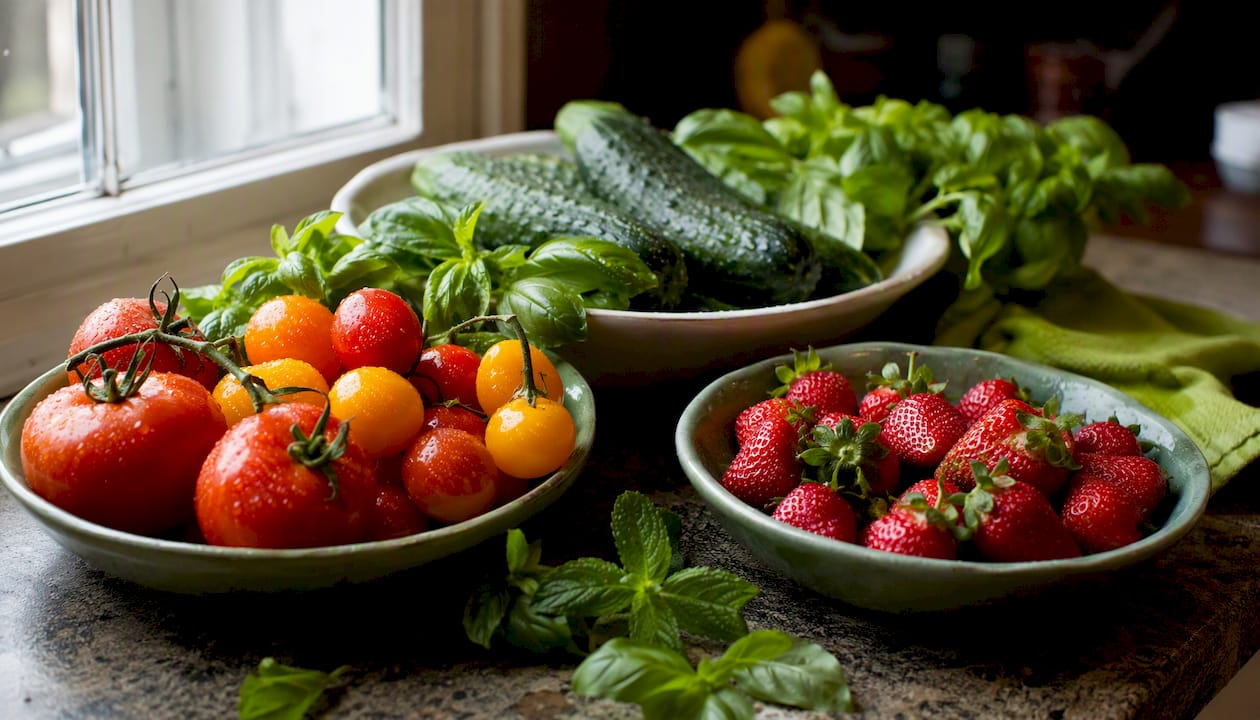
- Prioritise organic for produce with thin skins or high surface area: strawberries, raspberries, spinach, leafy greens, apples, and grapes tend to carry higher residue levels in monitoring surveys
- Thicker-skinned produce (avocados, pineapples, sweetcorn, onions) tends to carry lower residues and is less urgent to buy organic
- The “Dirty Dozen / Clean 15” concept, popularised by the US Environmental Working Group, is a useful heuristic for prioritisation, though it is based on US monitoring data and UK residue patterns may differ slightly
Antibiotics, antimicrobial resistance, and animal welfare
Organic livestock standards restrict routine antibiotic use and completely prohibit growth promoters. This is not a minor procedural difference. Antimicrobial resistance (AMR) is one of the most serious long-term public-health threats globally, and agricultural antibiotic use is a significant driver of resistant bacteria entering the food chain and environment.
In conventional intensive systems, antibiotics are sometimes used prophylactically across whole herds to prevent disease in crowded conditions. Organic standards require that animals are only treated when genuinely ill, and that treated animals are not sold as organic. The comprehensive PMC review notes that wider adoption of organic livestock practices could reduce antibiotic selection pressure at a population level, which is the public-health argument for organic meat and dairy that goes well beyond personal exposure.
Animal welfare in organic systems is also meaningfully better by design:
- Minimum outdoor access and pasture time are mandated
- Stocking densities are lower than in conventional systems
- Animals must be able to express natural behaviours (rooting for pigs, ranging for poultry)
- Mutilations such as routine beak trimming are restricted
These welfare standards matter both ethically and practically: lower-stress animals with better immune function require fewer interventions. For more on the specific benefits of organic meat production, the Naturessoulshop piece on organic meat benefits covers the welfare and health dimensions in detail.
Pro Tip: If you can only afford to buy one category of organic food, organic dairy or meat gives you the most direct reduction in antibiotic-related exposure, because the restriction on routine antibiotic use is one of the clearest and most enforceable differences between organic and conventional livestock systems.
What are the environmental benefits of organic farming?
Organic farming generally supports soil fertility, biodiversity, and reduced chemical runoff compared with intensive conventional agriculture. Cleveland Clinic’s commentary links consumer demand for organic food directly to broader ecological stewardship: when you buy organic, you are supporting farming practices that limit toxic runoff and reduce long-term soil degradation.
Systematic reviews suggest organic farms support significantly higher biodiversity than conventional equivalents, with studies reporting greater species richness of plants, insects, and birds on organic land. Soil organic matter and microbial activity also tend to be higher, which supports long-term fertility without synthetic inputs.
The main environmental benefits, supported by the evidence:
- Soil health: Crop rotation, green manures, and compost build organic matter and microbial diversity over time
- Biodiversity: Reduced pesticide use and more varied cropping support insects, birds, and wildflowers
- Water quality: No synthetic pesticide or fertiliser runoff reduces contamination of watercourses
- Reduced synthetic chemical load: Lower overall environmental burden from manufacturing and applying synthetic inputs
The trade-offs are real and worth acknowledging. Organic yields for some crops are lower than conventional equivalents, which means more land is needed to produce the same quantity of food. This land-use argument is the most substantive environmental counterpoint to organic farming. Integrated pest management (IPM) and organic-inspired techniques within conventional systems can capture some of the same environmental benefits without full conversion, which the PMC review identifies as a pragmatic route to environmental gains at scale.
For a fuller treatment of the environmental case, the Naturessoulshop article on why organic matters for the environment is worth reading alongside this.
Is organic food worth the cost, and how do you prioritise?
Organic food costs more. That is simply true, and pretending otherwise helps no one. The premium varies by product and retailer, but it is a real barrier for many households. The question is not whether organic is universally worth it, but where it delivers the most benefit per pound spent.
UK government organic farming data shows that certified organic production covers a relatively small share of UK agricultural land, which partly explains the price premium: smaller scale, more labour-intensive methods, and lower yields all feed into cost.
Where to prioritise your organic budget:
- Organic berries, leafy greens, and apples: These tend to carry higher pesticide residues in monitoring data and are worth prioritising when fresh organic is affordable
- Organic dairy and milk: The omega-3 difference is real, and the antibiotic-use argument is strongest here
- Organic meat: Particularly poultry and pork, where conventional intensive systems have historically used more antibiotics
- Organic baby food and food for young children: The precautionary case is strongest for developing bodies
Budget strategies that actually work:
- Frozen organic berries and vegetables are often significantly cheaper than fresh organic equivalents and retain most of their nutritional value
- Supermarket own-brand organic ranges (widely available in UK supermarkets) are typically priced lower than branded organic products
- Seasonal buying reduces cost: organic strawberries in June cost less than in January
- Farmers’ markets and box schemes can offer competitive pricing on locally grown organic produce
- Buying in bulk for storable items (organic pulses, grains, oats) spreads the premium across more meals
For guidance on seasonal produce and how to get the most from it nutritionally, the partner resource on benefits of seasonal produce is a useful companion read.
Pro Tip: Frozen organic spinach, peas, and berries are among the best-value organic purchases available in UK supermarkets. The freezing process preserves nutrients well, and the price per serving is often half that of fresh organic equivalents.
How to reduce pesticide residues at home
Buying organic is not the only way to reduce your pesticide exposure. Several practical steps make a meaningful difference regardless of what you buy.
Washing produce thoroughly under running water removes a significant proportion of surface residues. It does not eliminate systemic pesticides (those absorbed into the plant tissue), but it addresses surface contamination effectively. Peeling where appropriate — apples, cucumbers, courgettes — removes both surface residues and the outer layer where systemic residues tend to concentrate.
Practical steps to reduce exposure:
- Wash all fruit and vegetables under cold running water, even if you plan to peel them
- Remove outer leaves of leafy vegetables such as cabbage and lettuce, where residues concentrate
- Peel root vegetables and thin-skinned fruit when you are not buying organic
- Diversify your fruit and vegetable sources: eating a wide variety of produce reduces repeated exposure to any single pesticide
- Buy seasonal produce: in-season crops often require fewer pesticide applications
- Prioritise organic for high-surface-area items (strawberries, raspberries, spinach) where washing is less effective at removing residues
Pro Tip: For strawberries and soft berries specifically, soaking in cold water with a small amount of bicarbonate of soda for a few minutes before rinsing has been shown in some studies to remove more surface pesticide residues than plain water alone. It is not a substitute for buying organic, but it is a useful step when fresh organic is not available.
What do long-term studies and systematic reviews actually show?
The research picture on organic food and long-term health is more nuanced than either enthusiasts or sceptics tend to acknowledge. Here is the honest synthesis.
Consistent finding: Reduced pesticide exposure. This is the most robust result across both observational and interventional studies. The systematic review and meta-analysis covering 50 studies found that organic food intake is reliably associated with lower pesticide biomarker levels.
Suggestive evidence: A systematic review published in the European Journal of Clinical Nutrition found inverse relationships between organic food consumption and cardiometabolic risk factors including obesity, diabetes, and hypertension in several prospective studies. The associations are plausible and consistent, but the authors explicitly caution about residual confounding: organic food consumers tend to be healthier overall, and fully separating the organic effect from the healthy-lifestyle effect is methodologically difficult.
Insufficient evidence: Robust, disease-specific reductions in cancer incidence or cardiovascular mortality.
The strongest pooled finding across the literature is the reduction in pesticide exposure biomarkers among people eating organic diets. This is consistent across controlled intervention trials and observational studies, making it the most defensible claim for organic food’s direct health benefit.
Key limitations the research community acknowledges:
- Most studies are observational; randomised controlled trials of organic diets over years are impractical and rare
- Follow-up periods are often too short to detect effects on chronic disease outcomes
- Self-reported dietary data introduces measurement error
- Residual confounding from healthier lifestyle clustering among organic consumers is a persistent problem
What future studies need: longer follow-up, better dietary biomarkers, and populations with more varied organic consumption patterns to reduce confounding. The research is moving in the right direction, but the evidence base for organic food’s long-term disease-specific effects is still developing.
When does eating organic make sense for you?
The evidence supports a tiered, practical approach rather than an all-or-nothing decision.
If your priority is lower pesticide exposure: Choose organic for produce items with higher residue risk (berries, leafy greens, apples) and for food consumed by pregnant people and young children. The precautionary case is strongest here, and the Mayo Clinic guidance supports this framing.
If your priority is antibiotic resistance and animal welfare: Organic dairy and meat are where the clearest, most enforceable differences from conventional production lie.
If you are budget-conscious: Frozen organic berries and vegetables, supermarket own-brand organic ranges, and seasonal buying give you the most benefit per pound. Eating the recommended five portions of fruit and vegetables daily matters more than whether every portion is organic.
Three situation-based recommendations:
- Pregnant people and those planning pregnancy: Prioritise organic berries, leafy greens, and organic dairy where budget allows; the developmental exposure argument is strongest at this life stage
- Families with young children: Organic fruit, vegetables, and milk are the highest-value choices; children’s lower body weight amplifies relative pesticide exposure
- Budget-conscious shoppers: Focus organic spending on the highest-residue produce categories and frozen organic options; do not reduce overall fruit and vegetable intake to afford organic
The evidence hierarchy is clear: lower pesticide exposure is the most consistent and defensible benefit of eating organic food. Environmental and animal-welfare gains are real. Nutritional differences exist but are modest. Eating well, with plenty of fruit and vegetables, matters more than whether every item carries an organic label.
A personal take on balancing organic choices with everyday life
The evidence on organic food is genuinely interesting, and also genuinely complicated. What strikes me most is how often the debate gets framed as binary: either you go fully organic or you are not really trying. That framing serves no one.
The research is clear that lower pesticide exposure is real and measurable. It is also clear that eating five portions of fruit and vegetables a day, whether organic or not, is more important for most people’s health than the organic status of any individual item. These two things are not in conflict; they just require a bit of prioritisation.
My own approach: organic berries and leafy greens when they are available and reasonably priced, organic dairy most of the time, and conventional for everything else when the budget does not stretch. The environmental argument for organic farming is, if anything, more persuasive to me than the direct personal health argument, because the soil and biodiversity benefits are less dependent on the confounding problems that complicate the nutrition research.
The food quality standards discussion is worth engaging with seriously, and the partner resource on food quality standards for smarter dining offers a useful consumer-level framework for thinking about certification and what labels actually guarantee.
Pro Tip: Set a simple rule for your weekly shop: one or two organic swaps per trip, starting with whatever you eat most of. Over a month, you will have shifted your highest-frequency exposures without overhauling your budget.
Naturessoulshop: certified organic, delivered to your door
Knowing which organic products to trust is half the battle. Naturessoulshop stocks certified organic ranges across every category that matters: fresh fruit and vegetables, meat, dairy, dry grocery, vegan and gluten-free options, and home care and skin care products, all with clear labelling so you can see exactly what you are buying.
The range is built around clean ingredients and transparent sourcing, which means you are not hunting through ingredient lists to work out whether a product meets the standards this article describes. Whether you are starting with organic berries and leafy greens (the highest-priority swap for most shoppers) or looking for organic dairy and meat to reduce antibiotic exposure, the shop brings it together in one place with UK delivery.
Browse the full organic grocery range at Naturessoulshop and start with the categories where the evidence for benefit is clearest.
Sources
The following sources were used in preparing this article and are worth consulting for deeper reading:
- The effects of organic food on human health: a systematic review and meta-analysis of population-based studies
- Human health implications of organic food and organic agriculture: a comprehensive review - PMC
- Organic foods: Are they safer? More nutritious? - Mayo Clinic
- Understanding Organic Foods - Harvard Health
- Gov
Recommended
- Organic farming vs conventional farming: what the evidence says – naturessoulshop
- The real benefits of organic fruit nutrition in 2026 – naturessoulshop
- Why choose organic vegetables? Real benefits for families – naturessoulshop
- Long-term organic benefits for lasting wellness in India – naturessoulshop


