


TL;DR:
- Preservatives prevent food spoilage but vary in safety; natural methods have long tradition in India.
- FSSAI classifies preservatives into natural (Class I) and synthetic (Class II) with specific regulations.
- Reading labels for E-numbers and limiting synthetic preservatives helps make healthier food choices.
Most of us have stood in a supermarket aisle, squinting at an ingredient list, wondering whether that string of E-numbers is a chemistry experiment or a snack. For first-time parents, gluten-free shoppers, and plant-based eaters in India, the confusion runs even deeper. Are preservatives always harmful? Is “preservative-free” truly safer? This article cuts through the noise. We’ll explain what preservatives actually are, how Indian food law categorises them, which ones carry real health risks, and how to make smarter choices for your family without turning every grocery run into a research project.
Table of Contents
- What are preservatives and why are they used?
- Preservative types and FSSAI rules in India
- Preservatives and your health: What should you worry about?
- How to make healthier, preservative-smart food choices
- What most guides miss about preservatives in Indian diets
- Making preservative-safe choices with Nature’s Soul Shop
- Frequently asked questions
Key Takeaways
| Point | Details |
|---|---|
| Not all preservatives are equal | Natural (Class I) preservatives such as salt and vinegar are safer than most synthetic (Class II) types used in processed foods. |
| Learn to read food labels | Understanding E-numbers and FSSAI’s rules helps you identify additives and make informed choices. |
| Health risks are dose-dependent | Occasional use within safe limits is usually fine, but excessive intake of some preservatives—especially by children—can harm your health. |
| Smart swaps make a difference | Switch to more homemade foods and preservative-free products wherever feasible for safer nutrition. |
| Traditional preservation is powerful | Indian pickling, fermenting, and sun-drying methods keep food safe and delicious without synthetic additives. |
What are preservatives and why are they used?
Food preservatives are substances added to prevent spoilage by inhibiting microorganisms, oxidation, or enzymatic activity. In simpler terms, they stop food from going off too quickly. That matters enormously in India, where high temperatures, humidity, and long supply chains can turn fresh food unsafe within hours.
Think about a packet of namkeen sitting in a warehouse in June, or a bottle of mango juice travelling from a factory in Maharashtra to a shop in Assam. Without preservation, neither would survive the journey. Preservatives are not always the villain on the label. Context matters.
There are three main types of preservatives, each working differently:
- Antimicrobial preservatives stop bacteria, moulds, and yeasts from growing. Common examples include sodium benzoate (used in juices and soft drinks) and potassium sorbate (used in bakery items and dairy).
- Antioxidant preservatives prevent fats and oils from turning rancid. BHA and BHT are synthetic versions; vitamin E (tocopherol) is a natural one found in many cold-pressed oils.
- Anti-enzymatic preservatives slow down natural chemical reactions in food that cause browning or texture changes. Citric acid in packaged fruit products is a familiar example.
Common Indian foods that regularly contain preservatives include pickles, packaged snacks, fruit juices, bread, biscuits, canned foods, and ready-to-eat meals. Even some dairy products and flavoured yoghurts carry them.
“Not all preservatives are created equal. The source, quantity, and context of use determine whether a preservative supports food safety or poses a risk.”
It is also worth knowing that natural food preservatives like salt, turmeric, and vinegar have been used in Indian kitchens for centuries. They work through the same mechanisms, just without the E-number on the label.
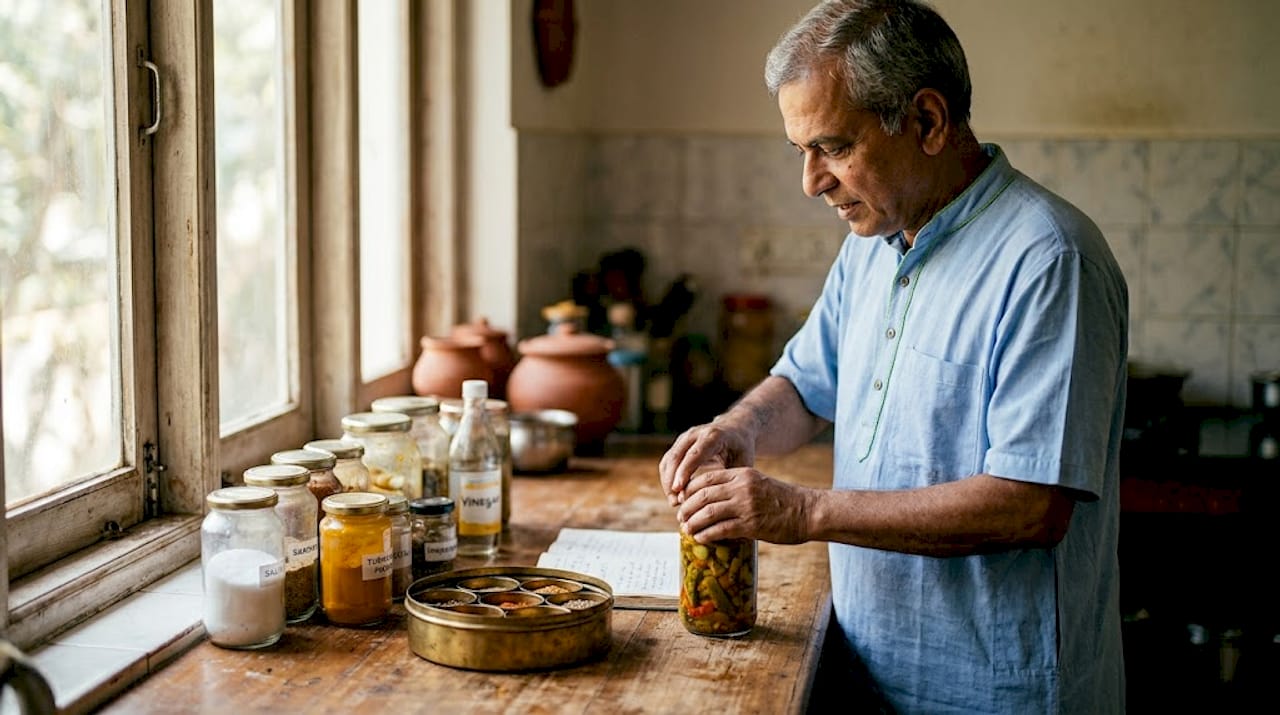
Pro Tip: A product labelled “preservative-free” may still contain ingredients that naturally preserve food, such as high sugar content, salt, or acidic components. Always read the full ingredient list, not just the front-of-pack claims.
Preservative types and FSSAI rules in India
[FSSAI classifies preservatives](https://fssai.gov.in/upload/uploadfiles/files/Chapter 3_Substances added to food(1).pdf) as Class I (natural) and Class II (synthetic), each with specific rules governing their use in Indian food products.
Class I preservatives are naturally occurring substances with a long history of safe use. These include common salt, sugar, dextrose, glucose syrup, honey, spices, vinegar, and edible vegetable oils. You’ll find these in homemade achaar, chutneys, and traditional sweets. They have no strict upper limit in most applications because they’ve been used safely in food culture for generations.
Class II preservatives are synthetic or semi-synthetic compounds permitted only in specific foods and only up to defined limits. These include:
- Benzoates (E210 to E213): found in carbonated drinks, squashes, and sauces
- Sorbates (E200 to E203): used in cheese, bakery products, and wine
- Nitrites and nitrates: used in processed and cured meats
- Sulphites (E220 to E228): used in dried fruits, wine, and some condiments
- Propionates (E280 to E283): used in bread and other baked goods
| Feature | Class I | Class II |
|---|---|---|
| Source | Natural (salt, sugar, vinegar) | Synthetic (benzoates, sorbates) |
| Upper limit | Generally unrestricted | Strictly regulated by FSSAI |
| Common foods | Pickles, sweets, chutneys | Packaged bread, juices, meats |
| Safety perception | Widely accepted | Requires label disclosure |
| Max per product | No restriction | Only one Class II permitted |
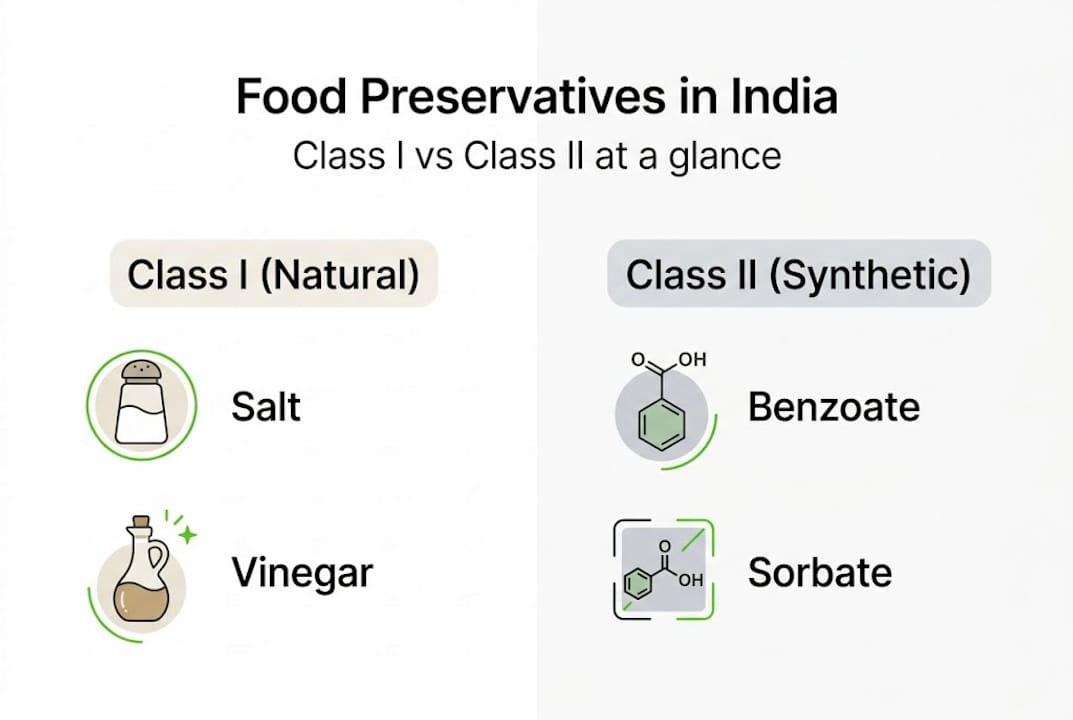
One rule that surprises many shoppers: FSSAI allows only one Class II preservative per food product. This limits the cumulative synthetic load in any single item. Understanding preservative classes helps you spot which products deserve closer scrutiny.
Here is how to identify preservatives on any Indian packaged food label:
- Flip the pack and find the ingredient list, which is mandatory on all FSSAI-regulated products.
- Look for words ending in “ate” or “ite” such as benzoate, sorbate, sulphite, or nitrite.
- Check for E-numbers in the 200 to 299 range, which are all preservative codes.
- Note whether the product states “Class II preservative” anywhere on the pack.
- Cross-reference with reading Indian food labels to understand what each ingredient means for your family.
Pro Tip: Homemade foods rely almost entirely on Class I strategies: salt, oil, and acidity. When in doubt, choose homemade or traditionally prepared alternatives over heavily packaged options.
Preservatives and your health: What should you worry about?
Knowing the rules is one thing. Understanding how these preservatives actually affect your body is another, especially when you’re feeding young children or managing a sensitive diet.
Certain preservatives carry risks including hyperactivity in children, allergic reactions, potential carcinogenicity, and endocrine disruption, each with specific maximum safe intakes defined by regulatory bodies.
Here is a summary of key concerns by preservative type:
| Preservative | Found in | Key concern | ADI (per kg body weight) |
|---|---|---|---|
| Sodium benzoate | Juices, sauces | Hyperactivity in children | 0 to 5 mg/kg |
| Sulphites | Dried fruit, wine | Asthma, allergic reactions | 0 to 0.7 mg/kg |
| Sodium nitrite | Cured meats | Potential carcinogen | 0 to 0.07 mg/kg |
| Propionates | Bread, baked goods | Possible insulin resistance | 0 to 3 mg/kg |
| BHA/BHT | Oils, snacks | Endocrine disruption | 0 to 0.3 mg/kg |
The Acceptable Daily Intake (ADI) is the amount considered safe to consume every day over a lifetime, based on body weight. Children are especially vulnerable because their ADI thresholds are much lower in absolute terms, yet they often eat more processed food relative to their size.
Watch for these signs that may suggest preservative sensitivity in your family:
- Skin rashes or hives after eating packaged snacks
- Wheezing or breathing difficulty, particularly linked to sulphite-containing foods
- Hyperactivity or irritability in children after consuming certain drinks or sweets
- Digestive discomfort after eating cured or processed meats
There is also a lesser-known risk worth noting: when sodium benzoate combines with vitamin C (ascorbic acid) in a drink, it can form benzene, a known carcinogen. Many fortified juices carry both ingredients. For health effects on children, this combination is particularly worth avoiding.
For plant-based and gluten-free households, the risk is different but real. These diets often rely more heavily on packaged alternatives, such as gluten-free bread, vegan cheese, or plant-based meats. Many of these products use synthetic preservatives to extend shelf life. Choosing nitrate-free meats and reading labels on every specialised product is essential, not optional.
Cumulative exposure is the real concern. One biscuit with propionates is not a crisis. But a diet built almost entirely on packaged foods, each carrying a different synthetic preservative, adds up quickly.
How to make healthier, preservative-smart food choices
Practical action is where understanding becomes genuinely useful. Here is how to navigate preservatives in your everyday shopping without spending hours in the aisle.
Step-by-step label reading for any packaged food:
- Start with the ingredient list, not the health claims on the front.
- Identify any E-numbers between E200 and E299 — these are all preservatives.
- Check whether the product contains more than one synthetic preservative (this would violate FSSAI rules and is a red flag).
- Look up unfamiliar names: benzoate, sorbate, sulphite, and nitrite are the most common ones to question.
- Compare two similar products and choose the one with fewer or no Class II preservatives.
Natural preservation strategies you can use at home and look for in products:
- Use salt, sugar, and vinegar-based pickling for homemade preserves
- Choose oils with natural antioxidants like cold-pressed sesame or mustard oil
- Opt for sun-dried or dehydrated foods where possible
- Fermented foods like idli batter, curd, and kanji are naturally self-preserving
- Turmeric and cloves have genuine antimicrobial properties used in traditional cooking
For those following preservative-free diets, it helps to know that FSSAI regulates the use of the term “preservative-free” on labels. A product making this claim cannot contain any Class II preservatives, though Class I ingredients like salt are still permitted.
Gluten-free and plant-based shoppers should pay extra attention to flavoured products, meat alternatives, and dairy-free cheeses, as these categories frequently use sulphites and sorbates to compensate for the absence of traditional preservation methods.
For healthy snacking, prioritise whole foods, roasted nuts, fresh fruit, and homemade options over packaged alternatives wherever possible.
Pro Tip: Start small. Pick one staple you buy regularly, such as bread, juice, or a packaged snack, and find a cleaner alternative this week. Small swaps build lasting habits without overwhelming your routine.
What most guides miss about preservatives in Indian diets
Most articles on this topic end up in one of two camps: either everything synthetic is poison, or preservatives are perfectly fine because regulators approve them. Both views miss the point entirely.
The truth is that India has one of the richest traditions of natural preservation in the world. Pickling in mustard oil, fermenting rice batter, sun-drying vegetables, preserving in jaggery — these are not just culinary habits. They are sophisticated food safety systems developed over centuries, using natural preservation methods that happen to align perfectly with what modern food science now recommends.
Blanket fear of preservatives can actually backfire. Families who avoid all packaged food without a reliable fresh supply chain may end up eating spoiled or contaminated food, which is far more dangerous than a small amount of potassium sorbate in a biscuit.
The smarter approach is informed trade-offs. A fresh, largely home-cooked diet with occasional packaged items is not a failure. It is realistic, sustainable, and far better than a rigid “no preservatives ever” stance that crumbles under the pressure of a busy urban life. Understand what you’re eating, choose Class I over Class II where you can, and trust the food wisdom your grandmother probably already practised.
Making preservative-safe choices with Nature’s Soul Shop
Ready for a practical, trustworthy source of preservative-smart foods and personal care? At Nature’s Soul Shop, every product is curated with ingredient transparency at the forefront, so you spend less time decoding labels and more time enjoying clean, wholesome food.
Whether you’re shopping for organic foods and groceries for your family, seeking gluten-free staples, or exploring plant-based options without hidden synthetic additives, our range is built around your values. We also carry preservative-conscious skin care for families who want clean ingredients beyond the kitchen. Explore our guides, compare products, and make every purchase a confident one.
Frequently asked questions
Are all synthetic preservatives in food harmful?
Not all synthetic preservatives are harmful; safety depends on the type, quantity, and how often you consume them. That said, FSSAI sets strict limits on synthetic preservatives specifically to protect public health, and some are worth minimising in children’s diets.
Which preservatives are banned or restricted in Indian foods?
Sulphites are banned on raw fruits and vegetables, and both nitrites and benzoates carry strict legal limits under FSSAI regulations. Sulphites and nitrites have documented health risks that informed these restrictions.
How can I check if a product has synthetic preservatives?
Look for E-numbers in the 200 to 299 range or ingredient names like benzoate, sorbate, or sulphite on the label. FSSAI requires clear disclosure of all Class II preservatives on packaged food sold in India.
Are naturally preserved foods always safe?
Natural preservatives like salt, sugar, and vinegar are generally safe, but excessive salt or sugar carries its own health concerns over time. Natural preservatives lack upper limits in most food applications but should still be used sensibly.
Do gluten-free and vegan foods contain fewer preservatives?
Not necessarily. Packaged gluten-free and vegan products may still rely on synthetic preservatives to extend shelf life, so label-checking is vital for anyone following a specialised diet.
Recommended
- Natural Food Preservatives: Healthier Choices for 2025 – naturessoulshop
- Preservatives in Packaged Food: What Delhi NCR Needs to Know in 2025 – naturessoulshop
- Common food preservatives to avoid for a cleaner diet – naturessoulshop
- How to choose safe baby food options in India – naturessoulshop
- INFORMED SPORT COLLAGEN


