


TL;DR:
- Choosing sustainable gifts based on durability and usefulness ensures long-term environmental benefits. Reusable items, experience-based presents, and ethically sourced consumables are among the most impactful options. Proper wrapping with recyclable or reusable materials is essential to complete an eco-friendly gifting practice.
Most people assume that choosing sustainable gifting ideas means settling for something worthy but dull. A recycled notebook. A seed packet. Something the recipient will smile at politely and then leave in a drawer. That assumption is wrong, and it is holding back one of the most thoughtful shifts you can make as a gift-giver. Genuinely eco-conscious gifts, properly understood, are defined not by their label or packaging copy but by their durability, usefulness, and the ethics behind their production. This guide cuts through the greenwashing to show you what actually works.
Table of Contents
- Key takeaways
- What makes a gift genuinely sustainable
- Comparing the main categories of green gifts
- Sustainable wrapping: the overlooked part
- Practical tips for everyday sustainable gifting
- My honest take on sustainable gifting
- Explore Naturessoulshop for ethical gifts worth giving
- FAQ
Key takeaways
| Point | Details |
|---|---|
| Durability defines sustainability | A gift that lasts years beats a “green” item made cheaply that ends up in landfill within months. |
| Usefulness over novelty | Gifts integrated into daily life reduce footprint far more than one-off eco gestures. |
| Wrapping matters too | Many common wrapping papers are not recyclable; switching to fabric or recycled paper completes the picture. |
| Know your recipient | The most sustainable gift is one that gets used consistently, not one that looks good in theory. |
| Certifications are a starting point | Labels and logos help, but real-world reuse and end-of-life options matter far more than marketing. |
What makes a gift genuinely sustainable
The phrase “sustainable gifting ideas” has become something of a catch-all. Brands attach it to everything from bamboo toothbrushes to luxury candles in glass jars. So before you buy anything, it helps to understand the actual criteria that separate a genuinely ethical gift from a green-washed one.
Durability and reduced pollution are the two qualities that define whether a greener gift actually matters. An item that lasts five years generates a fraction of the footprint of something replaced annually. This means that a well-made stainless steel water bottle or a high-quality organic cotton tote is far more sustainable than ten cheap “eco” alternatives bought over the same period.
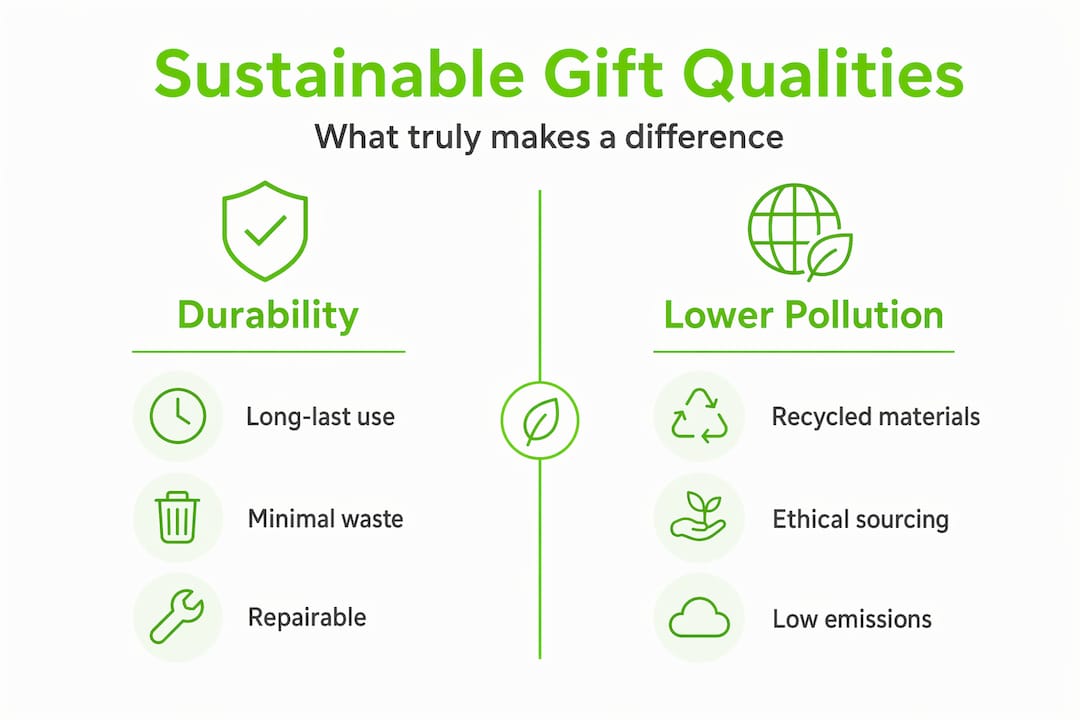
Usefulness is the second pillar. Gifts must integrate into daily life to justify their environmental footprint. A beautiful beeswax wrap set given to someone who never cooks at home is not a sustainable gift. It is clutter with good branding. The embodied energy in producing, packaging, and shipping any item is only offset when that item is genuinely used.
Here is what to check before you commit to any sustainable present:
- Durability. Will it last years, or is it likely to break, fade, or wear out within months?
- Usefulness. Does it fit into the recipient’s actual routine, not their aspirational one?
- Ethical sourcing. Are the materials and labour practices transparent and verified?
- Packaging. Is the product itself packaged responsibly? Foil-lined boxes and plastic inserts undermine any sustainability claim on the label.
- End of life. Can the item be recycled, composted, or repaired when it eventually wears out?
Gifts that replace disposables are a particularly strong choice. Reusable produce bags replace hundreds of plastic bags over their lifetime. A quality wooden chopping board replaces disposable cutting mats. These are items with a clear, calculable positive impact.
Pro Tip: Before purchasing, ask yourself whether the recipient would buy this item for themselves. If yes, you have probably found a genuinely useful, low waste gift idea.
Comparing the main categories of green gifts
Not all eco-friendly gift options are created equal. Each category has strengths and weaknesses depending on the recipient, the occasion, and how realistically you can predict their habits.
| Gift category | Environmental benefit | Practical appeal | Best suited to |
|---|---|---|---|
| Reusable products | High if used repeatedly over years | High when matched to lifestyle | Everyday users of similar items |
| Experience gifts | Very high, no physical waste | Requires personal relevance | People who value experiences |
| Plantable or consumable gifts | Moderate, often one-time impact | Accessible and approachable | Wide range of recipients |
| Charitable donations | High and ongoing | Lower personal connection | Recipients passionate about a cause |
Reusable products are the backbone of most best sustainable gifts lists. Bamboo utensil sets, glass food containers, organic cotton bags, and stainless steel bottles all have a strong case. The key caveat is that reusable packaging only surpasses single-use in impact after sufficient reuse cycles, often eight to fifteen times for food-service items. Give these to people who will genuinely use them, not those who already have three similar items at home.

Experience gifts avoid physical waste entirely. A cooking class, a spa day using organic products, or a tour of a local organic farm carry essentially no ongoing footprint. The catch is that experience gifts need to feel personal. A generic voucher for something the recipient has no interest in is not more sustainable because it lacks packaging. It simply becomes a spent purchase.
Plantable and consumable gifts cover everything from seed kits and living herb pots to organic hampers and artisan ethical coffee. These work well for people who find reusable items impersonal. Ethical coffee as a gift in particular has grown as a category because it combines fair-trade sourcing with everyday pleasure. The trade-off is that consumables have a one-time impact. A bag of excellent organic coffee is enjoyed and gone; a reusable item has a longer tail of benefit.
Charitable or impact-based gifts are where some of the most interesting green gift ideas live. Carbon offset and tree-planting gifts offer non-expiring, ongoing environmental benefit with recipient engagement through updates and live experiences. These suit recipients who are genuinely passionate about environmental issues and appreciate knowing their gift funds real action.
Sustainable wrapping: the overlooked part
You can spend hours selecting the perfect ethical gifting suggestion and then wrap it in a sheet of foil-coated, glitter-dusted paper that goes straight to landfill. This is one of the most common and most avoidable mistakes in sustainable gifting.
Many wrapping papers are not recyclable despite appearing eco-friendly. Metallics, foils, and glitter coatings mean the paper cannot be processed in standard recycling streams. Even some papers labelled as recyclable carry plastic laminates that cause problems in practice.
Here are the wrapping approaches that genuinely reduce waste:
- Fabric gift wraps. Reusable fabric gift wraps inspired by the Japanese furoshiki tradition and made from recycled plastic fabric offer a durable alternative to single-use paper. The wrap becomes part of the gift.
- Recycled and uncoated paper. Plain kraft paper or recycled newsprint is kerbside recyclable and can look beautiful with a dried sprig of herbs or a simple ribbon.
- Cloth bags and tins. A linen drawstring bag or a quality tin is reusable and feels premium. The container becomes a secondary gift.
- Creative repurposing. Old maps, pages from illustrated magazines, fabric offcuts, and even tea towels work beautifully as wrapping and generate zero additional waste.
Pro Tip: When using fabric wraps, check for durability after washing before gifting. A wrap that loses its shape or colour after one wash will not be reused, which defeats the purpose entirely.
The goal is for the wrapping to either be reused many times or to re-enter the materials cycle cleanly. Anything short of that standard is just decoration.
Practical tips for everyday sustainable gifting
Choosing ethical gifting suggestions does not need to be a research project every time. Once you have the principles clear, the decisions become much faster.
-
Start with the recipient’s lifestyle. The single most important factor in choosing a sustainable gift is whether it will be used. Talk to the person, notice their habits, and match the gift to their actual daily routine, not the version of them you imagine wanting to be more eco-conscious.
-
Choose singular, high-quality items. Overconsumption dressed in green packaging is still overconsumption. One well-made, ethically sourced item is more sustainable and more memorable than a basket of five mediocre products.
-
Scrutinise certifications critically. Soil Association organic certification, Fairtrade marks, and B Corp status are meaningful. Vague phrases like “natural” or “eco-friendly” on packaging are not. Look for third-party verification, not self-declared claims. Packaging choices critically influence the true sustainability of any gift, so check both the product and its packaging.
-
Consider second-hand and restored items. A beautifully restored vintage item or a curated second-hand find has the lowest possible production footprint. For the right recipient, it is also far more interesting than anything bought new.
-
Support local and independent green businesses. Buying locally reduces transport emissions and often means you can ask questions directly about sourcing and ingredients. For food gifts particularly, sustainable grocery choices made close to home carry a far lighter footprint than imported alternatives.
-
Verify end-of-life options locally. Durability and realistic end-of-life handling should guide every sustainable purchase. Check whether the item can be locally recycled, composted, or repaired before committing.
My honest take on sustainable gifting
I have been navigating sustainable lifestyle choices for years, and the thing I have found is that most people approach eco-conscious gifting backwards. They start with the label and work outward. They find something marketed as sustainable and assume the job is done. In my experience, that approach produces expensive clutter.
What I have learned is that the most genuinely sustainable gifts I have ever given were ordinary, durable, useful things bought from producers I could verify. A jar of raw organic honey from a local beekeeper. A pair of quality wool socks from a traceable British flock. A subscription to an organic box scheme. None of these shouted about their sustainability credentials. They simply were what they were: real, long-lasting, honestly made.
The harder truth I have come to is that no gift is truly waste-free. Every item has a footprint. The question is whether that footprint is justified by genuine, lasting usefulness in someone’s life. When it is, you have a genuinely sustainable gift. When it is not, you have a good intention and a piece of eventual landfill. Being honest about that distinction is what separates thoughtful sustainable gifting from virtue signalling wrapped in recycled paper.
— Arjit
Explore Naturessoulshop for ethical gifts worth giving
If the principles in this article resonate with you, Naturessoulshop is built around exactly them. Every product in the range starts with clean, verified ingredients and ethical sourcing across organic produce, health supplements, dairy, vegan and gluten-free options, and natural skin care.
When you are looking for low waste gift ideas that will genuinely be used and appreciated, the organic grocery store at Naturessoulshop offers everything from fresh organic produce and dry grocery to natural home care and personal care products. For recipients who prioritise their health and the planet’s, the health product range covers natural supplements and wellness essentials that make thoughtful, lasting gifts. And for fresh food gifts that feel genuinely special, Nature’s Soul Fresh showcases seasonal organic options sourced with care. All products arrive with eco-conscious packaging that completes the sustainable gifting picture from product to doorstep.
FAQ
What are eco-conscious gifts?
Eco-conscious gifts, often referred to as sustainable presents, are items chosen for their low environmental impact, ethical production, and genuine usefulness to the recipient. They prioritise durability, responsible sourcing, and minimal or recyclable packaging over superficial green marketing claims.
Are reusable gifts always the most sustainable option?
Not automatically. Reusable items only outperform single-use alternatives after being used many times, so a reusable gift given to someone who will not use it is worse than a thoughtfully chosen consumable.
Which wrapping paper is safe to recycle?
Plain, uncoated recycled paper and kraft paper are generally kerbside recyclable. Avoid foil, glitter, and metallic wrapping papers, as these coatings prevent recycling and send materials directly to landfill.
How do I choose a sustainable gift for someone I do not know well?
Focus on consumables with verified ethical sourcing, such as organic food hampers, fairly traded teas, or charitable donations in their name. These options carry minimal clutter risk and have a clear, honest environmental story behind them.
Does where I buy a gift affect its sustainability?
Yes, significantly. Buying locally from independent or certified green businesses reduces transport emissions and gives you the chance to ask directly about sourcing, ingredients, and packaging before you purchase.


