


Sustainable food boxes are the fastest, most practical way for health-conscious Delhi NCR households to get organic produce and eco-friendly gift hampers delivered without compromising on freshness. Nature’s Soul Shop offers exactly this kind of curated box, built to cut food waste and put seasonal, sustainably sourced produce on your table with far less packaging guilt than a standard supermarket run.
TL;DR:
- Choose produce boxes that specify local sourcing and harvest-to-door timelines, as these methods better support regional farmers and reduce spoilage.
- Verify the transparency of sourcing claims and avoid reliance solely on vague “eco-friendly” labels or packaging that isn’t recyclable or compostable locally.
- Inspect delivered produce immediately for damage or spoilage, and refrigerate perishables promptly to ensure safety and freshness.
- Count on a mix of delivery and in-person shopping for cost efficiency and quality control, especially for same-day needs or detailed inspection.
- Start with a trial box before committing to a regular subscription, focusing on sourcing transparency, portioning, and cold-chain handling.
Table of Contents
- What’s actually inside a sustainable food box?
- How do you choose the right box for your household?
- Which sustainability claims are real, and which are greenwash?
- What should you do the moment your box arrives?
- Getting more value out of every delivery
- How do sustainable food boxes affect local farmers and communities?
- Sustainable food boxes vs. traditional grocery shopping: which wins?
- What does 15 years in wellness retail teach you about food boxes?
- Ready to order your first sustainable food box?
- Sources
What’s actually inside a sustainable food box?
Not every box does the same job, and knowing the difference saves you from ordering the wrong thing. Broadly, four formats dominate the Delhi NCR market:
- Produce boxes: seasonal fruit and vegetables, often 5 to 8 kilograms, sized for a household of two to four people over a week.
- Curated snack or health boxes: dried fruit, roasted nuts, gluten-free crackers, plant-based protein bars, usually 6 to 10 items per box.
- Festival and gift hampers: dry fruits, teas, cold-pressed oils, artisanal preserves, packed for gifting rather than daily eating.
- Ready-to-cook meal kits: pre-portioned vegetables, grains and spice mixes for two to four meals, aimed at cutting prep time without cutting quality.
Portioning matters more than people expect. A produce box aimed at a single adult wastes money if it’s sized for a family of four, and the reverse leaves a family short by Wednesday. Delivery cadence usually splits into weekly, fortnightly or one-off gift orders, and pricing tends to fall into three loose bands: entry-level boxes for everyday produce, mid-tier boxes that mix produce with pantry staples, and premium hampers built around gifting or specialist diets. A fresh fruit and veg home delivery service is a useful starting point if you’re still deciding which format fits your kitchen.
How do you choose the right box for your household?
Start with what you’d actually eat, not what looks appealing in a product photo. The selection criteria that matter most are diet type (vegan, gluten-free, no restrictions), household size, how often you want deliveries, packaging preferences, how transparent the seller is about sourcing, and whether the price matches the portion you’re getting.
Before you order, run through this checklist:
- Does the box list allergens clearly, and can items be swapped out if someone in your household can’t eat them?
- What’s the delivery window, and does it match when someone is actually home to receive chilled items?
- Is there a stated refund or replacement policy if produce arrives damaged or wilted?
- Does the seller state where the produce is sourced from, or is it vague marketing language?
- Can you see the price broken down by weight or item count, so you’re not guessing at value?
If you’ve shortlisted two boxes, compare them the same way you’d compare two flats before renting: check price per kilogram or per item first, then sourcing transparency, then packaging claims, and only then aesthetics or gift presentation. Whichever box wins two of those three categories is usually the better long-term choice, even if the other looks nicer in photos.
Pro Tip: Order a single trial box before committing to a weekly subscription. Editorial testers who reviewed multiple organic produce delivery services recommend starting with a one-box-a-month cadence to judge freshness and portioning before locking into anything regular.
Which sustainability claims are real, and which are greenwash?
“Eco-friendly” gets printed on a lot of boxes that don’t earn it, so it’s worth checking three things before you trust the label: packaging, sourcing, and delivery frequency.
On packaging, genuinely useful materials are ones your building or municipal service can actually process. A box marked “compostable” is only as good as your access to composting. Kraft paper, jute pouches and recyclable cardboard tend to have a better real-world outcome for urban buyers than a compostable claim nobody nearby can act on. Editorial reporting on organic box subscriptions found that most top-tier services now use recyclable or compostable materials, but the packaging volume still runs higher than a single grocery shop trip.
On sourcing, look for specifics rather than adjectives. “Locally sourced” with a named farm or region beats “sustainably sourced” with nothing behind it. Testing across multiple produce and protein box services found the strongest performers prioritise local sourcing and short harvest-to-door timelines, some turning inventory over within 72 hours of harvest, as explained in Fresh Food Delivery Explained: What You Need to Know – Wild Foodz by Hotel Entree Brugge.
42% of consumers worldwide now say sustainability actively shapes which food gifts they choose, according to 2026 food gifting trend reporting, which is exactly why vague “eco” labelling has become so common. That’s your cue to check for named farms, stated certifications, or packaging material specifics rather than taking the label at face value. And remember: more frequent, smaller deliveries usually mean a bigger cumulative footprint than one larger, well-planned order.
What should you do the moment your box arrives?
Cold-chain handling is the part people skip and shouldn’t. If chilled items arrive lukewarm or the ice packs have fully melted, that’s a sign the delivery sat too long in transit. Contact the seller promptly rather than assuming the produce is still safe.
Once the box is at your door, work through it in this order:
- Inspect immediately. Open the box within minutes of arrival and check for damaged or wilted items before anything else.
- Refrigerate or freeze first. Perishables go straight into cold storage before you unpack anything else, including gift items or pantry staples that can wait.
- Wash produce properly. Farm-fresh vegetables often carry visible soil, which is normal rather than a quality problem. Submerge leafy greens in cold water and agitate them gently to loosen debris, per University of Minnesota Extension guidance.
- Store by priority. Use-first items (soft fruit, leafy greens) go to the front of the fridge; hardier vegetables can wait.
Organic labelling alone doesn’t guarantee safety. Clinical guidance on organic food delivery notes that temperature control and prompt storage matter more to health outcomes than whether something is certified organic, particularly for children, older adults, or anyone immunocompromised.
Getting more value out of every delivery
A box only reduces waste if you actually use what’s in it, so plan meals around what arrived rather than what you feel like cooking.
- Build a “use-first” shelf in your fridge for anything that’ll spoil within two days.
- Blanch and freeze surplus greens or vegetables you won’t get to in time; it stops waste without extra effort later in the week.
- Reuse sturdy boxes and jute pouches for storage or gifting rather than binning them straight away.
- Split a larger produce box with a neighbour or family member if a full delivery is more than your household eats.
Pro Tip: Keep the delivery note or packing slip for a week. If something arrives short or damaged, having the original list makes any refund conversation faster.
How do sustainable food boxes affect local farmers and communities?
Boxes built around regional sourcing put money into smaller supply chains that a standard supermarket often bypasses entirely. When a service commits to naming its source farms and keeping harvest-to-door timelines short, it’s usually buying in smaller, more frequent batches, which gives regional growers steadier demand than a single seasonal bulk order to a large distributor.
This matters more in a region like Delhi NCR, where a lot of fresh produce still travels through long, multi-stage supply chains before reaching a shop shelf. Shorter chains mean less time in transit, less spoilage, and a bigger share of the final price actually reaching the grower rather than a string of middlemen. It also gives smaller farms a viable route to health-conscious urban buyers who’d otherwise never see their produce.
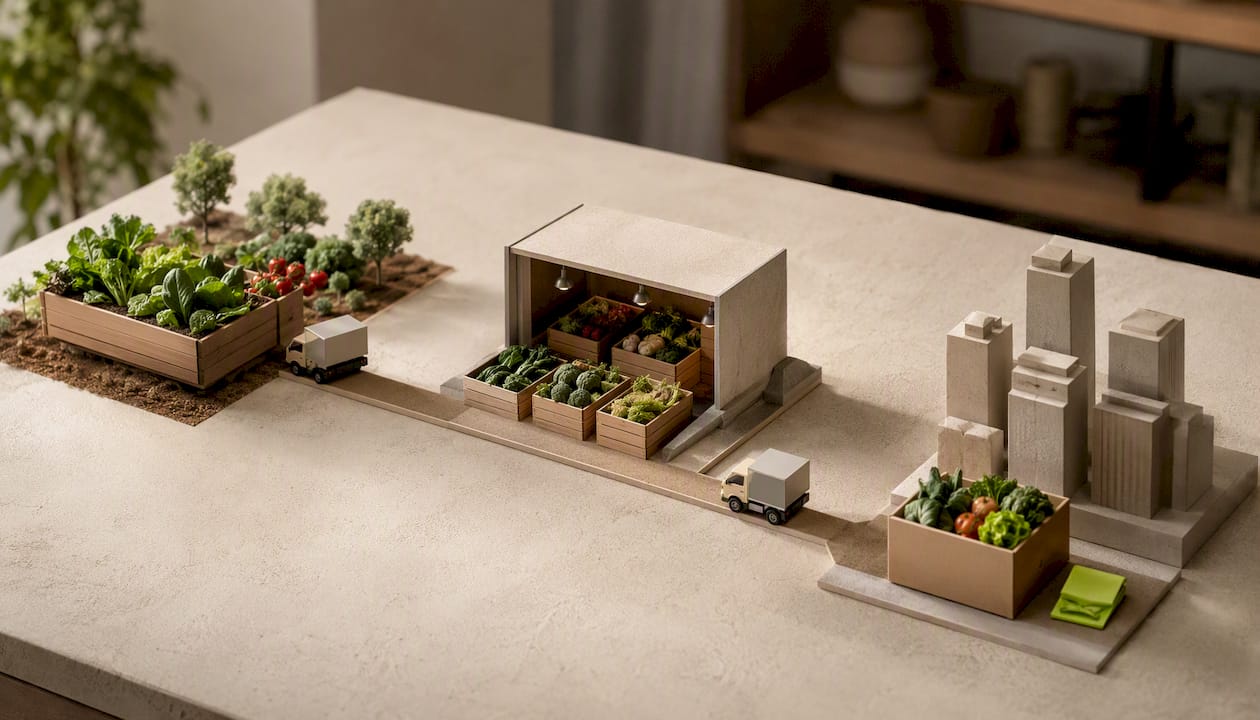
The trade-off is scale. A subscription box model can’t move the same volume as a large wholesale contract, so it tends to work best for farms already producing specialty, seasonal or organic crops rather than commodity staples. For buyers, that means a sustainable food box is rarely the cheapest way to eat, but it’s often a more direct way to support the growers behind what you’re eating. Sourcing transparency, not just the “organic” label, is the detail worth checking if this side of the story matters to you.
Sustainable food boxes vs. traditional grocery shopping: which wins?
Neither format wins outright. They solve different problems, and the honest comparison depends on what you’re optimising for.
On convenience, boxes win clearly. You’re not walking supermarket aisles or comparing five brands of the same vegetable; the selection is made for you, and organic meal delivery services tend to improve access to fresh produce while cutting the impulse purchases that pad out a typical grocery trip. On cost per item, traditional shopping usually wins, because you’re paying for curation and delivery on top of the produce itself.
On food waste, boxes generally perform better because portions are set for you rather than left to guesswork at the shop. On packaging footprint per order, traditional shopping can actually come out ahead, since a single grocery run in reusable bags often produces less packaging waste than a box with individual wrapping for each item, even when that wrapping is recyclable.
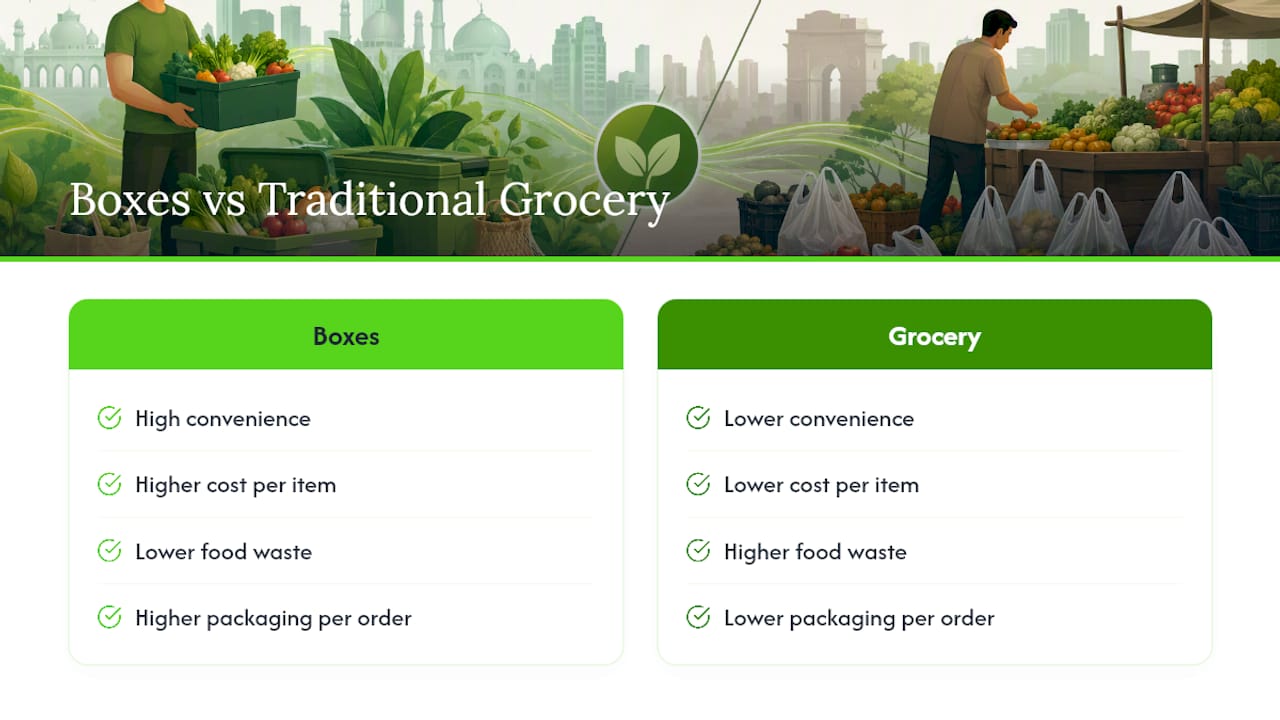
The practical answer for most Delhi NCR households is a mix: a recurring box for seasonal produce and pantry staples you trust, topped up with in-person shopping for anything you need same-day or want to inspect yourself before buying. Treating it as either/or misses where each format actually earns its place.
What does 15 years in wellness retail teach you about food boxes?
Most guidance on sustainable food boxes treats packaging as the whole story. It isn’t. Packaging is the easiest thing for a seller to photograph and the easiest thing for a shopper to judge at a glance, which is exactly why it gets disproportionate attention. Sourcing transparency matters more, and it’s harder to fake convincingly over time.
A seller who names the farm, states the harvest window, and can tell you honestly when something is out of season is doing the harder, more valuable work. A jute pouch with vague “sustainably sourced” text on it is doing the easier, more visible one. Readers comparing boxes should weight the two very differently: check the source claims first, and treat packaging as a secondary filter, not the deciding factor.
The other thing worth saying plainly: organic and eco-friendly labelling doesn’t automatically make a box healthier or safer. Handling still matters. A perfectly sourced organic box left on a doorstep for three hours in Delhi summer heat is a food safety problem, not a sustainability win. Buyers who focus only on the label and skip the handling checklist are solving half the problem.
One service’s approach to sourcing and packaging grew directly out of watching how much of the “sustainable” language in this category is decoration rather than substance. That’s the lens worth applying to every box you’re considering, including ours.
— Arjit
Ready to order your first sustainable food box?
Everything covered above, sourcing transparency, sensible packaging, cold-chain handling, portioning that actually fits your household, is what some services build their boxes around, rather than treating them as separate concerns bolted on for marketing. If you’ve been comparing services against that checklist, this is the point where it’s worth just trying one.
Browse the Nature’s Soul Fresh range for curated produce and pantry boxes, or check the Health collection if you’re shopping for a wellness-focused gift hamper rather than a weekly delivery. Both single orders and recurring subscriptions are available, so you can trial one box before deciding on a regular cadence. Delivery currently covers Delhi NCR, with same-day options in select areas. Start with the Nature’s Soul Shop homepage to see what’s in season this week, and place your first order when you’re ready.
Sources
- Organic meal delivery benefits and considerations (Healthline)
- Organic produce delivery services tested (The Good Trade) — 2026


