


Yes, you can eat gluten-free and sugar-free without living on lettuce and willpower. Build meals around naturally gluten-free whole foods, swap in the right flours and low-impact sweeteners for baking, and check labels rather than trusting the front of the packet. If you have coeliac disease, cross-contamination still matters; if you manage diabetes, total carbohydrate matters more than whether something is labelled “sugar-free”.
TL;DR:
- Most naturally gluten-free and low-sugar foods are unprocessed meats, eggs, dairy, vegetables, fruits, legumes, nuts, seeds, and certain grains like rice and quinoa.
- Cross-contamination is a concern for gluten-free labelers; always seek certified gluten-free products if you have coeliac disease.
- Sugar substitutes vary in sweetness and impact on blood sugar, with blending often necessary to improve taste and reduce digestive discomfort from sugar alcohols.
- Baked goods made without sugar require adjustments, such as added fats or binders, to compensate for the lack of sugar’s moisture and browning functions.
- Reading labels carefully is crucial to identify hidden gluten and sugar, especially with ingredients like malt, modified starch, or fruit juice concentrate.
Table of Contents
- What foods are naturally gluten-free and low in added sugar?
- How do sugar substitutes affect blood glucose, and which should you choose?
- Three gluten-free, sugar-free recipes worth trying this week
- How do you spot hidden gluten and sugar on a label?
- Why sugar-free, gluten-free bakes behave differently in the oven
- Why I think whole foods beat clever substitutes every time
- Where to find gluten-free, sugar-free staples without the label hunting
- Sources
What foods are naturally gluten-free and low in added sugar?
Most of your plate should come from foods that were never gluten-free by marketing, but just gluten-free by nature. Meat, fish, eggs, and most dairy contain no gluten and no added sugar unless something has been done to them in a factory. The same goes for vegetables, whole fruit, legumes, nuts, seeds, and grains like rice, quinoa, millet, and buckwheat (buckwheat, despite the name, has no wheat in it). Oats sit in a grey zone: they’re naturally gluten-free, but cross-contamination during milling is common, so look for oats specifically labelled certified gluten-free.
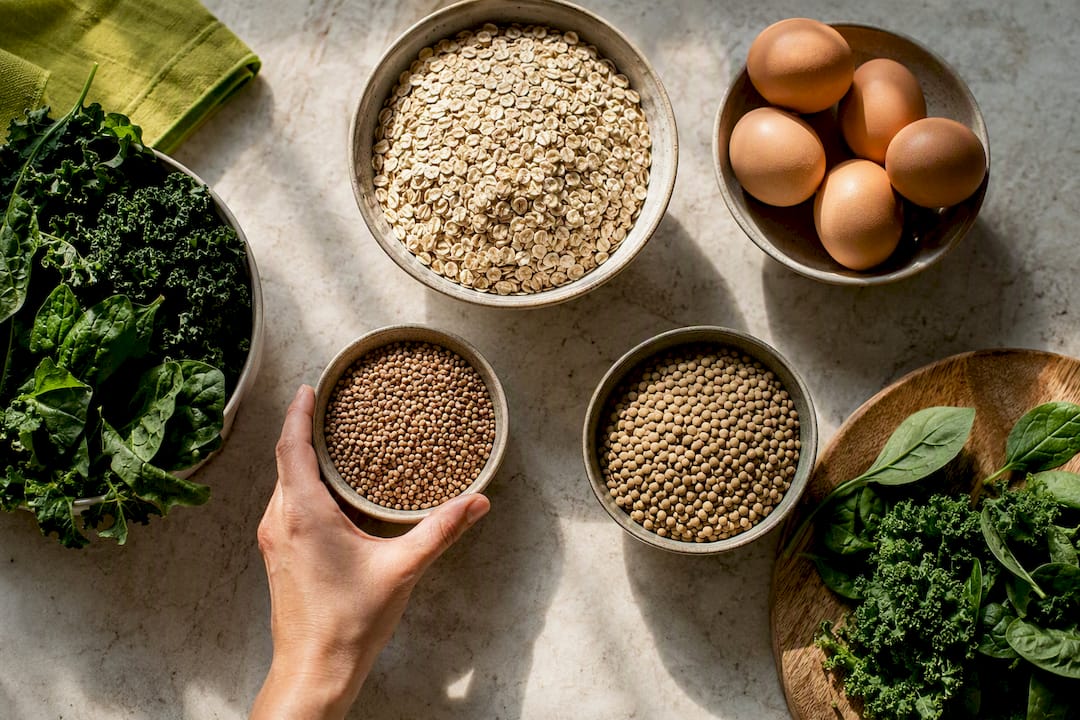
The trouble starts once food leaves its whole form. Sauces, marinades, stock cubes, and flavoured yoghurts are common places where wheat-based thickeners and added sugar sneak in, often in the same product. Grilled meats, roasted vegetables, and rice- or potato-based dishes are reliably safe starting points for naturally gluten-free dinners, but always scan the ingredients on anything sauced, seasoned, or pre-marinated.
A few practical checks worth building into your shop:
- Whole fruit beats fruit purée or juice for blood sugar. Purée concentrates the sugars and strips out some of the fibre that slows absorption.
- Plain nuts and seeds are safer bets than flavoured or coated versions, which often carry a sugar glaze.
- Canned legumes are fine, but check the liquid; some are packed in syrupy brines.
- Frozen vegetables and fruit (unsweetened) hold their nutrition well and avoid the added-sugar risk of tinned versions.
How do sugar substitutes affect blood glucose, and which should you choose?
The FDA sorts approved substitutes into three broad groups: artificial sweeteners (aspartame, sucralose, saccharin), sugar alcohols (erythritol, xylitol, maltitol), and plant-derived novel sweeteners (stevia, monk fruit). Each behaves differently once it reaches your body, and none of them are interchangeable in a recipe without adjustment.
A quick sweetness comparison: according to ADA professional guidance, monk fruit is much sweeter than sugar, stevia is also significantly sweeter, and sucralose is sweeter still, by several hundred times. Sugar alcohols sit at the other end, ranging from about a quarter to as sweet as sugar itself, according to the FDA’s own breakdown.
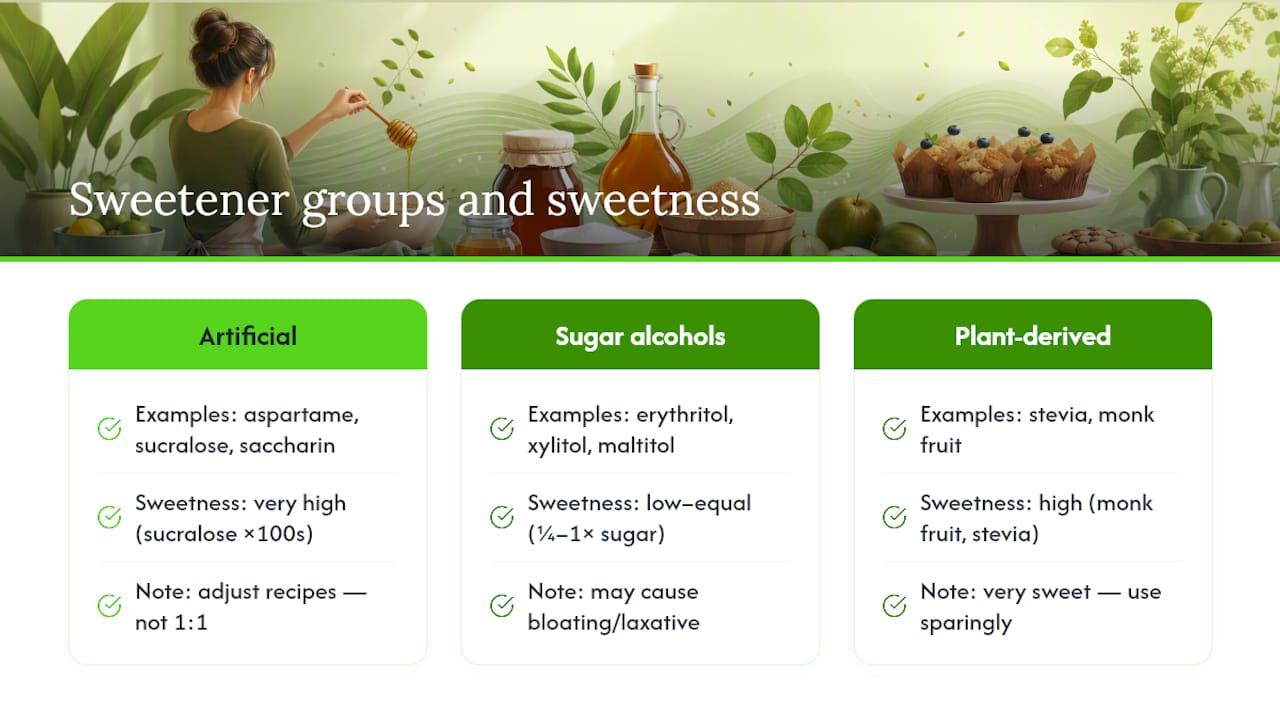
That intensity difference is why recipes calling for “one cup of sugar” can’t simply swap in one cup of stevia. A pinch does the job of a spoonful, and getting the ratio wrong is the single most common reason home bakes turn out either flat or unpleasantly sweet.
Sugar alcohols carry a separate caveat: eaten in quantity, they can cause bloating or a laxative effect for some people, a point the FDA flags directly. Blending erythritol with a small amount of stevia or monk fruit often solves two problems at once. It rounds out the aftertaste some people notice with stevia alone, and it reduces the volume of sugar alcohol needed, which keeps digestion happier.
Whichever you choose, Mayo Clinic’s guidance is worth keeping in mind: sweeteners are a genuinely useful short-term tool for cutting overall sugar intake, but whole foods remain the better long-term foundation. Don’t build a diet entirely around them.
Three gluten-free, sugar-free recipes worth trying this week
You don’t need a specialist cookbook to eat this way. Three swaps cover most of what a typical week needs; for practical seed-based meal inspiration, try some ideas from Wild Foodz by Hotel Entree Brugge.
- Oat and almond digestive biscuits. Use certified gluten-free oats blended with almond flour as the base, a mashed ripe banana or a spoon of erythritol for sweetness, and coconut oil in place of butter. Bake at a slightly lower temperature than a standard recipe calls for, since sugar-free batters brown faster on the surface while staying underdone inside.
- Carrot cake with almond or amaranth flour. Swap standard flour for almond or amaranth, and replace refined sugar with a combination of monk fruit sweetener and unsweetened apple purée. The purée keeps the sponge moist, which sugar would normally do, but taste as you go since apple purée still brings its own natural sugars.
- Chickpea flour flatbreads or pancakes. Gram flour (besan) needs no added sugar at all and makes a savoury, protein-rich breakfast or snack. Pair with avocado, egg, or a spiced vegetable filling for something that holds you until lunch.
Pro Tip: Store sugar-free bakes in an airtight container rather than a paper bag. Without sugar’s natural preservative effect, they dry out and stale faster than a conventional bake, usually within two to three days.
For more ideas along these lines, Nature’s Soul Shop’s snack guide and its round-up of gluten-free desserts both lean on the same swaps described above.
How do you spot hidden gluten and sugar on a label?
“Sugar-free” and “no added sugar” are not the same claim. Sugar-free generally means under half a gram of sugar per serving; no added sugar means nothing extra was put in during processing, but the food can still carry natural sugars from fruit or dairy. Always check total carbohydrate on the nutrition panel, not just the “sugars” line, since starches and fibre both count toward blood glucose differently.
Hidden gluten tends to hide behind unfamiliar names: malt, malt extract, barley extract, and modified food starch (unless specified gluten-free) are the usual culprits. Hidden sugar does something similar with maltodextrin, dextrose, and fruit juice concentrate, all of which read as “natural” but behave like sugar once digested. Johns Hopkins Medicine points out that gluten-free does not mean sugar-free. Plenty of commercial gluten-free bread and biscuits lean on starches and added sugar to replace the texture wheat normally provides.
If you have coeliac disease, look specifically for “certified gluten-free” rather than just “gluten-free”, since certification carries a stricter cross-contamination threshold. Nature’s Soul Shop’s beginner shopping list is a useful starting checklist if label reading still feels new.
Why sugar-free, gluten-free bakes behave differently in the oven
Sugar does more in baking than sweeten. It holds moisture, feeds browning, and helps a bake set properly, so pulling it out changes the physics, not just the flavour. Expect paler crusts and drier crumb unless you compensate with a touch more fat, an extra egg, or a binder like xanthan gum or psyllium husk to hold structure that sugar would otherwise provide.
Erythritol has its own quirk: it can crystallise as a bake cools, leaving a slightly gritty texture. Grinding it to a fine powder before use, and blending it with a liquid sweetener like monk fruit syrup, largely fixes this. For more on flour choices and binders, Nature’s Soul Shop’s guide to baking without gluten covers the ingredient side in more depth.
Pro Tip: If your bakes are coming out pale, brush the top with a little egg wash or a touch of milk before baking. It won’t replace sugar’s browning effect entirely, but it closes most of the gap.
Why I think whole foods beat clever substitutes every time
Cooking this way for any length of time teaches you a specific lesson: the recipes that hold up long-term aren’t the ones with the cleverest sweetener trick, they’re the ones built on real ingredients that needed almost no substitution in the first place. A chickpea flatbread doesn’t need a sugar swap because it was never sweet to begin with, and that’s a more durable habit than chasing the perfect erythritol blend.
That’s part of why specific flours, like amaranth and gram flour, alongside unrefined sweetener options are stocked rather than a wall of artificial substitutes. If you’re shopping for a family, our gluten-free guide for kids applies the same whole-food-first logic to lunchboxes and school snacks.
— Arjit
Where to find gluten-free, sugar-free staples without the label hunting
Reading every ingredient list gets tiring fast, which is why some stores offer gluten-free and refined-sugar-free filtering, so what’s on the shelf is what it claims to be.
The store carries certified gluten-free grains and flours, unrefined sweeteners, packaged snacks made without refined sugar, and a fresh produce range through Nature’s Soul Fresh for anyone stocking up on whole fruit and vegetables rather than processed alternatives. If you want a ready-made packaged option to try this week, the Namak Para made with jowar is a vegan, gluten-free snack that avoids the maltodextrin fillers common in shop-bought crisps. For a wider look at wellness-focused stock, the health range covers supplements and everyday nutrition support alongside the food categories.
Delivery runs same-day across select areas, which matters most for perishables like fresh produce and dairy. Browse the full Nature’s Soul Shop catalogue and build a basket around the staples covered here rather than guessing at supermarket labels next time you shop.
Sources
- Artificial sweeteners and other sugar substitutes - FDA
- Artificial sweeteners and other sugar substitutes - Mayo Clinic
- Facts About Sugar and Sugar Substitutes | Johns Hopkins Medicine


