


TL;DR:
- Truly pesticide-free produce contains zero detectable synthetic pesticide residues, verified by certification.
- Certified organic and hydroponic methods are reliable sources of pesticide-free food in Delhi NCR.
- Verification through certificates, official records, and farm visits is essential for authentic safe food.
Finding genuinely pesticide-free food in Delhi NCR is harder than it looks. Supermarket shelves are full of produce that looks fresh and wholesome, but Delhi NCR vegetables frequently exceed MRLs, including residues of banned chemicals like DDT and monocrotophos. For families trying to eat clean, a colourful label saying “natural” or “farm-fresh” simply is not enough. This guide cuts through the noise, explains what pesticide-free actually means, profiles the most trustworthy sources in the region, and gives you a practical checklist so you can shop with real confidence.
Table of Contents
- What does ‘pesticide-free’ actually mean?
- Top certified pesticide-free and organic food providers in Delhi NCR
- Certified organic vs. hydroponic: Which is safer and better for you?
- Choosing properly certified, truly pesticide-free food in Delhi NCR: Your checklist
- Why ‘pesticide-free’ needs clear proof in Delhi: Our take
- Find guaranteed pesticide-free food in Delhi NCR with Nature’s Soul Shop
- Frequently asked questions
Key Takeaways
| Point | Details |
|---|---|
| Demand certification | Always check for NPOP or recognised organic certifications to ensure food is genuinely pesticide-free. |
| Trust accredited sellers | Buy from well-known, certified vendors with transparent sourcing practices in Delhi NCR. |
| Hydroponic and organic excel | Both methods reliably avoid synthetic pesticides and offer safety for families. |
| Washing isn’t enough | Only proper certification can guarantee safety from systemic pesticide residues. |
What does ‘pesticide-free’ actually mean?
After understanding the risks, you will want to know what actually qualifies as pesticide-free food. The term sounds straightforward, but it is frequently misused in ways that can mislead even careful shoppers.
Truly pesticide-free produce contains zero detectable synthetic pesticide residues. This is not the same as “natural,” “chemical-free,” or “desi.” Those phrases carry no legal weight in India and no enforcement mechanism behind them. A farm can call its tomatoes natural while still spraying organophosphates right up to harvest.
The two production methods that genuinely meet the pesticide-free standard are:
- NPOP-certified organic farming: Organic farming under NPOP prohibits synthetic pesticides entirely, requiring farms to use biological controls, crop rotation, and approved natural inputs instead.
- Certified hydroponic farming: Grown in controlled, soil-free environments where synthetic chemicals are structurally unnecessary and typically absent.
- Uncertified “natural” farms: Often in a conversion phase that takes two to three years. During this period, residues from previous chemical use can still appear in produce.
- Greenwashed products: Brands that use organic-looking packaging without holding any verifiable certification.
Understanding what organic means in a certified sense is the first step. The second is learning to ask for proof. Look specifically for NPOP organic certification documents, not just a sticker on the packaging.
“A label is a marketing tool. A certificate is a legal commitment. Only one of them protects your family.”
The organic farming standards that underpin NPOP are rigorous and independently audited. If a seller cannot produce documentation on request, treat their claims with scepticism. In Delhi NCR’s crowded wellness market, proof matters far more than presentation.
Top certified pesticide-free and organic food providers in Delhi NCR
Now that you know what to trust, here is where you can buy genuine pesticide-free and organic food locally. The market has grown considerably, but quality and transparency vary widely.
Established providers in Delhi NCR include Gurvani Naturals, Jaivikfood, Tejas Organics, Organic India, and OnlyHydroponics. Each operates differently, so understanding their models helps you choose the right fit.
- Gurvani Naturals: NPOP-certified, direct-from-farm model, weekly delivery, wide vegetable and grain range, mid-price band.
- Jaivikfood: Certified organic grocery platform, strong dry goods catalogue, pan-Delhi delivery, slightly premium pricing.
- Tejas Organics: Farm-to-home focus, seasonal produce boxes, NPOP-certified, good for families wanting variety.
- Organic India: Widely available, strong herbal and packaged range, NPOP and USDA certified, easily verifiable credentials.
- OnlyHydroponics: Hydroponic leafy greens and herbs, no pesticides by design, year-round availability, premium price point.
| Provider | Certification | Delivery area | Unique strength |
|---|---|---|---|
| Gurvani Naturals | NPOP | Delhi NCR | Direct farm sourcing |
| Jaivikfood | NPOP | Pan-Delhi | Dry grocery depth |
| Tejas Organics | NPOP | Delhi NCR | Seasonal variety boxes |
| Organic India | NPOP, USDA | All India | Brand transparency |
| OnlyHydroponics | Hydroponic certified | NCR | Controlled-environment greens |
For convenient home delivery services that cover multiple categories, comparing providers on delivery frequency and range is worthwhile. Building a weekly organic list around two or three trusted suppliers keeps your household consistently stocked without overspending.
Pro Tip: Before subscribing to any box scheme, ask the provider to share their APEDA or NPOP certificate number. You can cross-check this on the APEDA portal in minutes. If they hesitate, that tells you everything you need to know.
Certified organic vs. hydroponic: Which is safer and better for you?
Once you have found trusted sources, you will want to choose the best growing method for your needs. Both certified organic and hydroponic farming avoid harmful synthetic chemicals, but they differ in approach, cost, taste, and environmental impact.
Hydroponic farms in NCR such as OnlyHydroponics and True Leaf Farms grow produce in nutrient-rich water solutions inside controlled environments. No soil means no soil-borne pests, which removes the temptation to use pesticides in the first place.
Certified organic farming works differently. It uses biopesticides like neem extracts, encourages natural predators, and relies on crop rotation to maintain soil health. The process is slower and more weather-dependent, but it produces food with a genuine connection to living soil ecosystems.
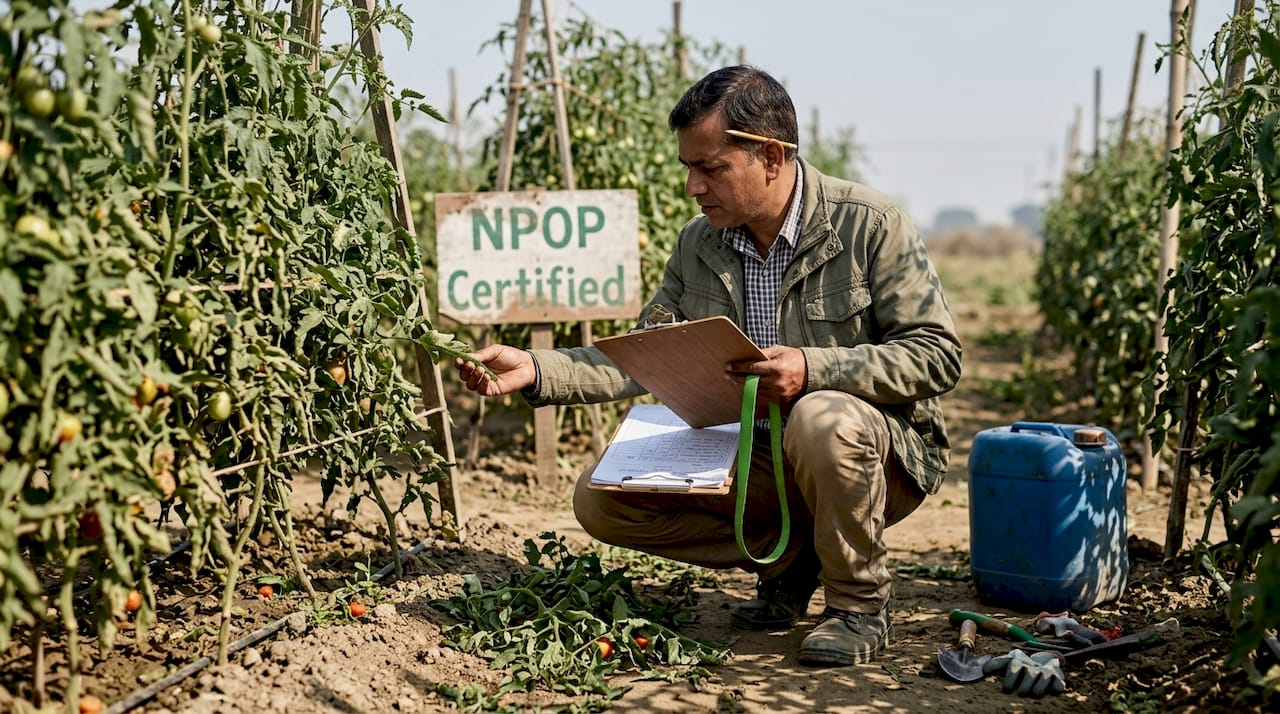
| Factor | Certified organic | Hydroponic |
|---|---|---|
| Pesticide use | None (biopesticides only) | None |
| Water usage | Standard irrigation | Up to 90% less water |
| Taste profile | Rich, seasonal variation | Consistent, mild |
| Cost premium | 30 to 50% above conventional | 50 to 80% above conventional |
| Eco-impact | Builds soil health | Lower water footprint |
Key differences worth noting:
- Hydroponics uses no soil and 90% less water, making it highly resource-efficient in a water-stressed city like Delhi.
- Organic farming supports biodiversity and long-term soil fertility in ways hydroponics cannot replicate.
- Organic okra contains only azadirachtin, a natural compound, while conventional okra frequently shows monocrotophos residues above the maximum residue limit.
For organic vs. conventional safety comparisons relevant to young children, certified organic and hydroponic both represent a significant step up from standard supermarket produce. If you are new to clean eating, starting with organic basics in Delhi will help you prioritise which foods to switch first.
Choosing properly certified, truly pesticide-free food in Delhi NCR: Your checklist
With your method chosen, here is how to guarantee what you are buying is actually pesticide-free. Use this checklist whether you are shopping online, at a farmers’ market, or visiting a store.
- Ask for the NPOP certificate. Every genuine organic supplier holds one. Check the certificate number against the APEDA database online.
- Verify the certification body. Look for accredited bodies such as ECOCERT, Control Union, or LACON India. A self-issued “organic” stamp means nothing.
- Check the farm’s conversion status. Farms in their first two years of transition may still carry residual pesticides. Ask directly whether the farm is fully certified or still converting.
- Inspect the packaging. Legitimate certified products carry a logo, certificate number, and certifying body name. Vague claims like “grown naturally” without these details are a red flag.
- Request a farm visit or virtual tour. Reputable NCR farms welcome this. It is one of the most reliable ways to build trust with a supplier.
- Cross-check brand claims on social media. Authentic producers share their certification renewals, farm updates, and test results publicly.
For detailed guidance on verifying organic certification and understanding what each accreditation covers, it is worth spending a few minutes before committing to a subscription. When buying local produce, the same steps apply at physical markets.
Pro Tip: Washing produce reduces surface residues but cannot remove systemic pesticides absorbed into the flesh of the vegetable. Peeling helps with some crops, but for leafy greens and thin-skinned produce, certified sourcing is the only reliable protection.
Why ‘pesticide-free’ needs clear proof in Delhi: Our take
Having seen the criteria and options available, here is our honest perspective on Delhi’s pesticide-free food market. We have reviewed supplier claims, visited farms, and spoken to families across NCR, and the pattern is consistent: labels are easy, enforcement is rare.
The uncomfortable truth is that Delhi’s food supply chain has multiple points where pesticide-free claims can break down quietly. A farmer may genuinely intend to grow clean produce but face pressure from traders to use chemicals that protect yield and appearance. By the time that produce reaches a “natural” store, the story has changed but the label has not.
Washing and peeling offer some comfort, but pesticide residue issues persist even with supposed bans in place. Systemic pesticides absorbed through roots and stems cannot be washed away. The only practical insurance for your family is certification or direct hydroponic sourcing.
We also see well-meaning families placing too much faith in “trusted” local vendors or neighbourhood sabziwallas. Familiarity is not the same as safety. Certification is. Until Delhi develops stronger enforcement mechanisms, the responsibility sits with you as the buyer to demand proof, and with brands like ours to make that proof easy to access.
Find guaranteed pesticide-free food in Delhi NCR with Nature’s Soul Shop
Now that you know what to look for, here is where you can confidently buy pesticide-free and organic food.
At Nature’s Soul Shop, we curate certified organic and natural products across every category your household needs, from fresh fruits and vegetables to dry grocery, dairy, and beyond. Every product on our platform is selected for clean ingredients and verifiable sourcing, so you never have to second-guess what is on your plate. We also stock supporting products for a fully chemical-free home, including organic neem oil for natural pest control in your kitchen garden. With delivery across Delhi NCR, making the switch to genuinely clean food has never been more straightforward.
Frequently asked questions
How do I know if food is truly pesticide-free in Delhi?
Check for NPOP or APEDA certification and ask the brand to share their certificate number, which you can verify on the APEDA portal. Genuine suppliers will also offer farm visit access or publish their test results openly.
Which is better for families: organic or hydroponic food?
Both are excellent choices that avoid harmful synthetic chemicals. Hydroponic farming also uses 90% less water and delivers consistent pesticide-free produce year-round, making it a strong option for families in urban Delhi.
Can washing vegetables remove all pesticides?
Washing reduces surface residues but cannot eliminate systemic pesticides that have been absorbed into the vegetable’s tissue. Certified organic and hydroponic sourcing remain the safest options for your family.
Are ‘natural’ or ‘desi’ vegetables always pesticide-free?
Not always. Many desi farms in conversion still carry residual pesticide contamination from years of prior chemical use, and without certification there is no independent body confirming their claims. Always ask for documentation before trusting the label.
Recommended
- Complete pesticide-free vegetables guide for Delhi NCR – naturessoulshop
- How to Buy Local Produce in Delhi NCR: Simple Steps Guide – naturessoulshop
- Organic Food Safety in 2025: Guide for Delhi-NCR & Expats – naturessoulshop
- Weekly organic grocery list for clean eating in Delhi NCR – naturessoulshop


