


TL;DR:
- Poor sleep is a common issue affecting adults aged 25 to 55, often addressed with ineffective remedies. Improving sleep naturally requires understanding disruptions and implementing strategies like consistent schedules, optimized environments, and behavioral shifts aligned with biology. Behavioral techniques such as CBT-I, along with a healthy routine, diet, and proper supplements, can significantly enhance sleep quality over time.
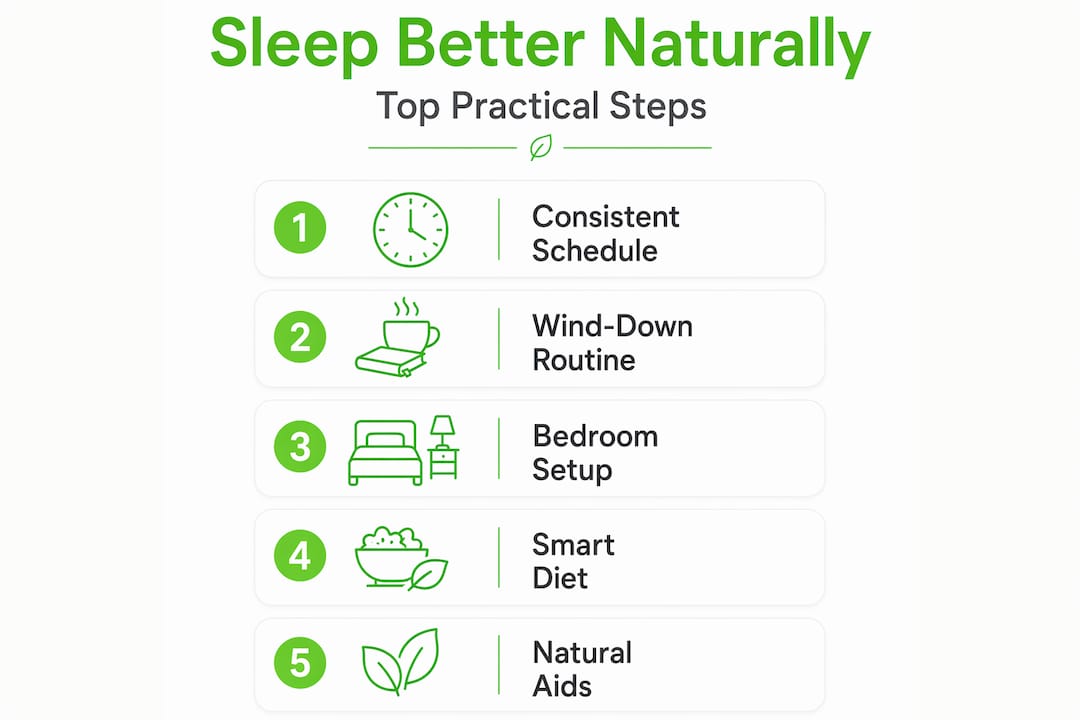
Poor sleep is one of the most common complaints among adults aged 25 to 55, yet most people cycle through the same ineffective fixes. Improving sleep naturally is not about herbal teas alone or downloading a meditation app. It is about understanding what actually disrupts your sleep, then systematically addressing it with strategies that work with your biology rather than against it. This guide covers the full picture: sleep hygiene, diet, supplements, and the behavioural shifts that make the biggest difference.
Table of Contents
- Key takeaways
- Improving sleep naturally starts with your routine
- Diet and lifestyle strategies for better sleep
- Natural sleep aids and supplements: what actually helps
- Managing obstacles and troubleshooting poor sleep
- My honest take on natural sleep improvement
- Support your sleep with natural products from Naturessoulshop
- FAQ
Key takeaways
| Point | Details |
|---|---|
| Consistent sleep timing matters most | Going to bed and waking at the same time daily aligns your circadian rhythm and improves sleep quality. |
| Your bedroom environment is a sleep tool | Keeping your room cool, dark, and quiet makes a measurable difference to how well you sleep. |
| Food and drink choices affect sleep | Chamomile tea, tart cherry juice, and light evening snacks support sleep, while caffeine and alcohol disrupt it. |
| Supplements work best as adjuncts | Melatonin and herbal aids are most effective when combined with behavioural and environmental changes. |
| Behavioural retraining breaks the cycle | CBT-I techniques like stimulus control help reverse conditioned insomnia that keeps you awake despite tiredness. |
Improving sleep naturally starts with your routine
Most people underestimate how much their daily habits shape their nights. The single most powerful thing you can do is fix your sleep and wake times. Consistent sleep schedules align your circadian rhythm and reduce the time it takes to fall asleep. This means weekends too. Sleeping in on Saturday morning can undo a week of progress.
Setting up your bedroom for sleep
Your bedroom needs to work for you, not against you. Research shows that bedroom temperatures around 15 to 19°C with minimal noise support uninterrupted, restorative sleep. Blackout curtains, white noise machines, and removing screens from the room are not luxuries. They are practical tools.
Here is what to address in your sleep environment:
- Temperature: Aim for 15 to 19°C. Your body temperature drops naturally during sleep, and a cool room supports that process.
- Light: Block out street lights and device glows. Even small amounts of light can interfere with melatonin production.
- Noise: Use earplugs or a white noise machine if your environment is unpredictable.
- Bed association: Use your bed only for sleep and intimacy. Working or watching television in bed trains your brain to associate it with wakefulness.
Building a wind-down routine that works
Starting a calming pre-bed routine about an hour before sleep signals your nervous system that it is time to slow down. This is not about rigid rituals. It is about reducing stimulation progressively.
Blue light from screens suppresses melatonin production and delays sleep onset. Switching your phone to night mode is not enough. Putting it in another room is far more effective. Replace screen time with reading, gentle stretching, or journalling. Racing thoughts at night respond well to meditation or writing down tomorrow’s to-do list before bed, which clears mental clutter and reduces pre-sleep anxiety.
Pro Tip: Set a “screens off” alarm 60 minutes before your target bedtime. Treat it with the same seriousness as your morning alarm. It takes about two weeks for this habit to feel natural.
| Habit | Effect on sleep | When to apply |
|---|---|---|
| Fixed wake time | Strengthens circadian rhythm | Every day, including weekends |
| Dimming lights at 9pm | Supports melatonin production | 60 minutes before bed |
| No screens after 9pm | Reduces sleep-onset delay | Nightly |
| Cool bedroom (15 to 19°C) | Promotes deeper sleep stages | All night |
| No caffeine after 2pm | Prevents sleep fragmentation | Daily |
Diet and lifestyle strategies for better sleep
What you eat and when you eat it directly affects how well you sleep. This is one of the most underused levers for improving sleep naturally.

Foods that promote sleep
Several foods contain compounds that support the body’s sleep processes. Tart cherry juice is one of the more evidence-backed options, as it contains naturally occurring melatonin. Warm milk provides tryptophan, a precursor to serotonin and melatonin. Chamomile tea contains apigenin, a compound that binds to GABA receptors and promotes relaxation. A light evening snack, such as a small handful of nuts or a banana, can stabilise blood sugar overnight and prevent early waking.
You can find healthy evening snack ideas that fit naturally into a sleep-supportive routine without overloading your digestion.
Late meals and high fluid intake close to bedtime interfere with sleep onset and continuity. Heavy or spicy food triggers digestive activity that competes with your body’s wind-down process. The general rule is to finish eating at least two to three hours before bed.
Caffeine, alcohol, and exercise timing
Caffeine has a half-life of roughly five to six hours, meaning a 3pm coffee still has half its stimulant effect at 9pm. Alcohol is more deceptive. It may help you fall asleep faster, but it fragments sleep in the second half of the night and suppresses REM sleep, leaving you groggy regardless of how many hours you spent in bed.
Exercise is one of the most effective natural insomnia solutions available. Morning or early afternoon exercise strengthens your sleep drive and reduces anxiety. Evening exercise is more nuanced. Vigorous training within two hours of bedtime raises core body temperature and cortisol, which can delay sleep onset. Gentle yoga or walking in the evening, however, tends to help rather than hinder.
- Avoid caffeine after 2pm if you struggle to fall asleep.
- Limit alcohol to no more than one drink, and not within three hours of bedtime.
- Schedule vigorous exercise before 6pm where possible.
- Aim for 20 to 30 minutes of morning sunlight to regulate your circadian rhythm.
- Keep daytime naps under 20 minutes and before 3pm to protect night sleep.
Pro Tip: Swap your evening coffee for a caffeine-free herbal tea such as Tulsi and ginger. The ritual of making and drinking it becomes part of your wind-down, and you avoid the sleep disruption entirely.
Natural sleep aids and supplements: what actually helps
The supplement market for sleep is enormous and largely overhyped. Knowing which options have genuine evidence behind them saves you money and avoids side effects.
Melatonin: what it does and does not do
Melatonin is the most widely used natural sleep aid, but most people misunderstand how it works. Sleep expert Luis F. Buenaver explains that melatonin creates quiet wakefulness that helps the brain transition toward sleep readiness, rather than forcing sleep directly. It is a signal, not a sedative.
Meta-analyses show melatonin has statistically significant benefits for sleep initiation, particularly when timed three to five hours before your natural dim-light melatonin onset. For most people, this means taking a low dose (0.5 to 1mg) in the early evening rather than right before bed. Incorrect timing or dosage can cause daytime drowsiness or phase shifts that make your sleep problems worse.
Herbal aids: chamomile, valerian, and reishi
Chamomile and valerian root are the most commonly used herbal sleep aids. The evidence for both is mixed. Chamomile shows modest benefits for relaxation and mild sleep improvement, particularly in tea form. Valerian has inconsistent results across trials, though some people find it helpful for reducing the time it takes to fall asleep.
Reishi mushroom is gaining attention for its adaptogenic properties. Reishi powder is used specifically for stress relief, calm, and restful sleep, and it fits naturally into an evening routine when added to warm drinks.
| Supplement | Evidence level | Best use |
|---|---|---|
| Melatonin | Moderate to good | Jet lag, sleep-onset issues |
| Chamomile | Mild | Relaxation, mild insomnia |
| Valerian root | Mixed | Short-term sleep support |
| Reishi mushroom | Emerging | Stress-related sleep disruption |
| OTC antihistamines | Poor long-term | Not recommended regularly |
OTC antihistamine sleep aids carry clinically relevant downsides, including daytime drowsiness, dry mouth, and cognitive impairment. They lose effectiveness quickly and can worsen sleep quality over time. Avoid relying on them as a regular solution.
Pro Tip: Trial any supplement for two weeks maximum. If you do not notice a meaningful difference by then, stop. Supplements should support a good sleep system, not substitute for one.
Managing obstacles and troubleshooting poor sleep
Even with the right environment and diet, many people still struggle because of the mental patterns that develop around sleep. Understanding these patterns is the key to breaking them.
When you spend night after night lying awake in bed, your brain begins to associate the bed with wakefulness and frustration. This is conditioned insomnia, and it is self-reinforcing. The harder you try to sleep, the more alert you become. CBT-I techniques address this directly by retraining sleep associations through stimulus control, sleep diaries, and cognitive restructuring.
Here is a practical sequence to follow if you are stuck in a poor sleep cycle:
- Set one fixed wake time. Do not adjust it based on how badly you slept. This rebuilds your sleep drive over days.
- Get out of bed if you cannot sleep. After 15 to 20 minutes awake, leave the bedroom and do something calm in dim light until you feel sleepy.
- Stop clock-watching. Turn your clock away or remove it. Checking the time increases anxiety and makes sleep harder.
- Write down worries before bed. Externalising anxious thoughts onto paper reduces their grip during the night.
- Seek professional support if needed. If natural methods have not helped after four to six weeks of consistent effort, a GP or sleep specialist can assess whether an underlying condition is involved.
“CBT-I reframes the relationship between bed and sleep. It is not about relaxing harder. It is about removing the conditions that keep the brain on high alert at night.”
Building healthy habits naturally around sleep takes time, but the changes you make to your routine and environment compound over weeks. Consistency is the mechanism, not motivation.
My honest take on natural sleep improvement
I have spent years watching people try to fix their sleep with the wrong tools. They buy expensive supplements, download sleep trackers, and obsess over their sleep scores. And then they wonder why nothing changes.
What I have found, time and again, is that the most impactful shifts are the least glamorous ones. A fixed wake time. A cooler bedroom. Putting the phone in another room. These are not exciting. But they work in a way that no supplement can replicate on its own.
The thing most people get wrong is trying harder. Sleep is one of the few biological processes that worsens when you force it. The goal is to create the right conditions and then get out of your own way. Behavioural retraining, particularly through CBT-I principles, is the closest thing to a genuine fix for chronic poor sleep. Supplements like melatonin and herbal aids have their place, but only as adjuncts to a well-structured sleep system.
My strongest advice is to pick two or three changes from this guide and apply them consistently for three weeks before evaluating. Do not overhaul everything at once. Sleep is sensitive to disruption, and too many simultaneous changes make it impossible to know what is working.
Natural methods build long-term resilience. They do not just help you sleep tonight. They rebuild the biological conditions that make good sleep your default.
— Arjit
Support your sleep with natural products from Naturessoulshop
If you are ready to put these strategies into practice, having the right products makes the process easier and more enjoyable.

At Naturessoulshop, you will find a curated range of organic and natural products designed to support your sleep and overall wellbeing. From caffeine-free herbal teas and calming reishi powder to clean evening snacks with no artificial additives, every product is made with ingredients you can trust. The health supplements range includes options specifically chosen for relaxation, stress relief, and restful sleep. Whether you are building a new wind-down routine or simply looking for cleaner alternatives to what is already in your cupboard, Naturessoulshop makes it straightforward to shop with confidence.
FAQ
What is the most effective natural way to improve sleep?
Maintaining a consistent sleep and wake time every day is the single most impactful change most people can make. Combined with a dark, cool bedroom and a screen-free wind-down routine, these habits address the root causes of poor sleep without any supplements.
Do melatonin supplements actually work?
Melatonin can help with sleep onset, particularly for jet lag or delayed sleep phase issues, but it works best when taken at the correct time and in a low dose. It supports the brain’s transition to sleep readiness rather than inducing sleep directly, and it is most effective alongside behavioural changes.
Which foods help you sleep better at night?
Chamomile tea, warm milk, tart cherry juice, and light snacks such as bananas or a small handful of nuts all support sleep. These foods contain compounds like tryptophan, apigenin, and naturally occurring melatonin that assist the body’s sleep processes.
How long does it take for natural sleep strategies to work?
Most people notice meaningful improvement within two to three weeks of consistent changes to their sleep schedule, environment, and pre-bed habits. Behavioural changes take longer than supplements to show results, but the improvements they produce tend to last.
When should I see a doctor about my sleep problems?
If you have applied consistent natural strategies for four to six weeks without improvement, or if your sleep difficulties are significantly affecting your daily functioning, speak to a GP. Conditions such as sleep apnoea or clinical anxiety require professional assessment rather than self-management alone.


