


TL;DR:
- Genuine farm to table in Delhi NCR entails direct sourcing, minimal handling, and full supply chain transparency.
- Top restaurants like Roots Cafe and Kiyan demonstrate real farm to table practices through farm ownership and seasonal menus.
- Consumers must actively verify origin, certifications, and delivery timelines to avoid risks like pollution and middlemen.
Most produce labelled ‘fresh’ in Delhi NCR has already spent two to four days in transit before it reaches your kitchen. That journey strips nutrients, introduces handling risks, and leaves families none the wiser. Farm to table eating cuts this chain dramatically, connecting your plate directly to the soil where food grows. It means real transparency, shorter timelines, and food that actually tastes like food. This article unpacks what genuine farm to table means locally, which establishments are doing it right, what risks still exist, and how your family can make smarter, safer choices every single week.
Table of Contents
- What does farm to table mean in Delhi NCR?
- Spotlight on Delhi NCR’s leading farm to table restaurants
- Challenges and risks in Delhi NCR’s farm to table movement
- How to choose and access genuine farm to table food in Delhi NCR
- Why Delhi NCR’s farm to table future hinges on transparency, not just trends
- Discover healthier farm to table options with Nature’s Soul
- Frequently asked questions
Key Takeaways
| Point | Details |
|---|---|
| True farm to table defined | Direct sourcing, clear traceability, and minimal transport distinguish real farm to table food in Delhi NCR. |
| Restaurant models compared | Delhi NCR hosts several restaurants with genuine farm to table practices, each with unique sourcing and menu strategies. |
| Health and safety risks exist | Pollution, supply chain gaps, and mislabelling can affect produce quality, so certification and transparency are essential. |
| Smart choices for families | Ask about organic certification and supply transparency, and buy from trusted sources prioritising freshness and safety. |
What does farm to table mean in Delhi NCR?
The phrase ‘farm to table’ gets thrown around liberally on menus and packaging across Delhi NCR, but the real definition is far more specific than most people realise. Authentic farm to table means food travels directly from a known, verified farm to your plate with minimal handling, no unnecessary middlemen, and full visibility of the supply chain. It is not simply a marketing label for anything grown in soil.
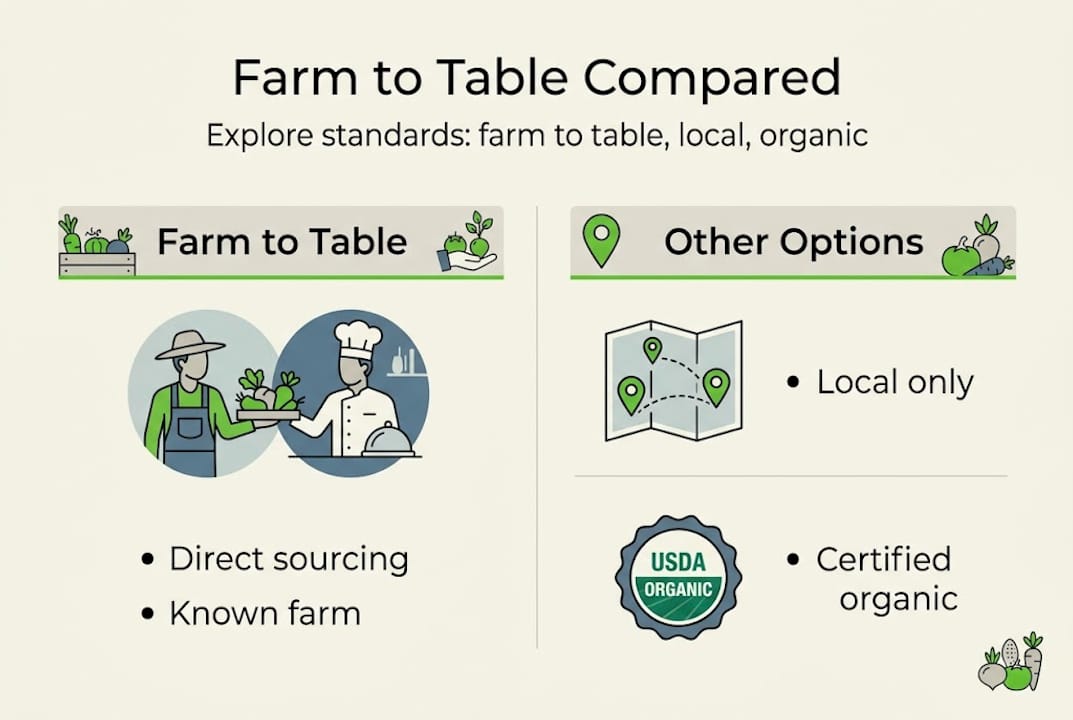
Many families confuse three related but distinct terms. ‘Local’ means grown nearby but says nothing about how it was grown or how many hands touched it. ‘Organic’ refers to the farming method, certified to avoid synthetic pesticides and fertilisers, but produce can still travel hundreds of kilometres and sit in cold storage for weeks. ‘Farm to table’ ideally combines both: known origin, clean farming, and a short, transparent journey. Understanding organic food meaning helps you cut through the noise when suppliers make vague claims.
Key features that distinguish genuine farm to table:
- Direct sourcing from a named, verifiable farm
- Short harvest-to-plate timelines, ideally under 48 hours
- Seasonal menus that change with what the farm actually produces
- No cold storage reliance or multi-step middleman chains
- Transparent communication about growing and handling practices
A compelling local example is Roots Cafe in Delhi, where all organic ingredients are sourced directly from its own farm, giving the kitchen complete control from seed to serving. This is the gold standard: full supply chain ownership.
For urban families in Delhi NCR, this matters enormously. Children’s nutritional needs are not met by produce that lost its vitamins in a refrigerated warehouse. Food safety is not guaranteed simply because a product says ‘fresh’ on the packet. Trust is built through visibility, and visibility is exactly what most supermarket supply chains cannot offer. Knowing where your local organic produce in Delhi comes from is the first practical step towards genuinely healthier eating.
| Attribute | Farm to table | ‘Local’ produce | Certified organic |
|---|---|---|---|
| Known farm origin | Yes | Sometimes | Sometimes |
| Short travel time | Yes | Varies | Not guaranteed |
| Clean farming method | Usually | Not guaranteed | Yes |
| Supply chain transparency | High | Low to medium | Medium |
| Seasonal menu alignment | Yes | Rarely | Rarely |
The table above makes it clear: farm to table is the most demanding standard of the three, which is precisely why it is rarer and more valuable.
Spotlight on Delhi NCR’s leading farm to table restaurants
Now that we have defined farm to table, let us look at standout places making it work in Delhi NCR. A handful of establishments have moved beyond the label and built genuine, accountable systems worth knowing about.
Kiyan at The Roseate, New Delhi is one of the city’s most credible examples. The restaurant uses a farm-to-table concept with organic home-grown vegetables cultivated on its own 2-acre farm. Owning the growing space means the kitchen controls quality from germination to garnish. Dishes reflect what is actually ready to harvest, not what looks appealing in a market.
OMO Gurgaon takes a different but equally rigorous approach. Rather than owning farmland, OMO practises true farm-to-table through daily evolving menus built entirely around fresh produce from trusted partner farms. Their menu is genuinely different each day, which is the clearest possible signal that a kitchen is working with real seasonal supply rather than a fixed, year-round catalogue.
Roots Cafe, run entirely by women, continues to stand out as a model of full supply chain integrity. Every ingredient traces back to the cafe’s own farm, and the ethos extends to how food is cooked and served. It demonstrates that farm to table is as much a philosophy as a sourcing strategy.
What to look for as a consumer:
- Menus that change seasonally or even daily
- Named farm partnerships or on-site growing facilities
- Staff who can answer questions about sourcing without hesitation
- Organic certification displayed visibly
- No reliance on imported or off-season produce
Buying seasonal organic produce aligned with what these restaurants serve is also a smart way to replicate the farm to table experience at home.
| Restaurant | Model | Farm ownership | Menu style |
|---|---|---|---|
| Kiyan at The Roseate | Own farm | Yes, 2-acre farm | Seasonal, rotating |
| OMO Gurgaon | Partner farms | No | Daily evolving |
| Roots Cafe | Own farm | Yes | Fixed, farm-driven |
When you build a regular organic grocery list inspired by what these kitchens do, you bring that same rigour into your own home meals.
Challenges and risks in Delhi NCR’s farm to table movement
While the movement is growing, it is important to know the pitfalls. The farm to table label, like ‘organic’ before it, is increasingly at risk of being diluted by opportunistic marketing.
The most serious concern in Delhi NCR is pollution. Produce grown along the Yamuna floodplains can absorb heavy metals from contaminated water and soil. Families buying ‘local’ vegetables without checking growing conditions may inadvertently be choosing the least safe option on the shelf. Proximity to the city does not equal safety.
Locally grown does not automatically mean clean. In a city like Delhi, the source matters as much as the distance.
Post-harvest losses add another layer of complexity. Fruit losses in India can reach 18%, meaning much of what enters the supply chain is already compromised before it reaches a market stall. When freshness is claimed but not guaranteed, families are making decisions on incomplete information.
Middlemen remain a persistent structural problem. Every additional step between farm and family blurs accountability. Farmers receive less income, consumers pay more, and nobody in the middle is responsible for quality. The result is a system where ‘fresh’ is a relative term at best.
How to protect your family from these risks:
- Always ask suppliers where, specifically, produce was grown
- Check for recognised organic certification rather than relying on verbal claims
- Prioritise suppliers who share harvest dates and delivery timelines
- Avoid produce with no clear origin labelling, regardless of how it looks
- Use a reliable pesticide-free vegetables guide to identify safer choices by category
Pro Tip: Ask any supplier for the harvest date. If they cannot answer immediately, that gap in knowledge is itself a red flag about their supply chain. A genuinely transparent supplier knows exactly when and where each batch was harvested.
Families seeking reliable pesticide-free food need to treat sourcing with the same diligence they would apply to any other health decision. The good news is that the information exists; you simply need to know the right questions to ask.
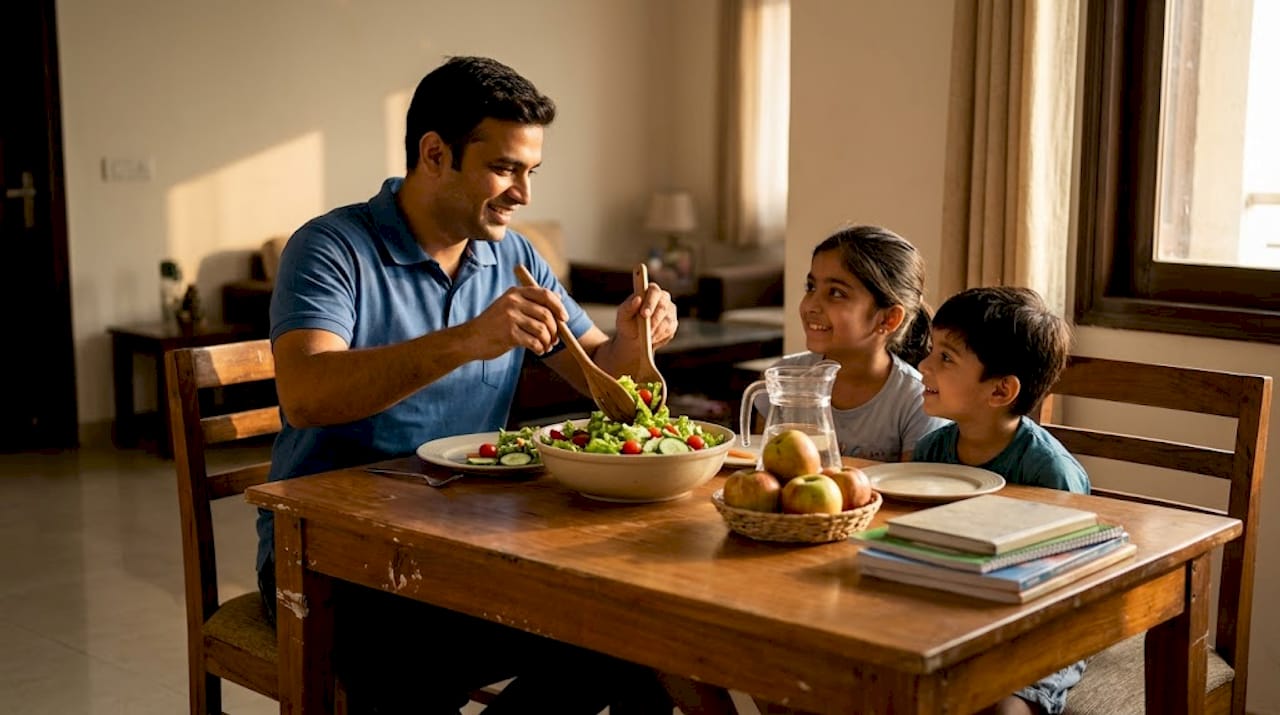
How to choose and access genuine farm to table food in Delhi NCR
Understanding the risks arms you with the right questions. Here is how to shop smart and safe.
The single most important shift is moving from passive consumption to active enquiry. Most families accept what is presented to them at face value. Farm to table eating requires a different mindset: you are a participant in the supply chain, not just its endpoint.
Step-by-step guide to accessing genuine farm to table food:
- Start with certification. Look for FSSAI organic certification or third-party verification. A certificate is not everything, but its absence is a clear signal to keep looking.
- Ask about traceability. Can the supplier name the farm, the district, and the harvest date? Verified organic certification and direct traceability with short harvest-to-door timelines should be the baseline you expect.
- Assess delivery timelines. Produce that travels from farm to your door in under 48 hours retains significantly more nutrients and flavour than anything sitting in cold storage for days.
- Visit local markets strategically. Not all market vendors are equal. Some have direct farmer relationships; others are buying from the same wholesale mandis as supermarkets. Ask directly.
- Explore trusted online providers. Several platforms now specialise in certified, traceable, farm-fresh delivery for Delhi NCR families. Understanding how to buy local produce through verified channels saves time and guesswork.
For specifics, even individual products matter. Something as seemingly simple as certified organic basil illustrates the difference: certified means the growing conditions have been externally verified, not simply self-declared.
Pro Tip: Build a relationship with one or two trusted suppliers rather than shopping opportunistically. Loyalty gives you access to better information, advance notice of seasonal produce, and a direct line to ask questions that a mass-market retailer would never entertain.
Families who follow these steps will find that their organic food safety improves markedly, not because the food system suddenly changed, but because they changed how they navigate it.
Why Delhi NCR’s farm to table future hinges on transparency, not just trends
Here is an uncomfortable truth: most ‘farm fresh’ labels in Delhi NCR are marketing. They are designed to appeal to families like yours without obligating the seller to prove anything. The farm to table movement is genuinely exciting, but it will only fulfil its potential if consumers refuse to accept vague claims at face value.
The real power sits with informed buyers. When families consistently ask for harvest dates, request certifications, and choose suppliers who answer clearly, the entire supply chain shifts. Restaurants and shops that cannot meet that standard lose business. Those who can, grow. Understanding organic farming basics helps you hold suppliers to a higher standard, because you understand what genuine clean farming actually involves.
Community-supported agriculture models and short supply chains are not niche idealism. They are practical tools that empower local farmers, reduce food miles, cut contamination risk, and put accountability back where it belongs. The future of farm to table in Delhi NCR is not determined by which restaurant opens next. It is shaped by what you choose to buy, and what questions you insist on asking.
Discover healthier farm to table options with Nature’s Soul
You now know what farm to table genuinely means, which establishments are delivering on it, and what risks to watch for. The next step is putting that knowledge to work in your daily routine.
Nature’s Soul delivers certified organic and farm-fresh foods directly to families across Delhi NCR, with transparent sourcing, clean ingredients, and no shortcuts. From seasonal fruits and vegetables to dairy, dry grocery, and home care, every category is held to the same rigorous standard. Explore the Nature’s Soul Fresh range for daily farm to table staples, or browse the full health range to build a cleaner, safer kitchen from the ground up.
Frequently asked questions
How can I tell if a Delhi NCR restaurant truly follows farm to table practices?
Look for direct sourcing evidence, organic certification, and disclosed harvest-to-table timelines on menus or websites. Roots Cafe, for instance, sources all organic ingredients directly from its farm and offers traceable supply chains as a baseline.
Are farm to table foods in Delhi NCR always safer for my family?
Not automatically. While many options significantly reduce pesticide and handling risks, certain local produce from areas like the Yamuna floodplains can absorb heavy metals, so verified certification and clear traceability remain essential checks.
What is the best way to order genuine farm to table produce at home?
Choose providers who offer verified organic certification, transparent sourcing, and short delivery timelines from farm to door, and always ask for the harvest date before committing to a supplier.
Recommended
- Supporting Local Farmers in Delhi NCR: A Healthy Choice for 2025 – naturessoulshop
- Organic Farming Basics for Healthy Living in Delhi NCR – naturessoulshop
- How to Buy Local Produce in Delhi NCR: Simple Steps Guide – naturessoulshop
- Find the best local organic produce in Delhi for healthy living – naturessoulshop


