


Wheat, barley, rye and triticale are the grains that contain gluten, and they turn up in far more than bread and pasta. Bread, pasta, most breakfast cereals, cakes, biscuits, sauces thickened with flour and beer all typically contain it. The bigger risk sits in processed foods where gluten hides under names like malt, modified starch or “natural flavouring”, which is why anyone with coeliac disease, wheat allergy or gluten sensitivity needs to read labels every time, not just once.
TL;DR:
- Wheat derivatives like semolina, spelt, and bulgur contain gluten and are common in many processed foods often mistaken as safe.
- Certified gluten-free oats are essential for coeliac individuals because regular oats are frequently contaminated during processing, though some people react to oat protein avenin regardless.
- A “gluten-free” label must contain less than 20 parts per million of gluten, but consumers should verify ingredients, allergen warnings, and certification marks for safety.
- Cross-contact risk from shared kitchen equipment, storage, or cooking oil is the main danger for hidden gluten exposure when preparing food at home or eating out.
- Gluten can be present in medications, supplements, and cosmetics through wheat starch or flavorings, but topical products usually pose minimal risk for coeliac disease.
Table of Contents
- Grains and ingredient names that contain gluten
- Common foods that usually contain gluten
- Oats: naturally gluten-free but often contaminated
- How to read labels and what “gluten-free” means
- Naturally gluten-free foods and substitutes for everyday meals
- Practical precautions for shopping, cooking and eating out
- Gluten in non-food products: medications, supplements and cosmetics
- What the label doesn’t tell you
- Shop certified gluten-free groceries with confidence
- Sources
Grains and ingredient names that contain gluten
Gluten is the umbrella term for the storage proteins found in wheat, barley and rye. On an ingredients list, wheat rarely just says “wheat”: it also appears as durum, spelt, semolina, farro and kamut, along with einkorn, graham flour, bulgur and couscous. All of these are wheat varieties or wheat-based preparations, and all contain gluten.
Barley is trickier because it often hides inside processing ingredients rather than appearing as a headline grain. Malt, malt extract, malt flavouring and brewer’s yeast are almost always barley derivatives, which is why “malt” on a label should stop you in your tracks.
Rye shows up mostly in dark breads, crackers and some crispbreads. Triticale, a wheat-rye crossbreed developed for higher yields, carries gluten from both parent grains.
- Wheat family: durum, semolina, spelt, farro, kamut, einkorn, graham, bulgur, couscous
- Barley derivatives: malt, malt extract, malt flavouring, malt vinegar, brewer’s yeast
- Rye and its crossbreeds: rye flour, rye flakes, triticale
The proteins responsible for reactions are gliadins (mostly in wheat) and glutenins, along with related proteins in barley and rye. Coeliac disease is an immune response to these specific proteins, which is why even small amounts matter.
Common foods that usually contain gluten
Once you know the grains, the food categories to watch follow naturally. Assume these contain gluten unless a package says otherwise:
- Bread, rolls, bagels, croissants and most bakery pastries
- Pasta, noodles, semolina dishes and couscous
- Most breakfast cereals and cereal bars, including some marketed as “wholegrain”
- Cakes, biscuits, cookies, pies and shop-bought desserts
- Sauces, gravies and any dish thickened with a flour-based roux
- Beer, ale, lager and other malted beverages
Clinical guidance from Mayo Clinic lists breads, pastas, cereals, cakes, biscuits, soups, sauces, gravies, beer and malt products as the foods people with coeliac disease need to avoid strictly. The pattern is simple: if flour, malt or a grain thickener went into making it, gluten probably came along.
Oats: naturally gluten-free but often contaminated
Oats don’t naturally contain gluten, but they’re frequently grown, stored, milled and packaged alongside wheat, barley and rye. Shared farm equipment, storage silos and processing lines mean ordinary oats routinely pick up gluten residue even when nothing in the oat itself would trigger a reaction.
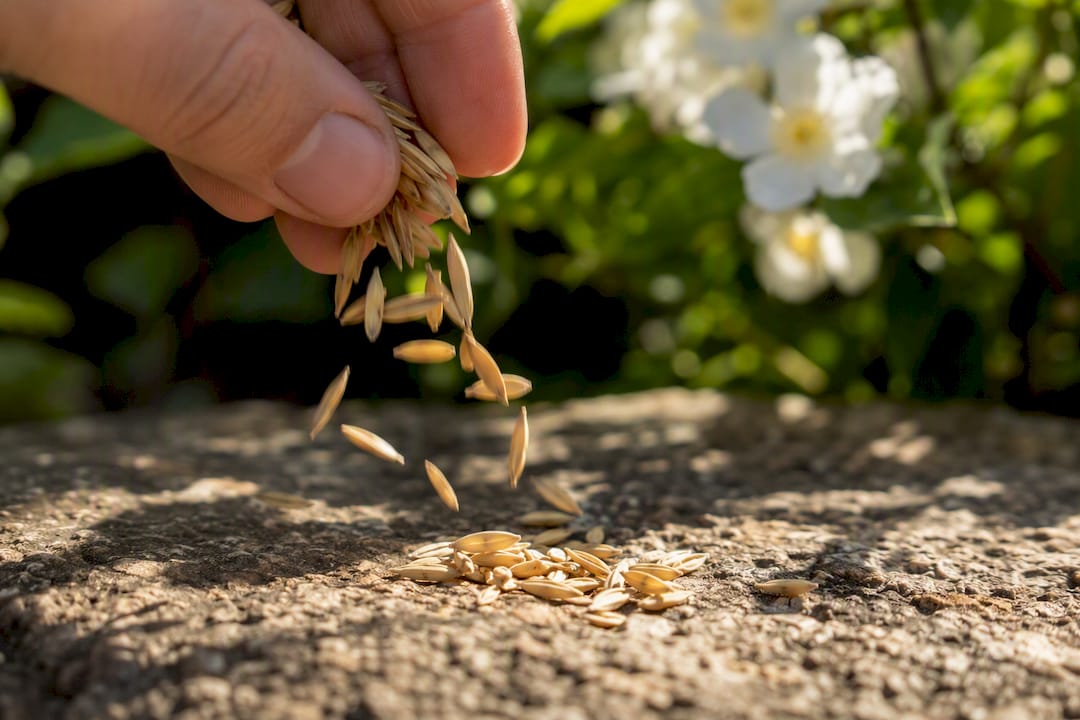
That’s why certified gluten-free oats exist as a separate category. Certification means the oats were grown, harvested and processed under controls that prevent cross-contact, keeping gluten levels below the accepted threshold.
There’s a second wrinkle: a minority of people with coeliac disease react to avenin, a protein naturally present in oats, regardless of certification. Certified gluten-free oats solve the contamination problem, not the avenin problem.
- Buy only certified gluten-free oats if you have coeliac disease
- Don’t assume “gluten-free oats” and “safe for everyone with coeliac disease” mean the same thing
- Speak to a clinician before reintroducing oats after diagnosis, and watch for symptoms if you do
How to read labels and what “gluten-free” means
A “gluten-free” claim on packaging isn’t just marketing language. In many jurisdictions, it’s a regulated threshold: products carrying that claim must contain less than 20 parts per million (ppm) of gluten, a level set because it’s low enough to be safe for the vast majority of people with coeliac disease.
20 ppm is the commonly referenced ceiling regulators use for the “gluten-free” label claim on packaged food.
That number is only useful if you actually check the label. A practical routine:
- Scan the ingredients list first for wheat, barley, rye or triticale by any of their alternate names.
- Look specifically for “malt” in any form, since it’s the most commonly missed barley source.
- Check the allergen statement, usually printed separately from the ingredients, for “contains wheat” or “may contain gluten” warnings.
- Look for a recognised certification mark rather than relying on “gluten-free” text alone.
- Recheck the label on repeat purchases; manufacturers reformulate products without warning.
Even trusted brands change suppliers or recipes. Products such as certain dairy items can pick up gluten through added flavourings or stabilisers that wouldn’t be obvious from the product name.
Naturally gluten-free foods and substitutes for everyday meals
Whole, unprocessed foods are the safest starting point for anyone building a gluten-free diet. Fresh fruit and vegetables, plain meat, fish, eggs, legumes, nuts and seeds are naturally free of gluten, provided they haven’t been processed, marinated or breaded with something that introduces it.
For grains and flours, you have real options: rice, maize (including polenta), quinoa, millet, buckwheat, sorghum, tapioca, potato flour and chickpea flour all work as gluten-free staples for cooking and baking.
- Whole foods: fresh produce, plain meat, fish, eggs, legumes, nuts, seeds
- Gluten-free grains: rice, maize, quinoa, millet, buckwheat, sorghum
- Gluten-free flours: tapioca, potato flour, chickpea flour
Packaged gluten-free baked goods deserve a second look even when labelled correctly, since they can still carry cross-contact risk from shared facilities and are worth checking for nutrient fortification, because swapping out wholegrain wheat can mean losing fibre and B vitamins unless the replacement product accounts for it.
Practical precautions for shopping, cooking and eating out
Most accidental gluten exposure doesn’t come from eating the wrong food outright. It comes from cross-contact: crumbs, shared utensils, a fryer that cooked breaded chicken an hour earlier.
- At home, store gluten-free items separately, label containers clearly, and use dedicated toasters, toaster bags or a separate section of the grill.
- Clean shared equipment (cutting boards, colanders, wooden spoons) thoroughly, or keep a dedicated set for gluten-free cooking.
- When shopping, prioritise certified products and sealed single-ingredient items when you’re uncertain about a brand.
- When eating out, ask directly about cross-contact in the kitchen, and favour venues with a dedicated gluten-free menu or preparation area.
- Avoid shared fryers and self-serve buffets unless the venue actively manages cross-contamination.
Local guidance on avoiding cross-contact while dining out covers venue-specific questions worth asking before you order.
Pro Tip: Keep a small card or phone note listing your exact dietary restriction in plain language. Handing it to kitchen staff removes ambiguity faster than explaining it verbally.
Gluten in non-food products: medications, supplements and cosmetics
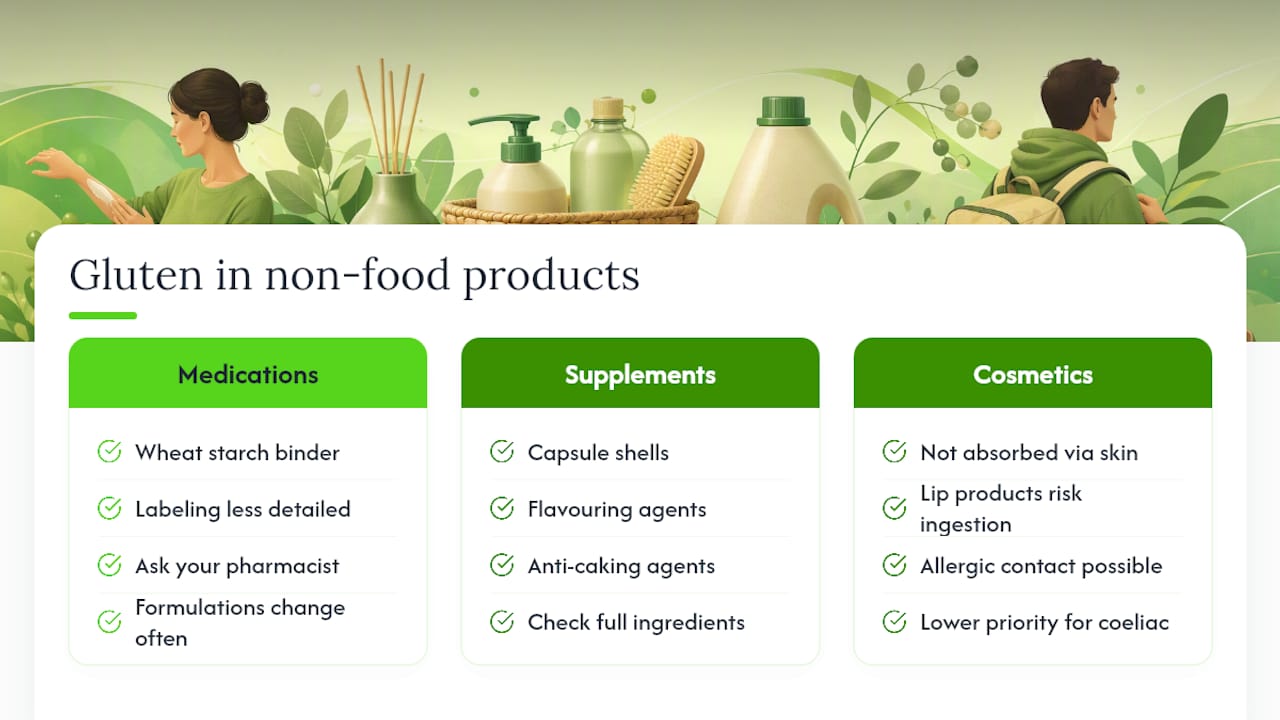
Gluten doesn’t stop at the plate. Some tablets, capsules and supplements use wheat starch as a binder or filler, and pharmaceutical labelling rules on allergens are often less detailed than food labelling, so the ingredient might be listed only by its technical name. If you’re on regular medication, it’s worth asking your pharmacist directly whether a specific brand or generic version contains wheat-derived starch, particularly when switching manufacturers, since formulations change between batches more often than people expect.
Supplements carry a similar risk. Capsule shells, flavouring agents and anti-caking agents can introduce gluten in a product that otherwise looks entirely plant-based or “natural” on the front of the pack. Checking the full ingredients panel, not just the marketing claims, matters as much here as it does with food.
Cosmetics and skincare sit in a different category clinically. Gluten in a lotion or lipstick isn’t absorbed through the skin in a way that triggers the coeliac immune response, but lip products and anything applied near the mouth carry a small ingestion risk simply through contact. For most people with coeliac disease, this is a low-priority concern compared to food and medication. For those with a separate wheat allergy causing skin reactions, it’s worth checking labels on lotions and shampoos too, since allergic contact reactions work through a different mechanism than coeliac disease and can be triggered by topical exposure alone.
What the label doesn’t tell you
Writing about gluten-free meal planning and dining strategies for Naturessoulshop has made one thing obvious: the hardest part isn’t avoiding bread. It’s the fifteenth ingredient down a soup packet, or the “natural flavouring” that turns out to be malt. Naturessoulshop stocks certified and naturally gluten-free groceries with that exact problem in mind, and offers local delivery so sourcing safe staples doesn’t mean scrutinising every label in a crowded aisle.
— Arjit
Shop certified gluten-free groceries with confidence
Grocery shopping for gluten-free households usually means one of two things: hours spent scrutinising ingredient panels, or settling for a narrow, repetitive list of “safe” brands out of caution. Naturessoulshop cuts that down by stocking a curated range of certified and naturally gluten-free products, from grain-free snacks and flours to pantry staples and gift packs, already vetted before they reach the shelf.
The range includes everyday snack options such as jowar namak para, a vegan, gluten-free take on a familiar savoury snack, alongside naturally gluten-free staples through the fresh produce and grocery range. For anyone rebuilding a pantry after a coeliac diagnosis, browsing the full gluten-free grocery selection is a faster starting point than piecing one together brand by brand. Still check the certification mark and ingredients panel on anything new before it goes in your basket, packaging and suppliers can change, and confirming it takes seconds.
This article is general information, not a substitute for advice from a qualified doctor. Consult a qualified healthcare professional about your own circumstances before acting on anything here.
Sources
The obvious foods rarely cause accidental exposure. It’s the processed aisle where gluten hides in plain sight, usually as a thickener, carrier or flavouring rather than a headline ingredient.
Malt syrup, malt extract and malt flavouring appear in cereals, sweets and even some crisps, and because they’re almost always barley-derived, they’re one of the most common label traps. Soups, stock cubes, bouillon powder, processed meats, sausages and imitation seafood (surimi, for instance) frequently use wheat-based fillers or binders. Traditional soy sauce is brewed with wheat, some sweet condiments contain flour-based thickeners, and certain sweets use wheat starch as a dusting agent.
- What is Gluten? | Celiac Disease Foundation
- Gluten and food labelling | FDA
- Gluten-free diet - Mayo Clinic
Read for the words “contains wheat”, “may contain” cross-contamination warnings, and alternative grain names buried in long ingredient lists. A detailed breakdown of hidden gluten sources covers dozens more examples worth knowing before you shop.
Pro Tip: When a label is vague or written in a language you don’t recognise well, contact the manufacturer directly. Most publish allergen statements on their websites, and it’s faster than guessing.


