


A good vegan protein delivers a solid amount of protein per serving, supplies the full spread of essential amino acids (either on its own or paired with something else that day), and is absorbed well by your body. That’s the whole definition. Whole foods should do most of the work: a 150g portion of tempeh gets you into the mid-20s in grams, a bowl of edamame does something similar, and if your week is too chaotic for that kind of cooking, a properly tested pea and rice protein blend fills the gap without you having to think much about amino acid pairing.
Two numbers to anchor this before you read further:
- Tempeh, 150g – a satisfying dinner portion that also gets you a meaningful protein hit
- One scoop of a third-party tested pea and rice powder – typically around 20 to 25g of protein, mixed into oats, a smoothie, or stirred through porridge
Keep reading for the exact serving sizes across a dozen whole foods, how much protein you actually need for your body weight, and two full sample days that land near 70g and 100g.
TL;DR:
- Most vegans should aim for 20 to 35 grams of protein per main meal, using whole foods like tempeh, lentils, and tofu as the primary sources.
- Proper food preparation such as soaking, sprouting, and fermenting improves nutrient absorption and minimizes antinutrients.
- A tested pea and rice protein powder can supplement diet gaps, but only if it has a short ingredient list and third-party certification.
- Active adults may need between 84 and 140 grams of protein daily, depending on body weight and training intensity.
- Tracking actual intake through meal planning helps ensure dietary targets are met without over-relying on supplements.
Table of Contents
- How much protein do you actually need as a good vegan protein eater?
- The three habits that actually get you to target
- High-protein vegan whole foods worth building meals around
- When a powder makes sense, and how to pick one that isn’t rubbish
- Two sample days and one quick 30g meal
- Key Takeaways
- Why most protein advice gets vegans halfway there
- Shop smarter for your protein needs with Nature’s Soul Shop
- Sources
How much protein do you actually need as a good vegan protein eater?
Protein rebuilds muscle tissue, keeps your immune system stocked with the antibodies it needs, and helps repair the small amount of wear your body puts on tissue every single day just from moving around. None of that is vegan-specific. What changes when you go plant-based is how deliberately you have to source it.
The baseline most nutrition bodies use is 0.8g of protein per kilogram of body weight per day, which is the minimum to avoid deficiency rather than a target for anyone training or recovering from illness. Active people typically need more, somewhere in the 1.2 to 2.0g/kg range, depending on how hard and how often they train.
In grams, that plays out like this:
- A 60kg adult needs roughly 48g/day at baseline, rising to 72 to 120g/day if training regularly
- A 70kg adult needs roughly 56g/day at baseline, rising to 84 to 140g/day if training regularly
- An 85kg adult needs roughly 68g/day at baseline, rising to 102 to 170g/day if training regularly
A 70kg person eating a sedentary lifestyle’s worth of meals genuinely only needs about 56g a day — that’s two portions of lentils and a handful of nuts, nothing dramatic. It’s the active end of the range where most vegans underestimate what they’re eating and end up short.
These figures are general population guidance, not medical advice. Pregnant people, anyone managing a chronic illness, or anyone recovering from surgery should get their targets confirmed by a GP or registered dietitian rather than working from a blog formula.
The three habits that actually get you to target
Forget the old myth that you need to eat rice and beans in the same bowl to “complete” the protein. Your body pools amino acids across the whole day, not meal by meal, so a lentil soup at lunch and a handful of Brazil nuts at 4pm cover each other’s gaps just fine. The AICR’s own guidance backs this: variety across the day, not perfect pairing at every sitting, is what matters.
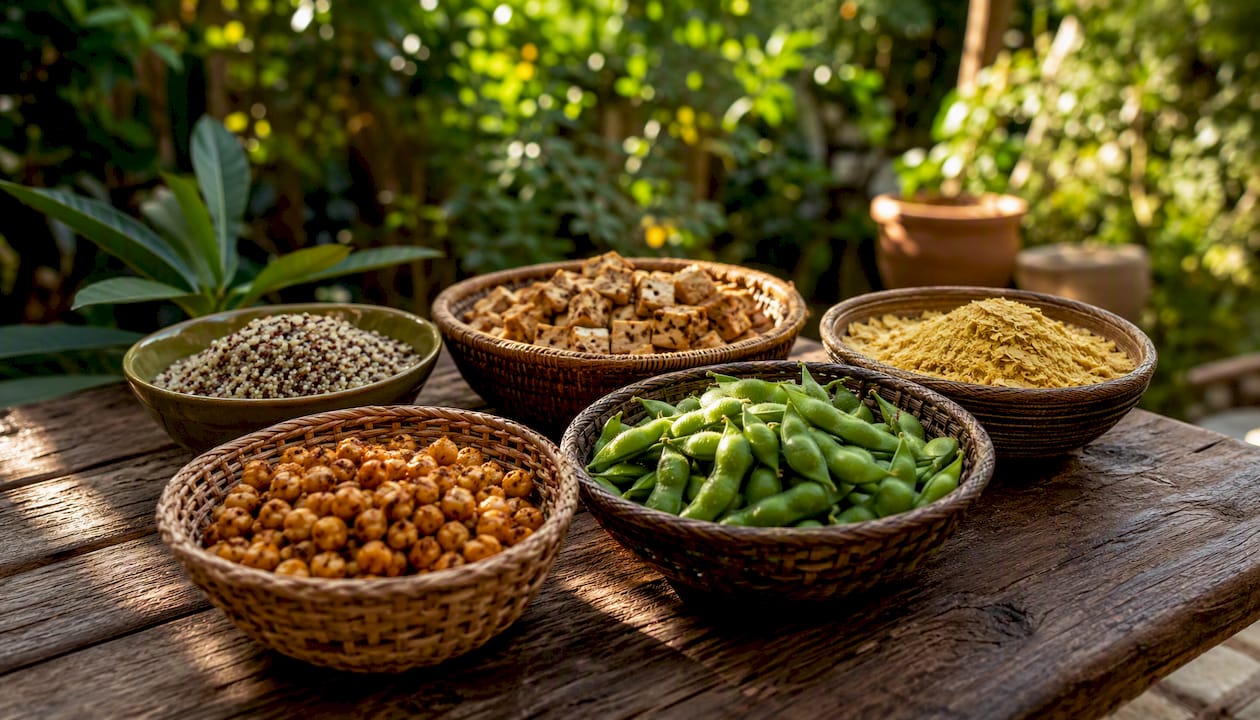
What does move the needle is preparation. Soaking, sprouting, and fermenting legumes and grains cuts down antinutrients like phytates and tannins, which otherwise block some mineral and amino acid absorption. Tempeh is a fermented soy product for exactly this reason. Overnight-soaked lentils cook faster and digest more easily than the dry version thrown straight into a pot.
Three habits worth building:
- Aim for 20 to 35g of protein at each main meal rather than trying to cram it all into one
- Keep a protein-rich snack on hand (roasted chickpeas, a nut butter, edamame) for the gaps between meals
- Batch-soak or sprout grains and pulses once a week rather than treating it as a per-meal chore
Alongside protein, keep an eye on B12, iron, and vitamin D, since none of these come reliably from a whole-food vegan diet without fortified products or targeted supplementation.
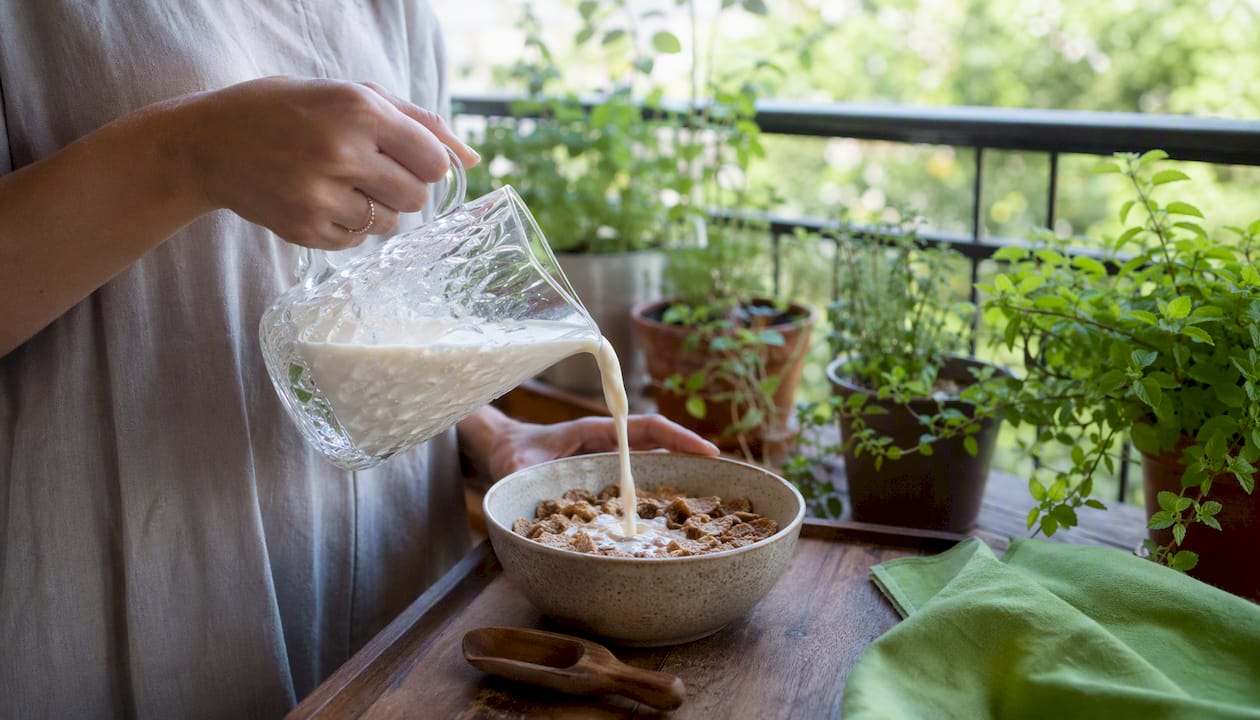
Pro Tip: Fortified plant milk and nutritional yeast are two of the easiest ways to close the B12 gap without adding another pill to your routine. Check the label. Not all brands fortify to the same level.
High-protein vegan whole foods worth building meals around
None of these need a scale and a spreadsheet to use well.
- Tempeh – Fermented, firm, and holds up to grilling or pan-frying. A typical dinner portion is a proper meat substitute in a stir-fry or curry. Swap it directly for minced meat in a bolognese.
- Edamame – Steamed in the pod as a snack or shelled into salads and grain bowls. A cup gets you a substantial protein hit alongside fibre and folate.
- Firm tofu – The most versatile item on this list. Press it, marinate it, and it takes on almost any flavour you throw at it. A cup pressed and pan-fried works in everything from scrambles to noodle bowls.
- Seitan – Made from wheat gluten, dense and chewy, closer to meat in texture than any other plant protein. A 100g portion is a strong base for stews and skewers, though it’s unsuitable if you’re avoiding gluten.
- Lentils – Cheap, quick-cooking (especially red lentils), and a cooked cup fits neatly into soups, dals, and bolognese-style sauces.
- Chickpeas – Whether roasted, blended into hummus, or tossed into a curry, chickpeas double up as a fibre source alongside their protein content.
- Green peas – Underrated as a standalone protein source. Stir a cup into a risotto or blitz into a bright green soup.
- Hemp seeds – One of the few plant foods offering a genuinely complete amino acid profile on its own. Sprinkle over porridge or blend into a smoothie.
- Chia seeds – Best known for fibre and omega 3s, but they carry a decent protein load too. Soak overnight in plant milk for a pudding base.
- Quinoa and amaranth – Both are complete proteins and cook like a grain, making them an easy rice substitute in bowls and salads.
- Nuts and nut butters – Almonds, peanuts, and cashews all contribute meaningfully, especially spread thick on seeded toast or stirred into a stir-fry sauce.
- Oats and wild rice – Not protein powerhouses individually, but they add up across a day and carry fibre that most powders don’t.
For an easy swap, use lentils where a recipe calls for mince, and reach for chickpeas or edamame when a salad needs bulking without cooking anything new. Nature’s Soul Shop’s high-protein vegan meal ideas walk through several of these combinations in full recipe form, and the vegan staple foods guide is worth a look before your next shop if you want to stock the essentials in one go. When you want an exact gram figure rather than an estimate, USDA FoodData Central has verified per-serving breakdowns for all of the above.
When a powder makes sense, and how to pick one that isn’t rubbish
Most powders on shelves are built from pea, rice, soy, or potato protein isolate. Pea protein alone tends to run 20 to 25% protein by dry weight in its raw seed form, and pea isolate has shown muscle-mass gains comparable to whey in some research when total daily intake is adequate. Rice protein is weaker on lysine, one of the amino acids vegans most often fall short on, which is exactly why pea and rice blends have become the standard recommendation rather than either used alone.
A decent powder is easy to spot once you know what to check:
- A short ingredient list, ideally under ten items, with no vague “proprietary blend” language
- Clear labelling of grams of protein per scoop, not just total powder weight
- Evidence of third-party batch testing, ideally through Informed Choice or NSF certification
- No unnecessary added sugars, artificial sweeteners stacked on top of each other, or filler starches
Third-party batch testing matters more than most labels admit. It’s the only reliable way to catch soil-derived heavy metals that can turn up in pea and rice protein depending on where the crop was grown, and a brand that publishes its batch results has nothing to hide.
Most well-formulated scoops deliver 20 to 30g of protein, enough to functionally replace a small meal’s worth if you’re stirring it into oats or a shake rather than treating it as an extra on top of an already sufficient day. And if your only experience of plant powder is a chalky tub from a decade ago, it’s worth trying again. Dietitians widely note that taste and mixability have improved substantially in recent formulations, which is part of why acceptability has climbed.
Two sample days and one quick 30g meal
A single 30g meal, no powder involved: a bowl of firm tofu scramble (roughly half a block) with a slice of wholegrain toast topped with peanut butter, and a side of steamed edamame. That combination alone comfortably clears 30g.
Day one, moderate adult (roughly 70g total):
- Breakfast: overnight oats with chia seeds and a splash of fortified soy milk (approximately 15g)
- Lunch: lentil soup with a wholegrain roll (approximately 18g)
- Snack: a handful of roasted chickpeas (approximately 7g)
- Dinner: tempeh stir-fry with quinoa and green peas (approximately 30g)
Day two, active adult (roughly 100g total):
- Breakfast: a smoothie with one scoop of pea and rice protein powder, banana, and oat milk (approximately 25g)
- Lunch: chickpea and edamame salad with hemp seeds (approximately 25g)
- Snack: hummus with seeded crackers (approximately 8g)
- Dinner: seitan stir-fry with wild rice (approximately 30g)
- Evening: a handful of almonds (approximately 6g)
Canned lentils and chickpeas, pre-pressed tofu, and fortified plant milks all cut prep time without sacrificing any of these numbers. A basic food-tracking app is the simplest way to see whether your actual week matches your target rather than guessing.
Where Arjit’s guidance and Nature’s Soul Shop’s editorial approach fit in
Arjit’s writing on the Nature’s Soul Shop blog has consistently pushed a whole-foods-first message, treating supplements as a backup plan rather than the default. That stance shapes every recommendation in this piece.
Buy whole foods first and let powders fill genuine gaps, not laziness. Choose fortified products for B12 rather than hoping a varied diet covers it by accident. And never buy a protein powder without checking for third-party lab testing on the label or product page.
Nature’s Soul Shop sells organic vegan groceries, which means there’s a commercial interest in readers buying food. That’s stated plainly here: the editorial position still prioritises whole-food guidance and ingredient transparency over pushing any specific product.
Key Takeaways
Good vegan protein means whole foods first, complementation across the day rather than per meal, and a tested pea and rice blend powder only when whole foods can’t realistically close the gap.
| Point | Details |
|---|---|
| Define quality first | A good vegan protein is bioavailable, contributes to a complete amino acid profile across the day, and is minimally processed where possible. |
| Know your target | Use 0.8g/kg as a baseline and 1.2 to 2.0g/kg if you train regularly; a 70kg adult needs roughly 56 to 140g/day. |
| Build meals around 20 to 35g | Tempeh, tofu, lentils, and chickpeas all deliver enough protein per serving to anchor a main meal. |
| Prepare food properly | Soaking, sprouting, and fermenting legumes reduces antinutrients and improves absorption. |
| Vet any powder before buying | Look for a short ingredient list, transparent grams per scoop, and third-party testing such as Informed Choice or NSF. |
| Shop with Nature’s Soul Shop | Nature’s Soul Shop’s organic grocery range and health category support a whole-foods-first approach with fortified options where needed. |
Why most protein advice gets vegans halfway there
The conventional advice on vegan protein spends too long on amino acid pairing charts and not nearly enough time on actual portion sizes. Readers come away knowing that rice and beans “complete” each other but with no real sense of whether their Tuesday lunch got them anywhere close to target. That’s backwards. The pairing science matters far less across a normal week of varied eating than simply hitting a decent protein number at each meal.
Where people genuinely go wrong is treating powder as either essential or suspicious, with nothing in between. It’s neither. A well-tested pea and rice blend is a reasonable tool for a busy Tuesday, not a crutch and not a shortcut around eating properly. The bigger failure I see is people skipping the boring groundwork, batch-soaking lentils, checking a label for third-party testing, tracking a single week of intake, in favour of chasing the next trending “complete protein” ingredient. Prioritise the boring stuff first. It works.
— Arjit
Shop smarter for your protein needs with Nature’s Soul Shop
Naturessoulshop is built around exactly the whole-foods-first approach this article recommends, stocking organic lentils, tempeh, tofu, and legumes alongside fortified vegan staples for the days when whole food alone won’t cut it.
Rather than hunting across multiple shops for clean-ingredient staples and a fortified plant milk that actually lists its B12 content, you get it in one place with clear labelling throughout. If you’re planning meals around the protein targets covered here, Naturessoulshop’s Nature’s Soul Fresh range is where to start for produce and perishables, and the Health category covers fortified products and supplements if your week genuinely needs the extra help. For recipe inspiration that goes beyond the basics, Wild Foodz’s seasonal vegan menu ideas are worth a browse alongside your shop. Head to Naturessoulshop and build your next basket around what actually gets you to target.
This article is general information, not a substitute for advice from a qualified doctor. Consult a qualified healthcare professional about your own circumstances before acting on anything here.
Sources
- How to get enough protein on a plant-based diet — AICR
- Dietary plant-based protein supplements: sources, processing, nutritional value and health benefits — PMC
- Best plant-based protein powders — Forbes


