


A vegan diet’s main advantages are lower risk of several chronic diseases, a substantially smaller environmental footprint, and the ethical benefit of removing animal exploitation from your plate. None of that is automatic. The 2025 Academy of Nutrition and Dietetics position paper confirms a well-planned vegan diet suits every life stage, but the word “planned” is doing heavy lifting. Skip the planning and you trade one set of health risks for another.
What the evidence actually supports:
- Lower rates of hypertension, type 2 diabetes and some cancers, per observational research
- Meaningful drops in LDL cholesterol and fasting insulin in controlled trials
- A substantial reduction in greenhouse gas emissions, land use and water consumption versus typical animal-heavy diets
- Complete removal of direct animal product consumption, the core ethical draw for most people who switch
Key Takeaways
A well-planned vegan diet delivers measurable cardiometabolic benefits, a substantially smaller environmental footprint, and complete avoidance of animal products, but only when built around whole foods and targeted nutrient planning.
| Point | Details |
|---|---|
| Health gains are real but intermediate | Trials show LDL and insulin improvements within weeks; long-term endpoint data is still limited. |
| Environmental impact drops sharply | Plant-based shifts cut emissions, land and water use by roughly 49–63% versus animal-heavy diets. |
| Seven nutrients need active planning | B12, vitamin D, iron, calcium, iodine, zinc and omega-3s require fortified foods or supplements. |
| Whole foods beat processed substitutes | Legumes, grains and vegetables deliver the actual benefits; packaged vegan snacks often don’t. |
| Get professional input for special cases | Pregnancy, childhood and complex medical needs warrant a registered dietitian’s guidance. |
Table of Contents
- The advantage of a vegan diet for your heart, weight and long-term disease risk
- How much does going plant-based actually help the planet?
- Which nutrients actually need planning on a vegan diet
- What a genuinely healthy vegan plate looks like day to day
- The downsides nobody mentions at the dinner party
- Where to start: Naturessoulshop’s vegan resources
- What the vegan diet debate keeps getting wrong
- Sources
The advantage of a vegan diet for your heart, weight and long-term disease risk
The strongest evidence sits with cardiometabolic health. Randomised controlled trials tracked in a PMC review show vegan interventions lowering LDL cholesterol and fasting insulin within four to eight weeks, alongside modest short-term weight loss. That’s not a fringe finding. It’s consistent enough across trials that researchers now treat it as one of the more reliable dietary interventions for intermediate cardiovascular markers.
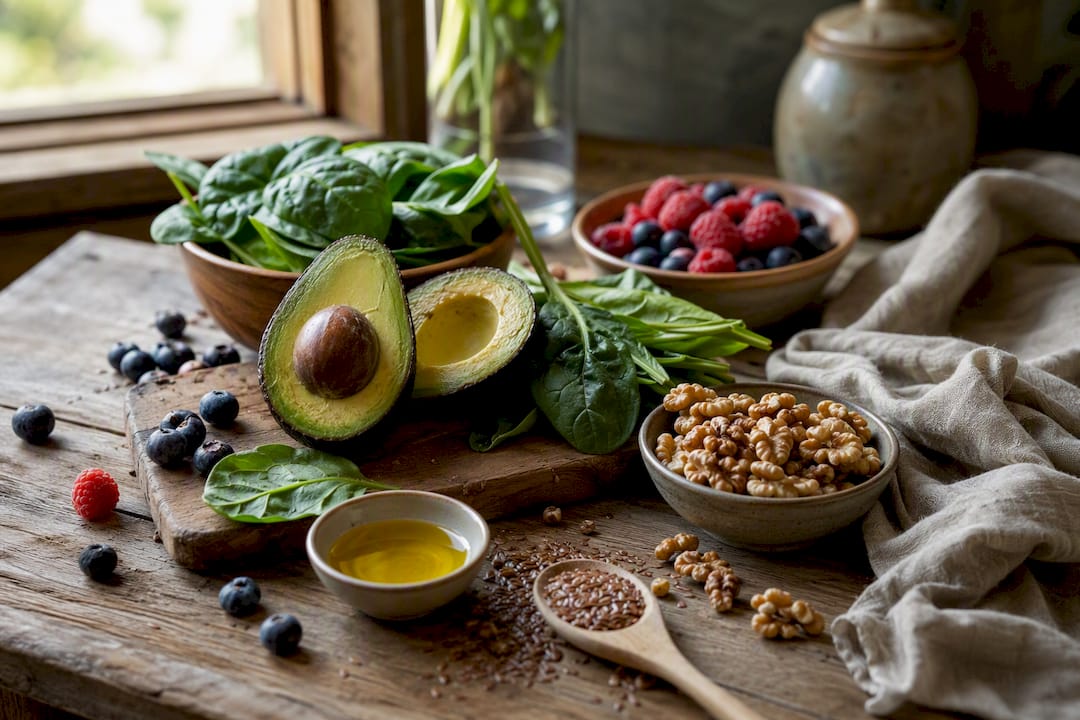
Observational data goes further. Analyses cited by Healthline put vegan diets at roughly 15% lower cancer risk and up to 75% lower risk of high blood pressure compared with omnivorous patterns in some study populations. Those are association figures, not proof of direct cause, and they come from cohorts where vegans often also exercise more and smoke less. Still, a WHO Europe review reaches a similar conclusion at population level: predominantly plant-based eating correlates with fewer non-communicable diseases.
The mechanism isn’t mysterious. Whole plant foods bring more fibre, less saturated fat, and a broader spread of phytochemicals than a typical meat-heavy plate. Fibre slows glucose absorption and feeds gut bacteria linked to lower inflammation. Cutting saturated fat directly moves the needle on LDL cholesterol. None of this requires you to swear off flavour or reinvent your kitchen.
The short-term signal is real and repeatable: trials consistently show LDL and insulin improving within weeks on a well-structured vegan diet, even before any weight loss shows up.
What the evidence doesn’t yet show is decades-long clinical endpoint data, like confirmed reductions in heart attacks or strokes over a lifetime. The intermediate markers point the right direction. Nobody has run a 30-year randomised trial to prove it conclusively, and probably nobody ever will.
How much does going plant-based actually help the planet?
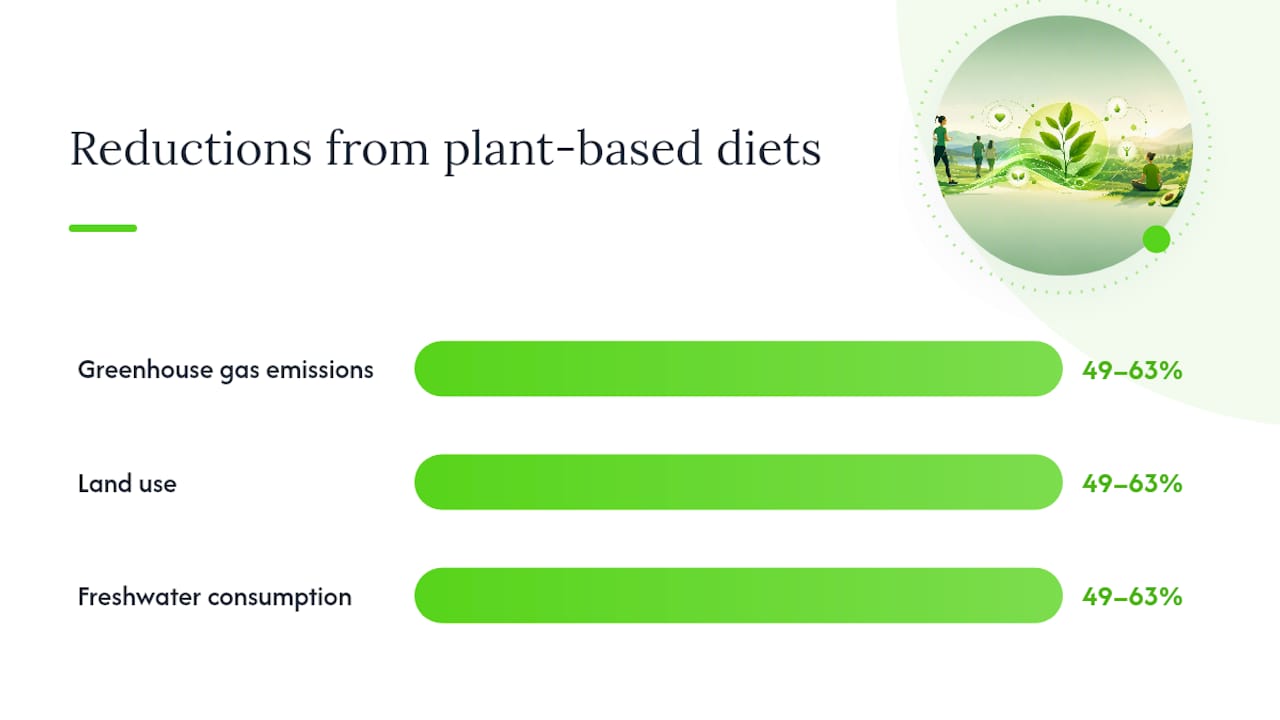
Modelling research published in Frontiers in Nutrition puts the numbers at 49 to 63% reductions in greenhouse gas emissions, land use, and freshwater consumption when a population shifts from a typical animal-heavy diet to a plant-based one. That range is wide because it depends on which animal products get replaced and how intensively they were farmed. Swapping out feedlot beef moves the number more than swapping out chicken.
The animal welfare case needs no modelling. A vegan diet excludes animal slaughter, dairy industry culling of male calves, and the confinement conditions common in industrial egg and meat production. That’s the whole argument, stated plainly rather than dressed up.
Beyond climate and welfare, the co-benefits stack up:
- Lower antibiotic use tied to reduced industrial livestock farming
- Reduced water stress in agricultural regions
- Public health savings the WHO Europe review links to lower rates of diet-related chronic disease
- Less land pressure, since plant-based calories generally need a fraction of the acreage that animal calories require
Naturessoulshop’s own look at plant-based diets and environmental benefits walks through how these savings compound at the household level, not just at the population scale.
Which nutrients actually need planning on a vegan diet
Here’s where a lot of well-meaning switchers stumble. Removing animal foods also removes their densest natural sources of a handful of nutrients, and pretending otherwise is how people end up tired, anaemic, or with weakening bones a few years in. The 2025 Academy position states plainly that vegan diets are adequate at every life stage, provided you handle these seven:
- Vitamin B12. Found almost exclusively in animal products, so vegans need fortified foods or a direct supplement, no exceptions.
- Vitamin D. Sunlight synthesis and fortified plant milks help, but NHS guidance recommends a seasonal supplement for most people in temperate climates, vegan or not.
- Iron. Plant iron absorbs less efficiently than the haem iron in meat; pairing with vitamin C boosts uptake substantially.
- Calcium. Fortified plant milks, tahini, and calcium-set tofu cover most of the gap left by dairy.
- Iodine. Often overlooked; iodised salt or seaweed in moderation fills this reliably.
- Zinc. Legumes and whole grains contain it, though soaking or sprouting improves absorption.
- Omega-3s (EPA/DHA). Flaxseed and walnuts supply ALA, but algae-based supplements are the only vegan route to the EPA/DHA forms your body actually uses directly.
Naturessoulshop’s guide to top vegan iron sources breaks down which plant foods deliver the most usable iron per serving.
Pro Tip: Pregnant, breastfeeding, or feeding a young child on a vegan diet? Book time with a registered dietitian nutritionist rather than guessing. The Academy’s position paper specifically flags these groups as needing individualised planning, and Naturessoulshop’s vegan pregnancy nutrition guide is a useful starting point before that conversation.
What a genuinely healthy vegan plate looks like day to day
Forget the idea that vegan eating means a cupboard full of imitation meats. The diet’s real advantage shows up when the plate is built from whole foods: legumes, whole grains, nuts, seeds, vegetables, and fruit, not heavily processed substitutes dressed up to look like something else.
A workable shopping list runs something like this:
- Lentils, chickpeas and black beans for protein and fibre together
- Oats, brown rice and quinoa as grain staples
- Tofu and tempeh for versatile cooking protein
- Leafy greens, peppers and citrus for iron absorption support
- Nuts, seeds and tahini for healthy fats and minerals
- Fortified plant milk and nutritional yeast for B12 and calcium
Naturessoulshop’s list of essential vegan staple foods covers the pantry basics in more depth, and the plant-based meal planning guide offers weekly templates if you’d rather not improvise from scratch. For seasonal inspiration, Wild Foodz’s rundown of seasonal vegan menu ideas is worth a look too.
| Point | Details |
|---|---|
| Pair iron with vitamin C | Squeeze lemon over lentils or add peppers to bean dishes to boost iron absorption. |
| Build meals around legumes and grains | Beans, lentils, oats and rice form the nutritional backbone, not meat substitutes. |
| Skip the processed aisle | Choose tofu and whole grains over vegan ready meals loaded with sodium. |
The downsides nobody mentions at the dinner party
Vegan diets aren’t risk-free by default. Harvard Health points out that many newcomers replace meat and dairy with heavily processed vegan alternatives, meaning the diet on paper looks plant-based but delivers little of the fibre or micronutrient density that drives the actual benefits.
The real risks, stated plainly:
- B12 deficiency if you skip fortified foods or supplements, leading to fatigue and, over time, nerve damage
- Weaker bone density if calcium and vitamin D intake fall short long-term
- High sodium and low nutrient density from over-relying on packaged vegan convenience foods
The protein myth deserves a quick correction: mixing legumes, grains, nuts and seeds across the day reliably meets amino acid needs. You don’t need to combine “complete proteins” at every single meal. Periodic blood checks for B12, ferritin and vitamin D are a sensible habit for anyone eating strictly plant-based long-term.
Where to start: Naturessoulshop’s vegan resources
Naturessoulshop stocks fortified and whole-food staples across its Health range, including B12 and vitamin D options for anyone tightening up their supplement routine. The complete guide to vegan diet and the how to transition vegan walkthrough both go deeper into the planning side covered here.
- Fortified foods and supplements: Health category
- Fresh produce for whole-food cooking: Nature’s Soul Fresh
- Transition and meal-planning guides on the Naturessoulshop blog
If you’re managing a specific condition or a life stage like pregnancy, a registered dietitian nutritionist remains the right call alongside anything you read here.
What the vegan diet debate keeps getting wrong
Most coverage of vegan eating splits into two camps: breathless advocacy or dismissive scepticism. Neither serves the person standing in a supermarket aisle trying to work out what to actually buy. The evidence doesn’t support either extreme. It supports a diet that measurably improves cardiometabolic markers and cuts environmental impact substantially, provided the person eating it treats nutrient planning as non-optional rather than an afterthought.
The conventional advice usually stops at “eat more plants,” which is true but useless without specifics. What matters more is naming the seven nutrients that need direct attention and building habits around them from week one, not after a blood test flags a problem. The 2025 Academy position exists precisely because too many people learned this the hard way.
If you’re starting out, prioritise B12 and vitamin D supplementation immediately, lean on whole foods over processed substitutes, and treat a dietitian consultation as sensible risk management rather than an admission of failure.
— Arjit
This article is general information, not a substitute for advice from a qualified doctor. Consult a qualified healthcare professional about your own circumstances before acting on anything here.
Sources
- Environmental benefits of plant‑based diets — Frontiers in Nutrition (2026)
- Academy of Nutrition and Dietetics position paper (2025)
- Impact of plant‑based diets on metabolic markers — PMC review


