


TL;DR:
- Most foods grown in India are non-GMO due to government bans on GMO crops.
- Certified organic and local grains, pulses, fruits, and vegetables are naturally non-GMO.
- Imported and processed foods may require label checks for non-GMO verification.
Confusing labels, imported products, and conflicting advice make it genuinely difficult for Indian families to know which foods are truly non-GMO. If you are a parent packing a school tiffin or someone following a gluten-free or plant-based diet, you deserve clear answers rather than vague reassurances. The good news is that India’s regulatory environment actually works in your favour more than you might realise. This guide walks you through the criteria for identifying non-GMO foods, the best categories and brands to trust, and the situations where extra caution is genuinely warranted.
Table of Contents
- How to identify non-GMO foods in India: Key criteria
- Best non-GMO food categories and ingredients in India
- Top non-GMO brands and packaged foods for Indian families
- When to be cautious: Processed, imported and at-risk foods
- Our perspective: The real story behind non-GMO food choices in India
- Make non-GMO shopping easier with trusted partners
- Frequently asked questions
Key Takeaways
| Point | Details |
|---|---|
| Indian food is mostly non-GMO | Government regulations ensure nearly all Indian-grown foods are non-GMO, with rare exceptions. |
| Organic label guarantees non-GMO | Choosing organic-certified foods is the simplest way to avoid GMOs in India. |
| Millets are a safe, GF staple | Millets are both non-GMO and naturally gluten-free, ideal for healthy and special diets. |
| Check processed and imported foods | Be extra careful with processed and imported products, as these have higher GMO risk. |
| Trusted brands make shopping easy | Relying on reputed brands and certifications simplifies safe, non-GMO grocery shopping. |
How to identify non-GMO foods in India: Key criteria
Before we introduce the top non-GMO foods, it is important to know what makes a food genuinely non-GMO in the Indian context. The starting point is surprisingly reassuring: India bans GMO food crops commercially, with only Bt cotton approved since 2002, regulated by the Genetic Engineering Appraisal Committee under the 1989 Environment Protection Rules. That means virtually every food crop grown on Indian soil, from rice and wheat to tomatoes and lentils, is non-GMO by law.
This is a fundamentally different situation from countries like the United States, where GM soy, corn, and canola are mainstream. Understanding food labelling in India helps you navigate supermarket shelves with confidence, especially for processed or packaged goods.
For organic products, the answer is even cleaner. Organic certification in India under the National Programme for Organic Production (NPOP) prohibits the use of GMO seeds outright. So any product carrying the India Organic logo is non-GMO by default.
For processed or imported goods, the picture is more nuanced. Non-GMO certification involves supply chain verification, laboratory testing, inspections, and audits by third-party bodies such as the Non-GMO Project or YAGAY/SUN. Look for these symbols on packaging:
- India Organic (NPOP) logo
- Non-GMO Project Verified seal
- USDA Organic or EU Organic on imported items
- Jaivik Bharat label for government-certified organic produce
Most Indian-grown foods are non-GMO by default, but imported and heavily processed products require closer scrutiny. The risk is real but manageable with the right knowledge.
Pro Tip: If you are buying grains or snacks for children, prioritise millet-based or NPOP-certified organic brands. Millets are inherently non-GMO and naturally gluten-free, making them an ideal choice for health-conscious households.
Best non-GMO food categories and ingredients in India
With the criteria clear, let’s spotlight which foods you can most confidently shop for as non-GMO across Indian markets.
India’s agricultural diversity is genuinely your ally here. The following categories are non-GMO by nature and widely available:
- Whole grains: Rice, wheat, jowar, bajra, ragi, and all millets
- Pulses and lentils: Chana, moong, masoor, toor dal, urad dal
- Fresh fruits and vegetables: All locally grown seasonal produce
- Pure dairy: Milk, paneer, ghee from Indian farms
- Nuts and seeds: Almonds, sesame, flaxseed, sunflower seeds
Millets deserve special mention. They are not just non-GMO; they are naturally gluten-free and packed with fibre, iron, and calcium. For families managing coeliac disease or gluten sensitivity, millets are a practical, affordable staple that does not require any certification hunting.
The India gluten-free market is growing at 11 to 14% CAGR through to 2030, driven by rising coeliac awareness and broader health trends, with millets sitting at the centre of this growth as the most natural gluten-free grain option available.
For parents, this is particularly relevant. An organic diet for children built around millets, pulses, and seasonal vegetables gives you the broadest non-GMO, gluten-free coverage without requiring a premium budget for every item.

Pro Tip: For plant-based and coeliac households, build your pantry around millets and pulses first. Both are non-GMO, both are gluten-free, and both are available across India without any specialist sourcing.
For packaged snacks, look for products carrying NPOP organic or Non-GMO Project certification. Brands that use these labels on millet-based biscuits, puffs, or ready-to-cook mixes are your safest bet in the processed foods aisle. Avoid products that only claim to be “natural” or “clean label” without any third-party verification.
Top non-GMO brands and packaged foods for Indian families
Knowing the categories is useful, but to make real-life snacks and meals easier, let’s get specific with the best brands and packaged picks.
Several Indian brands have built their identity around non-GMO, organic, and gluten-free credentials. Here is a comparison of the most reliable options:
| Brand | Food type | Best for | Certification |
|---|---|---|---|
| 24 Mantra | Rice, pulses, snacks | Families, plant-based | NPOP Organic |
| Soulfull | Ragi bites, millet cereals | Kids, gluten-free | Clean label, non-GMO |
| OGMO | Millet snacks, flours | Kids, coeliac | NPOP Organic |
| Nature’s Soul | Grocery, snacks, fresh | All households | NPOP, Non-GMO |
| Slurrp Farm | Millet dosa, pancake mixes | Toddlers, kids | Non-GMO, no maida |
For tiffin boxes and quick snacks, these are some of the easiest non-GMO packaged picks to find:
- Namak Para Jowar from Nature’s Soul: vegan, gluten-free, and made without refined flour
- Slurrp Farm Millet Dosa: spinach-enriched, no maida, low salt, ideal for toddlers
- 24 Mantra Puffed Rice: NPOP-certified, simple ingredient list
For top organic non-GMO brands in India, NPOP-certified products hold the strongest guarantee. “Natural” or “clean label” claims without third-party verification are marketing language, not regulatory commitments.
One important note for imported foods: soy-based products, protein bars, international breakfast cereals, and plant-based meat alternatives sourced from abroad carry a higher GMO risk. Always verify non-GMO or organic certification on these Indian approval status lines before purchasing.
When to be cautious: Processed, imported and at-risk foods
But not all foods are risk-free. Here is where extra attention is essential, especially with convenience products and imports.
The food categories most likely to contain GMOs in India are those with significant import exposure or heavy processing:
- Imported soy products (tofu, soy milk, edamame)
- Corn-based snacks and cereals from international brands
- Ready-to-eat baby foods from global manufacturers
- Plant-based meat alternatives using imported soy or pea protein
- International protein bars and supplements
Here is a stepwise approach to staying safe with these products:
- Check the origin: Indian-grown raw ingredients carry minimal GMO risk. Imported ingredients from the US, Brazil, or Argentina carry higher risk.
- Read the label carefully: Look for NPOP, Non-GMO Project, USDA Organic, or EU Organic seals. Use our guide on reading ingredient labels for a step-by-step approach.
- Avoid vague claims: “Natural,” “wholesome,” or “clean” without certification means nothing legally.
- Contact the brand: If a product does not display a certification, email the brand directly and ask for their non-GMO sourcing policy.
- Choose Indian-sourced alternatives: For soy and corn specifically, look for Indian-origin products or switch to moong or chana as protein sources.
| Food type | GMO risk level | Safer alternative |
|---|---|---|
| Indian-grown vegetables | Very low | No change needed |
| Indian pulses and millets | Very low | No change needed |
| Imported soy products | High | Indian moong or chana |
| Imported corn snacks | High | Jowar or millet snacks |
| Processed ready-to-eat meals | Medium to high | NPOP-certified options |
India is considering importing non-GMO soy and corn from the United States amid ongoing trade negotiations, which highlights how sensitive this issue remains. Strong public and farmer opposition to GMO imports means the landscape is shifting, but the risk with imported processed goods remains real for now.
Our perspective: The real story behind non-GMO food choices in India
Now that we have covered what and how to choose, it is time for some clear-eyed perspective on what all this means for your family’s food routine.
Here is something most international wellness content gets wrong about India: the non-GMO conversation is far less fraught here than it is in North America or Europe. Indian families are not navigating a landscape saturated with GM crops. Fresh produce from your local sabziwala, the dal in your pantry, the rice you cook every evening — these are non-GMO by regulatory default, not by luck or premium pricing.
The real vigilance is needed in a narrower zone: imported processed foods and certain packaged products where supply chains are less transparent. That is where certification matters and where your label-reading skills earn their keep.
We also think the “organic vs. non-GMO” debate can create unnecessary anxiety. In India, organic certification already covers non-GMO status. You do not need to chase two separate labels. Prioritise NPOP-certified products when buying packaged goods, and trust locally grown fresh produce for everything else.
For parents especially, the true value of organic for Indian children lies less in GMO avoidance and more in reduced pesticide exposure and better nutritional profiles. Keep that perspective, and your shopping decisions become much simpler and far less stressful.
Make non-GMO shopping easier with trusted partners
Ready to put your knowledge into practice and make shopping stress-free? Here is how we can help.
At Nature’s Soul Shop, we have curated a range of organic, non-GMO, and gluten-free groceries specifically for health-conscious Indian families. Every product in our range is selected for clean ingredients, transparent sourcing, and verified certifications — so you are not left guessing at the supermarket shelf.
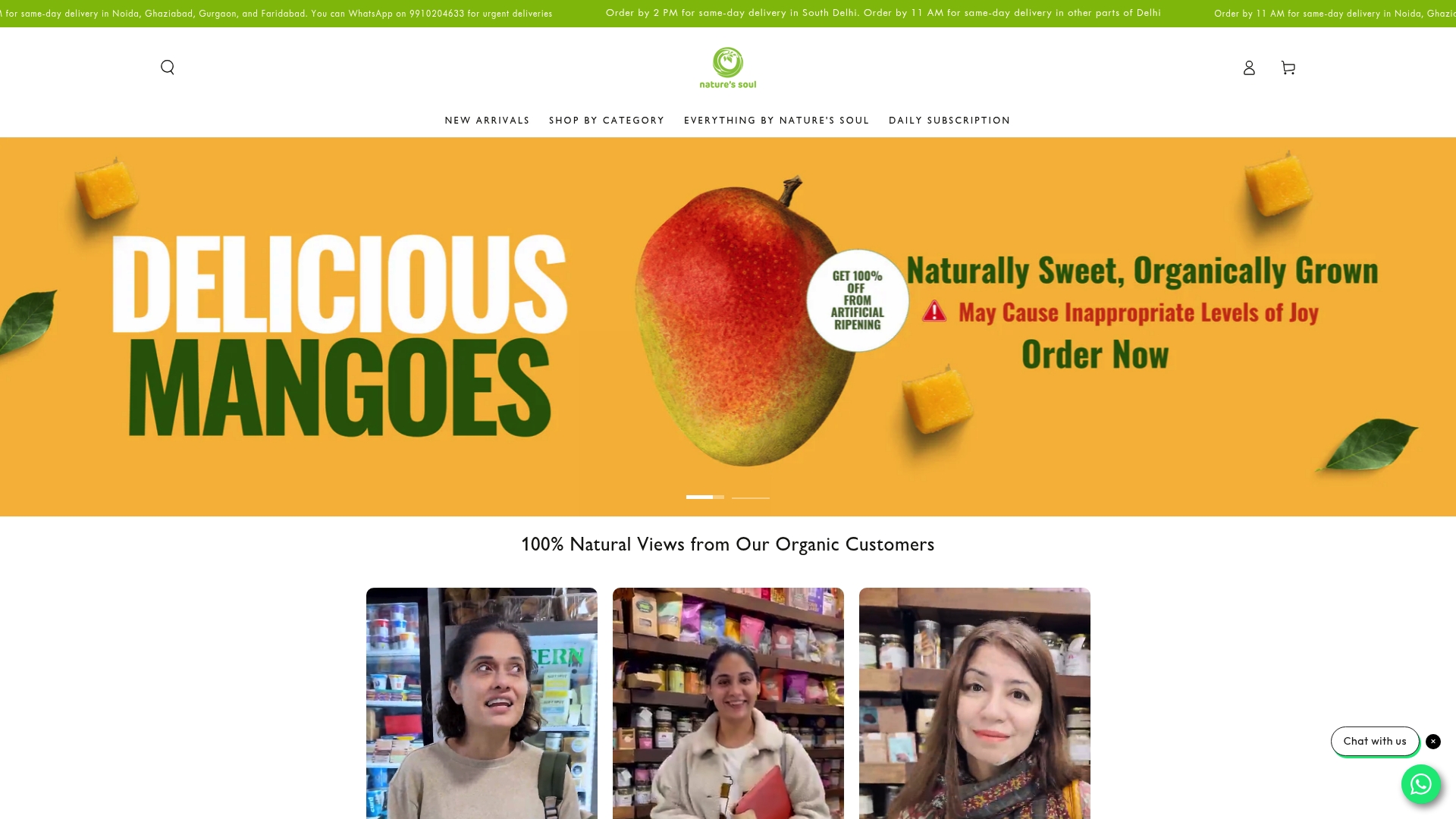
From pantry staples and millet-based snacks to fresh produce through our Nature’s Soul Fresh collection, we make it straightforward to shop with confidence. Browse our full healthy living range to find NPOP-certified, gluten-free, and non-GMO options across every category your family needs.
Frequently asked questions
Are all foods grown in India non-GMO?
Most foods grown in India are non-GMO because the government bans GMO food crops commercially, with the sole exception of Bt cotton, which is not a food crop.
How can I quickly check if packaged food is non-GMO in India?
Look for the India Organic (NPOP) logo or a Non-GMO Project seal on the packaging. Organic certification guarantees non-GMO status under Indian food standards.
Are millets and pulses in India always non-GMO?
Yes. Millets and pulses are not among the approved GMO crops in India, so all locally grown varieties are non-GMO as of 2026.
Which imported foods should I be most careful about?
Be most cautious with imported soy, corn, and processed snacks, as these are the categories most likely to contain GMOs globally. India’s trade discussions around soy and corn highlight ongoing sensitivity in this area.
Is ‘organic’ always non-GMO in India?
Yes. Indian organic standards under NPOP prohibit GMO seeds entirely, so organic equals non-GMO by default in any product carrying the India Organic certification.
Recommended
- Organic Certification in India: Your Guide to Healthy Choices – naturessoulshop
- Food Labelling India 2026: 70% Healthier Choices Guide – naturessoulshop
- How to choose fresh produce: 5 steps to better choices – naturessoulshop
- How to choose safe baby food options in India – naturessoulshop
- Spring Superfoods You Need on Your Plate Right Now – Lunix


