


You carefully examine product labels searching for truly sustainable choices, yet greenwashing involves misleading claims about a product’s environmental benefits, making it difficult to trust what you read. With the organic market expanding rapidly, companies increasingly use vague eco-friendly language without genuine credentials. This guide equips you with practical detection methods to identify authentic organic products, protect your health-conscious choices, and ensure your money supports genuinely sustainable brands.
Table of Contents
- Understanding What Greenwashing Involves
- Preparing To Spot Greenwashing: What You Need To Know
- Step-By-Step Methods To Detect Greenwashing On Product Labels And Marketing
- Common Greenwashing Pitfalls And How To Avoid Them
- Discover Genuinely Organic And Natural Products At Nature’s Soul Shop
- Frequently Asked Questions
Key takeaways
| Point | Details |
|---|---|
| Vague terminology | Greenwashing exploits unregulated words like ‘natural’ and ‘eco-friendly’ without substantive proof. |
| Certification verification | Authentic organic products display specific, verified certifications from recognised regulatory bodies. |
| Marketing awareness | Understanding common deceptive tactics helps you avoid misleading sustainability claims effectively. |
| Premium value | Consumers increasingly pay more for genuinely sustainable products, making detection skills financially valuable. |
| Protection strategy | Knowledge of greenwashing methods safeguards both your health choices and purchasing budget. |
Understanding what greenwashing involves
Companies deploy greenwashing to capitalise on growing consumer demand for sustainable products without implementing meaningful environmental practices. The term ‘greenwashing’ originated in the 1980s, exposing how businesses highlight minor eco-friendly initiatives whilst concealing harmful operations. This deceptive marketing creates confusion in organic and natural product markets, particularly affecting health-conscious consumers seeking clean ingredients.
Greenwashing undermines trust between brands and shoppers who prioritise sustainability. When companies make exaggerated environmental claims, they divert attention and money from genuinely responsible businesses. The tactic proves especially problematic in wellness sectors where consumers rely on accurate information to make health decisions for themselves and their families.
Several motivations drive businesses towards greenwashing practices:
- Increased profit margins from premium pricing without substantial investment in sustainable practices
- Competitive advantage in markets where eco-consciousness influences purchasing decisions
- Positive brand perception without genuine commitment to environmental responsibility
- Regulatory avoidance by using unregulated terminology that suggests compliance
The organic and plant-based market continues expanding rapidly, creating opportunities for both authentic sustainable wellness brands and deceptive operators. Vague terms flourish because regulatory frameworks struggle to keep pace with marketing innovation. Words like ‘natural’, ‘green’, ‘eco-friendly’, and ‘sustainable’ lack standardised definitions across many product categories, allowing companies to apply them liberally without accountability.
This regulatory gap means consumers must develop personal detection skills rather than relying solely on surface-level claims. Understanding greenwashing tactics transforms you from a passive shopper into an informed decision-maker who can distinguish authentic organic products from cleverly marketed alternatives.
Preparing to spot greenwashing: what you need to know
Successful greenwashing detection requires foundational knowledge about legitimate certification standards and common deceptive practices. Consumers struggle to verify the accuracy of environmental claims, making preparation essential before entering shops or browsing online stores. You need concrete criteria for evaluating product authenticity rather than relying on instinct or attractive packaging.
Recognised certification bodies provide the most reliable indicators of genuine organic status. Standards like USDA Organic, EU Organic, Soil Association, and equivalent national certifiers maintain strict verification processes and regular inspections. These organisations require documented evidence of organic farming practices, ingredient sourcing, and production methods. Unlike vague marketing buzzwords, legitimate certifications represent tangible commitments backed by third-party verification.
Familiarise yourself with these essential elements before evaluating products:
- Specific certification logos with registry numbers that allow independent verification
- Detailed ingredient lists showing percentages and sourcing information rather than general claims
- Transparency about supply chain practices and production facility locations
- Company history and track record in sustainable practices beyond isolated initiatives
- Access to verification databases where you can confirm certification authenticity
Marketing tactics frequently employ partial disclosure, highlighting one eco-friendly aspect whilst concealing problematic practices elsewhere in production. A product might emphasise recyclable packaging whilst ignoring unsustainable ingredient sourcing or harmful manufacturing processes. Understanding this selective transparency helps you ask critical questions about overall environmental impact rather than accepting isolated positive claims.

Pro Tip: Bookmark official certification databases on your smartphone for instant verification whilst shopping. Sites like the USDA Organic Integrity Database or Soil Association certification search tools let you confirm authenticity immediately, preventing impulse purchases based on misleading claims.
Investigating beyond surface-level claims requires examining how products align with your specific health priorities. For those following how to identify organic products properly, understanding ingredient origins proves crucial. Supply chain transparency indicates genuine commitment, as truly sustainable companies willingly share detailed sourcing information. Consider sustainable food packaging solutions as part of your evaluation, since authentic eco-friendly brands address multiple environmental touchpoints rather than cherry-picking convenient ones.
Step-by-step methods to detect greenwashing on product labels and marketing
Systematic examination of product claims transforms vague suspicions into confident purchasing decisions. Follow this structured approach when evaluating organic and natural products:
-
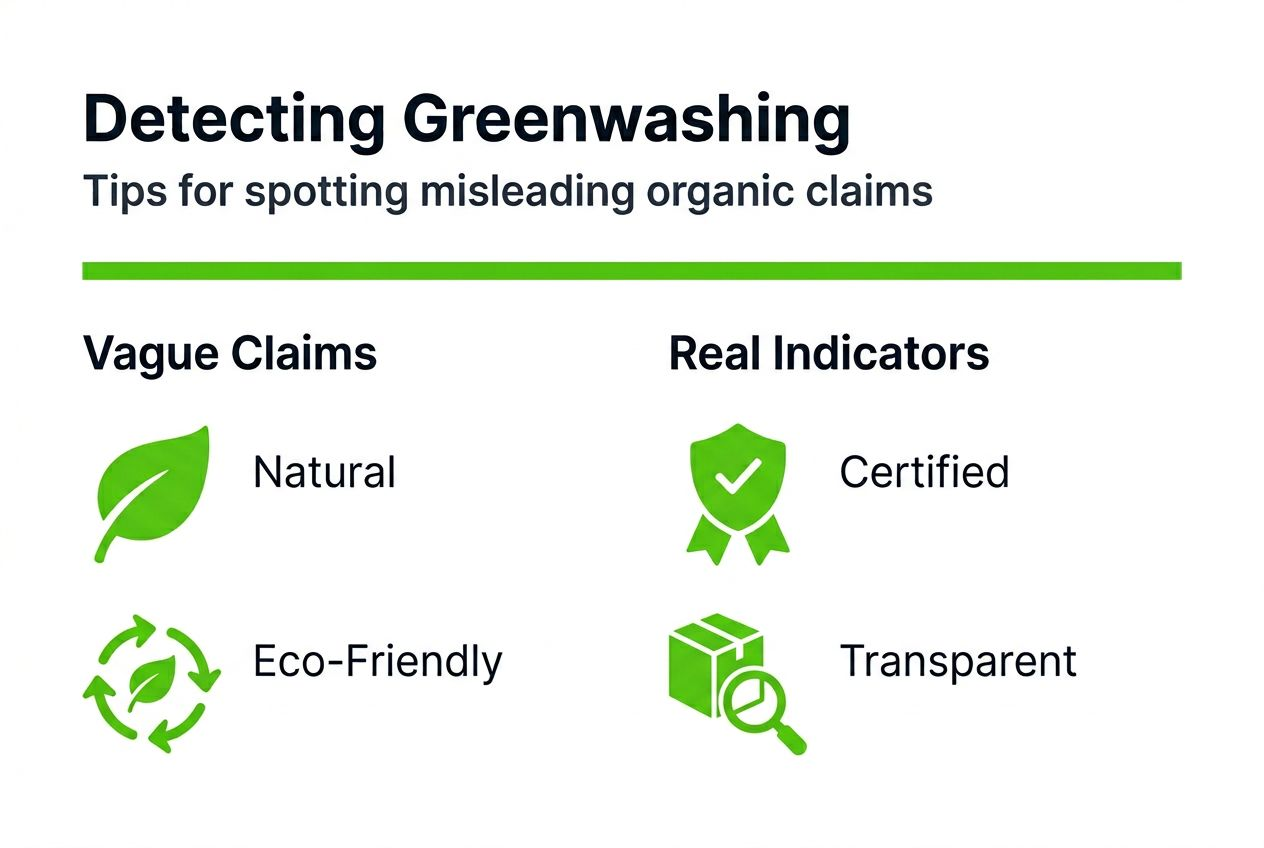
Scrutinise specific terminology used in marketing copy and packaging. Greenwashing often uses vague terms like ‘natural’ or ‘eco-friendly’ without substantive evidence or regulatory backing.
-
Locate certification logos and verify their legitimacy by checking registry numbers against official databases. Genuine certifications include traceable verification codes.
-
Examine ingredient percentages and origins. Authentic organic products specify exact percentages of certified organic ingredients and their geographical sources.
-
Research company practices beyond the specific product. Visit the brand website to assess overall sustainability commitment rather than isolated eco-friendly initiatives.
-
Compare claims against scientific possibility. If sustainability promises seem unrealistically comprehensive or absolute, investigate further for substantiation.
-
Check for third-party verification. Independent testing or certification provides more credibility than self-reported environmental achievements.
Understanding the difference between meaningless buzzwords and credible indicators helps you navigate confusing product labels effectively:
| Vague Claim | Credible Indicator |
|---|---|
| ‘Natural ingredients’ | ‘USDA Organic Certified with 95% organic ingredients’ |
| ‘Eco-friendly packaging’ | ‘FSC Certified recyclable materials with recycling instructions’ |
| ‘Sustainably sourced’ | ‘Rainforest Alliance Certified with supply chain transparency’ |
| ‘Chemical-free’ (impossible) | ‘No synthetic pesticides, verified by Soil Association’ |
| ‘Green formula’ | ‘EcoCert certified with ingredient percentage disclosure’ |
Over a fifth of product descriptions contained at least one potentially misleading green claim, demonstrating how widespread deceptive marketing practices have become. This statistic highlights why verification skills prove essential rather than optional for health-conscious consumers.
Critically evaluating specific environmental claims requires understanding technical definitions. Terms like ‘biodegradable’ and ‘compostable’ carry precise meanings under certification standards but often appear without context or timeframes. Genuinely biodegradable products break down within specific periods under defined conditions, certified by bodies like TÜV Austria or BPI. Marketing that uses these terms without supporting certification or condition specifications raises immediate red flags.
Pro Tip: Download certification verification apps like Think Dirty or Good On You before shopping trips. These tools instantly scan products and reveal certification authenticity, ingredient concerns, and brand sustainability ratings, transforming your smartphone into a greenwashing detector.
Investigating company practices reveals whether environmental commitment extends throughout operations or remains confined to marketing departments. Review corporate websites for detailed sustainability reports with measurable outcomes rather than aspirational statements. Brands genuinely committed to environmental impact of food organic principles publish transparent data about carbon footprints, water usage, and waste reduction with annual progress updates. Those practising greenwashing offer vague commitments without measurable targets or accountability mechanisms.
Your examination should encompass the entire product lifecycle when assessing sustainable food choices guide recommendations. Consider ingredient sourcing, manufacturing processes, packaging materials, transportation methods, and end-of-life disposal. Companies highlighting only one sustainable aspect whilst ignoring others typically employ greenwashing tactics rather than comprehensive environmental responsibility.
Common greenwashing pitfalls and how to avoid them
Even informed consumers fall victim to sophisticated greenwashing techniques designed to exploit trust and environmental concern. Recognising these common traps protects you from wasting money on products that fail to deliver promised sustainability benefits.
Typical greenwashing practices in packaging and advertising include:
- Natural imagery like leaves, forests, or water droplets suggesting environmental benefits without substantiation
- Green colour schemes creating subconscious associations with eco-friendliness regardless of actual practices
- Ambiguous percentage claims such as ‘50% more sustainable’ without baseline comparisons or measurement criteria
- Hidden trade-offs emphasising one eco-friendly attribute whilst concealing significant environmental harms elsewhere
- Fabricated certifications using official-looking logos without legitimate third-party verification
- Irrelevant claims highlighting compliance with legal requirements as though they represent voluntary environmental leadership
Trusting vague ‘green’ language without concrete proof exposes you to financial and health risks. Products marketed with sustainability buzzwords often command premium prices despite lacking genuine organic credentials or clean ingredients. This pricing strategy exploits consumer goodwill whilst funding companies that prioritise marketing over meaningful environmental action.
A significant percentage of ‘green’ claims are misleading, exaggerating sustainability achievements to capture market share from authentically responsible competitors. This deception harms both consumers and genuinely sustainable businesses that invest substantially in environmental practices. When greenwashing succeeds, it reduces competitive pressure for meaningful change whilst eroding trust in legitimate sustainability claims.
Companies frequently emphasise isolated eco-friendly actions to distract from core business practices that contradict environmental responsibility. A brand might publicise recyclable packaging whilst sourcing ingredients through environmentally destructive supply chains. Another might highlight reduced water usage in one facility whilst operating multiple high-pollution manufacturing sites. These selective disclosures create misleading impressions of overall sustainability.
“Greenwashing doesn’t just deceive consumers; it undermines the entire market for genuinely sustainable products. When shoppers cannot distinguish authentic environmental commitment from marketing spin, trust erodes across the sector, making it harder for responsible companies to communicate their genuine achievements and ultimately slowing progress towards meaningful sustainability.”
Avoiding these pitfalls requires consistent application of verification methods rather than accepting convenient narratives. Question why specific information appears prominently whilst other details remain obscure. Investigate whether environmental claims address your primary concerns about health, ingredient purity, and genuine sustainability. Cross-reference multiple information sources rather than relying solely on brand-provided materials.
Recognise that authentic eco friendly packaging options represent one component of comprehensive sustainability rather than complete environmental solutions. Companies genuinely committed to reducing environmental impact address multiple operational areas simultaneously, publishing transparent progress reports with specific metrics. Those practising greenwashing concentrate marketing efforts on visible elements like packaging whilst avoiding discussion of ingredient sourcing, manufacturing processes, or supply chain practices.
Develop healthy scepticism towards marketing language that sounds impressive but lacks specific, verifiable details. Learn to spot greenwashing by demanding concrete evidence for environmental claims, checking certification authenticity, and researching company practices beyond individual products. Your consistent application of these standards encourages brands to improve actual sustainability rather than merely enhancing environmental marketing.
Discover genuinely organic and natural products at Nature’s Soul Shop
Navigating greenwashing becomes significantly easier when you shop with brands committed to transparency and verified organic standards. Nature’s Soul Shop specialises in authentic organic and natural products across all wellness categories, from fruits and vegetables to home care and skin care, ensuring clean ingredients without deceptive marketing.
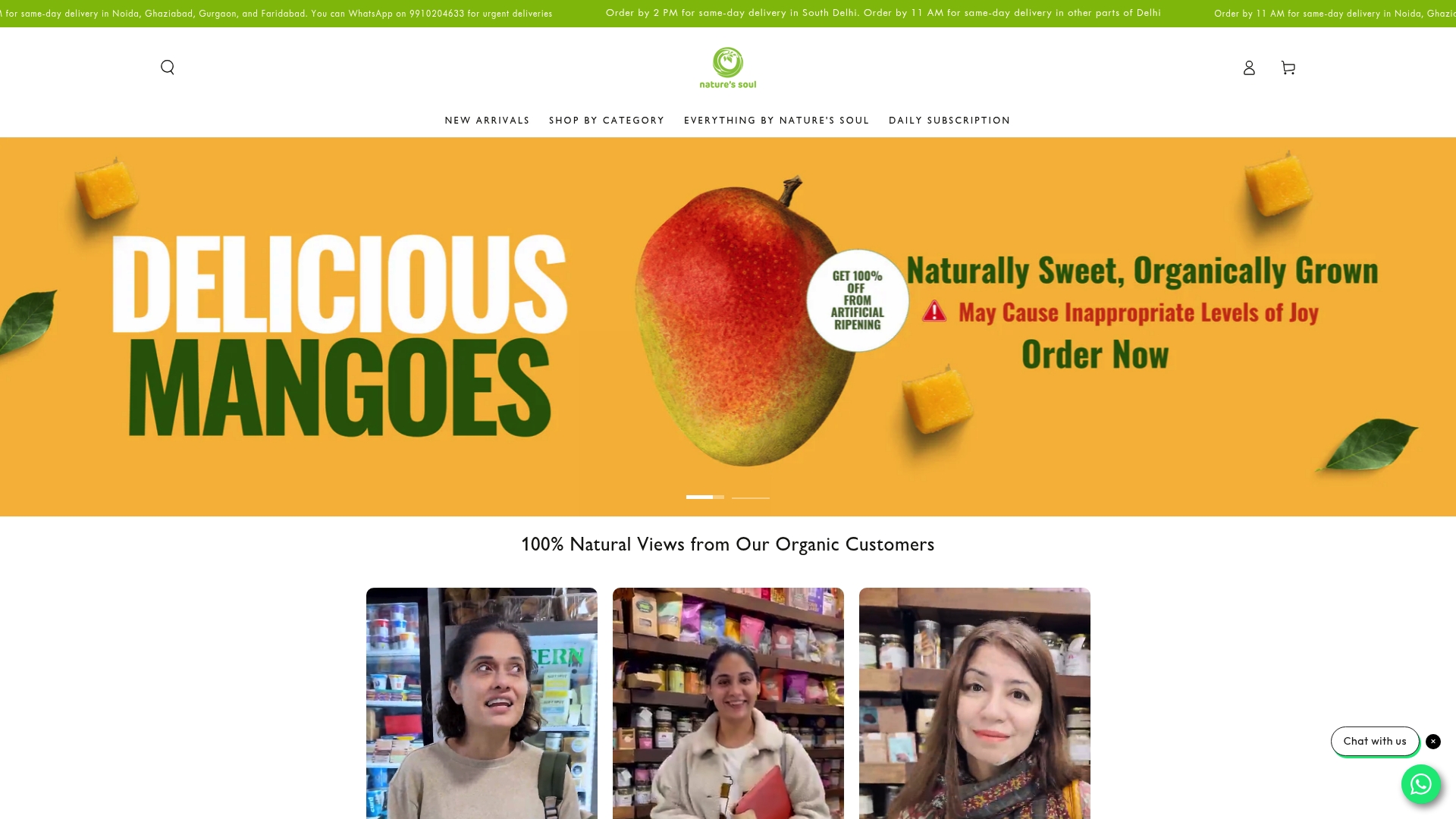
Every product at Nature’s Soul Shop undergoes rigorous verification to confirm genuine organic credentials and sustainable sourcing. The curated selection includes premium vegan and gluten-free staples like Namak Para made from jowar, offering plant-based nutrition without compromise. For those seeking versatile meal solutions, red lentil gluten-free pasta delivers protein-rich alternatives crafted from pure ingredients. Explore the complete range of genuinely sustainable products that align with your health-conscious values and environmental priorities.
Frequently asked questions
What are the most common misleading greenwashing terms?
Terms like ‘natural’, ‘eco-friendly’, ‘green’, and ‘chemical-free’ frequently appear without regulatory definition or verification. Companies exploit these vague descriptors because they lack enforceable standards, allowing liberal application regardless of actual environmental impact. Always demand specific certifications and measurable claims rather than accepting ambiguous terminology.
How can I verify if an organic label is legitimate?
Consumers should look for specific certifications from reputable organisations like USDA Organic, which maintain strict standards and verification processes. Check the certification logo for registry numbers, then cross-reference these codes on official certifier websites or dedicated verification apps. Legitimate certifications include traceable documentation that confirms how to identify organic products correctly through third-party inspection.
What should I do if I suspect a product is greenwashed?
Greenwashing misleads the public to believe that a company is doing more to protect the environment than actual practices support. Contact consumer protection agencies or certification bodies with specific concerns about deceptive claims. Share your findings with the brand directly, requesting detailed evidence for environmental assertions. Report suspected violations to relevant regulatory authorities to help protect other consumers and encourage marketplace accountability.
Do higher prices guarantee authentic organic products?
Premium pricing provides no assurance of genuine organic credentials or sustainable practices. Greenwashing often exploits consumers’ willingness to pay more for environmental benefits by charging elevated prices without delivering substantive sustainability. Always verify certifications and research company practices rather than assuming price correlates with authenticity. Genuine organic products may cost more due to sustainable farming practices, but price alone never confirms legitimacy.
Recommended
- How to Identify Organic Products Effortlessly – naturessoulshop
- Switching to Organic: Step-by-Step Guide for Healthier Living – naturessoulshop
- Complete Guide to Organic vs Conventional Products – naturessoulshop
- Food Labelling India 2026: 70% Healthier Choices Guide – naturessoulshop
- Top 8 Primallypure.com Alternatives in 2026 for Health-conscious Mothe – Moose’s Tallow


