


TL;DR:
- Check produce using sensory signs like weight, aroma, and appearance rather than just color.
- Verify organic produce through trusted certifications like NPOP, Jaivik Bharat, and look for authenticity markers.
- Prioritize buying organic for high-residue items like leafy greens, apples, and tomatoes, especially in India.
Picking up a gleaming apple or a perfectly green bunch of spinach feels reassuring, but appearances can mislead even experienced shoppers. Many households in India spend money on produce that wilts within a day, or unknowingly buy food laden with pesticide residues. Organic labels add another layer of confusion, with greenwashing rampant across supermarkets and local mandis alike. Whether you are a first-time parent trying to feed your family cleanly, someone following a gluten-free lifestyle, or simply a mindful eater, this guide walks you through exactly how to spot genuinely fresh, safe, and nourishing produce every single time you shop.
Table of Contents
- Know what to check before buying produce
- Recognise genuine organic and safe produce in India
- Make smarter choices: Dirty Dozen, Clean Fifteen, and dietary needs
- Shop fresh: seasonal, local, and sustainable habits
- Our perspective: What most guides miss about picking produce in India
- Find fresh, organic produce and healthy essentials
- Frequently asked questions
Key Takeaways
| Point | Details |
|---|---|
| Sensory checks are key | Colour, aroma, firmness, and weight are the most reliable signs of truly fresh produce. |
| Prioritise organic wisely | Buy organic for high-risk produce like leafy greens and apples, and check for authentic Indian certifications. |
| Go seasonal and local | Choosing local, in-season fruits and vegetables boosts nutrients and freshness while reducing waste. |
| All fresh produce fits most diets | Naturally gluten-free and plant-based, all fresh produce suits vegan and gluten-free lifestyles—just avoid additives in processed items. |
| Trust signs, not shine | Natural imperfections and brief shelf life are good indicators—don’t be fooled by unnaturally uniform appearances. |
Know what to check before buying produce
Most of us rely on colour and shine when checking produce quality, but those are often the least reliable signals. Wax coatings make apples gleam. Cold storage can preserve the look of fruit for weeks while nutrients quietly decline inside. True freshness lives in the details.
Sensory checks are your most powerful tool. According to a ripeness guide from The Old Farmer’s Almanac, genuinely ripe produce should feel heavy for its size, carry a natural aroma, and show vibrant, even colour without soft patches or wrinkles. Leaves should be crisp, not limp. Fruit should yield slightly under gentle pressure without collapsing. Avoid anything oversized, as rapid growth often dilutes flavour and nutrition.
Here is a quick sensory checklist to carry with you:
- Colour: Rich and even, not faded or patchy
- Texture: Firm with a slight give for fruit; crisp and taut for leafy greens
- Aroma: Fresh and distinct, not sour or fermented
- Weight: Heavier than it looks signals high water content and freshness
- Surface: No bruises, mould spots, or excessive wrinkles
- Leaves and stems: Green and upright, not yellowing or drooping
Timing matters too. Early morning is when most vendors receive fresh stock, making it the best window to shop at local markets. Produce that has sat in the sun through the afternoon has already lost moisture and some nutritional value.
| Produce type | What to check | Red flag |
|---|---|---|
| Leafy greens | Crisp, deep green leaves | Yellow edges, sliminess |
| Tomatoes | Firm, heavy, even red | Soft spots, wrinkled skin |
| Mangoes | Fruity aroma near stem | Fermented smell, black patches |
| Root vegetables | Smooth skin, solid feel | Hollow sound when tapped |
| Citrus fruits | Heavy for size, tight skin | Spongy or very light feel |
Peak-season produce offers up to 30% more nutrients compared to out-of-season alternatives, making seasonal shopping a genuine health decision, not just a preference.

Pro Tip: For fruit, check the field spot, the patch where the fruit rested on the ground. A creamy yellow or orange field spot on a melon or mango signals it ripened naturally. A stark white patch often means it was harvested too early.
Recognise genuine organic and safe produce in India
Once you know what freshness looks like, it is just as important to confirm your food is truly organic. India has a specific certification ecosystem, and understanding it protects you from misleading claims.
The most credible certifications to look for are NPOP (National Programme for Organic Production), the Jaivik Bharat logo, India Organic, and FSSAI standards. As outlined in organic certification guidance, each of these carries a distinct verification process. NPOP is the gold standard for export-grade organic produce. Jaivik Bharat is the government-backed consumer label that links directly to a traceable database. PGS-India (Participatory Guarantee System) applies to smaller, community-level organic farmers and is equally valid.
For identifying organic products in practice, check these signals:
- Certification logo: NPOP, Jaivik Bharat, or India Organic printed clearly on the label
- Batch or lot number: Traceable to a registered farm
- Short shelf life: Genuine organic produce spoils faster due to minimal processing
- Natural imperfections: Irregular shapes, slight colour variation, small blemishes are normal
- Sourcing transparency: Vendor or brand should be able to name the farm or region
| Certification | Governing body | Best for |
|---|---|---|
| NPOP | APEDA, Ministry of Commerce | Export-grade organic products |
| Jaivik Bharat | Ministry of Agriculture | Retail consumer verification |
| PGS-India | Ministry of Agriculture | Local and small-farm produce |
| FSSAI Organic | FSSAI | Packaged organic food items |
Verifying NPOP certification is straightforward: the Jaivik Bharat portal allows you to scan QR codes on packaging and confirm authenticity instantly. This takes under a minute and eliminates guesswork entirely.
Pro Tip: If a vendor claims their produce is organic but cannot show any certification or name their supplier, treat the claim with scepticism. Genuine organic farmers are proud of their credentials and happy to share them.
Make smarter choices: Dirty Dozen, Clean Fifteen, and dietary needs
With an understanding of organic standards, you can also use pesticide risk lists to decide where your organic budget matters most.
The Environmental Working Group publishes an annual guide, and their 2026 Shopper’s Guide found that 96% of Dirty Dozen samples carried pesticide residues, while 60% of Clean Fifteen samples had none at all. In the Indian context, leafy greens, apples, and tomatoes consistently rank as high-risk items.
Prioritise organic for high-residue produce. If your budget is limited, spend it on the items most likely to carry pesticide residues. Conventional versions of low-risk produce are generally safe.
Here is how to use this practically:
Buy organic when possible:
- Spinach, methi, and other leafy greens
- Apples and pears
- Grapes and strawberries
- Tomatoes and capsicum
- Cucumbers and courgettes
Safer to buy conventional:
- Avocados, onions, and sweet corn
- Pineapples, papayas, and mangoes (thick-skinned)
- Cabbage and asparagus
- Frozen sweet peas
For those avoiding pesticides due to health conditions or dietary choices, this list is a practical starting point. Families with young children should be especially careful with leafy greens and thin-skinned fruits, as children’s bodies are more sensitive to residue exposure.
All fresh fruits and vegetables are naturally gluten-free and plant-based, which is reassuring for those on restricted diets. However, processed or frozen versions may contain additives, modified starch, or cross-contamination risks. Always read ingredient labels on anything that has been cut, seasoned, or pre-packaged. A gluten-free produce list can help you identify which Clean Fifteen items are also low-risk for your dietary needs.
Pro Tip: Focus your organic budget on the top five high-residue items first. Once that becomes habit, gradually expand your organic basket as your budget allows.
Shop fresh: seasonal, local, and sustainable habits
Optimising your shopping approach makes healthy choices easier, more sustainable, and genuinely better for both you and the planet.
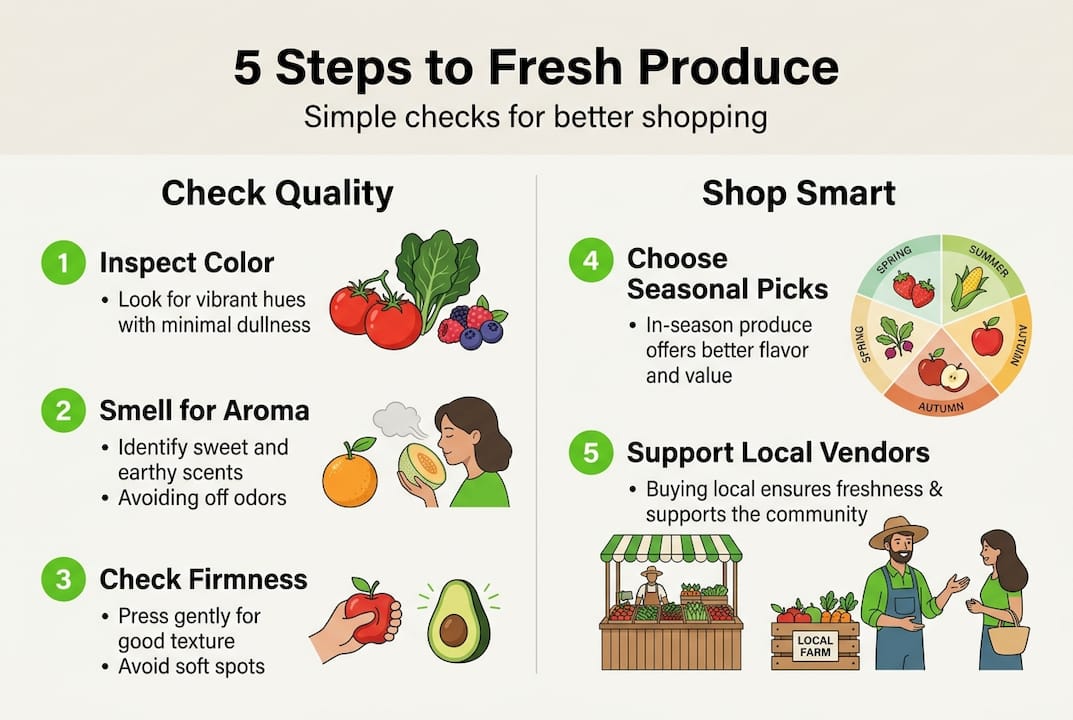
Seasonal produce is fresher by default. It has travelled less distance, spent less time in cold storage, and was harvested closer to peak ripeness. Local, in-season produce can contain up to 30% more nutrients than produce that has been shipped long distances or stored for extended periods. In India, this means eating raw mangoes in summer, root vegetables in winter, and leafy greens during the cooler months.
Here is how to build a smarter shopping routine:
- Research your region’s seasonal calendar before you shop. A quick search for your state’s harvest calendar tells you what is at peak quality right now.
- Visit farmers markets or trusted local vendors early in the morning for the freshest stock.
- Buy smaller quantities more frequently rather than stocking up for the week. This reduces spoilage and ensures you are always eating at peak freshness.
- Ask your vendor directly about harvest dates and storage conditions. A good vendor will always know.
- Mix online and offline shopping strategically. Use trusted online platforms for certified organic dry goods and visit local markets for fresh produce.
Small habits around reducing food waste also stretch your budget further. Buying only what you will use in three to four days keeps your refrigerator full of genuinely fresh food rather than slowly declining produce.
- Store leafy greens wrapped in a damp cloth in the fridge
- Keep tomatoes and mangoes at room temperature until ripe
- Use root vegetables within a week of purchase
- Freeze excess herbs immediately rather than letting them wilt
Pro Tip: Always ask your vendor when the produce arrived. If they cannot tell you, that is a signal to shop elsewhere. Freshness transparency is a mark of a trustworthy seller.
Our perspective: What most guides miss about picking produce in India
Most produce guides are written for Western supermarkets with consistent labelling and refrigerated supply chains. India is different, and that difference is worth celebrating rather than working around.
Here is what we have observed: the most nourishing produce in India often looks the least impressive on the surface. An organically grown brinjal may be smaller and slightly uneven. A naturally ripened mango may have a few dark spots. As noted by organic farming experts, irregular shapes, minor blemishes, and shorter shelf life are signs of minimal processing, not poor quality. The perfectly uniform fruit you see in supermarkets has often been sorted, waxed, and cold-stored for weeks.
Certifications matter, but vendor trust is equally important. Many small Indian farmers practise organic methods without formal certification because the process is costly and time-consuming. Building a relationship with your local farmer or trusted vendor gives you access to genuinely clean food that no label can fully capture. Ask questions. Visit farms when you can. That connection is part of what makes food nourishing.
Technology helps too. Scanning Jaivik Bharat QR codes takes seconds and provides real traceability. But do not let app verification replace your senses. Smell the produce. Feel its weight. Trust what your instincts tell you after a few weeks of mindful shopping. The insights on Indian organic labels available today make this easier than ever, but the real skill is combining knowledge with intuition.
Find fresh, organic produce and healthy essentials
You now have the tools to shop with real confidence, from reading sensory signals to decoding Indian organic certifications and prioritising your pesticide-risk budget wisely.
At Nature’s Soul, we make this easier by bringing certified organic and natural products directly to your door across India. Whether you are looking for organic food online, exploring our healthy living range, or stocking up on gluten-free snacks that fit your lifestyle, every product we carry is chosen with clean ingredients and transparent sourcing in mind. From fresh produce to dairy, vegan options, and home care, we support every part of your mindful living journey.
Frequently asked questions
What are the signs of truly fresh fruits and vegetables?
Look for vibrant colour, firm texture, a fresh aroma, and weight that feels heavy for the size. Avoid anything with bruises, mould, or a sour smell.
How do I confirm if produce is really organic in India?
Check for NPOP, Jaivik Bharat, or India Organic logos on the label, and look for a short shelf life and natural surface imperfections as supporting signs.
Which produce in India should always be bought organic?
Leafy greens, apples, and tomatoes are high pesticide-risk items in India and are best purchased organic whenever possible, along with grapes and strawberries.
Are all fruits and vegetables safe for gluten-free or vegan diets?
Yes, all fresh fruits and vegetables are naturally gluten-free and plant-based. Always check labels on processed or pre-packaged versions for hidden additives.
Does buying local or seasonal produce really make a difference?
Local, in-season produce contains up to 30% more nutrients than out-of-season alternatives and supports fresher, more sustainable shopping habits.


