


Every parent faces that moment when family nutrition choices start to matter more than ever, especially in a diverse city like Delhi NCR. Embracing a plant-based diet might sound appealing for its health and environmental benefits, but sorting fact from fiction is not always simple. Understanding the spectrum of plant-based eating patterns helps families make confident choices, manage potential nutritional risks, and support overall wellness without unnecessary confusion.
Table of Contents
- Defining Plant Based Diets And Common Myths
- Major Types Of Plant Based Eating Patterns
- Key Nutritional Risks And Deficiencies
- Impact On Children And Family Wellness
- Processed Plant Foods And Safety Issues
- Practical Solutions And Safer Alternatives
Key Takeaways
| Point | Details |
|---|---|
| Understanding Plant-Based Diets | Plant-based diets encompass a range of eating styles that prioritise plant-derived foods, with some allowing for animal products. |
| Nutritional Benefits and Risks | Well-planned plant-based diets can reduce the risks of various diseases but may require attention to specific nutrients like Vitamin B12 and Iron. |
| Importance of Meal Planning | Transitioning to a plant-based diet should involve gradual changes and strategic meal planning to ensure nutritional adequacy. |
| Processed Foods Caution | Not all processed plant foods are healthy; consumers should prioritise whole, minimally processed options and scrutinise labels for nutritional content. |
Defining Plant Based Diets and Common Myths
A plant-based diet represents a nutritional approach that prioritises foods derived primarily from plants, including fruits, vegetables, grains, legumes, nuts, and seeds. Global dietary definitions reveal surprising diversity in what constitutes this dietary pattern.
Contrary to popular misconception, plant-based diets are not exclusively vegan or vegetarian. Instead, they represent a spectrum of eating styles that emphasise plant-derived nutrition while potentially allowing small quantities of animal products. These diets can range from strict vegetarianism to more flexible approaches like Mediterranean or flexitarian eating patterns.
Some common myths about plant-based diets include:
- Plant-based diets are expensive and difficult to maintain
- These diets lack essential proteins and nutrients
- One must completely eliminate all animal products to be considered plant-based
- Plant-based eating is socially restrictive and complicated
Research consistently demonstrates that well-planned plant-based diets can offer substantial health benefits. Comprehensive nutritional reviews indicate these dietary approaches are associated with reduced risks of type 2 diabetes, cardiovascular disease, and certain cancers.
The key is understanding that plant-based eating is not about strict elimination, but thoughtful inclusion. Individuals can design plant-forward meals that are nutritionally complete, delicious, and adaptable to personal preferences and lifestyle requirements.
Pro tip: Start transitioning to a plant-based diet gradually by introducing one or two meat-free meals per week, focusing on nutrient-dense whole foods that provide balanced nutrition.
Major Types of Plant Based Eating Patterns
Plant-based eating encompasses a diverse range of dietary patterns that vary significantly in their approach to nutrition and animal product consumption. Comprehensive dietary research reveals multiple nuanced approaches to plant-forward nutrition.
The primary categories of plant-based eating patterns include:
- Vegan Diet: Complete elimination of all animal products
- Lacto-Ovo Vegetarian: Includes dairy and egg products
- Pescatarian: Includes fish alongside plant foods
- Flexitarian: Primarily plant-based with occasional meat consumption
- Mediterranean Diet: Plant-focused with limited animal protein
- Planetary Health Diet: Emphasises environmental sustainability
Each dietary approach offers unique nutritional profiles and potential health benefits. Vegetarian diet classifications demonstrate that plant-based eating is not a one-size-fits-all strategy, but a flexible nutritional framework adaptable to individual preferences and health requirements.
Understanding these dietary patterns helps individuals make informed choices about their nutritional intake. The key is recognising that plant-based eating exists on a spectrum, allowing people to find an approach that aligns with their personal health goals, ethical considerations, and lifestyle constraints.
Here is a comparison of major plant-based dietary patterns:
| Diet Type | Animal Products Allowed | Key Nutritional Focus | Level of Restriction |
|---|---|---|---|
| Vegan | None | Plant proteins, B12 sources | Most restrictive |
| Lacto-Ovo Vegetarian | Dairy and eggs | Calcium, vitamin D | Moderate |
| Pescatarian | Fish, possibly dairy/eggs | Omega-3s, iodine | Moderate |
| Flexitarian | Occasional meat/fish | Balanced, adaptable | Least restrictive |
| Mediterranean | Limited animal protein, mostly fish | Healthy fats, whole grains | Flexible, food diversity |
| Planetary Health | Minimal animal products, focus on sustainability | Environmental impact | Variable, based on guidelines |
Pro tip: Consult a registered dietitian to develop a personalised plant-based eating plan that meets your specific nutritional needs and health objectives.
Key Nutritional Risks and Deficiencies
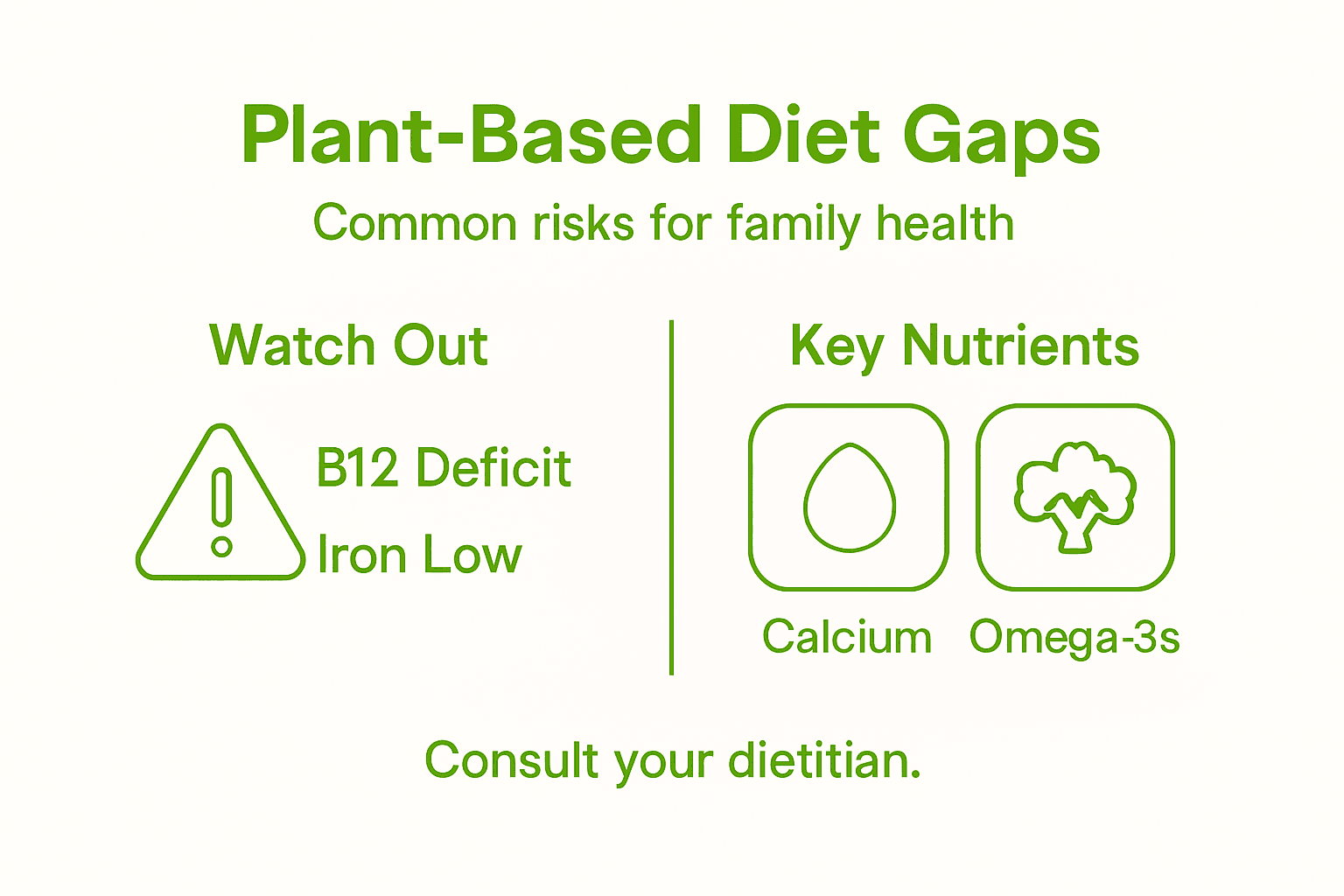
Plant-based diets offer numerous health benefits, but they also present potential nutritional challenges that require careful planning and awareness. Long-term dietary studies reveal specific nutrient deficiency risks that demand attention.
The primary nutritional risks associated with plant-based diets include:
- Vitamin B12: Critical for neurological function, primarily found in animal products
- Calcium: Essential for bone health, with lower absorption from plant sources
- Vitamin D: Important for immune function and bone density
- Iodine: Crucial for thyroid function and metabolism
- Omega-3 Fatty Acids: Necessary for cardiovascular and brain health
- Iron: Required for blood cell production, with reduced bioavailability in plant sources
Clinical research highlights the potential severity of these nutritional gaps, particularly emphasising the neurological risks associated with vitamin B12 deficiency. Vegetarians and vegans must be particularly vigilant about supplementation and strategic food choices to mitigate these potential health risks.
Maintaining a balanced plant-based diet requires comprehensive nutritional knowledge. This involves understanding nutrient bioavailability, incorporating fortified foods, considering targeted supplementation, and potentially working with a registered dietitian to ensure complete nutritional coverage.
Pro tip: Conduct regular blood tests to monitor key nutrient levels and consult a healthcare professional about personalised supplementation strategies for your specific dietary pattern.
To help identify and address nutrient deficiencies, consider this quick reference:
| At-Risk Nutrient | Why It Matters | Common Plant Sources | Supplement Required? |
|---|---|---|---|
| Vitamin B12 | Nerve and blood health | Fortified cereals, nutritional yeast | Often necessary |
| Iron | Oxygen transport, energy | Lentils, beans, spinach | Sometimes beneficial |
| Calcium | Bone strength | Tofu, almonds, leafy greens | Depends on intake |
| Vitamin D | Bone and immune health | Fortified milks, mushrooms | Often necessary |
| Omega-3 Fatty Acids | Heart and brain function | Flaxseed, chia, walnuts | Usually beneficial |
| Iodine | Thyroid function | Seaweed, iodised salt | Sometimes beneficial |
Impact on Children and Family Wellness
Long-term dietary studies reveal complex implications of plant-based diets for children’s health and family wellness, presenting both promising benefits and potential nutritional challenges.
Key considerations for families adopting plant-based nutrition include:
- Growth and Development: Ensuring adequate protein, calcium, and micronutrient intake
- Nutritional Monitoring: Regular health check-ups and blood tests
- Supplementation: Strategic use of vitamins and minerals
- Dietary Diversity: Incorporating varied protein and nutrient sources
- Educational Support: Teaching children about balanced nutrition
Parents must be particularly attentive to potential nutrient gaps that could impact children’s bone density, cognitive development, and overall growth. Careful meal planning, fortified food choices, and professional nutritional guidance become crucial in maintaining optimal health.
Transitioning a family to a plant-based diet requires comprehensive research, professional consultation, and a nuanced understanding of individual nutritional needs. Children’s unique physiological requirements demand personalised dietary strategies that balance plant-based principles with complete nutritional coverage.
Pro tip: Consult a paediatric nutritionist specialising in plant-based diets to develop a tailored nutrition plan that supports your children’s specific developmental requirements.
Processed Plant Foods and Safety Issues
Ultra-processed food research reveals critical insights into the complex landscape of plant-based processed foods, challenging assumptions about their inherent health benefits.
Key safety considerations for processed plant foods include:
- Nutritional Profile: Evaluating actual nutrient content
- Additive Composition: Understanding chemical ingredients
- Processing Methods: Assessing potential nutrient degradation
- Preservative Levels: Monitoring potential health impacts
- Sodium and Sugar Content: Tracking hidden unhealthy components
While plant-based diets offer numerous health advantages, processed plant foods can introduce significant nutritional risks. Comprehensive food safety analyses demonstrate that not all plant-based products are inherently healthy, with many ultra-processed options containing excessive sugars, fats, and artificial additives.

Consumers must develop critical skills in reading nutritional labels, understanding processing techniques, and distinguishing between minimally processed whole foods and heavily manufactured plant-based products. This discernment becomes crucial in maintaining the intended health benefits of a plant-based dietary approach.
Pro tip: Prioritise whole, minimally processed plant foods and carefully examine ingredient lists to avoid excessive additives and hidden nutritional pitfalls.
Practical Solutions and Safer Alternatives
Novel plant-based alternatives represent a critical pathway towards developing more nutritionally robust plant-based dietary options that balance health and sustainability.
Key strategies for safer plant-based nutrition include:
- Whole Food Prioritisation: Focus on minimally processed plant ingredients
- Nutrient Fortification: Select products enriched with essential vitamins and minerals
- Careful Label Reading: Understand ingredient compositions and nutritional profiles
- Supplementation: Consider targeted vitamin and mineral supplements
- Diverse Protein Sources: Incorporate varied plant protein options
Consumers must become discerning in their food choices, recognising that not all plant-based products are inherently healthy. Food labelling guidance emphasises the importance of understanding nutritional content and making informed dietary decisions.
Transitioning to a healthier plant-based diet requires a strategic approach that balances nutritional needs, taste preferences, and overall wellness. This means selecting whole foods, understanding processing techniques, and being willing to experiment with diverse, nutrient-rich alternatives.
Pro tip: Work with a registered nutritionist to develop a personalised plant-based meal plan that ensures comprehensive nutritional coverage and meets your individual health requirements.
Support Your Family’s Health with Confident Plant-Based Choices
Transitioning to a plant-based diet comes with challenges like ensuring adequate Vitamin B12, calcium, and Omega-3 intake for your family’s wellness. You deserve access to clean, organic, and natural products that help fill these nutritional gaps without compromise. At Nature’s Soul Shop, our carefully curated range includes fresh fruits and vegetables, vegan and gluten free options, and nourishing dairy and meat alternatives made from clean ingredients. Each product is selected to help you create balanced, nutrient-rich meals that support your loved ones’ growth and vitality.
Discover how easy and safe adopting plant-based eating can be. Take control of your family’s health today by exploring our selection at https://naturessoulshop.com. For expert guidance on choosing the right products to complement your lifestyle, visit our landing page and start building a personalised plan. Don’t wait to make your plant-based transition a nourishing success that safeguards the wellness of those you care about.
Frequently Asked Questions
What are the main nutritional risks of a plant-based diet for children?
The main nutritional risks for children on a plant-based diet include deficiencies in Vitamin B12, calcium, iron, and Vitamin D. Careful meal planning and potential supplementation are essential to ensure children receive all necessary nutrients for growth and development.
How can families ensure their plant-based diet is nutritionally complete?
Families can ensure a nutritionally complete plant-based diet by incorporating a variety of whole foods, monitoring nutrient intake, and considering fortified foods or supplements. Consulting a dietitian can also help develop a personalised meal plan.
Is it safe for children to follow a strict plant-based diet?
While it is possible for children to thrive on a strict plant-based diet, it requires careful planning to meet their unique nutritional needs. Regular monitoring of their growth, health check-ups, and potential supplementation are recommended to avoid nutritional deficiencies.
What are some common misconceptions about plant-based diets for families?
Common misconceptions include the belief that plant-based diets are not suitable for children or that they automatically lack essential nutrients. In reality, a well-planned plant-based diet can be healthy and nutritionally adequate for all family members, including children.
Recommended
- Benefits of Plant Protein for Family Wellness – naturessoulshop
- Plant-Based Diet and Environment – Real Benefits for Wellness – naturessoulshop
- Choosing Healthy Fats: Plant-Based Family Nutrition – naturessoulshop
- Plant-Based Diets: Wellness and Sustainability Explained – naturessoulshop
- The Ultimate Guide to Vegan Multivitamins: Finding Optimal Nutrition – Nutribliss Inc.
- Combatting Hair Loss on a Vegan Diet | MyHair


