


TL;DR:
- India’s diverse climate creates regional variations in harvest times, challenging a single produce calendar.
- Eating seasonal and organic produce boosts nutrition, reduces chemical exposure, and supports local farmers.
- Prioritizing local, fresh, and region-specific sourcing enhances produce quality and minimizes post-harvest loss.
Most families in India assume there’s one tidy seasonal produce chart that applies from Kashmir to Kanyakumari. There isn’t. With six distinct climate zones, two major cropping seasons, and regional microclimates that shift harvest windows by weeks, the idea of a single national produce calendar is more myth than reality. What’s ripe in Maharashtra may still be weeks away in Punjab. Understanding this nuance isn’t just academically interesting — it directly affects how nutritious your food is, how much you spend, and how lightly you tread on the planet.
Table of Contents
- How India’s seasons shape what you eat
- What’s in season when? Key fruits and vegetables explained
- Why seasonal and organic produce matters
- Shopping smart: How to use India’s seasonal produce calendar
- A fresh perspective: Why ‘local and seasonal’ isn’t as simple as it sounds
- Your next step: Embrace seasonal eating with Nature’s Soul
- Frequently asked questions
Key Takeaways
| Point | Details |
|---|---|
| Seasonality varies | India’s produce calendar shifts by climate and region, so always check what’s truly in season locally. |
| Eat with the seasons | Seasonal fruits and veg offer better taste, higher nutrition, and support local farmers. |
| Go organic for health | Organic and seasonal produce reduces exposure to chemicals and supports sustainability. |
| Smart buying matters | Use regional calendars, ask about origin, and plan meals around what’s freshest. |
How India’s seasons shape what you eat
To understand the Indian produce calendar, start with the foundational role of the country’s diverse seasons. India’s three produce seasons are Summer (March to July), Monsoon/Autumn (July to November), and Winter (November to March), each shaped by rainfall, temperature, and soil conditions that vary dramatically from state to state.
These seasons don’t just tell farmers when to plant. They dictate what reaches your market stall and how fresh it actually is by the time it gets there. A mango purchased in May in Mumbai is likely days from the orchard. The same variety sold in Delhi in June may have travelled further and spent time in a cold storage facility in between.
Regional variations play a significant role here. Northern apple orchards in Himachal Pradesh peak in August to October, considerably later than southern states where apple cultivation is minimal. Mango seasons differ too — Alphonso from Ratnagiri in Maharashtra peaks in April and May, while Dasheri from Uttar Pradesh comes into its own in June and July.
Seasonal produce peak periods at a glance:
| Season | Months | Key produce examples |
|---|---|---|
| Summer | March to July | Mango, Watermelon, Litchi, Jackfruit |
| Monsoon/Autumn | July to November | Custard Apple, Jamun, Pomegranate |
| Winter | November to March | Citrus fruits, Strawberries, Grapes, Apple |
| Year-round | All months | Banana, Guava, Papaya |
Cold storage has extended the ‘in-season’ window for many fruits, particularly apples and grapes. While this increases availability, it also means that produce labelled seasonal may have been harvested weeks or months earlier. Freshness and nutritional density are not guaranteed simply because a fruit is theoretically ‘in season’. When choosing fresh produce, it helps to ask about actual harvest dates, not just seasonal categories.
Pro Tip: When shopping at a local mandi or vendor, ask specifically where the produce was grown and when it was harvested — not just whether it is ‘in season’. A vendor who knows their supply chain will usually tell you.
What’s in season when? Key fruits and vegetables explained
Once you know the main seasons, it’s important to identify what’s actually available when you shop. The following breakdown gives you a working guide for everyday planning.
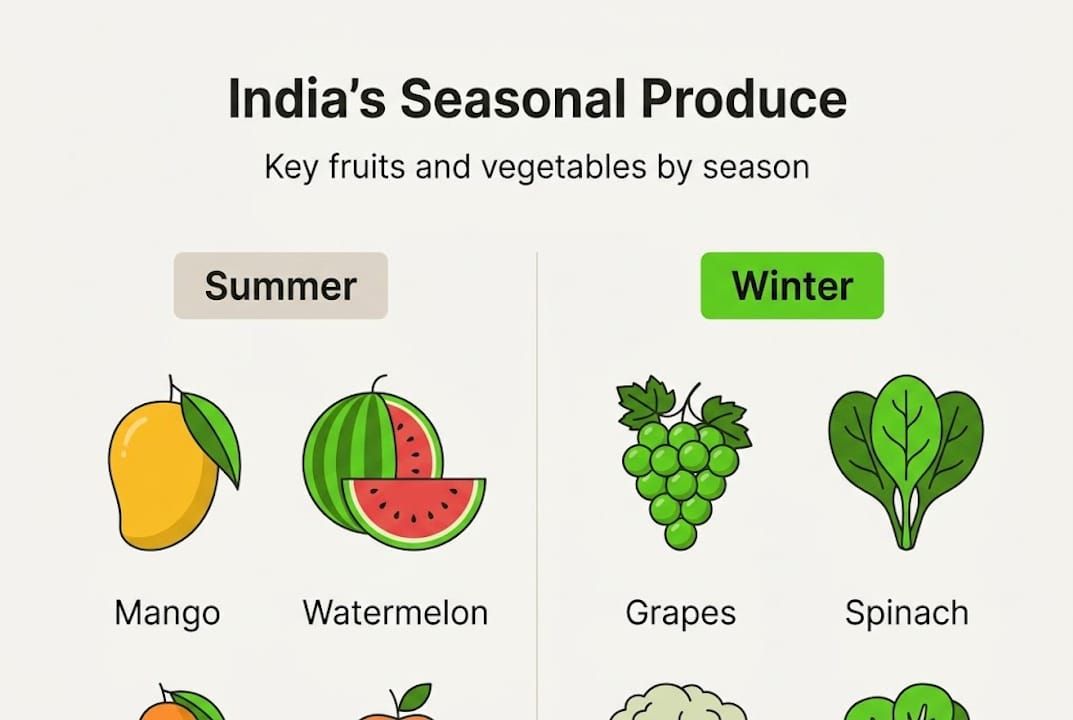
Summer fruits (March to July): Mango peaks in May to June, along with watermelon, muskmelon, litchi, and jackfruit. This is when organic watermelon is at its hydrating best, naturally sweet and rich in antioxidants.
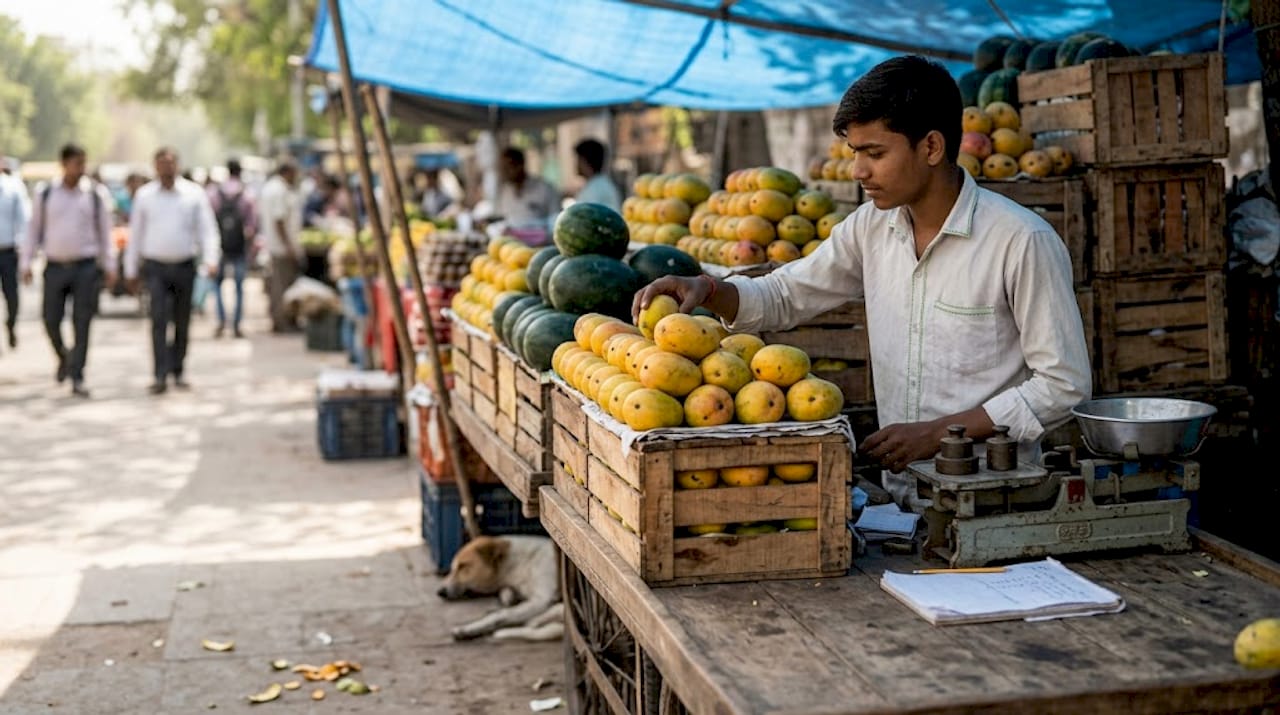
Monsoon/Autumn fruits (July to November): Custard apple, jamun, and pomegranate dominate this period. These are fruits that thrive in high humidity and warm nights, and they carry impressive nutritional profiles. If you’re curious about the wellness benefits of exotic fruits like custard apple and jamun, this is the season to explore them.
Winter fruits (November to March): Citrus fruits, grapes, and strawberries come into their own during cooler months. Oranges, sweet lime (mosambi), and kinnow are at peak flavour from December through February.
Comparison by season:
| Fruit | Peak season | Best region |
|---|---|---|
| Alphonso Mango | April to May | Maharashtra |
| Dasheri Mango | June to July | Uttar Pradesh |
| Watermelon | April to June | Rajasthan, AP |
| Pomegranate | October to November | Maharashtra |
| Strawberry | December to February | Maharashtra, HP |
| Kinnow | January to February | Punjab |
Staple seasonal vegetables by season:
- Summer (Zaid): Cucumber, bottle gourd, bitter gourd, ridge gourd, cluster beans
- Monsoon/Kharif: Lady’s finger, snake gourd, taro, yam
- Winter/Rabi: Spinach, fenugreek, mustard greens, peas, cauliflower, carrot
For those following seasonal eating in Delhi NCR, the Rabi season from November to March is particularly rich in leafy greens and root vegetables. Families who plan their weekly meals around these crops benefit from peak nutrition and far better value for money. Bananas, guavas, and papayas deserve a special mention — these three are available year-round and form a reliable nutritional backbone regardless of season.
Why seasonal and organic produce matters
Now that you know what’s in season, let’s explore why eating this way makes such a difference for you and your family.
India’s organic farming sector is growing meaningfully. The country now has 4 million hectares of certified organic farmland as of 2024, making it one of the largest in the world by area. This expansion directly benefits consumers by making clean, pesticide-free seasonal produce more accessible across urban and rural markets alike.
Three compelling reasons to eat seasonal and organic:
-
More nutrients: Produce picked at peak ripeness and consumed quickly retains higher levels of vitamins, minerals, and antioxidants. The nutritional boost of in-season eating is especially significant for children and older adults whose dietary needs are more sensitive.
-
Fewer chemicals: Organic seasonal produce is grown without synthetic pesticides or fertilisers. Choosing organic sweet lime or organic banana means you’re getting the fruit’s full benefit without residue concerns.
-
Supports local farmers and the environment: Buying seasonal produce from local or regional growers reduces food miles, supports livelihoods, and encourages biodiversity in farming.
India loses an estimated 30% of its horticultural produce to post-harvest damage and spoilage each year. Buying fresh, local, and in-season is one of the most direct ways consumers can reduce this waste while getting the most nutritious food possible.
Government schemes for organic farming under MIDH (Mission for Integrated Development of Horticulture) and the NHB (National Horticulture Board) are actively supporting farmers in adopting sustainable practices and improving cold chain infrastructure. This is genuinely good news for consumers who want to trust their food supply.
Pro Tip: To spot genuine organic seasonal produce in Indian markets, look for NPOP (National Programme for Organic Production) certification labels. Ask vendors for documentation if you’re buying in bulk — reputable sellers will have it readily available.
Shopping smart: How to use India’s seasonal produce calendar
Understanding the why is one thing — knowing how to buy better every week is key.
Kharif crops such as gourds and lady’s finger thrive during the monsoon season, while Rabi crops like spinach and peas flourish in winter. These crop cycles are shaped by rainfall and temperature, and they shift by two to four weeks depending on your local climate zone. A calendar from a national agriculture website may not match what’s actually arriving at your neighbourhood mandi this week.
Five steps to shop smarter with the seasonal calendar:
- Check a regional produce calendar rather than a generic national one. Your state’s agriculture department often publishes localised guides.
- Ask vendors about regional origin. Produce from closer farms is typically fresher and more nutritious.
- Read organic certification labels carefully. NPOP is the Indian standard; imported organics may carry different certifications.
- Join a CSA (Community Supported Agriculture) box service if available in your city. These programmes deliver locally sourced seasonal produce directly from farms.
- Plan meals weekly around the calendar, not the other way around. Selecting the freshest options at the start of the week and building recipes around them reduces waste dramatically.
Bananas and papayas are your safety net — always available, nutritious, and affordable when other seasonal produce is between cycles. For monsoon months, organic pomegranate from Maharashtra is a brilliant choice, packed with antioxidants and heart-supportive properties.
Pro Tip: Meal planning around the produce calendar doesn’t need to be complicated. Spend ten minutes each Sunday noting what’s in season locally, then build two to three core meals around those ingredients. Your nutrition improves, your grocery bill drops, and very little goes to waste.
A fresh perspective: Why ‘local and seasonal’ isn’t as simple as it sounds
Beyond the practicalities, let’s reflect on what seasonal eating really means in the Indian context.
Following a generic seasonal chart can quietly mislead you. A fruit listed as ‘in season’ nationally may have been grown 1,500 kilometres away, stored for three weeks, and transported across climatic zones before reaching your kitchen. By that point, it may be less nutritious than a well-managed year-round crop grown thirty kilometres from your home.
The uncomfortable truth is that ‘seasonal’ without ‘local’ is only half the picture. Distance and post-harvest time erode nutritional value faster than most people realise. A pomegranate harvested in Maharashtra and consumed in Delhi four weeks later is a very different food from one bought at a local farm in season.
We’d encourage you to reframe seasonal eating not as a calendar exercise but as a sourcing practice. Ask your vendor: when was this harvested, and where? That two-question habit will tell you more than any national chart. For those navigating local produce in urban India, the good news is that urban supply chains are improving, and genuinely local options are increasingly available if you know where to look. Mindful, region-aware eating is where the real benefits of seasonal produce are found.
Your next step: Embrace seasonal eating with Nature’s Soul
Ready to start eating smarter and more sustainably? Knowing which fruits and vegetables are in season is the first step. Acting on that knowledge with trusted, certified organic sources is what makes the real difference for your family’s health.

At Nature’s Soul Shop, we source organic and natural produce with clean ingredients and transparent supply chains — so you’re never left guessing about origin or quality. From seasonal fruits and vegetables to dairy, dry grocery, and beyond, our health-focused products are selected with your wellbeing in mind. Explore our Nature’s Soul Fresh range for locally sourced, seasonal picks delivered to your door — because eating well shouldn’t require a compromise.
Frequently asked questions
What are the main produce seasons in India?
India’s three produce seasons are Summer (March to July), Monsoon/Autumn (July to November), and Winter (November to March), though exact timings vary considerably by region and local climate.
Are there any fruits available year-round in India?
Yes. Banana, guava, and papaya are reliably available throughout the year across most regions in India, making them excellent nutritional staples regardless of season.
How does organic farming impact seasonal produce in India?
India’s 4 million hectares of certified organic farmland mean that clean, sustainably grown seasonal produce is more accessible than ever, particularly through specialist suppliers and urban delivery services.
Why do mango and apple seasons differ across India?
Regional climate differences mean northern mangoes and Himachal Pradesh apples ripen later than varieties cultivated in India’s southern and western states, sometimes by a full month or more.
How can I ensure my produce is really seasonal and local?
Ask sellers about harvest dates and farm origin, check for NPOP certification on organic labels, and use local crop timing guides that account for your state’s specific Kharif and Rabi cycles rather than relying on a generic national chart.


