


TL;DR:
- Longer transit times with fewer handling points generally ensure fresher, higher-quality produce.
- Handling, storage, and packaging significantly impact produce freshness, often more than delivery speed.
- Post-delivery storage choices at home are crucial for maintaining produce quality and shelf life.
Most people assume that a 10-minute delivery window guarantees the crispest, most nutritious produce on their kitchen counter. It does not. India wastes around 18% of its fruit and vegetable supply, and quick commerce models frequently deliver bruised or wilted items despite their speed. For health-conscious families across Delhi NCR, this gap between expectation and reality matters enormously. This guide explains what genuine freshness means, how different delivery models compare, and what you can do at home to protect the quality of every delivery that arrives at your door.
Table of Contents
- What does freshness mean in home delivered produce?
- Comparing delivery models: Quick commerce vs farm-direct services
- Best practices for maintaining produce freshness after delivery
- How to choose the right home delivery service for your family
- Our perspective on finding truly fresh home delivered produce
- Discover truly fresh organic produce with Nature’s Soul Shop
- Frequently asked questions
Key Takeaways
| Point | Details |
|---|---|
| Speed is not freshness | Ultra-fast delivery does not guarantee fresher produce and may raise bruising risks. |
| Farm-direct is best for organics | Services sourcing directly from farms offer the highest quality and least handled organic fruit and vegetables. |
| Proper storage extends life | Simple at-home storage practices significantly prolong the shelf life and nutrition of delivered produce. |
| Choose thoughtfully | Assess delivery services for transparency and handling practices to ensure lasting produce quality. |
What does freshness mean in home delivered produce?
Freshness is not a single measurement. It is the result of several overlapping factors: time since harvest, how the produce was handled at each stage, the storage conditions it passed through, and how quickly it moved from field to your kitchen. Speed of delivery is just one piece of this picture, and often not the most important one.
Think about it this way. A tomato picked three days ago and handled gently in a temperature-controlled environment will almost always outperform a tomato picked two days ago and jostled through multiple dark-store transfers. The second tomato arrived faster, but it is already bruised beneath the skin.
Quick commerce often leads to bruised or wilted produce because of the 2 to 3 day harvest-to-home journey that passes through aggregators, sorting centres, and dark stores before reaching you. Each transfer point introduces physical stress and temperature fluctuation. The result is produce that looks acceptable on the outside but deteriorates rapidly once home.
Here is a quick comparison of how different delivery models typically perform on the freshness timeline:
| Delivery model | Avg. harvest to home | Touchpoints | Freshness risk |
|---|---|---|---|
| Quick commerce | 2 to 3 days | High (3 to 5 transfers) | Bruising, wilting |
| Farm-direct D2C | 1 to 2 days | Low (1 to 2 transfers) | Minimal |
| Premium D2C | 2 to 3 days | Medium (2 to 3 transfers) | Low to moderate |
| Local mandi delivery | 3 to 5 days | Very high | High spoilage risk |
The factors that genuinely determine freshness include:
- Time since harvest: Nutritional value begins declining within hours for leafy greens and within days for most fruit
- Handling quality: Rough sorting, stacking, and repeated loading cause physical damage that accelerates decay
- Cold chain integrity: Temperature breaks during transit cause condensation and bacterial growth
- Packaging: Breathable packaging protects; airtight plastic traps moisture and heat
- Storage at source: How produce was held before dispatch matters as much as the delivery itself
When you are choosing fresh produce for your family, understanding these layers helps you ask better questions of your delivery service rather than simply comparing delivery times.
Comparing delivery models: Quick commerce vs farm-direct services
Not all home delivery services are built the same way, and for organic buyers in Delhi NCR, the differences are significant. The table below breaks down the key trade-offs across the most common models available in the region.
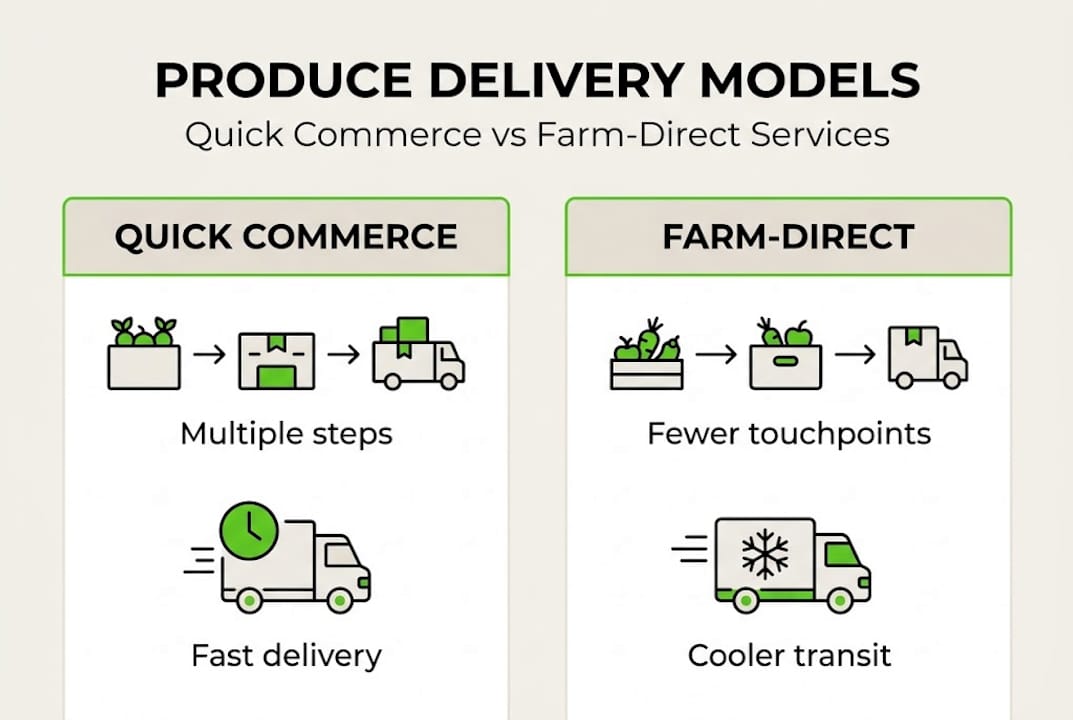
| Model | Speed | Freshness quality | Organic suitability | Handling standard |
|---|---|---|---|---|
| Quick commerce | Very fast (under 30 min) | Variable, often bruised | Poor | Low |
| Farm-direct D2C | Moderate (next day) | High | Excellent | High |
| Premium D2C | Moderate (same/next day) | High | Good | High |
| Subscription box | Scheduled | High | Good to excellent | High |
Empirical data shows that services like Farmery operate on a 3 to 4 day post-harvest cycle with fewer touchpoints, while morning-delivery models such as Sbzee prioritise temperature control. Quick commerce, despite its 2 to 3 day total journey, consistently shows higher waste rates aligned with the 18% industry average.
“For organic produce, quick commerce is a quality compromise you may not notice on day one but will certainly taste by day three.” This is the reality that premium farm-direct operators have built their entire model around.
For organic buyers specifically, fewer touchpoints matter more than speed. Organic produce is grown without synthetic preservatives, which means it is inherently more sensitive to physical damage and temperature changes. A direct farm route with two transfer points will always outperform a five-step dark-store model, regardless of delivery time.
Here is how to evaluate delivery services compared before committing:
- Ask where the produce is sourced and how far the farm is from your delivery point
- Check whether the service uses refrigerated transport or ambient vehicles
- Look at customer reviews specifically mentioning produce condition on arrival
- Confirm whether the service offers morning or night deliveries to reduce heat exposure
- Verify if they carry certified organic produce options with traceability
Pro Tip: Services that operate night or early morning delivery windows expose produce to cooler ambient temperatures, which significantly reduces wilting and moisture loss during transit. This small scheduling detail makes a measurable difference to what lands on your counter.
Best practices for maintaining produce freshness after delivery
Even the best farm-direct delivery can be undone by poor storage choices at home. What you do in the first 30 minutes after your delivery arrives often determines whether your produce lasts three days or seven.
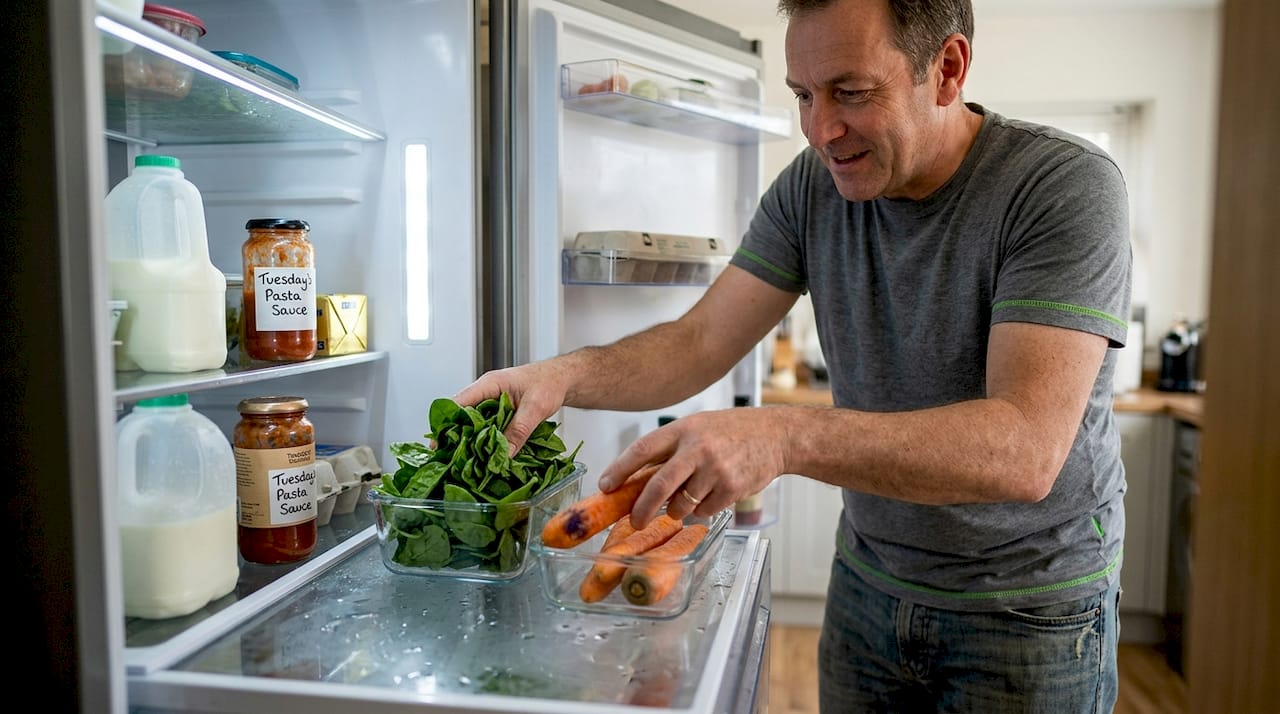
Separating ethylene-producing fruits from ethylene-sensitive vegetables is one of the highest-impact actions you can take. Apples, bananas, mangoes, and pears release ethylene gas, which accelerates ripening and decay in nearby produce. Storing them together with leafy greens or cucumbers shortens the life of everything in the vicinity.
Temperature and humidity control matter equally. Most vegetables prefer cool, humid conditions, while most tropical fruits prefer room temperature until ripe. Placing everything in the fridge is a common mistake that causes chilling injury in bananas, tomatoes, and aubergines.
Here are the most effective freshness-extending actions for common produce:
- Leafy greens: Wrap in a damp cloth or place in a breathable bag; store in the crisper drawer
- Tomatoes: Keep at room temperature away from direct sunlight; refrigerate only once fully ripe
- Root vegetables: Store in a cool, dark spot with good air circulation; do not wash until use
- Herbs: Trim stems and place in a glass of water like flowers; cover loosely with a bag
- Citrus: Keeps well at room temperature for up to a week; refrigerate for longer storage
- Berries: Do not wash until ready to eat; store in a single layer on a paper towel
Pro Tip: Use glass containers or breathable cotton bags for leafy greens rather than sealed plastic. Glass regulates moisture without trapping ethylene, and breathable fabric prevents the condensation that turns spinach and coriander into a soggy mess within 24 hours.
For more detailed guidance, explore storing produce for freshness and natural produce storage tips to build a reliable home system that complements your delivery choices.
How to choose the right home delivery service for your family
With so many options available across Delhi NCR, narrowing down the right service requires a clear framework. Health priorities, organic preferences, and household routines all play a role in finding the best fit.
For health-conscious Delhi NCR families, the priority should be services with direct farm ties, morning or night delivery windows, and same-day or next-day dispatch to minimise touchpoints and temperature exposure. Speed is a secondary consideration.
Follow these steps to assess any delivery service before placing your first order:
- Verify source transparency: Does the service name its farm partners or sourcing regions? Vague descriptions like “farm fresh” without specifics are a warning sign.
- Examine the handling chain: How many steps does produce pass through before reaching you? Fewer is better.
- Check delivery scheduling flexibility: Can you choose a morning slot? Early deliveries avoid peak heat and reduce transit stress on produce.
- Read the returns and quality policy: Services that offer easy replacements for damaged produce signal confidence in their own quality standards.
- Ask about harvest frequency: Ideally, produce should be harvested within 24 to 48 hours of your delivery. Ask directly if this information is not published.
- Look for organic certification or traceability: For organic buyers, third-party certification or named farm sourcing adds genuine accountability.
Pro Tip: When trialling a new service, order a small selection of delicate items first, such as leafy greens or fresh herbs. These are the most sensitive to handling and will reveal the quality of the cold chain and packaging far faster than root vegetables or citrus.
For families in Delhi NCR who are serious about clean eating, buying local produce from verified sources is one of the most effective ways to reduce chemical exposure and improve nutritional intake simultaneously.
Our perspective on finding truly fresh home delivered produce
Here is something the popular coverage rarely says plainly: the obsession with delivery speed has distracted consumers from the variables that actually matter. We have seen this pattern repeatedly. Families switch to a 10-minute delivery app expecting restaurant-quality produce and receive wilted spinach and soft tomatoes. The speed was real. The freshness was not.
The hard-won lesson is this: fewer touchpoints and careful post-harvest handling are what keep produce genuinely fresh, not the number of minutes between order and doorbell. A service that takes an extra few hours but moves produce through two transfer points in a refrigerated vehicle will consistently outperform a rapid model with five ambient-temperature stops.
Most people also underestimate how much their own storage choices affect the outcome. The delivery service gets your produce to the door. What happens next is entirely in your hands.
Our contrarian view is that investing 20 minutes of research into a farm-direct source pays back in better taste, longer shelf life, and measurably higher nutritional value every single week. If you are building a clean eating routine in Delhi NCR, the delivery model you choose is as important as the produce itself.
Discover truly fresh organic produce with Nature’s Soul Shop
Everything covered in this guide, from minimising touchpoints to careful cold-chain handling and transparent sourcing, is precisely how we operate at Nature’s Soul Shop. We source directly from verified organic farms and bring chemical-free fruit and vegetables to health-conscious families across Delhi NCR with care at every step.
Whether you are looking for everyday staples or something a little more special like our organic sweet peppers, you will find produce that is handled with the same intention you bring to your family’s meals. Explore our full range and experience the difference that genuine farm-to-door freshness makes.
Frequently asked questions
Why does home delivered produce sometimes arrive bruised even with fast delivery?
Quick commerce models increase the number of handling transfers and expose produce to temperature fluctuations, which causes bruising and wilting regardless of how short the total delivery window is.
What delivery model is best for organic produce freshness in Delhi NCR?
Farm-direct and premium D2C services consistently deliver fresher, less damaged organic produce because they use fewer touchpoints and more careful handling than standard quick commerce models.
How can I keep home delivered produce fresh for longer?
Separate ethylene-producing fruits from sensitive vegetables, store items at the correct temperature and humidity, and avoid washing produce until you are ready to use it.
Is it worth waiting longer for farm-direct or premium D2C deliveries?
Yes. A slightly longer wait typically means better taste and nutrition because produce passes through fewer hands and experiences less physical stress during transit.
Recommended
- How to Store Produce: Maximise Freshness and Quality – naturessoulshop
- How to Store Fresh Food Naturally for Maximum Freshness – naturessoulshop
- How to choose fresh produce: 5 steps to better choices – naturessoulshop
- Safe food storage tips for health-conscious families 2026 – naturessoulshop
- Hoe bloemen langer vers houden: 30-50% meer levensduur


