


Soy foods, quinoa, amaranth, seitan, spirulina, hemp seeds and nutritional yeast all supply every essential amino acid your body cannot make itself, which makes them genuine complete vegan proteins in their own right. The single rule that makes vegan protein planning simple: anchor your main meals on one of these, or pair legumes with grains across the day (think dal with rice, or hummus with pita) so the amino acid gaps in one food get filled by the other.
You don’t need to hit this balance at every single meal. Getting it right across the day is enough.
- Standalone complete sources: tofu, tempeh, edamame, seitan, quinoa, amaranth, spirulina, hemp seeds, nutritional yeast
- Classic pairings: rice + beans, lentils + wholegrains, hummus + pita, peanut butter + wholegrain bread
Quick targets: aim for roughly 1.0 to 1.6 grams of protein per kilogram of body weight daily, and a moderate target per main meal, according to guidance from UC Davis Health.
Key Takeaways
Complete vegan protein comes from a short list of standalone foods (soy, seitan, quinoa, spirulina) or from pairing legumes with grains across the day, targeting 20 to 35 grams per meal.
| Point | Details |
|---|---|
| Anchor meals on soy or seitan | Tofu, tempeh, edamame and seitan each deliver a complete amino acid profile in a single food. |
| Pair legumes with grains | Rice and beans, or lentils and wholegrains, cover each other’s amino acid gaps across a day. |
| Hit 20 to 35g per meal | Spread protein evenly rather than loading one meal, especially important for older adults. |
| Watch lysine specifically | Eat legumes, soy or quinoa three to four times daily to stay covered on this limiting amino acid. |
| Use fortified options when needed | Blended powders like pea and rice, and fortified foods from Naturessoulshop, help close gaps on busy days. |
Table of Contents
- Single-ingredient complete vegan proteins and how to use them
- Combining incomplete plant proteins for a full amino acid profile
- How much protein vegans actually need, and when to eat it
- Protein powders and fortified foods: useful tools, not requirements
- Lysine, digestibility and antinutrients: the real limitations
- A realistic day of complete vegan protein, and where Arjit shops for it
- Why the food-combining obsession misses the point
- Where to find complete vegan protein staples in one place
- Frequently asked questions
- Sources
Single-ingredient complete vegan proteins and how to use them
A handful of plant foods carry all nine essential amino acids in meaningful amounts, which puts them in a different league from most vegan staples.
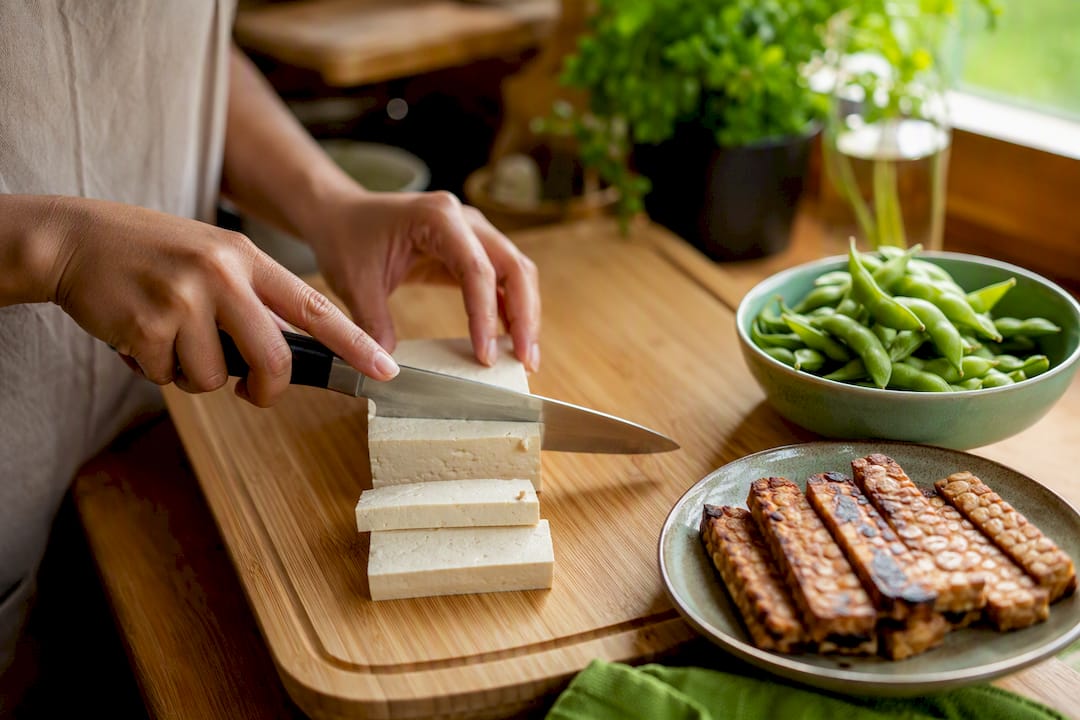
Soy foods lead the pack. Tofu delivers roughly 15 to 20 grams of protein per 150 grams, tempeh slightly more thanks to fermentation, and edamame around 17 grams per cooked cup. Fermentation in tempeh partially breaks down proteins before you even cook it, which tends to make it easier to digest than plain tofu. Use firm tofu in stir fries or scrambles, tempeh marinated and grilled, and edamame straight from the pod as a snack or tossed into salads.
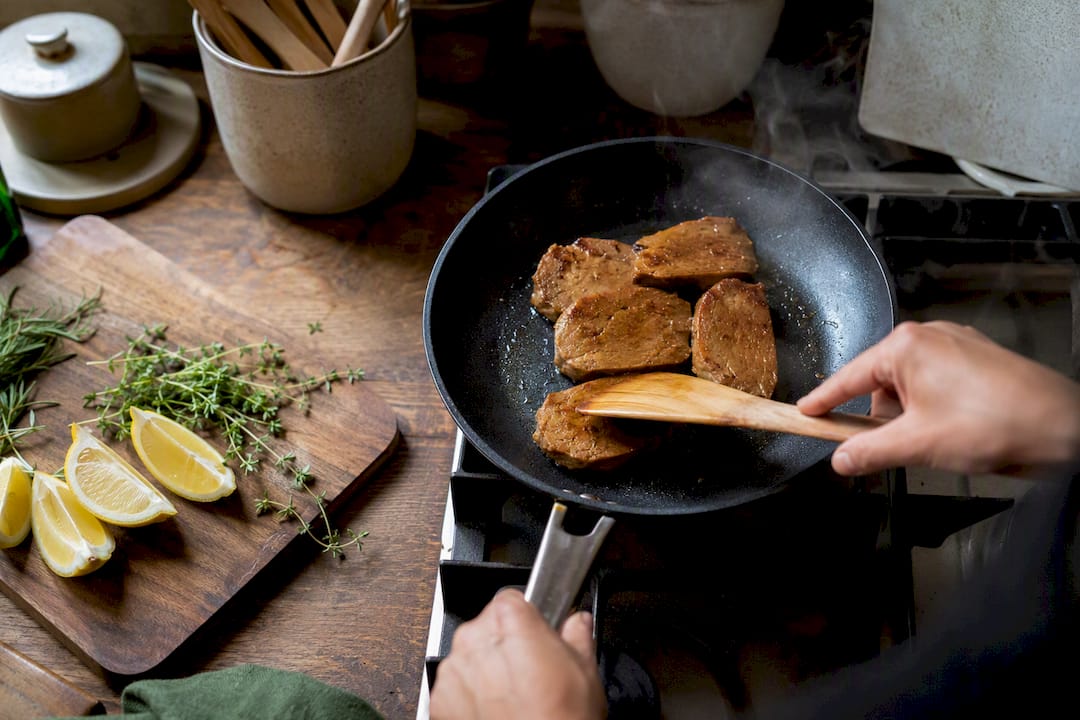
Seitan, made from wheat gluten, packs an unusually dense 20 to 25 grams of protein per 100 grams and behaves like meat in a pan, which makes it a natural anchor for stews, fajitas or a Sunday roast substitute. Skip it if you have coeliac disease or a wheat sensitivity; it’s pure gluten.
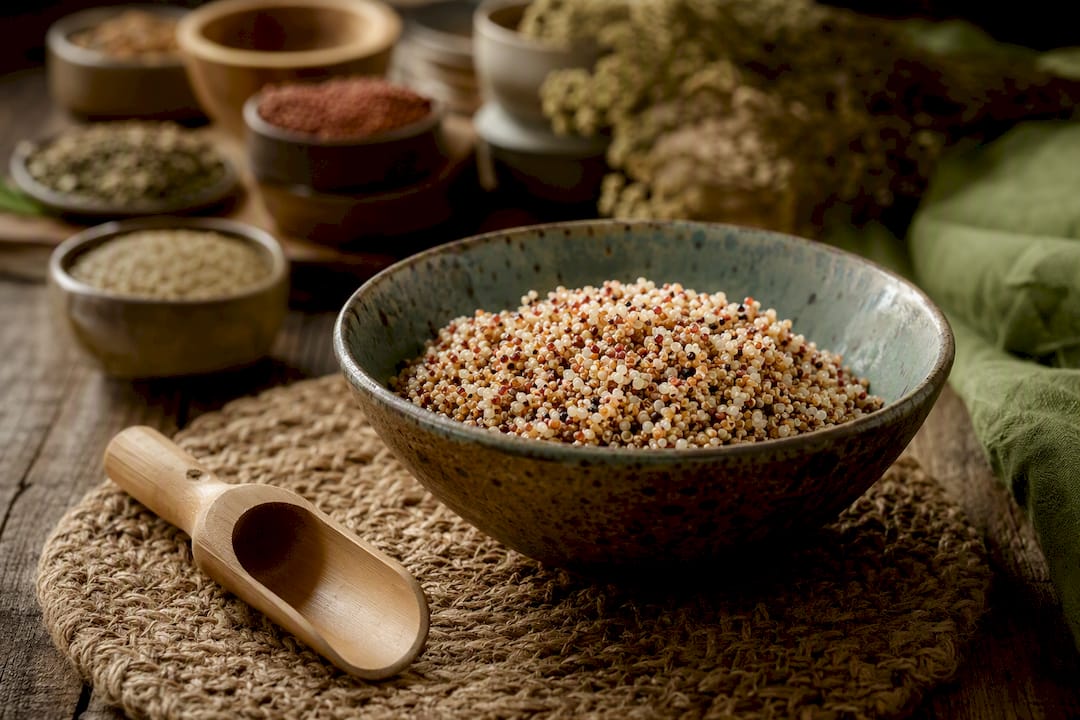
Quinoa and amaranth are the two grains that stand out as complete on their own, though at lower density than soy or seitan, around 8 grams per cooked cup. Use them as your base grain instead of rice when you want a protein boost without extra effort.
Spirulina, a blue green algae sold as powder or tablets, is roughly 60% protein by dry weight and complete in amino acid terms, but people typically eat only a spoonful at a time, so it’s a booster rather than a meal anchor.
Hemp seeds offer about 10 grams of complete protein per three tablespoons, sprinkled over porridge, smoothies or salads.
Nutritional yeast, the savoury flaky seasoning, is complete and adds roughly 8 grams of protein per two tablespoons alongside a strong dose of B vitamins, making it a smart addition to sauces and popcorn rather than a main course.
Combining incomplete plant proteins for a full amino acid profile
Grains tend to run low on lysine while legumes run low on methionine, so pairing the two fills both gaps and gives you every essential amino acid in one sitting. You don’t need to calculate anything. These combinations have worked for generations because they solve a genuine biochemical mismatch, not because of tradition alone.
- Rice and beans: a cup of cooked rice with a cup of black beans delivers around 15 grams of complete protein, and it’s the pairing behind Brazilian feijoada and Cuban moros y cristianos alike.
- Lentils and wholegrains: dal over brown rice or bulgur wheat gives you a similarly complete, filling plate for well under 400 calories.
- Hummus and pita: chickpeas plus wheat bread cover both amino acid gaps and travel well as a packed lunch.
- Peanut butter and wholegrain bread: a simple sandwich that quietly delivers a complete protein profile, useful when you’re short on time.
Pro Tip: You don’t need to eat the two halves of a pairing in the same bite, or even the same meal. As long as both show up somewhere across your day, your body pools the amino acids and uses them together.
How much protein vegans actually need, and when to eat it
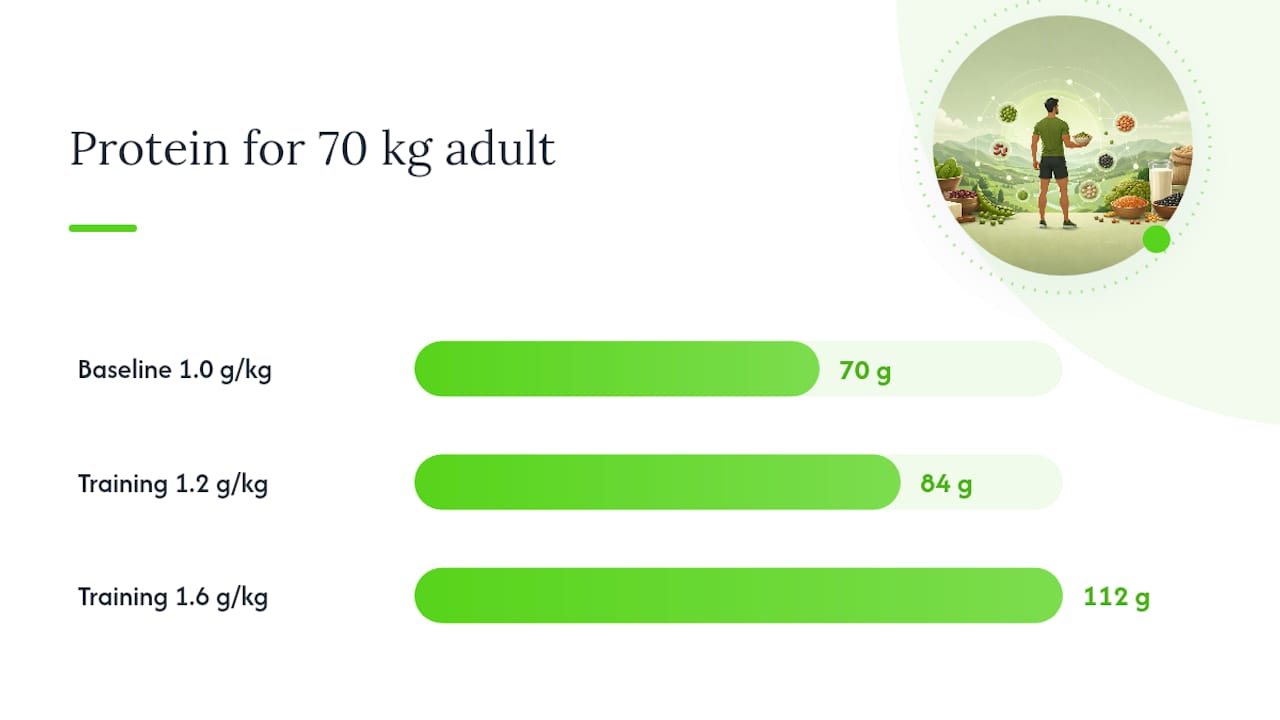
Most adults do well on roughly 1.0 gram of protein per kilogram of body weight daily as a baseline, rising to 1.2 to 1.6 g/kg if you train regularly or are trying to build muscle, a range echoed in coverage from UC Davis Health. For a 70kg adult, that’s somewhere between 70 and 112 grams a day.
Older adults need to push toward the higher end of that range, and sometimes beyond it. Ageing brings anabolic resistance, meaning your muscles respond less efficiently to a given amount of protein, so a narrative review in PMC points to targets of a moderate amount of high-quality protein with an adequate amount of essential amino acids to properly trigger muscle protein synthesis at each meal.
Spreading intake across the day matters more than most people assume. Loading most of your protein into one evening meal wastes the surplus. Aim for a 20 to 35 gram anchor at breakfast, lunch and dinner instead.
| Food portion | Approximate protein |
|---|---|
| 150g firm tofu | 20g |
| 1 cup cooked lentils | 20g |
| 1 cup cooked quinoa | 8g |
| 100g seitan | 25g |
| 3 tbsp hemp seeds | 10g |
| 1 cup edamame | 17g |
Portion values are drawn from USDA FoodData Central and reflect standard cooked or prepared weights.
Protein powders and fortified foods: useful tools, not requirements
Powders and fortified products earn their place when appetite is low, training volume is high, or you’re simply short on time to cook three protein-dense meals a day. Older adults in particular sometimes struggle to eat enough volume of whole food to hit elevated targets, and a fortified shake or bar closes that gap without adding bulk.
- Soy protein isolate stands out as one of the few single plant sources with a genuinely strong amino acid profile.
- Pea and rice protein blends are common precisely because pea is low in methionine while rice is low in lysine, so blended they cover each other.
- Modern processing methods have measurably improved the digestibility and completeness of these blends, according to research covered in PubMed.
When shopping, check protein per serving, whether it’s a blend (a good sign for completeness), added sugar content, and whether it’s fortified with B12 or iron.
Lysine, digestibility and antinutrients: the real limitations
Lysine is the amino acid vegans most commonly fall short on, since it’s the limiting factor in most grains and many nuts. VeganHealth recommends 3 to 4 servings a day of high-lysine foods such as legumes, soy foods or quinoa to stay covered without any calculation required.
Digestibility varies by food and by processing. DIAAS (Digestible Indispensable Amino Acid Score) gives a more accurate read than the older PDCAAS, because it measures how much of each amino acid your gut actually absorbs rather than just what’s present on paper, a distinction the PMC review highlights as central to vegan protein planning.
- Soaking and sprouting legumes reduces phytates, antinutrients that otherwise block mineral and protein absorption.
- Fermentation, as in tempeh or miso, breaks proteins down before you eat them, easing digestion.
- Pressure cooking legumes and grains further cuts antinutrient content while softening texture.
Pro Tip: If you eat a lot of raw legumes or unsoaked grains, you’re likely absorbing less protein than the label suggests. A twelve-hour soak before cooking costs nothing and measurably improves uptake.
A realistic day of complete vegan protein, and where Arjit shops for it
A working example beats a formula. Breakfast: porridge with three tablespoons of hemp seeds and a spoon of peanut butter, about 20 grams of protein. Lunch: a hummus and pita plate with edamame on the side, around 25 grams. Dinner: seitan stir fry over a cup of quinoa, close to 35 grams. That’s roughly 80 grams across the day for a moderately active adult, sitting comfortably inside the 1.0 to 1.6 g/kg range.
Arjit, who covers plant-based nutrition for the Naturessoulshop blog, builds most working menus around two or three protein anchors rather than obsessing over every ingredient.
When shopping, prioritise:
- Soy products (tofu, tempeh, edamame) for a dense, versatile anchor
- Pulses and lentils in bulk for cost-effective daily protein
- Seeds (hemp, chia) for easy additions to breakfasts and salads
- Fortified foods for backup coverage on busy weeks
Why the food-combining obsession misses the point
The conventional wisdom on vegan protein spends far too much energy on combining foods within a single meal, and not nearly enough on simply eating enough dense protein across the day. That old idea that rice and beans must appear on the same plate to “complete” each other is technically true but practically overstated. Your body pools amino acids from meals eaten hours apart, so a lentil lunch and a quinoa dinner do the same job as a lentil and quinoa dinner combined.
What the research actually supports is anchoring. Pick one dense complete protein (tofu, tempeh, seitan, or a solid legume plus grain combination) at each main meal, and the amino acid maths mostly sorts itself out. Older vegans and highly active ones are the two groups who genuinely need to think harder, since anabolic resistance and training load both raise the bar on what “enough” means.
If you take one thing from this: stop counting grams of individual amino acids and start building meals around a protein anchor. Everything else follows from that.
Where to find complete vegan protein staples in one place
Building meals around soy, seitan, pulses and seeds is straightforward in theory, but it depends on having reliable, clean-ingredient versions of these staples on hand rather than hunting across five different shops. Naturessoulshop stocks organic tofu-friendly staples, pulses, seeds and fortified vegan products across its fresh produce range and its health and fortified foods category, so the anchors this guide recommends are one order away rather than a weekend of shop-hopping.
If you want inspiration beyond what’s covered here, the seasonal pairing ideas at Wild Foodz are worth a look for rotating your legume and grain combinations through the year without repeating the same three meals on loop.
For pantry staples that make daily protein targets genuinely easy to hit, check the essential vegan staples list and browse the main Naturessoulshop store to stock your kitchen with the soy products, pulses and fortified foods this guide points to.
Frequently asked questions
Is quinoa a complete protein on its own? Yes. Quinoa contains all nine essential amino acids, though at a lower density (around 8 grams per cooked cup) than soy foods or seitan, so it works best as a base grain rather than your sole protein source.
Do I need to eat rice and beans in the same meal? No. Your body draws on amino acids from meals eaten across the same day, so lentils at lunch and rice at dinner achieve the same completeness as eating them together.
What’s the difference between DIAAS and PDCAAS? DIAAS measures how much of each amino acid your gut actually absorbs, while PDCAAS is an older, less precise method. Reviews increasingly treat DIAAS as the more accurate standard for judging vegan protein quality.
Can I get enough complete protein without powders or supplements? Yes, for most adults. Anchoring meals on soy foods, seitan, or legume and grain combinations covers the 1.0 to 1.6 g/kg daily range without powders, though older adults or heavy trainers may find fortified products helpful for convenience.
Which single food is the best all-round complete vegan protein? Soy, in its various forms (tofu, tempeh, edamame), offers the best combination of amino acid completeness, protein density and versatility across cuisines, making it the most practical everyday anchor.
This article is general information, not a substitute for advice from a qualified doctor. Consult a qualified healthcare professional about your own circumstances before acting on anything here.
Sources
Achieving High Protein Quality Is a Challenge in Vegan Diets (PMC) VeganHealth: Protein Guidance USDA FoodData Central Plant Protein Processing and Digestibility (PMC)
- Protein - Vegan Health
- Technological innovations improving plant protein extraction and digestibility - PubMed


